
Tips to Deal with Anger

❝Anger is often seen as a negative emotion but there are many ways of working with it so that it does not impact negatively on our lives.❞
Have you ever found yourself losing patience over small things with your partner? Maybe it’s a delayed reply, a forgotten chore, or a disagreement that spirals into silence or shouting.
In Indian relationships, where family dynamics, societal pressure, and unspoken expectations often add extra weight, it’s easy for frustration to build up. But frequent angry outbursts, silent treatment, or holding in angry feelings can quietly damage even the most loving bond.
Let's understand how to control anger in a relationship for lasting love, not by suppressing your feelings, but by learning healthier ways to express them. Because love shouldn’t feel like a battlefield, and anger doesn’t have to end the story.
In this Article
Why Anger Shows Up in Relationships?

Ever felt your blood boil over something as simple as your partner scrolling on their phone during a conversation? You’re not alone. In relationships, where roles, routines, and responsibilities often go unquestioned, anger can build up silently until it bursts.
Sometimes you just need someone qualified to talk to. Find a counsellor near you — independent, professional, and ready to listen.
Find a CounsellorAnger in relationships usually isn't about one incident. It’s often a reaction to feeling unseen, unheard, or overwhelmed.
Here are some common triggers many couples face:
- Unmet Emotional Needs: Not feeling loved, valued, or appreciated.
- Daily Stress: Work pressure, traffic, family duties piling up.
- Unresolved Past Issues: Old fights or childhood wounds surfacing.
- Mismatch in Expectations: One wants space, the other wants closeness.
- Power Struggles: Over finances, parenting, or decision-making.
Why Managing it Matters?
“It was just anger, I didn’t mean it.”
Sound familiar? Many Indian couples say this after a fight, brushing it off like it’s no big deal. But when anger becomes a regular guest in your relationship, it doesn't just hurt feelings, it chips away at love, trust, and peace.
Here’s why learning how to control anger in a relationship truly matters:
- It protects emotional intimacy, without fear or distance creeping in.
- Breaks the cycle of guilt and silence, no more hurting each other, then shutting down.
- Improves your mental health, lowering stress, high blood pressure, and daily irritation.
- Sets a healthier example for children, one based on communication, not control.
- Brings peace back into daily life so your home doesn’t feel like a battlefield.
Ready to break the cycle? TherapyRoute can connect you with trusted, culturally aware therapists across India who can help you and your partner build calmer, more connected relationships.
How to Control Anger in a Relationship? 7 Effective Strategies Inside
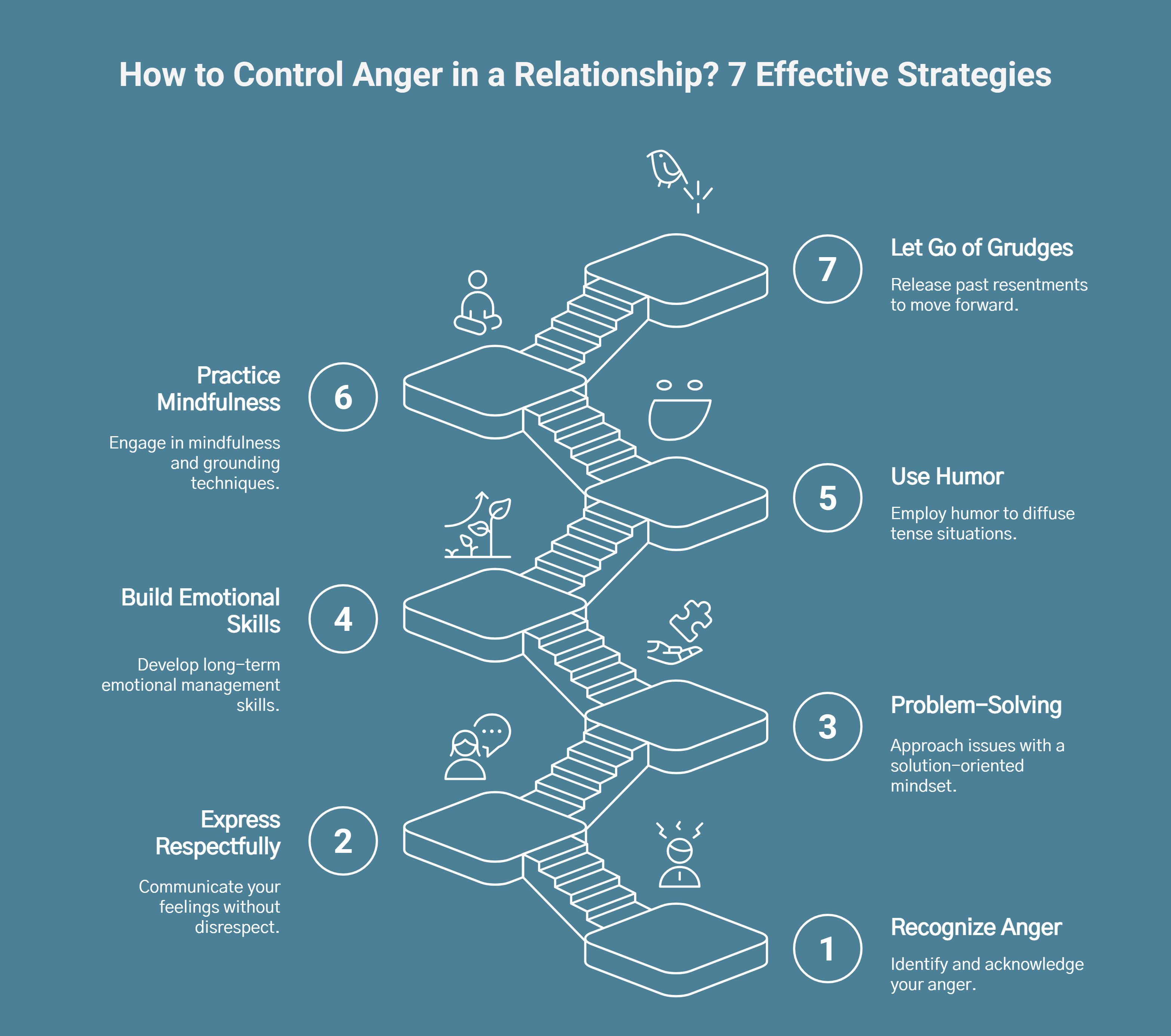
It’s not about never getting angry. It’s about learning how to respond when you do.
If you often wonder, “Why do I say things I don’t mean?” or “How do I stop this pattern?”, the tips below will help you express your feelings better and build emotional strength as a couple.
Let’s walk you through practical ways to manage anger, without guilt, shutdowns, or emotional damage.
1. Recognise & Name Your Anger
Do you react first and regret later? In many Indian relationships, anger builds silently, then explodes, leaving behind guilt, silence, or emotional distance.
The first step to breaking this pattern?
Pause. Observe. Name what you feel.
This simple act interrupts the cycle and empowers choice, so you're not just reacting, you're responding.
Try this the next time you're triggered:
- Notice Physical Signs: Tight chest, racing heart, clenched fists.
- Label the Emotion: “I’m feeling hurt,” “I’m frustrated,” or “I’m overwhelmed.”
- Give Yourself Space: Even 10 seconds of awareness helps shift the tone.
If you’re wondering "how to deal with anger issues in a relationship," this small step is your starting point toward emotional clarity and calm.
2. Express Yourself Respectfully
Anger either erupts or gets buried. Neither helps. Many Indian couples struggle to find that middle ground, where anger doesn't lead to silence or emotional distance.
The key? Speak to be heard, not to hurt.
Instead of blaming or bottling it up, try:
- Use “I feel…” instead of “You always…”.
- Focus on your needs, not your partner’s faults.
- Stay calm, deep breathing helps regulate tone and heart rate.
Learning how to control anger and frustration in a relationship starts with expressing emotions in a way that invites understanding, not conflict.
3. Use Problem-Solving Mindset
Arguments over money, chores, or time with in-laws? These everyday issues can feel like the end of the world in the heat of the moment. But the goal isn’t to win the fight, it’s to find better ways forward.
Here’s how you can shift the energy:
- Focus on the issue, not the person.
- Look for fair, doable solutions, like shared tasks or clearer boundaries.
- Respect different opinions while staying rooted in composure.
When you approach conflict with maturity and intention, you don’t just manage the moment, you improve the quality of your life and relationship.
4. Build Long-Term Emotional Skills
Love alone isn’t enough when life keeps testing your patience. From family stress to daily pressures, Indian couples often carry more than just emotions, they carry expectations. That’s why building emotional strength together matters.
Small, consistent habits can help you grow through challenges instead of fighting against them:
- Daily Emotional Check-Ins: Talk, not just about tasks, but feelings.
- Joint Stress-Relievers: Walks, mindfulness, or evening tea without screens.
- Counselling Support: For personal clarity or deeper couple healing.
Ready to strengthen your emotional foundation?
With TherapyRoute, you can filter therapists by location, specialisation, language, and more, so you find someone who truly understands your journey. Whether you're looking for couples counselling or individual support, the right help is just a few clicks away.
5. Use Humour (Not Sarcasm) to Heal the Moment
Sometimes, a light laugh can do what a long lecture can’t. In Indian relationships, where unspoken expectations often build pressure, gentle humour can ease tension and bring hearts closer.
But be mindful, humour should heal, not hurt.
Try this:
- Use playfulness, not sarcasm or taunts
- Laugh together, not at each other
- Share silly moments that remind you you’re on the same team
6. Practice Mindfulness and Grounding Techniques
Ever noticed how one upsetting moment can throw off your entire day? When emotions feel overwhelming, grounding yourself can help you stay calm and present, especially during conflict with someone you love.
Mindfulness isn’t about “fixing” your anger. It’s about creating space between your feelings and your reaction.
Simple ways to centre yourself:
- Take deep, steady breaths to slow your heart rate.
- Focus on physical sensations, like your feet on the ground or hands on your lap.
- Pause before responding to avoid words you’ll regret.
These small practices create space between your anger and your actions, helping you hold on to peace, even during chaos.
7. Don't Hold a Grudge
Still upset about something that happened weeks ago? In many relationships, anger doesn’t always show up as shouting, it lingers as silence, sarcasm, or distance. Holding onto hurt may feel justified, but it only builds emotional walls.
Letting go isn’t about forgetting; it’s about choosing peace over prolonged pain.
Here’s how to start:
- Talk it out when you’re calm, not in the heat of the moment.
- Focus on resolution, not blame.
- Remind yourself: your relationship is bigger than one argument.
When Do You Need Professional Support?
It’s normal to get angry from time to time. Every relationship has its ups and downs. But when anger begins to feel unmanageable, when it starts to control how you speak, respond, or treat your partner, it’s not just a phase. It’s a signal that you may need more support.
You may benefit from professional help if:
- You find yourself in the same arguments again and again, without resolution.
- Anger often turns into outbursts, sarcasm, stonewalling, or emotional withdrawal.
- You experience a strong urge to shut down or lash out, even over small things.
- The emotional strain is affecting your mental health, physical health, or sense of peace.
- You or your partner feel unsafe, unheard, or constantly on edge.
Therapy isn’t only for moments of crisis, it’s a space to gain clarity, learn healthier responses, and rebuild trust. Seeking help doesn’t mean you’ve failed. It means you’re choosing to grow, both for yourself and for the relationship.
If you’ve tried self-help but anger is disrupting your relationship, schedule a session with a certified therapist through TherapyRoute now.
Struggling with Anger in a Relationship? Find the Right Therapist with TherapyRoute
Anger can feel isolating, especially when it starts to impact your relationship. But you don’t have to figure it out alone. The right therapist can help you understand your triggers, communicate better, and build a calmer connection with your partner.
TherapyRoute makes finding that support easy and personal. Use powerful filters to narrow down your search by:
- Location (online or near you)
- Specialisation (couples therapy, anger management, trauma, etc.)
- Approach (CBT, mindfulness, emotion-focused, etc.)
No more endless scrolling or confusion. With just a few clicks, connect with someone who truly gets you and your relationship journey.
Conclusion
Anger is not the enemy; unmanaged anger is. In Indian relationships, where emotional expression is often shaped by tradition, expectations, and pressure to “keep the peace,” anger can silently fester or suddenly erupt. But it doesn’t have to stay that way.
When you choose to understand your emotions instead of suppressing them, when you respond instead of reacting, you’re not just saving a relationship, you’re strengthening it.
Healthy love requires more than patience. It needs self-awareness, respectful communication, and sometimes, a little outside support.
Frequently Asked Questions
How do you control anger in love?
Controlling anger in love begins with self-awareness. Try deep breathing exercises, pause before reacting, and express your needs in a respectful way. The goal of anger management is not to suppress angry feelings, but to handle them maturely.
How to stop reacting angrily?
The first thing is to slow down your heart rate using relaxation techniques like deep breaths or imagery. Learn to problem-solve, not punish. There are healthier ways to respond than rage, practice active listening, and delay your reaction.
Why am I so quick to anger?
You might have a strong need for control, feel unheard, or be dealing with unresolved stress. Sometimes, excessive anger is linked to deeper mental health concerns. If it's affecting your quality of life, consider professional help or anger management classes.
How can anger affect your relationship?
Uncontrolled outbursts, sarcasm, or the silent treatment can damage intimacy and trust. If you can’t express anger in a respectful way, your personal relationships may suffer. Over time, anger issues can push away significant others or even lead to domestic violence.
Are anger issues a mental illness?
Anger itself is a human emotion, not a disorder. But if the amount of anger you feel is frequent and intense, it could signal a deeper anger problem or an underlying mental health condition. Cognitive behavioural therapy can help regain control of your emotions.
Important: TherapyRoute does not provide medical advice. All content is for informational purposes and cannot replace consulting a healthcare professional. If you face an emergency, please contact a local emergency service. For immediate emotional support, consider contacting a local helpline.
Find Therapists
Must Read
Creating Space for Growth: How Boundaries Strengthen Relationships
Setting healthy boundaries fosters respect, protects emotional well-being, and strengthens relationships by defining personal limits and maintaining self-care.
International Mutual Recognition Agreements for Mental Health Professionals
Mutual recognition agreements for mental health professions are rare and uneven, with major gaps in counselling, social work, and allied therapies. Read on to understand ...
Mental Health Licensing & Regulation in New York State: 2026 Guide
Mental Health Licensing & Regulation in Singapore: 2026 Guide
Jumping to Conclusions
Jumping to conclusions is a thinking habit where we assume the worst or make judgments without enough evidence. By recognising this pattern, therapy can help you slow dow...
About The Author

“All people are capable of healing themselves. My role is to help you access your ability to accomplish this.”
Johnathen Sacks is a qualified Psychotherapist, based in City Center, Cape Town, South Africa. With a commitment to mental health, Johnathen provides Child / Adolescent Therapy and Family Therapy.


