How to Move On from Relationship When It Still Hurts?

❝If you’re stuck in the “I miss them” loop, here’s how to move on from relationship without losing yourself in the process.❞
You can love someone deeply and still know you can’t stay. That’s the paradox no one prepares you for, the ache of trying to move on while your heart is still tethered to what was. Maybe the relationship ended abruptly. Or slowly, painfully, over time. Either way, you’re left with feelings that don’t just disappear when the goodbye is said.
You wake up thinking of them. You replay memories, wonder if things could’ve gone differently, and ask yourself questions that have no satisfying answers. And while everyone tells you to “just move on,” no one really tells you how to do that when your heart still loves them.
This guide isn’t about rushing your feelings or forcing closure. It’s about helping you find steady footing while your heart heals through what can often feel like an emotional rollercoaster. We’ll walk through the emotional knots, the in-between phase where nothing feels clear, and, most importantly, what it takes to gently start letting go, even when you’re still in love.
In this Article
What are the 10 Grounding Practices for Letting Go?
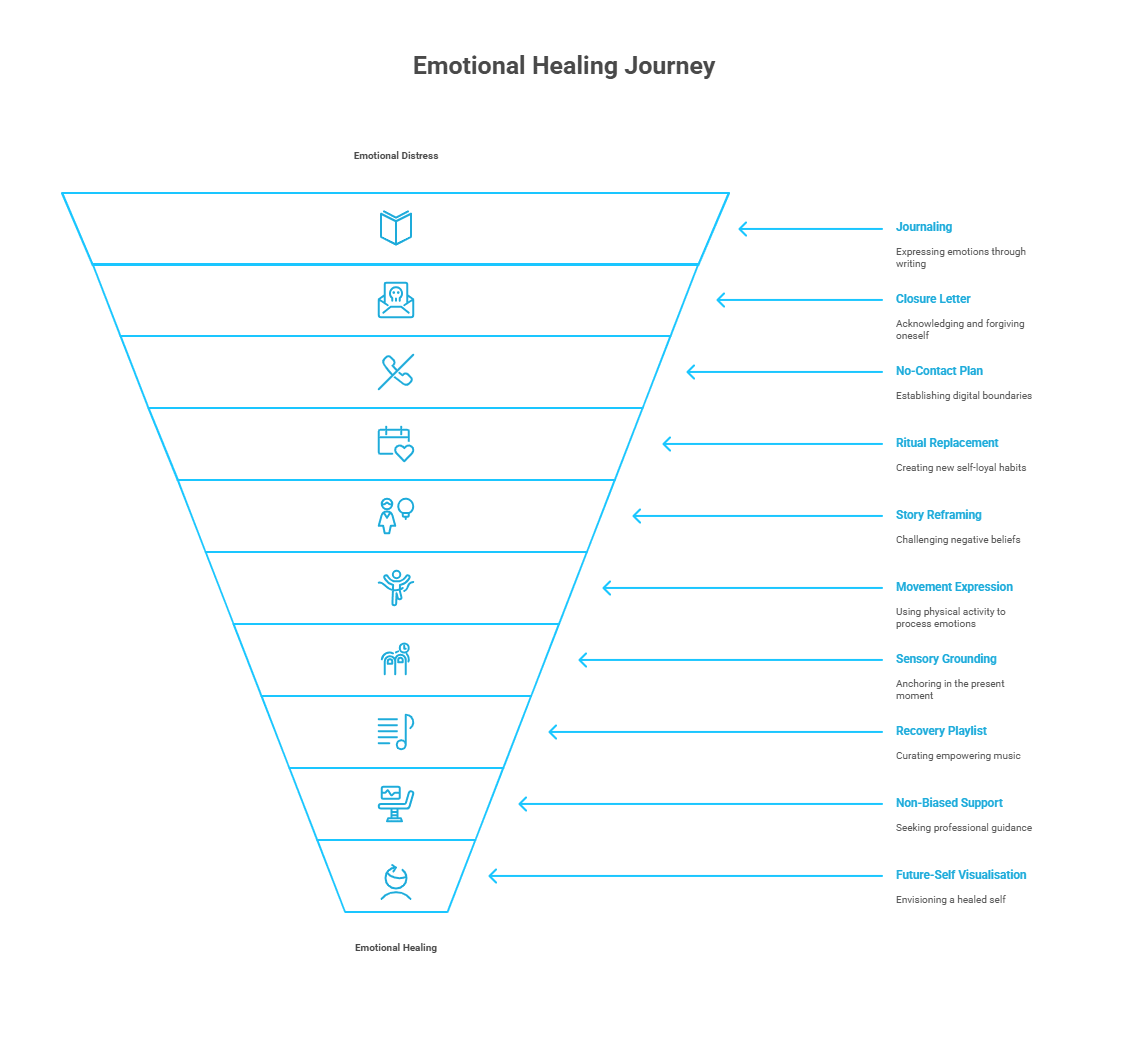
Healing isn’t just about time passing; it’s about what you do during that time. These practices are designed to help you rewire your emotional patterns, not just distract from them. They're grounded in trauma-informed and behavioural psychology, helping you feel more anchored during moments of grief, craving, or uncertainty.
Relationships take work — and sometimes outside support. Find a couples or relationship therapist who can help you move forward.
Find a Relationship Therapist
1. Journal Without Editing
Use “stream-of-consciousness” journaling for 10–15 minutes each morning. Write everything, even the parts you’re ashamed of. This reduces emotional suppression and helps your brain make sense of nonlinear feelings. Try prompts like:
- “Today I feel… because…”
- “What I wish I could say is…”
- “If I could let go a little, I would…”
2. Write a Closure Letter to Yourself
Instead of writing to them, write to yourself. Acknowledge what you tolerated, what you learned, and what you’re choosing now. End with:
“I forgive myself for the version of me who stayed. I honour the version of me who’s choosing something different.”
Burning or deleting this letter marks a symbolic turning point, and Berkeley research shows that symbolic rituals aid emotional release.
3. Create a “No-Contact” Safety Plan
Instead of just “don’t text them,” set specific digital boundaries:
- Block their number for 30 days
- Use an accountability app or a friend
- Move old photos or messages into a password-protected folder (don’t delete if you’re not ready)
Structure reduces reactivity and relapses.
4. Replace Rituals with Self-Loyal Habits
Love thrives in routine. So does grief. Identify the rituals that tethered you to that person (Sunday texts, morning good mornings, birthday reminders), and replace them with acts of self-loyalty.
- Morning: start with a 5-minute stillness check-in.
- Weekly: do one thing that brings joy or pride.
- Monthly: review what you’ve survived and write it down.
5. Reframe the Inner Story
Your brain builds identities through storytelling. After a breakup, your narrative might sound like: “I’m hard to love,” or “I’ll never find better.”
Challenge this with:
- “What would I say to a friend feeling this way?”
- “What evidence do I have that contradicts this belief?”
This isn’t toxic positivity, it’s rewiring distorted beliefs from grief.
6. Use Movement as Emotional Expression
Choose movement based on what your body feels, not what burns calories.
- Feeling numb? Try cold showers + brisk walking.
- Feeling heavy or sad? Yin yoga or floor stretches.
- Angry or restless? Number meditation, dancing, and fast-paced walking.
You’re not exercising, you’re metabolising emotion.
7. Anchor with Sensory Grounding
When overwhelmed, bring attention back to the physical:
- Run cold water over your wrists
- Smell something strong (coffee, citrus oil)
- Place your feet on the floor and name 5 things you see
This pulls you out of mental spirals and anchors you in the present moment.
8. Create a “Recovery Playlist”
Curate songs not just for crying, but for reclaiming. Include songs that mirror your emotions and make you feel powerful, hopeful, and alive.
Try songs like:
- Love You Zindagi – Dear Zindagi
- I’m Still Standing – Elton John
- Ilahi – Yeh Jawaani Hai Deewani
- Good as Hell – Lizzo
- Phir Se Ud Chala – Rockstar
- Stronger (What Doesn’t Kill You) – Kelly Clarkson
- Badal Pe Paon Hai – Chak De! India
- Khul Ke Jeene Ka – Dil Bechara
9. Talk to Someone Who Doesn’t Take Sides
A therapist, coach, or even a trained listener offers what friends can’t: non-biased validation without emotional overload.
- You won’t be told to “get over it”
- You can unravel your story without feeling judged
- You can hear truths you may not want but need
This space is vital for reshaping how you see yourself post-break.
If you’re ready to find that safe space, TherapyRoute can help you connect with trauma-informed professionals who listen without judgment, supporting your healing journey every step of the way.
→ Find a Therapist Who Understands You on TherapyRoute.
10. Future-Self Visualisation
Set a timer for 5 minutes. Close your eyes and meet your future you, the one who is no longer defined by this pain.
- What are they doing differently?
- What do they no longer tolerate?
- How do they speak to themselves?
Anchor your decisions today to the version of yourself you’re becoming.
When moving on feels tangled, understanding your emotions differently can be a game-changer. This Gestalt therapy video shows how tuning into the present moment can shift your healing in unexpected ways.
Why Letting Go Is So Hard (Even When You Know You Should)?
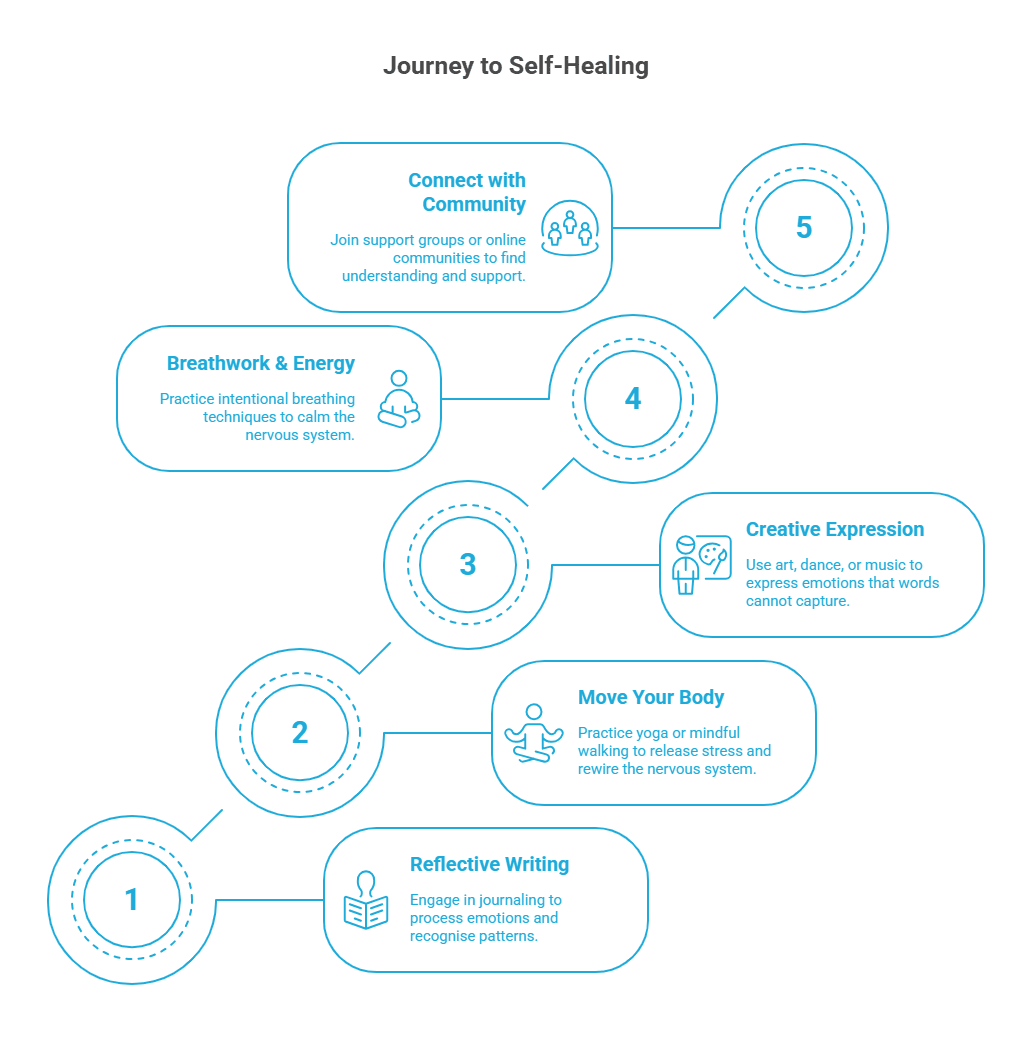
Even when your mind knows the relationship is over, your heart doesn’t always follow the red flags. That’s because moving on isn’t a clean break, it’s a gradual unwinding of attachment, habits, and emotional memory. Here's why letting go can feel so overwhelming:
1. You’re Not Just Missing Them, You’re Missing a Version of You
Breakups don’t just take away another person. They take away the version of yourself that existed with them, the way you laughed, dreamed, planned weekends, or saw your future. It’s hard to let go when it feels like losing part of your identity and your sense of self.
2. Your Brain Is Addicted to Familiarity
Emotional attachment is wired into your nervous system. Your brain craves routine and predictability, even if it hurts. That’s why you might keep checking their social media or rereading old texts. You're not weak, you’re neurologically wired for connection.
3. Hope Lingers Even After Closure
Maybe a part of you still wonders: What if they change? What if we’re meant to be later? Even when the relationship had real issues, hope can cloud clarity. It’s hard to release someone when your heart is still writing alternate endings.
4. Emotional Bonds Don’t Expire Overnight
Just because something ended doesn’t mean your feelings disappear. You can still love someone and accept that they’re not right for you. That emotional conflict is natural, and it’s one of the hardest parts of moving on.
If you want a deeper healing guide, here's our take on-
How to heal from emotional abuse in a relationship.
What are The Three Phases of Moving On?
Letting go isn’t a single decision; it’s a transition. Inspired by William Bridges’ Transition Model, the emotional process of moving on from someone you still love can be divided into three distinct but overlapping phases, and now may be the perfect time to navigate through them. Each phase comes with its own challenges and turning points.
1. The Ending
This is the part most people try to skip, but it’s where healing truly begins.
- Acknowledge what you’ve lost, not just the person, but the version of yourself that existed with them.
- Grieve consciously. This could mean journaling your feelings, crying without guilt, or talking to someone you trust about the grieving process you are experiencing.
- Let go of the illusion that things might go back to how they were. This includes giving up false hopes or denial that prolongs the pain.
The ending isn’t about forgetting. It’s about facing reality with honesty and compassion.
2. The In-Between (Neutral Zone)
This phase is often the most uncomfortable. It’s the emotional no-man’s-land where nothing feels certain.
- You may feel disoriented, questioning your identity or purpose. “Who am I without them?” is a common thought.
- You’ll face conflicting emotions, love and anger, sadness and relief, at once.
- Avoid numbing your feelings with distractions like overworking, dating too soon, or social media spirals.
- Instead, create grounding rituals: go for walks, cook meals, and maintain a sleep routine. These simple anchors help stabilise you while your emotional landscape shifts.
3. The New Beginning
Healing isn’t marked by a single moment. It happens quietly, as you start choosing yourself again.
- Don’t expect a dramatic rebirth. It’s more like a gradual reorientation toward things that bring you peace or curiosity.
- You begin to rediscover parts of yourself, passions, goals, and routines that were pushed aside.
- Slowly, you build new habits, redefine your boundaries, and create space for relationships (especially with yourself) that feel safe and nourishing.
This is where forward movement begins, not because the past is erased, but because it no longer holds you back.
Your Heart Isn’t Broken, It’s Overwhelmed. And That’s Where TherapyRoute Helps.
Moving on when you still love someone isn’t just about “getting over it.” It’s about facing a flood of conflicting emotions: love, anger, grief, guilt, hope, and trying to make sense of them without drowning.
But here’s the truth most people avoid saying: this kind of emotional work is not meant to be done alone.
That’s why TherapyRoute exists, not to give you instant solutions, but to help you find the right kind of help. Whether you're replaying every conversation, having a hard time struggling to eat or sleep, or simply feeling stuck in the in-between, a therapist can guide you through the emotional aftermath with structure, support, and zero judgment.
TherapyRoute lets you:
- Find therapists who specialise in heartbreak, grief, codependency, and self-worth.
- Choose between online or in-person sessions, based on your comfort.
- Filter by therapy styles, CBT, trauma-informed, somatic experiencing, and more.
- Connect with someone who respects your emotional pace, not rushes it.
→ When your friends say “just move on,” but your heart says “I’m not ready,” TherapyRoute helps you find someone who listens to that. Start here.
Conclusion
Letting go when you still love someone is one of the hardest emotional transitions you’ll ever face. But that pain doesn’t mean you’re broken; it means you cared deeply. And caring isn’t something to erase; it’s something to honour as you choose yourself again.
Some days will feel heavier than others. Some mornings you’ll wake up missing them, and some nights you’ll finally feel like you’re breathing again. That’s not failure. That’s the process.
Healing isn’t linear. But every time you choose to sit with your feelings instead of running from them, every time you say no to what hurts and yes to what heals, you’re already moving forward.
Frequently Asked Questions
1. How to move on from a relationship when you are still in love?
The first step is accepting the impermanence of connection. Letting go doesn’t mean erasing love; it means honouring your emotional needs without making excuses for staying stuck. Spend time rebuilding your daily routine around self-worth, not your former partner.
2. How to move on from a serious relationship that shaped your identity?
After the ending of a relationship that defined you, personal growth starts with learning who you are outside the “we.” Meditation, journaling, and support systems, like a best friend or therapist, help you create meaning beyond the old relationship.
3. How to move on from toxic relationship patterns?
A toxic relationship often leaves behind insecurities and emotional wounds. The only way to break the cycle is to reflect on your own experiences, recognise unhealthy dynamics, and resist rushing into future relationships. Healing takes boundaries, not dating apps.
4. How to move on from long term relationship memories and habits?
Moving on from a long-term relationship takes time and intention. Replacing shared rituals with new things, practicing positive affirmations, and spending time with family members or trusted friends can slowly rebuild emotional stability and shift focus toward the rest of your life.
5. How much time it takes to move on from a relationship, really?
There’s no fixed timeline, some people heal in months, others take years. A lot of people underestimate the role of grief in breakups. The best way is to focus on the healing process, not the clock, and let your mental health guide you.
Important: TherapyRoute does not provide medical advice. All content is for informational purposes and cannot replace consulting a healthcare professional. If you face an emergency, please contact a local emergency service. For immediate emotional support, consider contacting a local helpline.
Find Therapists
Must Read
Creating Space for Growth: How Boundaries Strengthen Relationships
Setting healthy boundaries fosters respect, protects emotional well-being, and strengthens relationships by defining personal limits and maintaining self-care.
International Mutual Recognition Agreements for Mental Health Professionals
Mutual recognition agreements for mental health professions are rare and uneven, with major gaps in counselling, social work, and allied therapies. Read on to understand ...
Mental Health Licensing & Regulation in New York State: 2026 Guide
Mental Health Licensing & Regulation in Singapore: 2026 Guide
Jumping to Conclusions
Jumping to conclusions is a thinking habit where we assume the worst or make judgments without enough evidence. By recognising this pattern, therapy can help you slow dow...
About The Author

TherapyRoute
Cape Town, South Africa
“Our in-house team, including world-class mental health professionals, publishes high-quality articles to raise awareness, guide your therapeutic journey, and help you find the right therapy and therapists. All articles are reviewed and written by or under the supervision of licensed mental health professionals.”
TherapyRoute is a mental health resource platform connecting individuals with qualified therapists. Our team curates valuable mental health information and provides resources to help you find the right professional support for your needs.