
What Are the Top Play Therapy Techniques for Trauma?

❝Worried about your child’s trauma recovery? This blog explores play therapy techniques for trauma that help children express emotions, build trust, and heal safely.❞
In this Article
- What Is Play Therapy and How Does It Help With Trauma?
- What Are the Best play therapy techniques for trauma?
- How Do Therapists Tailor the Approach Based on Age?
- How Does Play Therapy Support Recovery from Childhood Trauma?
- What Is the Role of Mental Health Professionals in Play Therapy?
- Find Trusted Play Therapists on TherapyRoute
- Conclusion
- Frequently Asked Questions
TL;DR
|
When children experience trauma, they often don’t have the words to describe what they’re going through. Instead, their pain shows up in their behaviour: withdrawal, aggression, nightmares, or difficulty in school. For parents, caregivers, and educators, this can feel confusing and heartbreaking.
That’s where play therapy comes in. It uses toys, art, storytelling, and other creative activities to help children express and process painful emotions. Most importantly, it allows them to do so without needing to talk about the trauma directly.
If you're wondering how this form of therapy works, which techniques are most effective, and whether it's suitable for your child or a child you care about, this blog will guide you. You’ll learn about the best play therapy techniques for trauma, how they're adapted to different age groups, and the crucial role therapists play in the healing journey.
What Is Play Therapy and How Does It Help With Trauma?
Play therapy is a specialised form of therapy that uses the natural language of children, and that’s play, to help them process, understand, and recover from traumatic experiences. For children who may struggle to verbalise their pain, this approach provides a safe space to express feelings and experiences non-verbally.
Children affected by domestic violence, sexual abuse, natural disasters, or other forms of trauma often manifest their distress through behaviour. Play therapy bridges this gap between behaviour and communication by enabling emotional expression through play activities.
Healing from trauma is possible with the right therapist. TherapyRoute lists trauma-informed professionals ready to support you.
Find a Trauma TherapistAccording to a study , play therapy significantly improves emotional development in children exposed to trauma, especially those under the age of 12.
What Are the Best Play Therapy Techniques for Trauma?
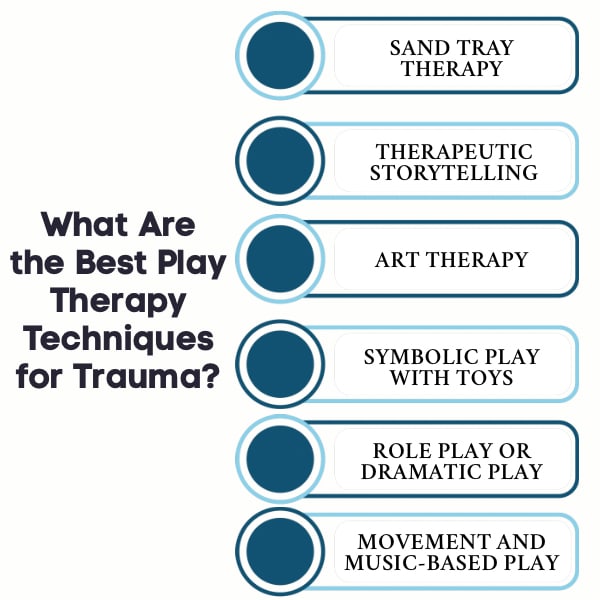
Play therapy is not a one-size-fits-all method. Therapists carefully select specific techniques based on the child’s age, developmental stage, type of trauma, and therapy goals. These approaches aim to help children express and process their experiences in ways that feel natural and safe to them.
Here are some of the most widely used play therapy techniques for trauma recovery:
1. Sand Tray Therapy
In sand tray therapy, children use miniature figures, objects, and sand to create visual scenes that reflect their inner thoughts and feelings. These symbolic representations often mirror real-life traumatic experiences, such as grief, family conflict, or physical abuse.
Since the process is non-verbal, it allows children to communicate sensitive information without needing to speak directly. The act of building and reshaping scenes can be both expressive and healing.
2. Therapeutic Storytelling
Storytelling is a powerful tool in trauma recovery. Children are encouraged to create fictional stories with characters who may face situations similar to their own.
This form of therapeutic play helps them explore fear, anger, guilt, or confusion from a safe emotional distance. Over time, it also supports insight, empowerment, and emotional release.
3. Art Therapy
Art therapy uses creative activities like drawing, colouring, painting, or clay modelling to help children express what words cannot. These artistic expressions often reveal underlying emotions, trauma triggers, or unresolved pain.
Art therapy is particularly effective for children who are withdrawn or have difficulty articulating their feelings. It also promotes emotional development and contributes to improved mental health.
4. Symbolic Play With Toys
Children often process trauma through symbolic play using dolls, action figures, puppets, or animals. This allows them to recreate distressing scenarios in a way that feels safe and controlled.
As they play, therapists can observe recurring themes and gently guide the child toward healthier emotional expression. This technique is especially effective for younger children who communicate more freely through play than through conversation.
5. Role Play or Dramatic Play
In dramatic play, children act out real or imaginary situations using costumes, props, or improvisation. This helps older children explore past traumatic events, express emotions, and try out new responses to challenging situations.
Role play also encourages creativity, builds confidence, and enhances problem-solving skills. It’s an effective way to explore issues like bullying, domestic violence, or parental separation in a developmentally appropriate manner.
6. Movement and Music-Based Play
This technique integrates physical movement or music into the therapeutic space, encouraging expression through rhythm, dance, or musical instruments. It helps children release stored emotional energy, especially when trauma has affected their ability to sit still or concentrate.
Music and movement also support body awareness, relaxation, and emotional regulation. This approach is particularly useful for children who are highly active, non-verbal, or easily overstimulated by traditional talk-based methods.
Want to raise emotionally resilient kids? Read our guide on teaching children to be mentally strong.
How Do Therapists Tailor the Approach Based on Age?
Children process trauma differently at various stages of development. That’s why play therapists follow a structured and age-sensitive approach, ensuring each technique aligns with the child’s emotional, cognitive, and social maturity.
While the underlying goal of emotional healing remains the same, the method of delivery is carefully adapted to suit the child’s age group, history of trauma, and behavioural needs.
For Younger Children (Ages 3–7)
Therapy for younger children often leans toward non-directive and imaginative techniques. These children are still developing language skills, so therapists rely heavily on symbolic play and the use of toys to help them express thoughts and emotions.
Key features of the approach include:
- Symbolic play and imaginative scenarios using dolls, puppets, or toy animals.
- Non-directive sessions, where the child leads the play and chooses activities at their own pace.
- Gentle observation by the therapist, who interprets patterns in play to understand emotional needs.
- Flexibility in structure allows the child to feel safe and in control.
This approach supports natural emotional expression and is particularly effective for children processing early childhood trauma or non-verbal distress.
For Older Children (Ages 8–12)
As children grow older, their ability to reflect and communicate improves. Therapists can begin incorporating more structured and insight-based techniques, while still maintaining a playful and supportive environment.
Tailored strategies for this age group include:
- Guided storytelling and role play to help them explore and reframe traumatic memories.
- Sand tray therapy and art-based tasks that allow for symbolic expression with added structure.
- Reflective dialogue, where the therapist helps the child make connections between their play and real-life experiences.
- Goal-oriented sessions, with gentle prompts to address specific emotional or behavioural problems.
These methods encourage children to not only express their emotions but also develop coping skills, build insight, and strengthen their emotional regulation.
Looking for a therapist who understands your child’s emotional needs? Explore qualified child mental health professionals on TherapyRoute.
How Does Play Therapy Support Recovery from Childhood Trauma?
Children experience and process trauma very differently from adults. While adults may analyse or verbalise distressing events, children often express their pain through behaviour, imagination, or play. Their understanding of traumatic events is usually fragmented and tied to emotions rather than logic or language.
Play therapy offers a developmentally appropriate, non-threatening outlet for emotional expression. It externalises inner distress through symbolic play, giving children a way to process what they may not have the words for.
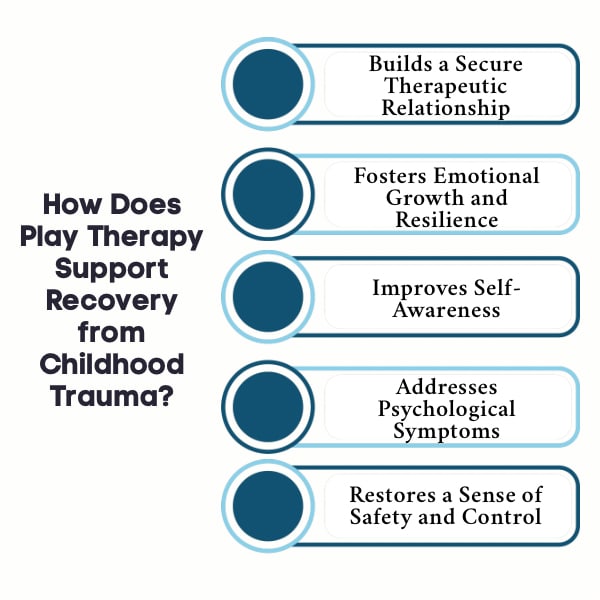
Here’s how play therapy facilitates healing and emotional recovery:
1. Builds a Secure Therapeutic Relationship
Trust is essential for healing, especially for children affected by trauma. In play therapy, a consistent and empathetic therapist provides a safe space where the child feels heard and accepted. Over time, this bond encourages the child to express difficult emotions. It lays the foundation for deeper emotional work.
2. Fosters Emotional Growth and Resilience
Trauma can disrupt a child’s emotional development. Play therapy allows children to explore and regulate emotions like fear or anger through guided activities. This builds coping skills and emotional strength. As a result, children become more resilient when facing future challenges.
3. Improves Self-Awareness
Children often struggle to understand or name their emotions. Through symbolic play, they begin to express feelings they cannot verbalise. Therapists gently help them identify these emotions. This leads to greater self-understanding and emotional control.
4. Addresses Psychological Symptoms
Trauma may cause anxiety, attention issues, or mood swings. Play therapy helps reduce these symptoms by letting children express their struggles in a non-threatening way. Over time, many show improved behaviour and mental well-being. It supports emotional balance without forcing verbal disclosure.
5. Restores a Sense of Safety and Control
Traumatised children often feel powerless. In play therapy, they lead the process and make choices, which boosts confidence. This sense of control helps them feel safer and more secure. Regaining that stability is key to recovery.
Want to know how everyday words impact children emotionally? Explore the common phrases we shouldn’t say to our kids.
What Is the Role of Mental Health Professionals in Play Therapy?
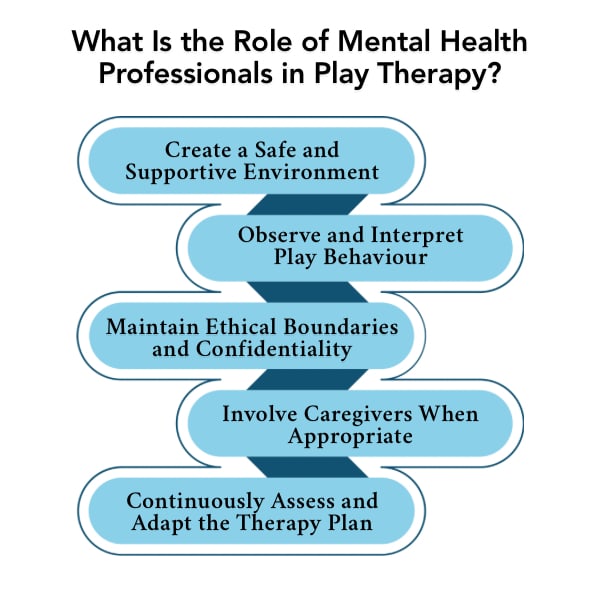
In play therapy, the mental health professional is far more than just an observer; they are an active, empathetic guide who helps create the foundation for healing. Their role blends clinical expertise with emotional sensitivity, ensuring that each session is tailored to the child’s unique needs and responses.
Here’s how therapists contribute meaningfully to the process:
1. Create a Safe and Supportive Environment
A foundational role of the therapist is to build a space where the child feels emotionally safe and accepted. Through consistent, warm, and non-judgmental interactions, the therapist helps the child develop trust. This supportive environment encourages open emotional expression and allows the child to engage freely in therapeutic play without fear or shame.
2. Observe and Interpret Play Behaviour
Mental health professionals are trained to carefully observe how children use toys, stories, and activities during play. These behaviours often reflect the child’s underlying emotions, trauma history, or unmet needs. By identifying symbolic expressions and recurring themes, therapists gain deep insights into the child’s internal world, which helps guide the therapy process.
3. Maintain Ethical Boundaries and Confidentiality
Therapists uphold strict ethical standards throughout the therapy process. They ensure confidentiality is respected, making the child feel secure in their disclosures. At the same time, they remain vigilant and adhere to legal obligations, such as mandatory reporting, in situations involving abuse, neglect, or risk of harm.
4. Involve Caregivers When Appropriate
While play therapy sessions are centred on the child, involving caregivers can significantly enhance progress. Therapists may offer feedback, suggest strategies for emotional support at home, and promote positive parenting. This collaborative involvement ensures consistency across settings and strengthens the child’s external support system.
5. Continuously Assess and Adapt the Therapy Plan
Therapy is not static; it evolves based on the child’s emotional responses and developmental progress. Therapists regularly assess how the child is engaging with the sessions and adjust techniques, pacing, or goals accordingly. This flexibility ensures that therapy remains child-led, personalised, and aligned with the child’s healing journey.
Find Trusted Play Therapists on TherapyRoute
At TherapyRoute , we understand how overwhelming it can be to find the right support for a child coping with trauma. That’s why we make it easier for you to connect with qualified, experienced mental health professionals who specialise in child therapy and play-based approaches.
Our platform allows you to:
- Search by therapy type, including play therapy and trauma-focused care.
- Filter by location, language, and gender, ensuring your child feels safe and understood.
- Access verified therapist profiles, so you can make informed decisions with confidence.
Whether you're a parent, caregiver, or educator, TherapyRoute helps you take the next step toward your child’s healing journey with trusted, evidence-based support.
Conclusion
Play therapy techniques for trauma are more than just play. They are powerful therapeutic tools that help children heal from distressing and often unspeakable experiences. Whether it’s the effects of trauma from sexual abuse, natural disasters, or domestic violence, these techniques offer a safe, structured, and emotionally supportive pathway forward.
From enhancing emotional development to building communication skills, play therapy opens up new ways for children to reconnect with themselves and the world around them. When guided by trained mental health professionals, it can lead to long-term positive outcomes.
Frequently Asked Questions
What should parents look for in a play therapist?
Parents should look for therapists trained in play therapy techniques, with experience supporting children affected by trauma. It's important that the therapist creates a safe, trusting space and holds credentials from recognised mental health organisations or institutions in India.
How long does play therapy usually take?
Play therapy duration varies based on the child’s trauma, developmental needs, and therapy goals. While many children begin to show progress within 12 to 20 sessions, some may need ongoing support depending on emotional responsiveness and the severity of their experiences.
Can play therapy and trauma-focused interventions be combined?
Yes, play therapy can be integrated with trauma-focused interventions like cognitive behavioural therapy. This blended approach helps address emotional and behavioural symptoms in an age-appropriate manner, especially when children are unable to engage in traditional talk-based therapies.
Is play therapy for trauma suitable for children exposed to domestic violence?
Yes, play therapy for trauma is highly suitable for children affected by domestic violence. It provides a safe, indirect way to process fear, confusion, and anger, allowing them to rebuild trust, express emotions, and feel more secure in their environment.
Can play therapy support academic growth?
Play therapy helps children manage emotions and reduce anxiety, which can improve focus, behaviour, and classroom participation. Fostering emotional stability and resilience supports better academic performance and learning outcomes, especially in children affected by trauma or stress.
Important: TherapyRoute does not provide medical advice. All content is for informational purposes and cannot replace consulting a healthcare professional. If you face an emergency, please contact a local emergency service. For immediate emotional support, consider contacting a local helpline.
Find Therapists
Must Read
Creating Space for Growth: How Boundaries Strengthen Relationships
Setting healthy boundaries fosters respect, protects emotional well-being, and strengthens relationships by defining personal limits and maintaining self-care.
International Mutual Recognition Agreements for Mental Health Professionals
Mutual recognition agreements for mental health professions are rare and uneven, with major gaps in counselling, social work, and allied therapies. Read on to understand ...
Mental Health Licensing & Regulation in New York State: 2026 Guide
Mental Health Licensing & Regulation in Singapore: 2026 Guide
Jumping to Conclusions
Jumping to conclusions is a thinking habit where we assume the worst or make judgments without enough evidence. By recognising this pattern, therapy can help you slow dow...
About The Author

TherapyRoute
Cape Town, South Africa
“Our in-house team, including world-class mental health professionals, publishes high-quality articles to raise awareness, guide your therapeutic journey, and help you find the right therapy and therapists. All articles are reviewed and written by or under the supervision of licensed mental health professionals.”
TherapyRoute is a mental health resource platform connecting individuals with qualified therapists. Our team curates valuable mental health information and provides resources to help you find the right professional support for your needs.



