Unlived Life

❝For many, the lives not lived become a source of anguish and bitterness. Yet it is also true that in freeing ourselves from certain anxieties and discovering unknown aspects of ourselves, different lives are possible.❞
In her hugely successful 2015 single Hello, Adele sings about an earlier past of two lovers, “I’m in California, dreaming about who we used to be when we were younger and free”. Implicitly, she suggests that there could have been other paths or possibilities and that the singer hankers after a past that might have led to different possibilities and relationships. She seems to be imaginatively living out what might have been.
Looking for evidence-based support? Find a qualified psychologist near you through TherapyRoute.
Find a PsychologistFor many, the lives not lived to become a source of anguish and bitterness. Yet it is also true that in freeing ourselves from certain anxieties and discovering unknown aspects of ourselves, different lives are possible. Sometimes, it seems that what is required is that one should reconcile oneself to the life one has, yet at other times, psychotherapy seems to imply that we need to “live the unlived life”.
There are many ways of understanding what happens in psychotherapy and what leads to change. One model suggests that, fundamentally, psychotherapy is about the integration of unintegrated aspects of an experience. These could include a range of human experience: aggression, the need for comfort and attachment, ambition, sexuality, and creative fulfilment. The argument is that a set of circumstances and environmental trauma (for example a caregiver being unable to bear dependency, for instance, or the caregiver’s heightened valuing of some aspect – academic success for instance in the child) leads to certain areas of the child’s experience being disavowed and yet remaining dormant in the psyche and body of the individual. These denied and dormant aspects cause difficulty for the child or adult in obvious and subtle ways. For example, a denial of aggression could lead to a lack of assertiveness, as well as a feeling of being half alive. A denial of the need for comfort and connection could lead to isolation and depression.
The therapeutic relationship offers the possibility of reintegrating these split off aspects and “living the unlived life”. This requires a working through in the relationship with the therapist, as the individual might well feel that the therapist cannot bear certain aspects of himself.
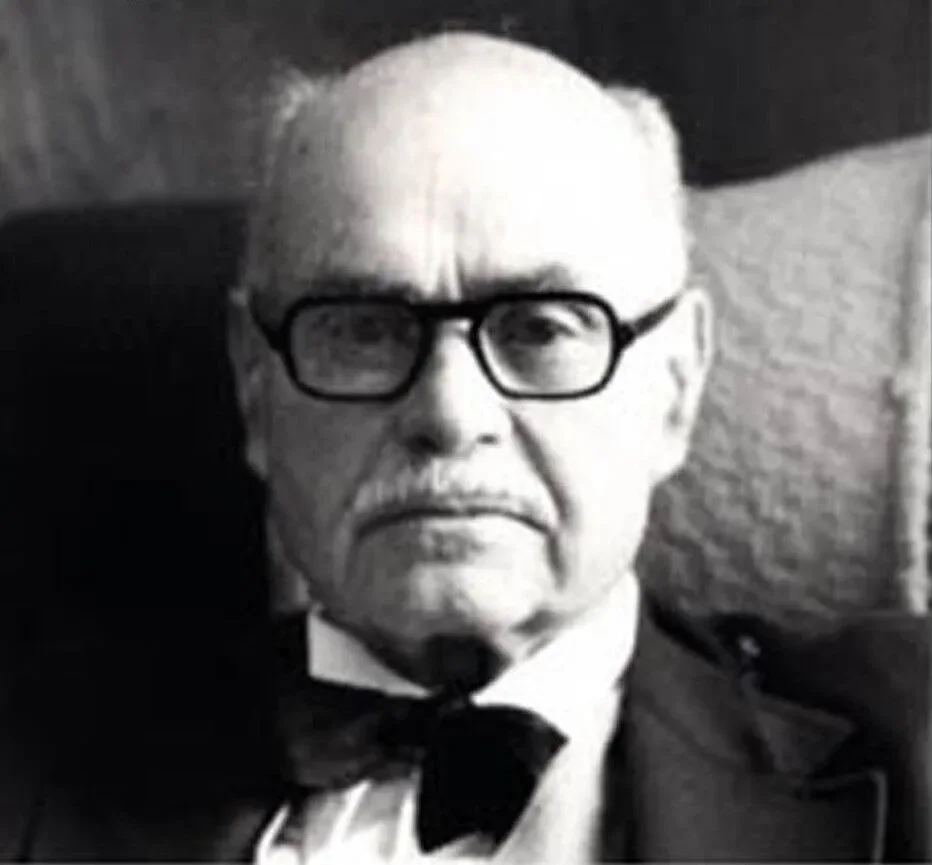
Carl Jung was the first major theorist to suggest that not only was this ‘unlived’ experience bad for the individual but also for those around the individual. Thus a unlived sexuality in the adult or parent might manifest as a real difficulty in the child or adolescent of this parent.
Jung used the metaphor of “infection” without really attempting to explain the mechanics of this process. Thus Jung (CWKS 17) writes about the unlived life, “The repressed causes of the suffering have other effects, it radiates out into the environment, and if there are children it infects them too. In this way, neurotic states are often passed from generation to generation. …. Children are obliged to live not as they want, but as their parents want”. Jung continues in even stronger language “This suffering (unlived life) fraudulently avoided, secretes an insidious poison which seeps into the soul of the child through the thickest walls of silence and through the whitened sepulchre of deceit, complacency and evasion”.
Modern researchers have given more empirical description and validation to Jung’s “infection” and “poison”.
For example, attachment theorists have shown empirically that attachment styles are passed from generation to generation. Thus adults with anxieties around attachment might well shift away from infants/children when they manifest a need for connection. In this way, the child recognizes that to keep a connection with the parent, certain desires/experiences need to be put aside. More recent microanalysis of video material showing the intimate dance between parent and child and the subtle engagement and disengagement of both participants (parent and child) confirms this thesis.
Thomas Ogden, a well known psychoanalyst, argues a similar point when he says
that those individuals who have been forced to erect defences against emotional agony and therefore cannot experience critical life events, often have a feeling of having a life “that feels to him like life that is mostly a unlived life,” and that is what prompts them to seek help.
In psychotherapy, when a unlived experience is integrated, there is a painful recognition that life might well have taken a different course had possibilities been integrated earlier. In some cases, the individual is still in a position to live out new possibilities. For others, although there is a new felt sense of life, there is some acknowledgement of possibility that might remain “unlived”.
Adam Philips, a London Psychoanalyst, suggests we always live in relation to our unlived lives, the lives we did not have or cannot have. He points to the fact that much of our mental life can consist of fantasy about “lives we are not living, the lives we are missing out on and the lives we could be leading”. However, an acceptance of these “unlived lives" is necessary to prevent ongoing bitterness or mourning.
Robert Johnson, a Jungian Analyst, also points to the idea that there has to be acceptance of the fact that some aspects may well not be “lived out”. However, he argues, from a slightly different position to Philips that we should remain in touch with these possibilities, even attempting to live them out imaginatively and symbolically, if not in reality. In this way, through the symbolic, some transformation can take place.
Thus we always have an ambivalent relationship to our “unlived lives.” The “unlived" aspect can cause difficulty for us; however to know these “unlived parts” is also a potentially painful process as there is an associated recognition of some loss. Not all can, as Jung suggests, “Shed a beam of light into the darkest corner of their soul”. It is true that some people in therapy end the therapeutic process because it is too hard to face the reality of their current lives and the unlived aspect of it. Each individual then has to find his/her own relationship to these unintegrated aspects and how integration might shape their present and future.
Important: TherapyRoute does not provide medical advice. All content is for informational purposes and cannot replace consulting a healthcare professional. If you face an emergency, please contact a local emergency service. For immediate emotional support, consider contacting a local helpline.
Find Therapists
Must Read
Creating Space for Growth: How Boundaries Strengthen Relationships
Setting healthy boundaries fosters respect, protects emotional well-being, and strengthens relationships by defining personal limits and maintaining self-care.
International Mutual Recognition Agreements for Mental Health Professionals
Mutual recognition agreements for mental health professions are rare and uneven, with major gaps in counselling, social work, and allied therapies. Read on to understand ...
Mental Health Licensing & Regulation in New York State: 2026 Guide
Mental Health Licensing & Regulation in Singapore: 2026 Guide
Jumping to Conclusions
Jumping to conclusions is a thinking habit where we assume the worst or make judgments without enough evidence. By recognising this pattern, therapy can help you slow dow...
About The Author

“I am an experienced psychotherapist of 35 years. I work with individuals and couples. Although I have trained as a Jungian analyst, I am also informed by Self Psychology, Relational Psychoanalysis and British Object Relations.”
Ian Donald is a qualified Clinical Psychologist, based in Pinelands, Cape Town, South Africa. With a commitment to mental health, Ian provides Jungian Analysis.