
Intergenerational Trauma

❝An overview of the different types of generational trauma and how they may manifest in individuals and families❞
Intergenerational trauma refers to the transmission of emotional and psychological wounds from one generation to another. It occurs when the effects of trauma, often stemming from significant historical events, persist across generations, impacting the mental, emotional, and even physical well-being of individuals who were not directly exposed to the original traumatic event.
This transmission can happen through various means, including family dynamics, cultural norms, and shared narratives, leading to the continuation of trauma-related symptoms, behaviours, and coping mechanisms in subsequent generations.
Table of Contents:
Symptoms of Intergenerational Trauma
Some Common Causes of Traumatic Stress Disorders
Family dynamics can be complex. A family therapist can help you navigate challenges and strengthen your relationships.
Find a Family TherapistSome Examples of Historically Traumatised Groups
Historical Trauma
Collective Trauma
Conclusion
Symptoms of Intergenerational Trauma
Some people experience symptoms of stress-related disorders without knowing why. These can show up as:
- Depressive moods
- Addiction
- Aggression and self-destructive behaviours
- Relationship difficulties
- Low self-esteem
- Feeling constantly 'on edge'
While people experience these symptoms in a very real way, they often do not understand why they are happening because they cannot trace them back to a specific cause. This can lead to confusion, denial, guilt, minimisation of one's own feelings, and a belief that "there must be something wrong with me".
Trauma responses are not always caused by big events that happen to us directly. Your trauma response may have roots in the traumatic experiences of your parents, grandparents, great-grandparents and ancestors. If there is a history of trauma in your family, then it is likely that you have inherited some of the effects of that trauma.
Some Common Causes of Traumatic Stress Disorders (such as PTSD and C-PTSD) Include:
- Domestic violence
- Sexual abuse or assault
- Serious accidents
- Warfare
- Bullying and hate crimes
- Traumatic childbirth or loss of a child
- Vicarious trauma (witnessing other people's traumas)
When traumatised parents (or caregivers) pass on the effects of trauma to their children, the children experience intergenerational trauma. Transgenerational trauma refers to the passing on of trauma to the following generation – when the grown children pass it on to their children (the grandchildren of the originally traumatised generation). If trauma is not addressed, this cycle can repeat for many generations to come (see the diagram below).
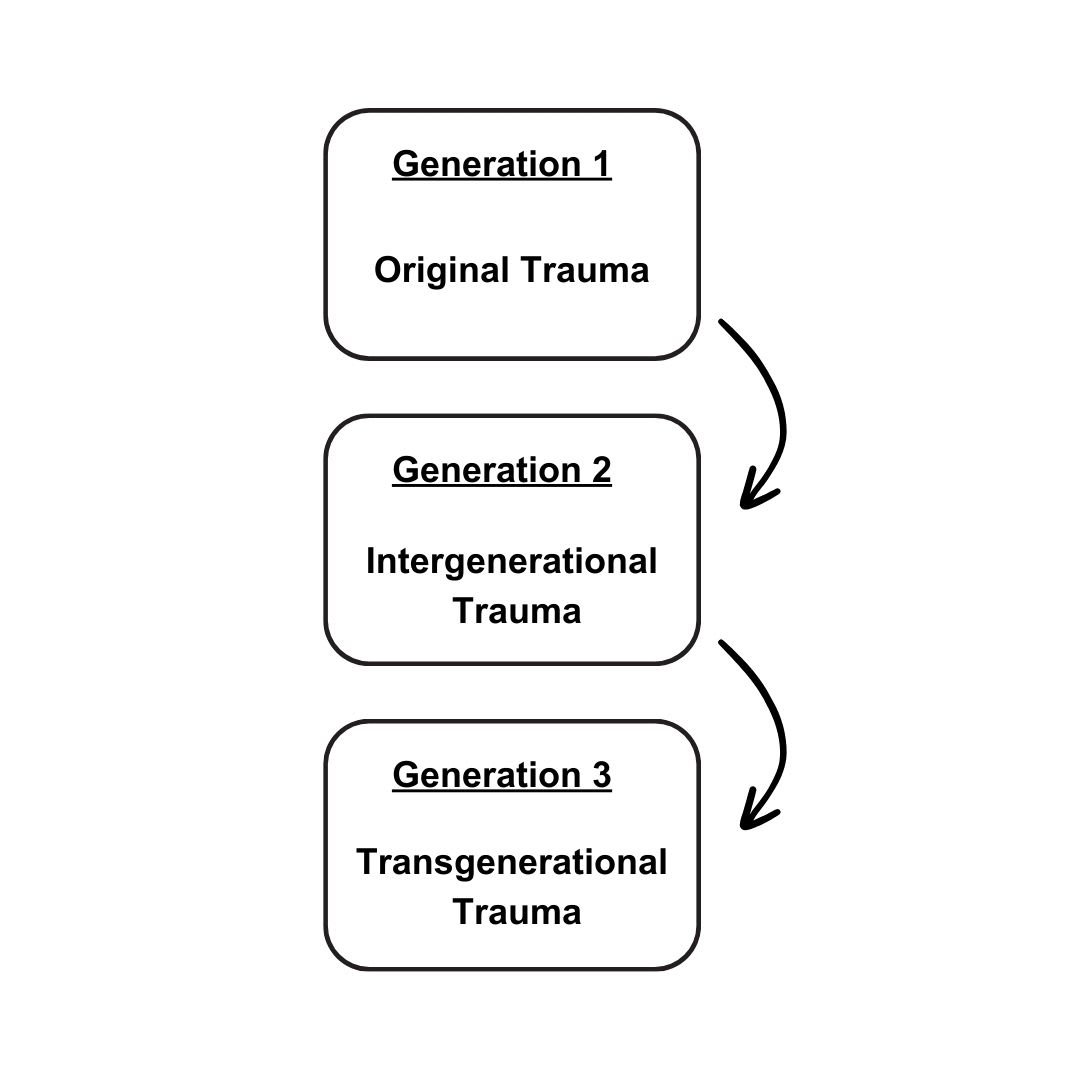
Parents with unresolved trauma are often impaired in their ability to parent and form secure attachments with their children. This negatively impacts a child's development. Unresolved trauma that is passed on can become more severe in successive generations.
Historical trauma is experienced by cultural groups who have survived devastating circumstances such as genocide, colonisation, dispossession, institutionalisation, systemic poverty and forced migration.
Some examples of historically traumatised groups include:
- First Nations people of Australia
- African-Americans
- Holocaust survivors and their descendants
- Indigenous people of North America
- The disability community
- Historical trauma: is particularly devastating because it erodes identity on an individual and cultural level. People who come from communities that have experienced historical trauma are less likely to seek help from institutions or government services because they do not trust that the systems will support them.
- Collective trauma: refers to the psychological effects of a traumatic event experienced by an entire community or society. The event is remembered, discussed and reconstructed collectively in order to make meaning of it. Significant events such as natural disasters, terrorist attacks, famines and pandemics can leave a long-lasting impression on the collective psyche. Refugees and immigrants also experience collective trauma which can significantly impact their cultural identity.
Many people are unaware of the generational transmission of trauma because family members do not talk about what happened; they cannot bear to remember – let alone speak about – their traumatic experiences. People often carry a lot of shame and guilt around being a victim/survivor. As a survival defence, they may deny, suppress or 'cut off' from their experience. In doing so, they are unable to heal or grow; they remain stuck in old, unhelpful patterns, and they struggle to connect meaningfully with others.
Healing from transgenerational trauma is a long but rewarding journey that involves a lot of examination, investigation and self-compassion. With the help of your therapist, you will be encouraged to access parts of yourself that have been suppressed or forgotten. Once you begin to integrate and heal from intergenerational trauma, you will gain a much greater capacity for self-growth and healthy relationships.
Conclusion
Intergenerational trauma, a profound phenomenon, passes emotional wounds across generations, impacting well-being. Symptoms manifest as stress disorders, confusion, and disconnection. Ancestral trauma responses affect parenting, attachment, and development. Historical trauma's ripple effects seen in challenged cultural groups erode identities and trust. Silence perpetuates negativity. Addressing intergenerational trauma is vital for growth and relationships. Healing involves introspection, self-compassion, seeking support, fostering resilience, and breaking the cycle for healthier futures.
Important: TherapyRoute does not provide medical advice. All content is for informational purposes and cannot replace consulting a healthcare professional. If you face an emergency, please contact a local emergency service. For immediate emotional support, consider contacting a local helpline.
Find Therapists
Must Read
Creating Space for Growth: How Boundaries Strengthen Relationships
Setting healthy boundaries fosters respect, protects emotional well-being, and strengthens relationships by defining personal limits and maintaining self-care.
International Mutual Recognition Agreements for Mental Health Professionals
Mutual recognition agreements for mental health professions are rare and uneven, with major gaps in counselling, social work, and allied therapies. Read on to understand ...
Mental Health Licensing & Regulation in New York State: 2026 Guide
Mental Health Licensing & Regulation in Singapore: 2026 Guide
Jumping to Conclusions
Jumping to conclusions is a thinking habit where we assume the worst or make judgments without enough evidence. By recognising this pattern, therapy can help you slow dow...
About The Author

“My approach is built on a foundation of Gestalt therapy. Depending on your needs, I will then incorporate aspects of attachment theory, depth psychology, existential psychotherapy, mindfulness-based stress reduction (MBSR), coaching and experiential learning. I seek to understand your context beyond the therapy room.”
Tiffany Ha is a qualified Psychotherapist (Gestalt), based in Mount Lawley, Perth, Australia. With a commitment to mental health, Tiffany provides Counseling, Psychotherapy and Individual Therapy.
