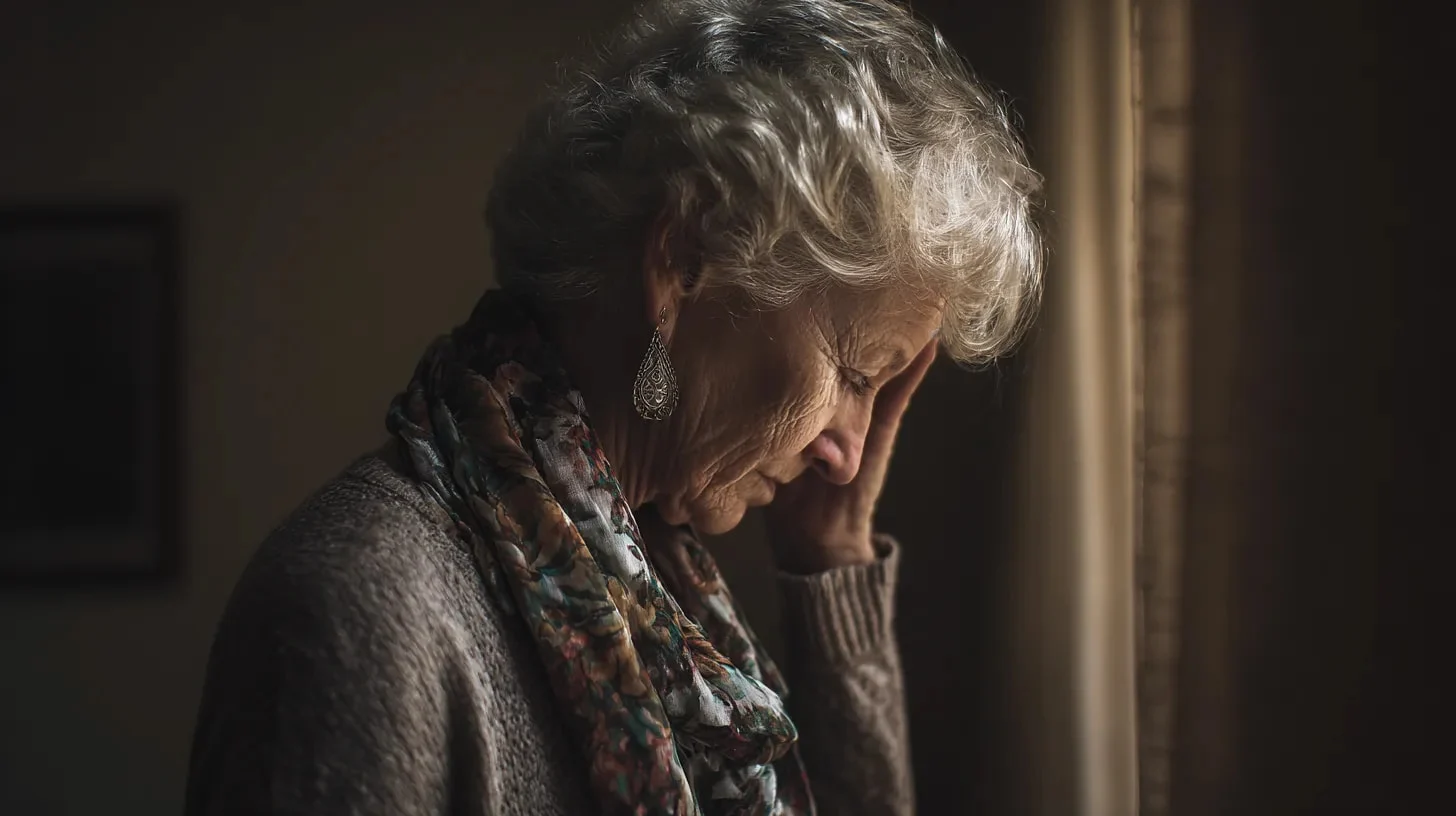
Grief and Loss

TherapyRoute
Clinical Editorial
Cape Town, South Africa


❝Grief touches everyone, yet no two experiences unfold the same way. Read on to explore what grief really is, how it appears across different losses and relationships, and why there is no “right” timeline, only a deeply human process of adapting, remembering, and healing.❞
IF YOU ARE IN CRISIS, PLEASE READ THIS FIRST. If you are in danger, please seek help immediately. Visit a nearby emergency service, hospital, or mental health clinic immediately. If you are in crisis, consider these helplines and suicide hotlines worldwide.
Show Crisis Numbers
- United States: 988 Suicide & Crisis Lifeline | Text 988
- United Kingdom: 111 (NHS Urgent Care) | Samaritans 116 123 | Text SHOUT to 85258
- Canada: 9-8-8 Suicide Crisis Helpline | Call or Text 988
- Australia: Lifeline 13 11 14 | Beyond Blue 1300 22 4636
- New Zealand: Call or Text 1737
- South Africa: SADAG 0800 567 567 | Lifeline 0861 322 322
- Ireland: Samaritans 116 123
- India: AASRA 022 2754 6669
- Singapore: Samaritans of Singapore 1767
- Germany: TelefonSeelsorge 0800 111 0 111
Grief is the natural human response to losing someone or something that mattered to you. Almost everyone goes through it. Few experiences feel as lonely. Grief is not a disorder or a problem to be fixed, and for most people it becomes less intense over time, helped by the support of those around them.1
This guide covers what grief is, how it tends to unfold, and why the familiar five-stage idea is largely a myth. It describes what grief can feel like, when it may be worth seeking help for, and how people recover. It is for anyone who is grieving. It is also for the people supporting them.
What grief is
Grief is a whole-person response to loss. It is emotional, physical and mental, and for many people spiritual as well. It is far more than sadness. Longing, anger, guilt, relief, numbness and fear can all arrive within the same hour.
Grief can disturb sleep, appetite and concentration. There is no single right way to grieve, and no fixed timetable. Your grief is shaped by who or what you lost, what that relationship meant, and how the loss happened.
Healing from trauma is possible with the right therapist. TherapyRoute lists trauma-informed professionals ready to support you.
Find a trauma therapistGrief is not a sign that something has gone wrong with you. Long-term studies, which followed people from before a loss to well after it, found that the most common outcome is resilience: a return, over time, to steady functioning, alongside real sadness.1
That is not a demand to be strong, or to grieve quickly. It describes what usually happens. It is not a standard to measure yourself against.
The many kinds of loss
Grief is most often associated with the death of someone we love, whether sudden or long expected. But grief follows many kinds of loss. Some deaths are particularly hard to speak about.
One is the loss of a pregnancy, generally defined as a pregnancy that ends on its own before the twentieth week.2 Another is the death of a baby in the first weeks of life, the period of highest risk in childhood.3 Losses like these are sometimes called disenfranchised grief: the people grieving are not always given room to mourn openly.
Grief also follows losses that are not deaths at all. The end of a marriage or relationship can bring it. So can a serious diagnosis, the loss of a home or a job, a pregnancy hoped for, or a friendship that ends. So can the loss of a future you had imagined.
Anticipatory grief is mourning that begins before the loss itself. It happens, for example, while caring for someone who has a life-limiting illness. Naming these experiences as grief explains feelings that might otherwise seem out of proportion.
How grief actually unfolds, and the myth of five stages
Most people have heard that grief comes in five stages: denial, anger, bargaining, depression and acceptance. The idea has a specific source. The psychiatrist Elisabeth Kubler-Ross described the five stages in her 1969 book On Death and Dying.
She based them on her observations of people who were themselves dying, and coming to terms with their own terminal illness.4 They were never developed as a description of bereavement, which means grief for the death of someone else.
Over the decades the five stages were widely borrowed and applied to grieving people. They were often treated as a checklist to be completed. That is the problem.
The stage model has frequently been read as prescriptive: a set order a bereaved person must move through to heal. There is no good scientific evidence that people grieve in fixed stages. Expecting them to can do harm, and can leave someone feeling they are grieving "wrongly" when their experience does not fit.5
If your grief does not look like those five stages, nothing is wrong with you or with your grief. The frameworks below describe grief as varied and individual, rather than as a fixed sequence.
Researchers and clinicians now use these frameworks in place of stages. They are ways of understanding grief, not tasks you are scored on:
- Worden’s tasks of mourning. Worden sets out four active tasks rather than passive stages. They are: accepting the reality of the loss, working through the pain, adjusting to a world without the person, and finding a lasting way to stay connected while moving forward with life.6
- The dual process model. Stroebe and Schut observed that grieving people move back and forth. Some of the time they face the loss and its pain directly. The rest of the time they take a break from it and deal with the practical demands of a changed life. This oscillation, rather than a fixed sequence, is what supports adaptation, which is also why it is normal to feel grief-stricken one moment and able to laugh the next.7
- Rebuilding meaning and continuing bonds. Much of grieving is gradual work: rebuilding a sense of meaning, and retelling the story of your life so that it includes the loss.8 Healing rarely means cutting the connection. More often people keep an enduring bond with the person, through memory, ritual and love.
What grief can feel like
Grief affects the whole person. Its signs are easy to mistake for other problems. The reactions below are common ones.
- Emotionally: sadness and longing, but also anger, guilt, anxiety, irritability, relief, numbness, or a sense of unreality. Guilt and relief often occur together, and both are normal.
- Physically: tiredness, a tight chest or throat, aches, changes in appetite, a poorer sense of health, and disrupted sleep. Grief is physically demanding.
- In the mind: difficulty concentrating or remembering, preoccupation with the person or the loss, confusion, and sometimes a vivid sense of the person’s presence.
- In behaviour and daily life: withdrawing from others, restlessness, avoiding or seeking out reminders, and struggling with ordinary tasks. Grief often returns suddenly, set off by anniversaries, places, songs or scents.
When grief becomes prolonged
For most people, even very intense grief changes slowly over months and years. It does not disappear. It becomes less overwhelming, so that life can be lived alongside it.
For a minority, grief stays severe and disabling for a long time without easing. In 2022 this was recognised as a formal diagnosis: prolonged grief disorder. It was added to the DSM-5-TR, a standard diagnostic manual, in the chapter on trauma- and stressor-related disorders.9
Prolonged grief disorder is not simply grief that is still painful. Ordinary mourning should not be treated as an illness.
The diagnosis is only considered when the death was at least twelve months ago for an adult, or at least six months ago for a child or adolescent. It also requires an intense yearning for the person, or preoccupation with them, together with several other grief symptoms. These must persist most days and seriously interfere with the ability to function.10 Those are the DSM-5-TR thresholds.
The ICD-11 is another classification. It is in use across most of the countries this directory serves. It sets a lower threshold: a grief response lasting less than six months should not be regarded as meeting its duration requirement.10 Either way the threshold is set deliberately, so that normal grief is not labelled a disorder.
Prolonged grief disorder affects roughly one in ten bereaved adults. For the large majority, grief eases over time without becoming a disorder.11
There is one reason to be especially attentive. Prolonged and complicated grief is linked with a higher risk of suicidal thinking, over and above depression.12
If grief has left you feeling that life is not worth living, or unsafe, reach out now. That is not weakness. It is not permanent.
Speak to a doctor, a mental health professional, or one of the crisis lines listed at the top of this page. Grief-focused therapy helps people who are stuck in severe grief, and it is the mainstay of treatment.13
Grief in different relationships
Every loss is specific, and the relationship shapes the grief. Losing a spouse or partner can mean grieving several things at once: a companion, a co-parent, a shared income, and an imagined future. Daily life changes with it.
The death of a child is often described as one of the most profound losses. It can strain even strong partnerships, because two parents grieve differently. Losing a parent can change your sense of who you are, and of your place in the family. That holds whether you are a child or an adult yourself.
A sibling’s death means losing a shared history, and someone who knew your life from the start. Their grief is often the one others overlook. The death of a close friend can be deeply painful, and it often goes unrecognised. Comparison is not the point: your loss is real, whatever form it takes.
Cultural, spiritual and religious dimensions
How people grieve and mourn is shaped by culture, faith and community. Traditions differ in what happens at the time of death, how long mourning lasts, and how the dead are remembered and honoured. Examples include shiva, the mourning period observed in Jewish tradition, and the requiem mass said for the dead in Christian tradition. Rituals of prayer, dress and gathering vary in the same way.
For many people, spiritual or religious belief offers comfort, meaning and community. For others, a loss raises painful questions and unsettles their faith. That too is a normal part of grief.
There is no single correct way to mourn. What matters is honouring your loss in a way that fits who you are.
Supporting someone who is grieving
You do not need the perfect words to help. Presence matters more than eloquence. What helps most is showing up, listening without trying to fix things, and letting the grieving person set the pace.
- Helpful: "I am so sorry." "I am here." "Tell me about them." Saying the person’s name. Offering something concrete, such as a meal, a lift or an hour of childcare, rather than "let me know if you need anything".
- Better avoided: "They are in a better place," "at least they lived a long life," "I know how you feel," or anything that begins with "you should". Well-meant advice to move on usually does harm.
- Over time: keep showing up after the funeral, when other people stop coming, and the loss is often at its hardest. Remember anniversaries.
Children grieve too. They do it in ways that fit their age. They are helped by honest, simple language, and by being included rather than shielded. Grieving colleagues are usually supported best by practical flexibility and some patience, without pressure to explain themselves.
Looking after yourself while grieving
Grief is physically and mentally demanding. Basic care matters. As far as you can, protect sleep, eat something regularly, move your body gently, and go easy on alcohol. Let yourself feel what you feel, in your own time.
Rely on the people and communities who help you feel steadier. Give yourself permission to say no to what you cannot manage. Small rituals can help: lighting a candle, writing, walking a familiar route, or keeping a photograph close.
Be patient with yourself. Adaptation is gradual, and setbacks on hard days are part of it, not a failure.
When and how to seek professional help
Grief itself is not an illness. Most people move through it without formal treatment.
Reaching out to a professional is worth it if grief stays severe and unchanging over a long period. The same applies if you cannot function in daily life. It applies too if you are turning to alcohol or drugs to cope. Reach out straight away if you have thoughts of not wanting to be alive.12
Help can take several forms. Grief-focused talking therapy can be one to one, or within a family. It can also be a support group with others who have lost someone.
Talking therapy gives a person a setting in which grief can be spoken about and worked through. There is good evidence that it helps people who have become stuck in severe grief.13
Medication does not treat grief. A doctor may consider it for an accompanying depression or severe anxiety. Where antidepressants are used, they usually take several weeks to reach their full effect.14
A qualified professional can help you tell the difference between painful but ordinary grief and grief that has become a disorder. Neither one is something you have to face alone.
Hope and healing
Healing from grief does not mean forgetting, "getting over it", or returning to exactly who you were. It means gradually taking the loss into your life, so that it no longer overwhelms every day. The love and the memory remain. Many people describe a continuing bond with the person who died, one that changes over time but does not end.8
Some people find that loss, over time and often through great pain, changes what matters to them. It can deepen relationships or give a sense of purpose. This kind of growth is real. It is not a goal to aim for or a test to pass, and its absence is not a failure.
What the evidence supports is gentler and more reliable. Most people, given time and support, do return to a steady life that includes the loss.1 If you are grieving now, you do not have to do it alone. Nor do you have to do it on anyone else’s timetable.
This article is for general information and is not a substitute for professional assessment or care. If grief is affecting your life, please consider reaching out to a qualified mental health professional in your country.
References
- [1] Grief is a normal human response to loss, not in itself a mental disorder; prospective research finds that resilience, a stable trajectory of healthy functioning, is the most common outcome after bereavement, seen in just under half of conjugally bereaved adults in one landmark study that followed them from before the loss to eighteen months after it. Bonanno GA, et al. (2002). Resilience to loss and chronic grief: a prospective study from preloss to 18-months postloss. Journal of Personality and Social Psychology, 83(5), 1150-1164.
- [2] Pregnancy loss is generally defined as a pregnancy that ends on its own before the 20th week. Eunice Kennedy Shriver National Institute of Child Health and Human Development. Pregnancy loss.
- [3] The neonatal period, the first 28 days of life, carries the highest risk of death in childhood: nearly half of all deaths in children under five occur in this period. World Health Organization. Newborn mortality (fact sheet).
- [4] The idea of five stages of grief comes from Elisabeth Kubler-Ross's 1969 book On Death and Dying, which documented her observations of how dying patients adjusted to their own terminal illness, not how bereaved people adjust to the death of someone else. Kubler-Ross E. (1969). On Death and Dying. New York: Macmillan.
- [5] The stage model has frequently been interpreted prescriptively, as a progression bereaved persons must follow in order to adapt to loss, yet there is no scientific foundation for it and decades of research have shown that most people do not grieve in stages; the expectation that a bereaved person should pass through set stages can itself be harmful to those who do not. Stroebe M, Schut H, Boerner K. (2017). Cautioning health-care professionals: bereaved persons are misguided through the stages of grief. Omega (Journal of Death and Dying), 74(4), 455-473.
- [6] Worden frames mourning not as passive stages but as four active tasks: to accept the reality of the loss, to process the pain of grief, to adjust to a world without the person, and to find an enduring connection with them while moving forward in life. Worden JW. (2018). Grief Counseling and Grief Therapy: A Handbook for the Mental Health Practitioner (5th ed.). New York: Springer Publishing.
- [7] The dual process model describes grieving as an oscillation: bereaved people move back and forth between confronting the loss and its emotions, and taking breaks from it to attend to the practical demands of a changed life, and this oscillation, rather than a fixed sequence, is what supports adaptation. Stroebe M, Schut H. (2010). The dual process model of coping with bereavement: a decade on. Omega (Journal of Death and Dying), 61(4), 273-289.
- [8] Grieving often involves reconstructing a sense of meaning, retelling the story of the loss and one's own life in a way that can hold it, rather than simply letting go of the person who died. Neimeyer RA. (2019). Meaning reconstruction in bereavement: development of a research program. Death Studies, 43(2), 79-91.
- [9] Prolonged grief disorder was added to the DSM-5-TR in 2022, in the chapter on trauma- and stressor-related disorders. It describes a persistent, intense grief, with a lasting yearning for or preoccupation with the person who died, that does not ease as expected and that interferes with the ability to function. American Psychiatric Association. (2022). Diagnostic and Statistical Manual of Mental Disorders (5th ed., text revision): prolonged grief disorder.
- [10] Under the DSM-5-TR a diagnosis of prolonged grief disorder is only considered when the death was at least twelve months ago for an adult, or at least six months ago for a child or adolescent, together with at least three of a defined set of grief symptoms present most days and causing clinically significant distress or impairment. The ICD-11 criteria set out in the same source do not fix a single onset threshold, but require that the grief response has persisted for an atypically long period, with responses lasting less than six months not regarded as meeting that requirement. Both are deliberately set to avoid labelling ordinary, still-painful grief as a disorder. Eisma MC. (2023). Prolonged grief disorder in ICD-11 and DSM-5-TR: challenges and controversies. Australian and New Zealand Journal of Psychiatry, 57(7), 944-951.
- [11] A systematic review and meta-analysis of studies in adults estimated that prolonged grief disorder affects about one in ten bereaved people (a pooled prevalence of 9.8 percent), meaning that for the large majority, intense grief eases over time without becoming a disorder. Lundorff M, Holmgren H, Zachariae R, Farver-Vestergaard I, O'Connor M. (2017). Prevalence of prolonged grief disorder in adult bereavement: a systematic review and meta-analysis. Journal of Affective Disorders, 212, 138-149.
- [12] Complicated or prolonged grief is associated with a higher risk of suicidal thinking, independent of depression, which is one reason it is important to reach out for professional help when grief feels unbearable or unsafe. Latham AE, Prigerson HG. (2004). Suicidality and bereavement: complicated grief as psychiatric disorder presenting greatest risk for suicidality. Suicide and Life-Threatening Behavior, 34(4), 350-362.
- [13] Grief-focused psychotherapy that helps a person come to terms with the loss and reengage with life has been shown to help people with complicated grief, and is the mainstay of treatment; medication has at most a supporting role. Shear MK. (2015). Complicated grief. New England Journal of Medicine, 372(2), 153-160.
- [14] When medication is used to help with an accompanying depression or severe anxiety, antidepressants typically take several weeks to reach their full effect. National Institute of Mental Health. Mental health medications.
Important: TherapyRoute does not provide medical advice. All content is for informational purposes and cannot replace consulting a healthcare professional. If you face an emergency, please contact a local emergency service. For immediate emotional support, consider contacting a local helpline.
Find Therapists
Must Read
Creating Space for Growth: How Boundaries Strengthen Relationships
Setting healthy boundaries fosters respect, protects emotional well-being, and strengthens relationships by defining personal limits and maintaining self-care.
International Mutual Recognition Agreements for Mental Health Professionals
Mutual recognition agreements for mental health professions are rare and uneven, with major gaps in counselling, social work, and allied therapies. Read on to understand ...
Suicide statistics worldwide
Where to find help, what the evidence says about preventing suicide, and what the World Health Organization's latest estimates show worldwide, by region and by country, p...
Bullying and cyberbullying statistics worldwide
How many young people are bullied at school and online worldwide and in countries on every continent, how bullying is linked to depression and anxiety, and how common bul...
Self-harm statistics worldwide
How many young people and adults self-harm worldwide and in different countries, how reported self-harm has changed over time, and what trials show about therapy that hel...
About The Author

TherapyRoute
Cape Town, South Africa
“Our in-house team, including world-class mental health professionals, publishes high-quality articles to raise awareness, guide your therapeutic journey, and help you find the right therapy and therapists. All articles are reviewed and written by or under the supervision of licensed mental health professionals.”
TherapyRoute is a mental health resource platform connecting individuals with qualified therapists. Our team curates valuable mental health information and provides resources to help you find the right professional support for your needs.