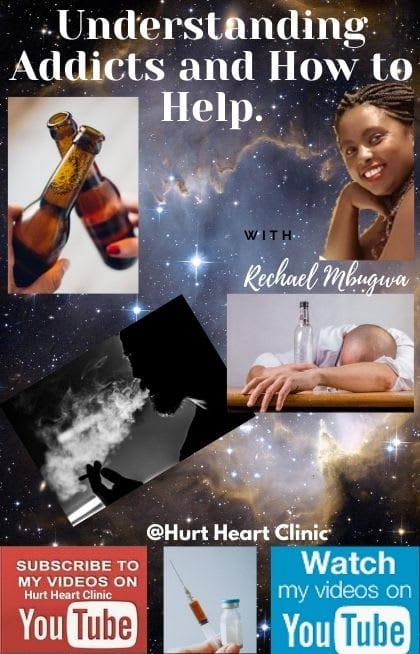
Understanding Addicts and How to Help Them

❝Understanding addicts and how to help them❞
Any addicted person was once sober until something happened. This occurrence could be a one-time traumatic experience or gradual consistent occurrences. E.g. TRAUMATIC:- loss (loved one, job, title, health, career, grades, lifestyle, marriage, family, child, pregnancies) GRADUAL OCCURRENCES:- experiencing (rejection, Isolation, low self-esteem, lifestyle, lack of a child, )
Sometimes you just need someone qualified to talk to. Find a counsellor near you — independent, professional, and ready to listen.
Find a CounsellorWhen these occurrences happen, psychologically their stability is shaken and unpleasant bad memories emerge as feelings are generated. In search of a better feeling, the substances available that soothe them best become their friend. They have no worries about their future, Their intake frequencies depend on how long the dosage lasts and the ability to access another. Their biggest achievement is getting the next dose. It is the gradual use of substances that causes them to become addicts.
Today we look at an example of a fireman, who once had a traumatic encounter that saw 10 fire men perish in a fire, yet he was the commander in chief of the squad. He got a back injury which caused him to step out of work as a fireman. This occurrence caused him to seek relief from painkillers and alcohol, and as a result he lost his family and was living in a wrecked car. 4 years into addiction he encounters a stranded lady with a flat tire and tried to help, in the process another car hit them from the back and that’s how he gets to ask for help from nearby firemen.
Substance Soothing may mean a temporary excitement or temporal ability to forget the occurrence. This practice prevents the brain from being able to face the reality of the occurrence and hence making the person become fixated on the occurrence. Normally our brains have the ability to solve problems or even develop a coping mechanism, but when substances are used to suppress thoughts and feelings the incidences or occurrences remain unresolved.
Each time the addict sobers up the incidence replays in their mind as a fresh occurrence which tortures them and drives them to look for substances to calm them down. Without knowing, this trend forms a behaviour that graduates to form a character. A character that defines them. That's why we call them addicts, despite them having a helping/kind heart. They justify their current situation by lying as they totally avoid anything that triggers the bad memories and they would rather lie, hide or run than face it. They also resent friends that show interest in them or even shut them out of their life. Some have even isolated themselves or the family has isolated them due to lack, shame or embarrassment.
Most addicts will tolerate their unpleasant state until they get into trouble and they want to be bailed out. Most of us rush to put conditions on bailing them out (e.g until you agree to go for rehab, come back home e.t.c.). We call this helping, while arm twisting the addict as they are at our mercy.
In our effort to help them recover, we hardly ask ourselves what the underlying issue is, but we rush to have them taken to rehabs for 3 months or so. Let me ask, have you ever helped an addict? Was it out of love or embarrassment? From my experience, most people assist to try to cover up shame or embarrassment caused by the addict.
Meaning they are not so concerned about the underlying issues that has caused him/her to become an addict but they are concerned with the shame that comes to the family out of his/her actions. This causes the addict to resent treatment. At the time the helper feels angry when the addict doesn’t seem interested with recovery. This is due to the extent he/she has searched for help, just to see the addict doesn't want help. At the time finance, resources or even sacrifices to be with the addict are wasted.
In my years of practice, I have witnessed people who intended to get help and they got it. I have also seen people who forced their friend/family member who is an addict to go for counselling or rehab and they have recovered, some for some time and later resumed their addiction, others recovered for life after making the recovery move personally.
Unfortunately, the addict will pick up on statements said e.g. "when you drink you embarrass the family", "you cant do this in such meetings".
It is very hard for an angry person to get help or even listen to advice.
Most people in rehab receive therapy after the detox stage. At this point, their body has excreted all substances, and some are experiencing withdrawal syndrome. With all the bad emotions generated in them, they are sent to see a therapist. What do you expect them to talk about? Most of them focus on the rejection they experienced during their addiction period or how they feel unwanted by everyone.
Most likely counsellors will focus on the rejection or suicidal thoughts raised, concentrating on these issues thinking they are addressing the underlying issues but mostly these are feelings acquired during the addiction period not the real cause of the person being an addict. Meaning the counsellor with only address outcomes of addiction not the root cause of addiction.
If the counsellor at this point insists to know what happened that pushed them to the addiction, the addict will shift blame focusing on the people that brought him/her to the rehab and expressing how they don’t love him/her and has suicidal thoughts to solve this problem.
My ideal approach:-
1.Family/friends introduce the addict to a counsellor as a friend, then leave the two to connect and share. The first day might be strange but next sessions might flow well.
2. Upon agreement therapy is initiated. Transformation starts from the mind (thinking patterns) to character change and later behaviour. I recommend day patient therapy because this helps the addict's transformation happen in the midst of the triggers thus making them purposefully desire to change and personally work towards change. If the addict says they are not ready, please respect that as a family and allow him/her to get contacts for the day he/she feels ready.
3. When therapy is initiated the addict can be helped to go back to the traumatic incidence or occurrences that caused them to depend on substances without necessarily having to blame anyone. The families have not forced them to undergo therapy and also their bodies are not experiencing withdrawal syndrome, which causes them not to be angry and resentful but rather just addicts.
4. Give them time:- Behavior change takes time, don’t rush or condemn when they trip and fall. A child learns how to walk through many falls. Be patient and supportive ( support doesn’t mean bailing them out in case of an incidence, or giving them cash because they are in therapy). No it means encouraging them to do good even when it's hard.
5. When addicts are helped to face their fears they become best equipped to handle issues on their own and even make future plans better.
NB: Therapy is a process that requires patience and consistency for positive changes to occur. Don’t hesitate to reach out for help .
Important: TherapyRoute does not provide medical advice. All content is for informational purposes and cannot replace consulting a healthcare professional. If you face an emergency, please contact a local emergency service. For immediate emotional support, consider contacting a local helpline.
Find Therapists
Must Read
Creating Space for Growth: How Boundaries Strengthen Relationships
Setting healthy boundaries fosters respect, protects emotional well-being, and strengthens relationships by defining personal limits and maintaining self-care.
International Mutual Recognition Agreements for Mental Health Professionals
Mutual recognition agreements for mental health professions are rare and uneven, with major gaps in counselling, social work, and allied therapies. Read on to understand ...
Mental Health Licensing & Regulation in New York State: 2025 Guide
Mental Health Licensing & Regulation in Singapore: 2025 Guide
Jumping to Conclusions
Jumping to conclusions is a thinking habit where we assume the worst or make judgments without enough evidence. By recognising this pattern, therapy can help you slow dow...
About The Author

“I am a credited, Passionate and God-fearing Counseling Psychologist professional working with all ages addressing any presented issues.”
Rechael Mbugwa is a qualified Psychologist, based in Westlands, Nairobi, Kenya. With a commitment to mental health, Rechael provides Advocacy, Child / Adolescent Therapy, Conflict Management, Consultation, Counseling, Family Therapy, Trauma Counseling, Relationship Counseling, Psychoeducation and Psychology.