The Silent Struggle: Why We "Hold Back" in the First Session

❝Almost everyone withholds something in a first session. Why that happens, what it protects, and why it is a normal part of beginning therapy.❞
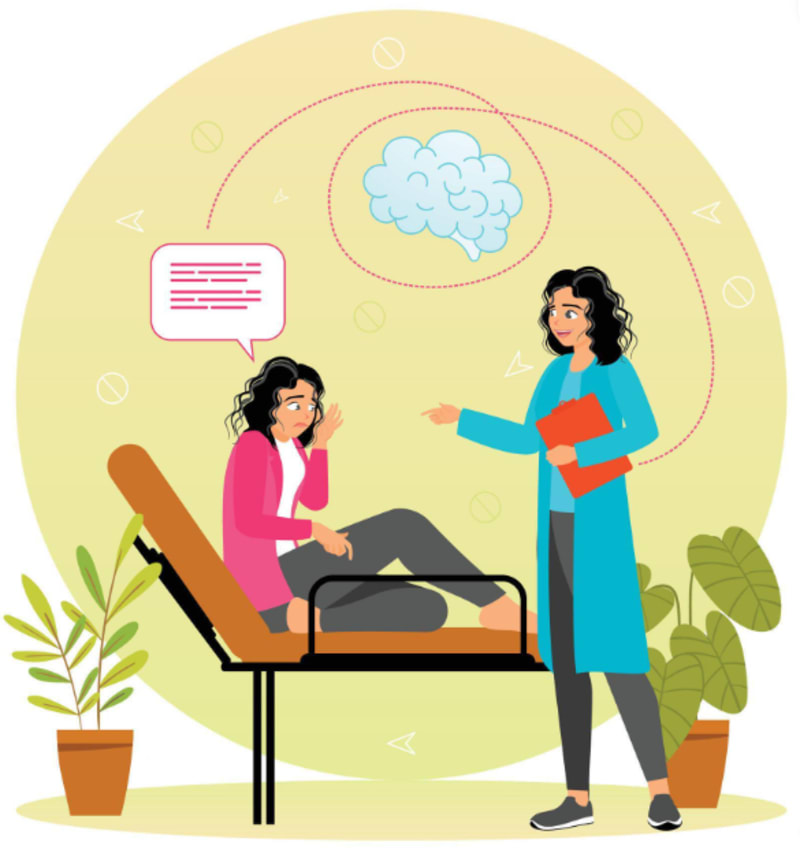
You’ve finally taken the step. You’ve booked the appointment, you’re sitting in the chair (or in front of the screen), and your therapist asks, "What brings you here today?" Suddenly, the words that felt so clear in your head an hour ago seem to vanish. Your throat tightens, or perhaps you find yourself talking about your busy week instead of the deep ache that actually brought you to seek help. If this sounds familiar, you aren't "bad at therapy". You are experiencing a very common, very human protective response.
The Weight of Holding Back
Research into the initial phase of therapy shows that most people enter the room with a quiet, internal tug-of-war. We want to open up, yet we feel a powerful, often automatic urge to hold back. This isn't just shyness; it is often rooted in deep-seated "pain points" that many of us share. According to Kleiven et al. (2020), these struggles often manifest as:
Fearing the Flood: A deep worry about the intensity and consequences of negative emotions—fearing they might overwhelm both you and the therapist.
Managing anxiety is easier with the right support. TherapyRoute connects you with qualified therapists who specialise in anxiety and stress.
Find an Anxiety TherapistThe "Bodily Stuck" Feeling: An experience of physical arrest where your body literally pulls away from the conversation, leaving you feeling numb or paralysed.
The Right to Speak: A lingering insecurity about your own worthiness and whether you have the "right" to share your inner experiences.
Loyalty to the Past: A struggle with feeling disloyal to loved ones by discussing family dynamics or past hurts.
Understanding Experiential Avoidance
In the clinical world, we briefly call this 'experiential avoidance'. This is a natural reflex where our mind tries to shield us from discomfort. When we hit a memory or a feeling that is too painful, we instinctively find a way to look away to avoid the psychological distress.
Think of it like a "safety shield". While it may have helped you survive difficult times in the past, in the therapy room, it can sometimes feel like a wall.
A Reflective Invitation
As a Clinical Psychologist and Psychotherapist, I view your "holding back" with deep respect. It is a sign of how hard you have worked to protect yourself. Our first sessions aren't about smashing through that shield; they are about sitting together in a safe, Urdu- or English-speaking space and slowly learning that it is okay to put the shield down.
Healing is not a race or a burden. It is a gentle process of noticing these hesitations with compassion. When we acknowledge the urge to hold back, we finally create the room to move forward.
Further reading
- [1] Kleiven, G. S., Hjeltnes, A., Råbu, M., & Moltu, C. (2020). Opening up: Clients' inner struggles in the initial phase of therapy. Frontiers in Psychology, 11, 591146. https://doi.org/10.3389/fpsyg.2020.591146
Important: TherapyRoute does not provide medical advice. All content is for informational purposes and cannot replace consulting a healthcare professional. If you face an emergency, please contact a local emergency service. For immediate emotional support, consider contacting a local helpline.
Find Therapists
Must Read
Creating Space for Growth: How Boundaries Strengthen Relationships
Setting healthy boundaries fosters respect, protects emotional well-being, and strengthens relationships by defining personal limits and maintaining self-care.
International Mutual Recognition Agreements for Mental Health Professionals
Mutual recognition agreements for mental health professions are rare and uneven, with major gaps in counselling, social work, and allied therapies. Read on to understand ...
Mental Health Licensing & Regulation in New York State: 2026 Guide
Mental Health Licensing & Regulation in Singapore: 2026 Guide
Jumping to Conclusions
Jumping to conclusions is a thinking habit where we assume the worst or make judgments without enough evidence. By recognising this pattern, therapy can help you slow dow...
About The Author

“As an internationally trained Clinical Psychologist and Psychotherapist in Lahore, I provide a safe, confidential space to help you navigate anxiety, depression, and trauma. Whether you are looking for online therapy or in-person sessions, I offer a compassionate, integrative approach to help you heal and thrive. Book your first session today."”
Aliya Attique is a qualified Clinical Psychologist, based in Bahria Town, Lahore, Pakistan. With a commitment to mental health, Aliya provides Individual Therapy, Stress Management, Imago Relationship Therapy, Integrative Psychotherapy, Trauma Counselling and Somatic Psychotherapy.