Surviving Childhood Abuse, Incest, and Trauma


❝Feeling stuck in old patterns or emotional pain? Learn how to overcome childhood trauma and start your journey toward real healing and lasting peace.❞
You’ve done well in life, on the surface. A decent job, a stable routine, maybe even a family. But certain things still trigger you.
A raised voice. Sudden rejection. Or maybe the constant feeling of never being “good enough.”
These emotional responses aren’t random, they often trace back to unresolved childhood trauma. For many Indians, especially those raised in homes where verbal abuse, emotional neglect, or domestic violence were dismissed as “normal,” the wounds run deep and unspoken.
As per a study published in the Journal of Indian Association of Pediatric Surgeons, every 15 minutes, a child in India silently carries the burden of a painful memory, be it harsh words, unwanted touch, or a home that never felt safe. If echoes of those experiences still affect your daily life, you're not alone, and we are here to help.
This blog will guide you on how to heal from childhood trauma and heal your inner child, so you can break free from old pain, build emotional resilience, and form healthier, more fulfilling relationships.
In this Article
What Is Childhood Trauma?
In many Indian households, what’s called “discipline” often leaves behind deep emotional scars. A slap for speaking up. Silence after crying. Being told, “Don’t be so sensitive.”
Childhood trauma refers to these painful events, emotional abuse, physical punishment, sexual abuse, or constant fear, that happen at a young age, often by a family member or caregiver.
Healing from trauma is possible with the right therapist. TherapyRoute lists trauma-informed professionals ready to support you.
Find a Trauma TherapistAlso known as Adverse Childhood Experiences (ACEs), these traumatic events can impact:
- Brain development and memory.
- The body’s stress response, causing anxiety or panic attacks.
- Attachment styles,leading to trust issues and unstable relationships.
- Day-to-day life, including how we react, connect, and cope.
From Silence to Scars: Types of Childhood Trauma
Childhood trauma can take many forms, and it’s not always about bruises or broken bones. Often, it’s the invisible wounds that leave the deepest scars.
Here are some common types of childhood trauma, especially relevant in Indian homes:
- Emotional abuse: Constant criticism, shaming, or being told you’re a burden.
- Verbal abuse: Yelling, name-calling, or threats that make you feel unsafe.
- Physical abuse: Beatings passed off as “discipline” or justified by culture.
- Sexual abuse: Any unwanted sexual act, often hidden or dismissed within families.
- Emotional neglect: Lack of affection, support, or validation from caregivers.
- Witnessing domestic violence: Seeing a parent being abused can traumatise a child deeply.
- Parental substance abuse: Growing up in a home with addiction brings constant fear and instability.
- Loss or abandonment: A parent dying, leaving, or emotionally withdrawing without explanation.
Recognising these experiences is not about blaming, it’s about finally naming what hurt you. That’s where healing begins.
Why Does Childhood Trauma Still Show Up?
You’re doing everything “right”, working hard, supporting your family, trying to stay strong. But sometimes, a small conflict feels overwhelming. You overthink. You shut down. And you react more than you want to.
So why does pain from years ago still show up today?
Because trauma doesn’t just live in memory, it settles in the body, your emotional responses, and even your sense of self. Especially when it’s never been acknowledged or healed.
Here’s why childhood trauma continues to affect your adult life:
- Wired for Survival Too Early: Your brain was still developing when the traumatic experience happened, and those patterns got wired in.
- Coping, Not Healing: You may have learned coping mechanisms like people-pleasing, silence, or anger to survive.
- Buried, Not Gone: Without emotional support, the painful memories remain unprocessed, just pushed down.
- Trauma Lives in the Body: The body stores trauma, and you might feel anxiety, fatigue, or panic without knowing why.
- No Words for the Wound: You were never taught to name or validate your emotional trauma, so it keeps resurfacing in relationships, parenting, or work.
How to Overcome Childhood Trauma in 6 Steps?
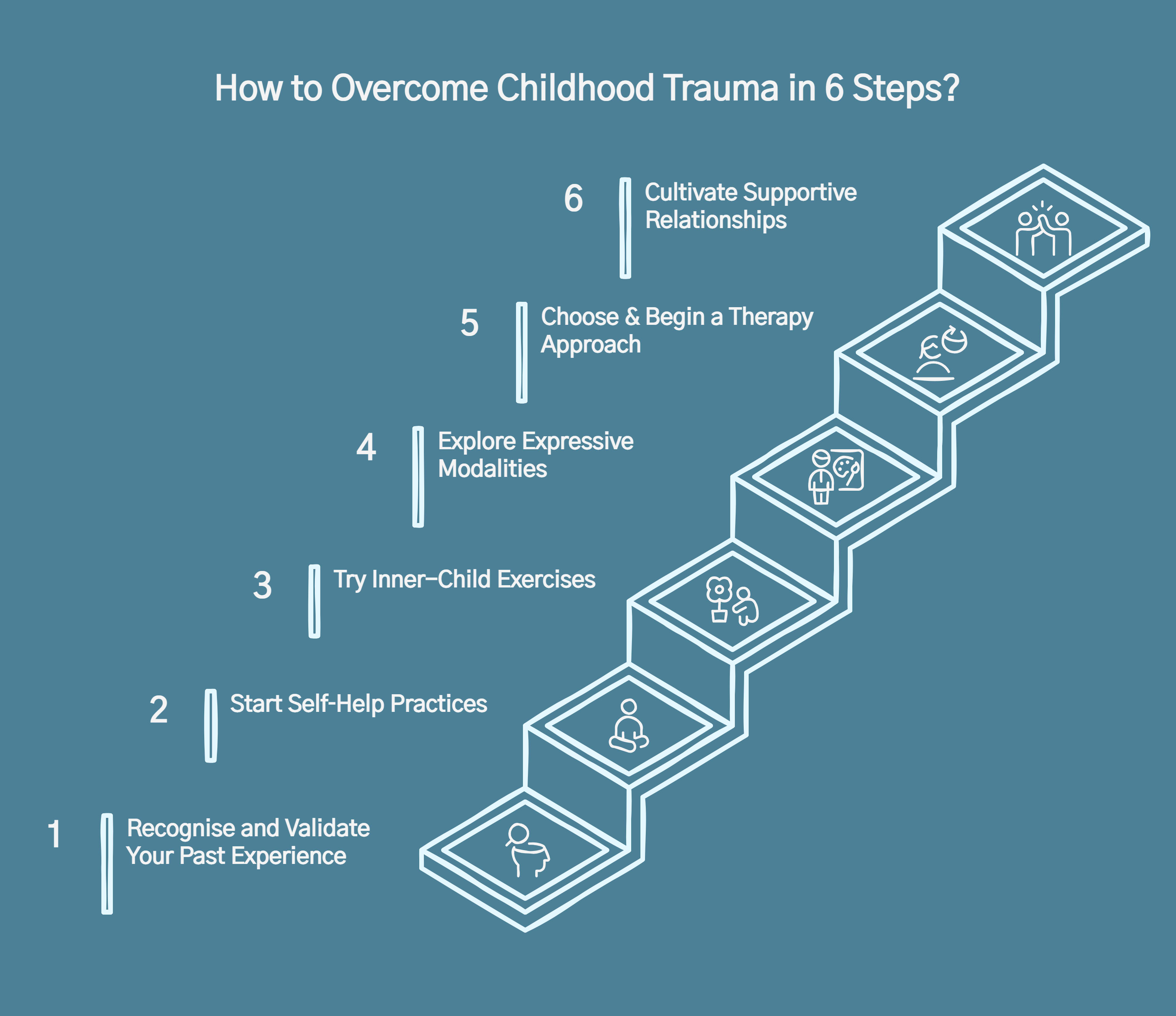
You may wonder, “Why am I still carrying this pain?” Or think, “Maybe I should’ve moved on by now.” But when the trauma started in childhood, healing takes more than time, it takes conscious effort and the right support.
If you’ve been asking how to get rid of childhood trauma or how to get over childhood trauma, here’s a gentle roadmap that many Indian trauma survivors have found helpful:
Step 1: Recognise and Validate Your Past Experiences
Stop telling yourself, “It wasn’t that bad.” Whether it was verbal abuse, neglect, or domestic violence, your experience matters. Naming what happened is the first step toward healing.
Step 2: Start Self‑Help Practices
Begin with small, consistent tools like:
- Mindfulness to stay grounded in the present.
- Journaling to make sense of painful memories.
- Deep breathing exercises to regulate emotional responses.
These practices build emotional awareness and give you back a sense of control.
Step 3: Try Inner‑Child Exercises
This means gently reconnecting with the younger version of yourself who was hurt, unheard, or scared. Write letters to your inner child, look at old photos, or speak kindly to yourself. It may feel strange at first, but it helps repair the emotional bond with your past self.
Step 4: Explore Expressive Modalities
Sometimes, words aren’t enough. You can try:
- Movement-based or art therapy.
- Somatic experiencing to release trauma stored in the body.
- Dance, music, or drawing as ways to process stuck emotions.
These are especially powerful when you grew up being told not to talk about feelings.
Step 5: Choose and Begin a Therapy Approach
When you’re ready, reaching out for professional help can be a powerful turning point. A trained mental health professional can help you safely explore the effects of childhood trauma, understand your emotional patterns, and guide you through a personalised healing process.
Start your healing journey today, use TherapyRoute to find trusted therapists near you, based on your needs, language, and location.
Step 6: Cultivate Supportive Relationships
Surround yourself with people who listen without judgment. Whether it’s a support group, close friend, or compassionate mental health professional, healing becomes easier when you feel seen and supported.
8 Signs of Childhood Trauma in Adults
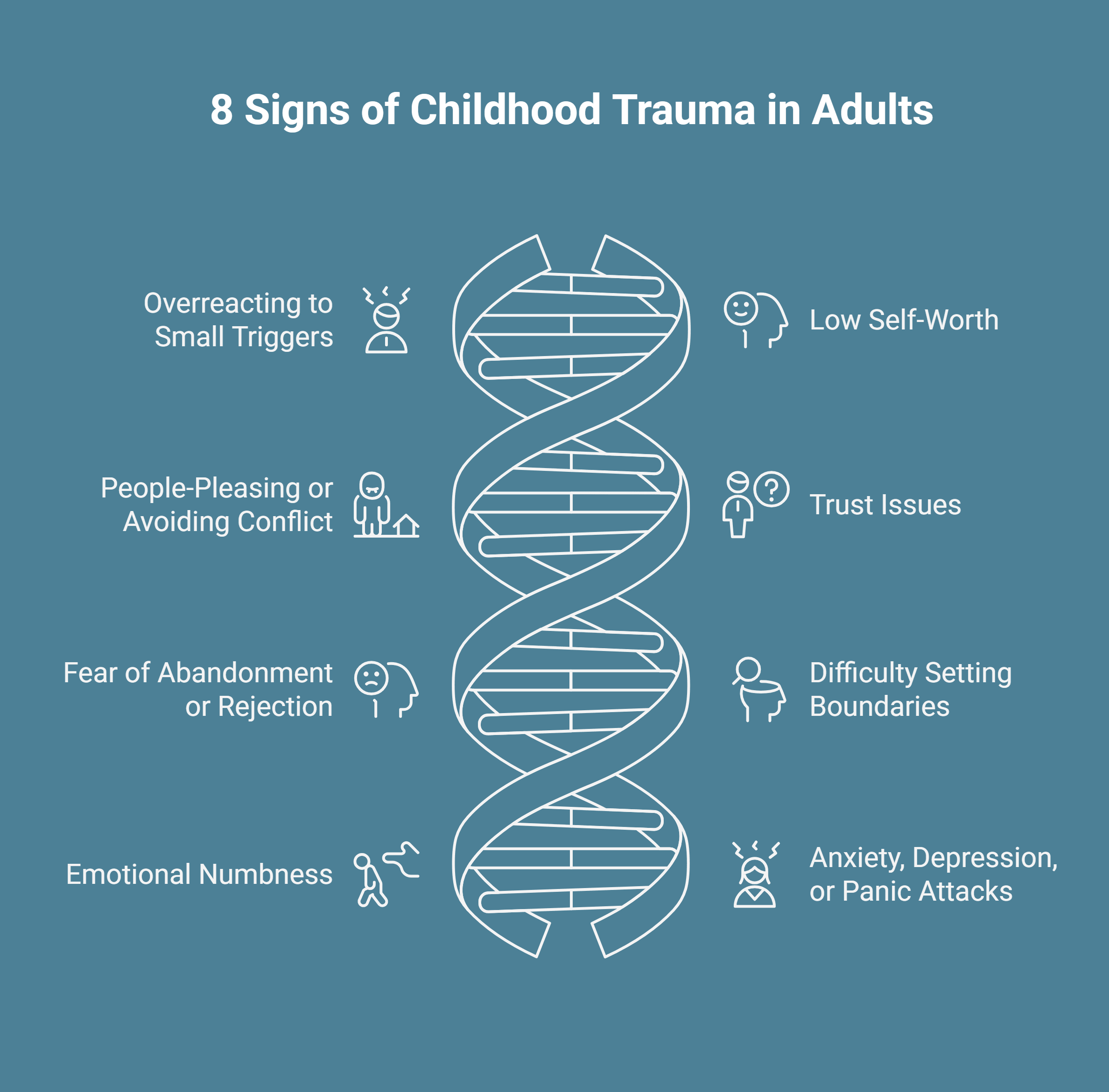
You may not talk about it, but you feel it. The constant self-doubt. The fear of being abandoned. The way you shut down during conflict, or explode when it’s too much.
These aren’t personality flaws. They could be symptoms of childhood trauma still echoing in your adult life.
1. Overreacting to Small Triggers
You may find yourself getting unusually upset or anxious over things others dismiss, like someone raising their voice or giving you harsh feedback. That’s not you being “too sensitive.” It’s your nervous system, shaped by unpredictable childhood experiences, still trying to protect you.
2. People-Pleasing or Avoiding Conflict
You often say “yes” when you want to say “no.” You avoid arguments at any cost. This habit likely started in childhood, where staying silent or agreeable felt like the only way to stay safe around emotional abuse or tension in the home.
3. Fear of Abandonment or Rejection
Even in stable relationships, you might worry: “Will they leave me?” This fear usually comes from early experiences of emotional neglect, verbal abuse, or being made to feel invisible or unwanted, often by a parent or caregiver.
4. Trust Issues
You struggle to open up, even with people who genuinely care. If betrayal or inconsistency was part of your early environment, your mind may now treat vulnerability as a risk, even when it’s safe.
5. Emotional Numbness
Sometimes, you just feel… nothing. You go through life on autopilot. This numbness is a coping mechanism your mind built to survive painful memories or unprocessed trauma, especially when expressing emotions wasn’t allowed growing up.
6. Low Self-Worth
You constantly feel “not good enough,” no matter how much you achieve. Maybe you were criticised a lot or rarely praised. This voice of self-doubt often comes from internalising verbal abuse or feeling emotionally invisible in your formative years.
7. Difficulty Setting Boundaries
You find it hard to say no, even when it hurts you. As a child, your needs may have been ignored or punished. So now, putting yourself first feels wrong or scary.
8. Anxiety, Depression, or Panic Attacks
Mood swings, panic, or constant worry may feel normal to you, but they’re often the body’s way of signalling unresolved childhood trauma. These are symptoms, not weaknesses, and they deserve care.
If you relate to these symptoms of childhood trauma, know that healing is not only possible, it’s your right. You don’t have to carry these burdens alone anymore. Connect with a therapist via TherapyRoute today.
How to Heal Childhood Trauma with Proven Therapies?
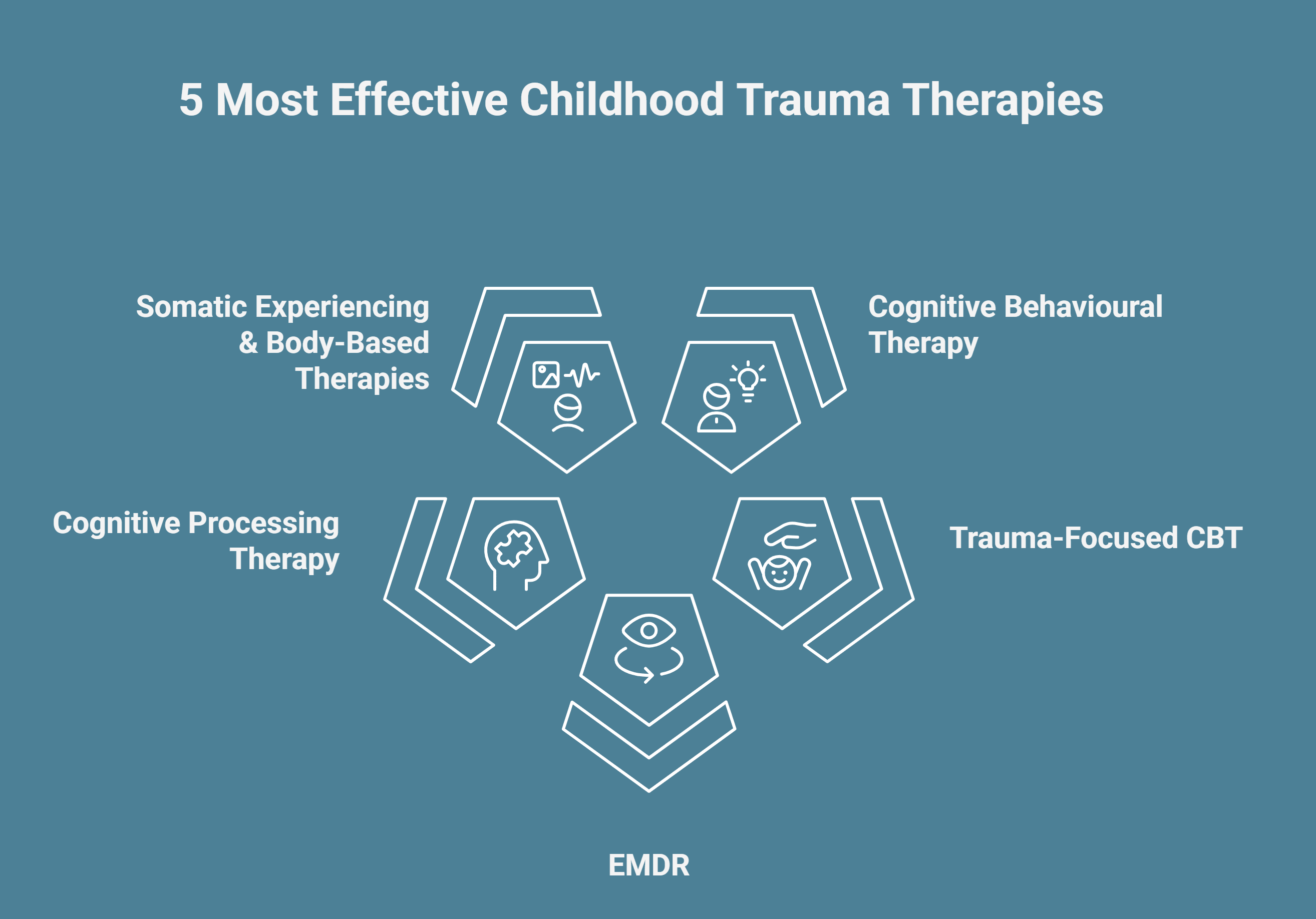
You’ve probably tried to move on. Focused on your career, supported your family, maybe even started spiritual practices. But deep inside, the old wounds still ache.
If you're still wondering how to deal with childhood trauma, know this: you can choose a new path. A path that is supported by proven childhood trauma therapy approaches that help survivors feel whole again.
Here are some therapies that many survivors have found truly transformative:
1. Cognitive Behavioural Therapy (CBT)
CBT helps you identify and challenge the negative thought patterns that were shaped by early trauma. It teaches you how to respond, not react, and slowly rebuilds your sense of self.
2. Trauma-Focused CBT (TF-CBT)
Especially helpful for those with adverse childhood experiences (ACEs), TF-CBT focuses on helping you process difficult memories in a structured, safe way, while also improving emotional regulation and coping skills.
3. Eye Movement Desensitisation and Reprocessing (EMDR)
EMDR helps people process traumatic memories without having to relive the full pain. It’s gentle yet effective, especially for those who’ve experienced sexual abuse, domestic violence, or deep emotional neglect.
4. Cognitive Processing Therapy (CPT)
CPT focuses on reframing the beliefs that trauma left behind, like “I’m not good enough” or “It was my fault.” CPT is especially useful when you’re stuck in guilt or shame from your childhood abuse.
5. Somatic Experiencing & Body-Based Therapies
In Indian homes, we often carry trauma in silence and in the body. These therapies help release stored tension, panic, and stress through gentle body awareness, movement, and deep breathing exercises.
From Silence to Strength: Find Your Support on TherapyRoute
For many Indians, trauma is buried in silence. You were told to “move on,” “stay strong,” or “forget it happened.” But deep down, that painful memory, that emotional abuse, still lives in your body, thoughts, and daily life.
You don’t have to carry it alone anymore.
TherapyRoute connects you with verified, culturally sensitive mental health professionals across India, therapists who truly understand the weight of growing up in homes where emotions were never named, only suppressed.
Whether you’re looking for:
- In-person sessions close to home
- Online therapy that fits your comfort
- Or a therapist who speaks your language and honours your journey
TherapyRoute helps you find care that feels safe, respectful, and empowering.
Healing is not a luxury. It’s your right. Let TherapyRoute help you take the first real step, from surviving to living freely.
Conclusion
Healing from childhood trauma is not about blaming the past, it’s about freeing yourself from it. The wounds you carry are valid, even if no one else saw them. Whether it was emotional neglect, verbal abuse, or simply never feeling safe, those early experiences don’t have to define your future.
With awareness, compassion, and consistent effort, you can reconnect with your inner child, rewrite your emotional patterns, and build a life rooted in self-worth. It’s never too late to begin again. You’re not broken, you’re healing. And every step you take is a powerful act of self-love.
*Disclaimer: The information in this blog is intended for general awareness and is primarily relevant to readers in India. Mental health systems, therapy regulations, and available resources may differ in other countries. Always consult with qualified professionals and verify details with your local health authorities or mental health boards for guidance specific to your region.
Frequently Asked Questions
How childhood trauma affects adulthood?
Childhood trauma, like emotional abuse, domestic violence, or neglect, can impact adult life through trust issues, anxiety, or negative thought patterns. These effects of trauma may disrupt relationships, self-worth, and physical health, often without us realising the link to those early childhood experiences.
How to heal subconscious trauma from childhood?
Healing subconscious trauma from childhood involves recognising emotional responses tied to past events. Techniques like cognitive behavioural therapy, somatic experiencing, or eye movement desensitisation help reprocess traumatic memories. The healing process may also include support groups, deep breathing exercises, and emotional support.
How long can childhood trauma last?
The effects of childhood trauma can last for years, even decades, if left unresolved. Whether it's childhood abuse, sexual abuse, or verbal abuse, the emotional trauma can affect mental health, physical health, and daily life well into adulthood, especially without professional help.
Can I heal my inner child on my own?
You can begin healing your inner child with journaling, self-compassion, and coping mechanisms like deep breathing exercises. But for deeper wounds from emotional or physical abuse, professional help is often needed to address unresolved childhood trauma and promote lasting recovery.
What is the best therapy for childhood trauma?
Cognitive behavioural therapy, cognitive processing therapy, and EMDR (eye movement desensitisation) are highly effective for trauma survivors. The best approach depends on the type of trauma, such as child abuse or adverse childhood experiences, and often includes emotional support and a licensed mental health professional.
Important: TherapyRoute does not provide medical advice. All content is for informational purposes and cannot replace consulting a healthcare professional. If you face an emergency, please contact a local emergency service. For immediate emotional support, consider contacting a local helpline.
Find Therapists
Must Read
Creating Space for Growth: How Boundaries Strengthen Relationships
Setting healthy boundaries fosters respect, protects emotional well-being, and strengthens relationships by defining personal limits and maintaining self-care.
International Mutual Recognition Agreements for Mental Health Professionals
Mutual recognition agreements for mental health professions are rare and uneven, with major gaps in counselling, social work, and allied therapies. Read on to understand ...
Mental Health Licensing & Regulation in New York State: 2026 Guide
Mental Health Licensing & Regulation in Singapore: 2026 Guide
Jumping to Conclusions
Jumping to conclusions is a thinking habit where we assume the worst or make judgments without enough evidence. By recognising this pattern, therapy can help you slow dow...
About The Author

“Registered Psychologist and Certified Master Traumatologist focused on workplace mental health, organizational behavior, trauma, abuse, burnout, stabilization of emotions, loss or grief, and women empowerment. "Helping survivors of sexual abuse and violence heal."”
Charlene Lucas is a qualified Registered Psychologist, based in Santa Mesa, Manila, Philippines. With a commitment to mental health, Charlene provides Consultation, Counseling, Trauma Counseling, Group Therapy, Psychoeducation, Organisational Psychology, EMDR and Individual Therapy.