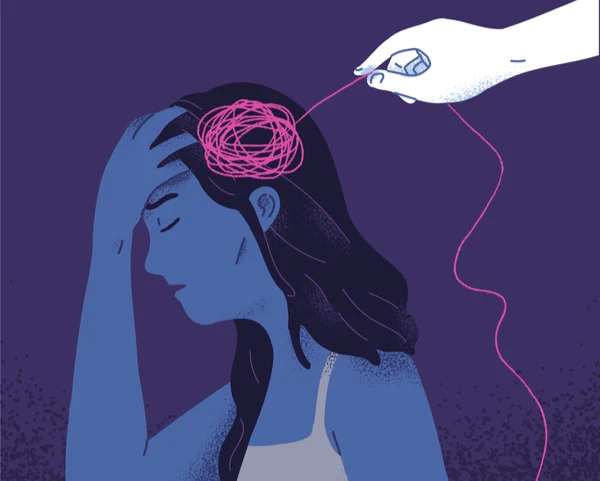
How to Heal From Trauma Without Therapy at Your Own Pace?

❝How to heal from trauma without therapy: a real-world guide for those seeking recovery through self-awareness, movement, and personal growth.❞
In Indian households, talking about trauma can feel complicated. Many of us grow up learning to suppress emotions, stay silent about pain, or “move on” without ever really addressing what happened. And while therapy is an incredible tool, it’s not always accessible or even accepted in every household, city, or community.
But here’s the truth: healing from emotional trauma is still possible, even without therapy.
Whether you're dealing with emotional wounds from childhood or facing the after-effects of recent trauma, your body and mind carry the capacity to recover. With time, awareness, and the right self-guided practices, you can begin to unlearn survival patterns and create space for calm, clarity, and emotional safety.
Read on to discover how to heal from trauma without therapy using strategies that are accessible, culturally respectful, and grounded in real-world self-healing approaches.
In this Article
- What Trauma Really Is, and How You Can Begin to Heal?
- What are the 5 Practical Ways to Heal Yourself When Therapy Isn’t an Option?
- How the Brain Heals: Neuroplasticity & Trauma Recovery
- How To Know When Self-Help Isn’t Enough Anymore?
- Not Ready for Therapy? Start with Exploration on TherapyRoute
- Conclusion
- Frequently Asked Questions
What Trauma Really Is, and How You Can Begin to Heal?
Trauma isn’t always what people think it is. It’s not just about one big, dramatic event. It can come from years of emotional neglect, growing up in a high-pressure home, surviving toxic relationships, or simply never feeling safe to express who you really are, leading to emotional distress.
In the Indian context, trauma often hides behind silence:
Healing from trauma is possible with the right therapist. TherapyRoute lists trauma-informed professionals ready to support you.
Find a Trauma Therapist- “Don’t talk back.”
- “Everyone goes through this.”
- “It’s just how families are.”
But unprocessed pain doesn’t go away. It settles in the body as anxiety, overthinking, anger, shutdown, or constant people-pleasing.
Can you really heal without therapy?
Yes, but it takes effort, patience, and structure. Therapy can offer a guided path, but even without it, your body and mind still have the tools to heal. What matters is using those tools consistently.
Healing without therapy doesn’t mean doing everything alone. It means learning to work with yourself, gently and honestly, to feel what’s buried, release it safely, and build new habits that support emotional wellbeing.
In the next section, we’ll walk through practical, science-backed ways you can start this process on your own, right where you are.
What are the 5 Practical Ways to Heal Yourself When Therapy Isn’t an Option?
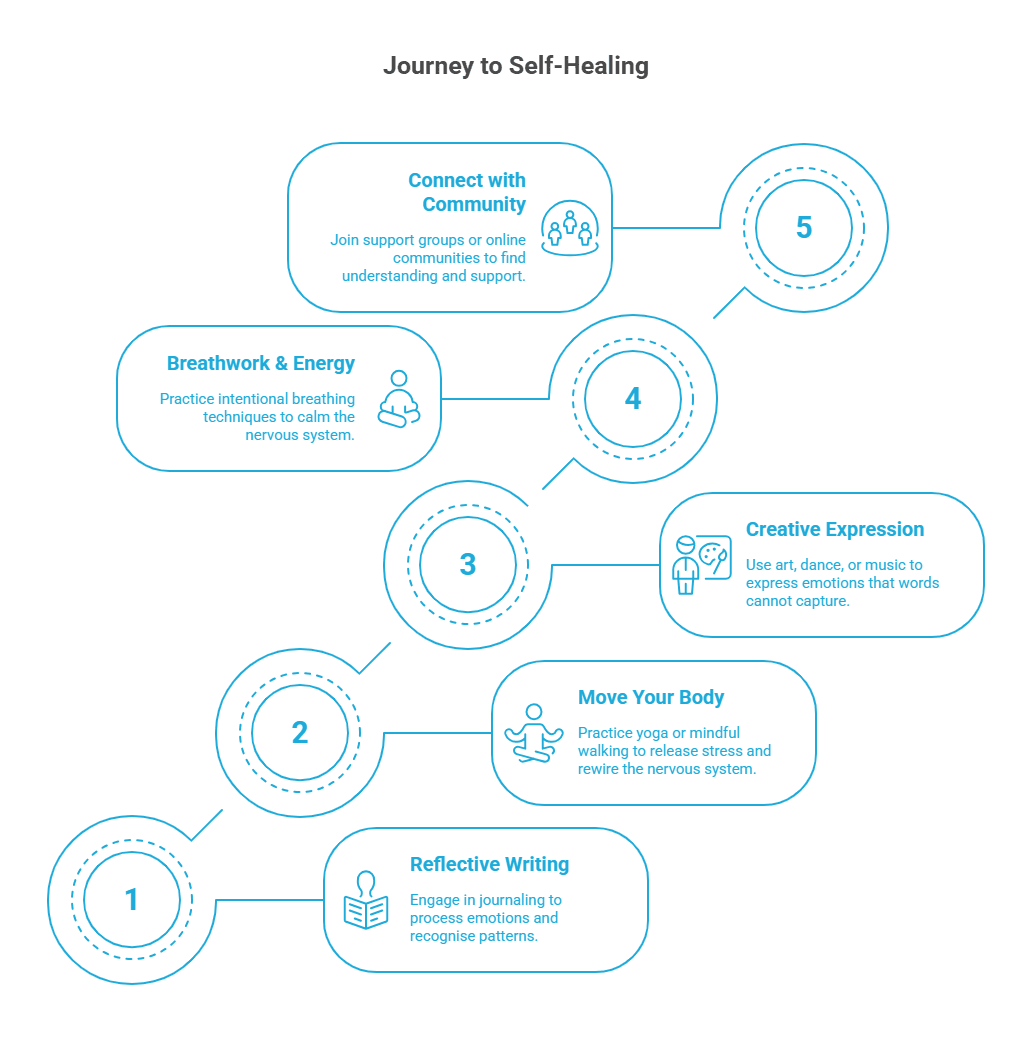
Healing from trauma doesn’t always need a clinic or a therapist's chair. For many people, especially in India, where therapy may be expensive, inaccessible, or a stigmatised conversation topic, self-healing becomes the starting point.
These five practices are grounded in real evidence and can help calm your nervous system, process difficult emotions, and reconnect you with your inner self.
1. Reflective Writing: Get Honest on Paper
Journaling may seem simple, but it’s one of the most powerful tools for self-healing. Writing helps you name feelings, recognise patterns, and externalise pain you’ve carried for years.
Try this:
- Every night, write down: “What did I feel today? What triggered me? What did I need in that moment?”
- Don't worry about grammar or neatness, just write freely.
Over time, you’ll notice emotional clarity improving. Things that once overwhelmed you will start to feel more manageable.
2. Move Your Body, Calm Your Mind
Trauma lives in the body, not just the mind. Practices like yoga, number meditation, mindful walking, or even stretching can help release stored stress and rewire your nervous system.
Start with:
- 15 minutes of yoga or pranayama (breathwork) every morning.
- Walking barefoot on grass (grounding) or simply noticing your breath when emotions spike.
You don’t need fancy gym equipment. Just consistency, curiosity, and willingness to slow down.
3. Creative Expression: Say What Words Cannot
Not all pain can be spoken. Sometimes it needs to move through colour, music, or rhythm. Art, dance, or singing can offer emotional release without having to explain everything logically.
Try:
- Drawing your feelings with colours instead of words.
- Listening to music that reflects your emotions.
- Dancing alone in your room to release tension.
It may sound strange, but creativity is one of the safest ways to process trauma, especially when talking feels too hard.
4. Breathwork & Energy Practices
Your breath is one of the fastest ways to access calm, and most of us barely use it well. Slow, intentional breathing activates your body’s natural calming system and brings you out of “survival mode.”
Start with:
- Box breathing: Inhale for 4 counts, hold for 4, exhale for 4, hold for 4.
- Nadi Shodhana (alternate nostril breathing) to balance energy and reduce anxiety.
- Explore meditation or body scanning if you are drawn to them.
These practices don’t require belief, just consistency.
5. Connect with Community or Peer Support
You don’t need a therapist to be understood; you need someone safe. That might be a support group, a mindful friend, a faith-based circle, or even an anonymous online community.
Look for:
- Mental health communities on platforms like Reddit or Telegram
- Spiritual or mindfulness circles in your area
- NGOs or organisations offering free peer support (e.g., iCall, YourDOST)
Connection heals. Even one person who listens without judgment can shift everything.
Healing Alone Is Brave. Finding the Right Support Is Powerful.
TherapyRoute lets you browse verified, trauma-informed therapists by specialisation, language, and location, so you can take the next step when you're ready.
→ Explore Trauma-Sensitive Therapists Near You
How the Brain Heals: Neuroplasticity & Trauma Recovery
For years, trauma was seen as something you had to live with forever. But neuroscience now confirms something powerful: your brain can rewire itself, even after trauma.
This ability is called neuroplasticity. It means your brain isn’t fixed. It learns from experience. And yes, that includes trauma, but it also includes healing.
Here’s what happens:
- Trauma creates survival patterns: shutting down, overreacting, and avoiding connection.
- These become “default” neural pathways over time.
- But with repeated, safe, positive experiences, even small ones, new pathways form.
Think of it like this: every time you choose to breathe deeply instead of panic, journal instead of numb out, or speak kindly to yourself, you’re laying down a new track in your brain.
Over time, this:
- Reduces overactivity in the amygdala (fear centre)
- Increases regulation through the prefrontal cortex (decision-making)
- Strengthens your vagal tone, helping you feel calm and safe in your body
And no, you don’t need a therapist for these changes to begin. You just need:
- Repetition
- Safety
- Awareness
The brain can change. The nervous system can settle. And your story doesn’t have to end where the trauma began.
How To Know When Self-Help Isn’t Enough Anymore?
Self-healing can take you far, but sometimes, the weight you’re carrying is too heavy to unpack alone. And that’s not a failure. It’s just a sign that deeper support is needed.
In India, many people wait until they completely break down before seeking help. There’s a fear of being judged, labelled, or misunderstood, even by your own family. In fact, doctors report that 80% of Indians with mental health issues do not seek treatment, often due to a lack of awareness, neglect, and stigma. But therapy isn’t just for “serious” problems. It’s a space for anyone who wants to feel better, understand themselves, or break painful patterns.
You might want to consider therapy if:
- You feel emotionally stuck, no matter how much you try
- You experience flashbacks, nightmares, or body-based anxiety
- You often dissociate or feel numb and disconnected
- Your relationships feel chaotic, unsafe, or draining
- You’re overwhelmed by guilt, shame, or suicidal thoughts
If you are having thoughts of suicide now, see helplines and suicide hotlines worldwide.
Self-guided practices are powerful, but some wounds need co-regulation, healing that happens in the presence of another safe, trained person.
And if you’ve tried therapy before and it didn’t work, it might not have been the right approach or therapist, not a reflection of your ability to heal.
Whether you continue alone for now or seek help later, the most important thing is this: your pain is valid, and you deserve to feel better.
Need Someone Who Understands Your Background?
Filter by cultural sensitivity, language, gender, and trauma expertise on TherapyRoute, so your story is met with understanding, not explanation.
→ Find Culturally Aligned Therapists on TherapyRoute
Not Ready for Therapy? Start with Exploration on TherapyRoute
Healing can start with something as simple as curiosity. You don’t have to book a session right away. Sometimes, just browsing therapist profiles, reading about different therapy types, or seeing who’s available in your area can be a powerful first step.
TherapyRoute is built to support that process, with no pressure to commit.
- Explore therapist listings filtered by issue, approach, or language
- Read the explainer content to understand what therapy could look like
- Learn from clinician-written articles and detailed therapist bios
Whether you’re considering therapy now or just want to understand your options, TherapyRoute lets you move at your own pace, safely and privately.
→ Explore at Your Own Pace with TherapyRoute.
Conclusion
Trauma doesn’t disappear just because time passes. It lingers in the body, in relationships, and in the stories we carry about ourselves. But healing is possible, even without therapy, when we begin to show up for ourselves in small, consistent ways. Therapy is not the only way to heal.
Whether you're journaling late at night, breathing through a difficult memory, or just learning to sit with your emotions instead of running from them, these are acts of healing. And they matter.
You don’t need anyone’s permission to begin. You don’t need to have it all figured out. You just need to believe that your pain is valid and your healing is worth working toward.
Frequently Asked Questions
How to heal childhood trauma without therapy?
If you are wondering how to heal from childhood trauma without therapy, you can start by building emotional intelligence, using somatic experiencing, journaling, and creating a safe support system. This helps address unresolved trauma and restore your sense of safety and self over time.
Can physical exercise help with symptoms of trauma?
Yes, physical exercise can be a powerful tool for trauma survivors. It supports physical health, reduces trauma symptoms, and helps release emotions stored from a traumatic experience, especially when linked to emotional abuse, sexual abuse, or domestic violence.
What coping mechanisms help trauma survivors in daily life?
Helpful coping mechanisms include deep breathing exercises, breathwork, grounding exercises, and expressive writing. These are effective after a traumatic event and can ease the effects of trauma, especially for those healing from physical abuse, substance abuse, or feelings of shame.
Is it possible to heal childhood trauma caused by a family member?
Healing childhood trauma caused by a family member is possible without professional help, though challenging. Addressing the emotional impact, building a support system, and exploring trauma-informed practices like somatic experiencing are all part of the healing journey and process.
What’s an important step after a traumatic experience like sexual assault or emotional abuse?
An important step after a traumatic experience, such as sexual assault or emotional abuse, is to rebuild your sense of self. Begin by recognising symptoms of trauma that affect your everyday life and using safe, non-clinical tools until you're ready for professional help.
Important: TherapyRoute does not provide medical advice. All content is for informational purposes and cannot replace consulting a healthcare professional. If you face an emergency, please contact a local emergency service. For immediate emotional support, consider contacting a local helpline.
Find Therapists
Must Read
Creating Space for Growth: How Boundaries Strengthen Relationships
Setting healthy boundaries fosters respect, protects emotional well-being, and strengthens relationships by defining personal limits and maintaining self-care.
International Mutual Recognition Agreements for Mental Health Professionals
Mutual recognition agreements for mental health professions are rare and uneven, with major gaps in counselling, social work, and allied therapies. Read on to understand ...
Mental Health Licensing & Regulation in New York State: 2026 Guide
Mental Health Licensing & Regulation in Singapore: 2026 Guide
Jumping to Conclusions
Jumping to conclusions is a thinking habit where we assume the worst or make judgments without enough evidence. By recognising this pattern, therapy can help you slow dow...
About The Author

TherapyRoute
Cape Town, South Africa
“Our in-house team, including world-class mental health professionals, publishes high-quality articles to raise awareness, guide your therapeutic journey, and help you find the right therapy and therapists. All articles are reviewed and written by or under the supervision of licensed mental health professionals.”
TherapyRoute is a mental health resource platform connecting individuals with qualified therapists. Our team curates valuable mental health information and provides resources to help you find the right professional support for your needs.



