Online Therapy? You must be kidding

❝Is online therapy safe, effective, and worth it? Discover the pros, potential risks, and how to find secure platforms, all from the comfort of your home.❞
In this Article
- What is Online Therapy and Why are People Turning to it?
- So, is Online Therapy Safe?
- How Can You Start Online Therapy Safely?
- What are the Benefits of Online Therapy?
- What Are The Limitations Of Online Therapy?
- TherapyRoute: Your Trusted Guide to Safe, Effective Online Therapy
- Final Thoughts
- Frequently Asked Questions
|
If you’ve been thinking about trying online therapy but aren’t sure if it’s the right step, you’re not alone. The flexibility sounds great, but it’s natural to wonder: Is online therapy actually safe?
In a world where we share everything online, can something as personal as therapy be trusted in a virtual space? Will your privacy be protected? And is it really as effective as seeing someone in person?
In this blog, we’ll explore what online therapy involves and why more people are turning to it. You’ll also learn how safe it is and how to find the right support, so you can make a confident, informed choice for your mental well-being.
What is Online Therapy and Why are People Turning to it?
Online therapy, also known as teletherapy or virtual counselling, is a form of psychological support delivered through digital platforms. It involves talking to a licensed therapist via video conferencing, phone calls, or even text therapy, all from the comfort of your own space.
Unlike traditional therapy sessions at a clinic, online therapy allows you to connect with professionals from anywhere, making it easier to prioritise your mental health without rearranging your life. Sessions are scheduled in advance and can often be tailored to your routine.
Therapy should be personal. Therapists listed on TherapyRoute are qualified, independent, and free to answer to you – no scripts, algorithms, or company policies.
Find Your TherapistSo why is it becoming more popular?
For many, it’s about easy access, especially in remote areas where quality mental health care may not be readily available. Others turn to it because of time constraints, commuting challenges, or a preference for more privacy. It also helps those who feel anxious walking into a therapist’s office, offering a familiar environment where they feel safe opening up.
Younger generations, in particular, prefer tech-enabled formats, while working professionals appreciate the flexibility it brings.
So, is Online Therapy Safe?
Online therapy can be a secure and effective way to receive mental health support, provided the right measures are in place. The safety of your experience depends largely on the platform you use and the therapist you choose.
Reputable therapy platforms use encrypted video conferencing tools to protect your private information and health information. Which confidentiality law applies depends on where you and your therapist are based. In the United States that is the Health Insurance Portability and Accountability Act (HIPAA); other countries have their own data protection frameworks. Ask a platform which one covers your records.
Beyond digital security, the therapist’s qualifications and ethical standards matter just as much. Licensed therapists, whether online or in person, are professionally bound to maintain your privacy, follow ethical guidelines, and create a safe space for open dialogue.
But safety isn’t only about data protection. It’s also about emotional trust. A safe therapeutic space, whether online or offline, helps you feel supported, respected, and understood. This is especially important when discussing personal challenges like mental health disorders, trauma, or relationship issues.
Looking for a secure and supportive space to begin your therapy journey? Find verified therapists on TherapyRoute.
How Can You Start Online Therapy Safely?
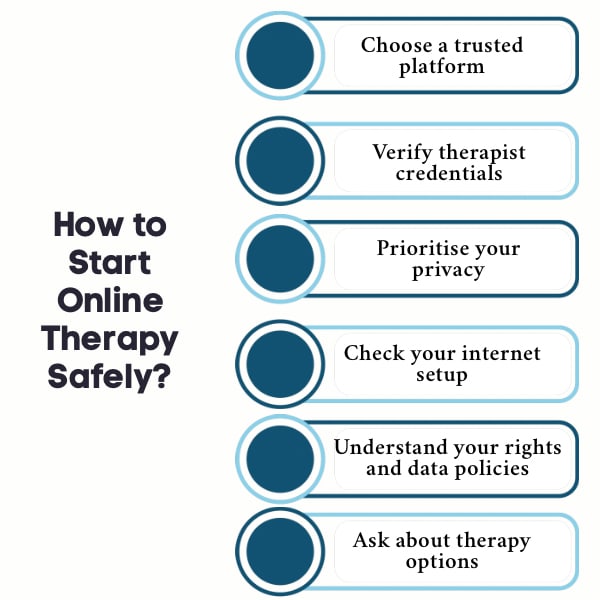
Starting therapy, especially online, can feel overwhelming. But with a few careful steps, you can ensure a safe, comfortable, and effective experience right from day one.
Here’s how to begin:
1. How do you verify if your therapist is qualified?
Look for platforms that are transparent, well-reviewed, and known for working with licensed therapists. Prioritise those with unbiased reviews of the best online therapy programs, so you know you're choosing a service with a track record of safety and professionalism.
2. How do you check your therapist’s registration?
Always confirm that your therapist is registered with recognised boards or professional bodies. A qualified therapist will follow strict ethical obligations, maintain confidentiality, and provide appropriate care based on your needs.
3. How can you protect your privacy during online sessions?
Pick a quiet, private space for your online therapy sessions, preferably somewhere you feel emotionally safe. This helps you open up more easily and protects your personal information from being overheard or exposed.
4. Why is a strong internet connection important?
A reliable internet connection is essential for smooth communication, especially during video conferencing. A laggy or dropped session can interrupt progress and leave you feeling disconnected.
5. What should you know about data privacy and your rights?
Before you begin, ask how the platform handles your health information. Many platforms follow the privacy law of the country they operate in, such as HIPAA in the United States, and Indian platforms are also expected to comply with regulations like the Information Technology Act and the Digital Personal Data Protection Act, ensuring your health data is handled with care and confidentiality.
6. What therapy options are available online?
Not sure what kind of support you need? That’s okay. Many platforms guide you through the selection of the type of therapy, whether it’s online CBT, group therapy, or one-on-one counselling services. You don’t need to have all the answers before you begin.
What are the Benefits of Online Therapy?
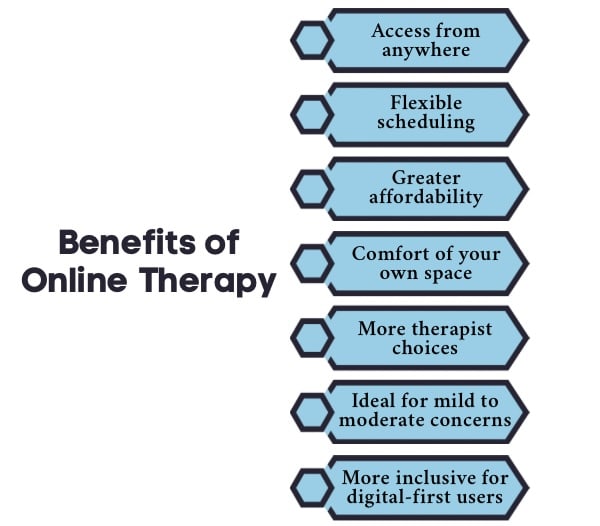
Online therapy offers more than just convenience, it’s reshaping access to mental health care in meaningful ways. Whether you’re managing everyday stress or addressing deeper emotional struggles, the benefits of virtual therapy are hard to ignore.
1. Access from anywhere
One of the biggest advantages is that it removes geographical barriers. Whether you're in a busy city or a remote area, you can connect with licensed professionals from your device. For many who live in places with few mental health services, this can be life-changing.
2. Flexible scheduling
Online therapy fits into your schedule, not the other way around. Evening, early morning, and even weekend therapy sessions are often available, making it easier for working professionals, caregivers, and students to seek consistent help.
3. Greater affordability
The cost of online therapy is often lower than in-person options. You also save on transport, child care, or time off work. With many platforms now accepted by health insurance and insurance providers, therapy becomes more accessible to those on a budget.
4. Comfort of your own space
Many people feel safer and more relaxed speaking to a therapist from the comfort of their home. This can help clients open up more quickly and ease any anxiety about being in a therapist’s office.
5. More therapist choices
You’re not limited to practitioners in your local area. You can explore a wider pool of mental health professionals, including those with specialised experience in areas like social anxiety disorder, trauma, or panic disorder, making it easier to find someone who truly fits your needs.
6. Ideal for mild to moderate concerns
Online therapy is especially effective for those managing mental health issues such as anxiety, burnout, and relationship challenges. Modalities like cognitive behavioural therapy (CBT) have proven successful in online formats.
7. More inclusive for digital-first users
Many younger people find online platforms more intuitive and less intimidating. The integration of mobile apps, chat-based therapy, and self-paced tools makes support easier to access on their terms.
What Are The Limitations Of Online Therapy?
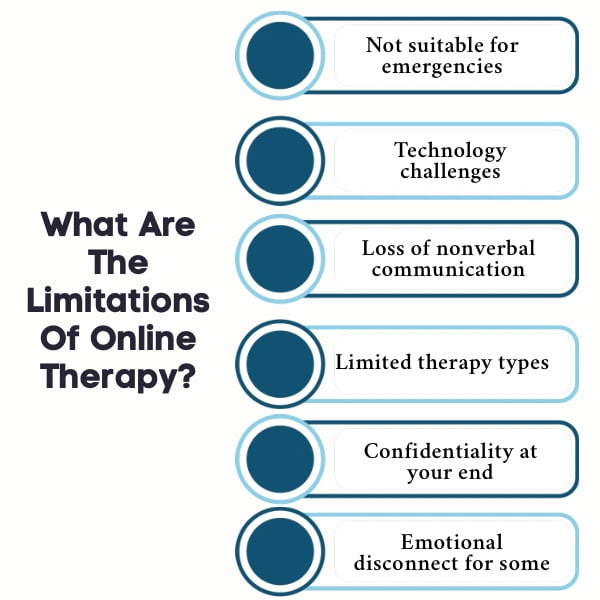
Despite its many benefits, online therapy isn’t right for everyone. Certain situations or needs may call for in-person sessions or more intensive mental health care.
1. Not suitable for emergencies
If you're in immediate crisis, experiencing suicidal thoughts, or navigating severe mental illness, online therapy may not offer the urgent support you need. In such cases, it’s important to reach out to local emergency services or crisis centres.
2. Technology challenges
A strong internet connection is essential for smooth communication. Those who struggle with tech, or live in areas with poor internet access, may find it frustrating. Additionally, older adults unfamiliar with digital tools might prefer traditional sessions.
3. Loss of nonverbal communication
While video conferencing is effective, it limits the ability to observe full body language or nonverbal cues. This can make it harder for therapists to assess emotional nuances, particularly in the first session or early sessions.
4. Limited therapy types
Some forms of therapy, such as art therapy, movement therapy, or child play therapy, require physical presence and tools. These are harder to replicate through digital platforms, even those with advanced online services.
5. Confidentiality at your end
While platforms are required to protect private information through encryption and data compliance laws, your own environment matters too. If you can’t find a quiet, private space, it may impact your ability to speak freely.
6. Emotional disconnect for some
Certain clients feel that face therapy offers more emotional depth and connection. They may find virtual formats less engaging or therapeutic, especially if they value physical presence during vulnerable moments.
Not sure where to begin your search? Read our guide on how to find a good therapist and choose the right support.
TherapyRoute: Your Trusted Guide to Safe, Effective Online Therapy
Navigating the world of online therapy can feel overwhelming, but you don’t have to figure it out alone. TherapyRoute is here to simplify your journey.
Whether you’re looking for a therapist who specialises in anxiety, trauma, relationships, or everyday stress, we help you connect with licensed, verified professionals, both online and in person. Our platform lets you compare services, check reviews, and find care that suits your budget, schedule, and comfort level.
Start your online therapy journey today at TherapyRoute.
Final Thoughts
Online therapy can be a safe, effective, and empowering way to care for your mental health, when done through the right platform and with a qualified therapist. Whether you're seeking flexibility, privacy, or access from a remote location, virtual counseling offers real support for real needs.
If you’re ready to begin, take that first step with confidence. Your well-being is worth the effort, and help is just a click away.
Frequently Asked Questions
Can you trust online therapists?
Yes, provided they are certified and listed on reliable platforms. Always check their credentials, experience, and client reviews before beginning therapy. A trustworthy online therapist will also maintain clear communication and follow professional ethics throughout the counselling process.
Is online therapy as good as face-to-face therapy?
For many mental health conditions, yes. Studies show online CBT and other approaches are just as effective as in-person sessions. However, the success often depends on the issue, the therapist, and your comfort with the format used.
Are therapy platforms safe for storing personal data?
Reputed platforms follow the privacy law that applies where they operate, such as HIPAA in the United States, to protect health information. They use encrypted video tools and secure servers to keep your personal information confidential. Still, it’s wise to read their privacy policy before starting.
What if I don’t feel a connection with my online therapist?
It’s normal. Therapy requires a good personal fit. Most online therapy platforms allow you to switch therapists easily. Don’t hesitate to look for someone who understands your needs; it’s part of their ethical responsibility to support your comfort.
Do younger people prefer online therapy?
Yes. Many younger people find online therapy more approachable due to its tech-friendly nature, flexible schedules, and availability through mobile apps. It also allows them to seek help discreetly, without needing to visit a therapist’s office.
Important: TherapyRoute does not provide medical advice. All content is for informational purposes and cannot replace consulting a healthcare professional. If you face an emergency, please contact a local emergency service. For immediate emotional support, consider contacting a local helpline.
Find Therapists
Must Read
Creating Space for Growth: How Boundaries Strengthen Relationships
Setting healthy boundaries fosters respect, protects emotional well-being, and strengthens relationships by defining personal limits and maintaining self-care.
International Mutual Recognition Agreements for Mental Health Professionals
Mutual recognition agreements for mental health professions are rare and uneven, with major gaps in counselling, social work, and allied therapies. Read on to understand ...
Mental Health Licensing & Regulation in New York State: 2026 Guide
Mental Health Licensing & Regulation in Singapore: 2026 Guide
Jumping to Conclusions
Jumping to conclusions is a thinking habit where we assume the worst or make judgments without enough evidence. By recognising this pattern, therapy can help you slow dow...
About The Author

TherapyRoute
Mental Health Resource
Cape Town, South Africa
“Our mission is to help people access mental healthcare when they need it most.”
TherapyRoute is a mental health resource platform connecting individuals with qualified therapists. Our team curates valuable mental health information and provides resources to help you find the right professional support for your needs.