Loving Someone Who Doesn't Love You Back - How to Heal and Move on with Confidence


❝Unrequited love is one of the most painful emotional experiences a person can face. It occurs when deep romantic feelings are not returned by the person you care about.❞
Unrequited love is one of the most painful emotional experiences a person can face. It occurs when deep romantic feelings are not returned by the person you care about. While the disappointment can be heartbreaking, it can also become an opportunity for personal growth, greater self-awareness, and emotional maturity. Understanding the nature of unrequited love can help you heal and eventually build the healthy, reciprocal relationship you deserve.
In this Article
- The Many Faces of Unrequited Love
- Recognizing the Signs of Unrequited Love
- Possible Reasons for Unrequited Love
- The Emotional Impact of Unrequited Love
- How to Heal from Unrequited Love
- When Professional Help May Be Beneficial
- If You Are the One Who Does Not Return Someone's Feelings
- A Final Word of Hope
Many people experience a situation where a friendship begins to deepen, feelings develop, and hopes for a romantic relationship grow. Gathering the courage to express those feelings can be difficult enough, but hearing that the other person only sees you as a friend can feel devastating. Although they may still value you, romantic rejection can leave profound emotional wounds.
The good news is that the pain of unreturned love does not have to last forever. With understanding, support, and intentional healing, it is possible to move forward toward healthier and more fulfilling relationships.
The Many Faces of Unrequited Love
Unrequited love can take several forms, including:
Loving someone who does not share your romantic feelings.
Managing anxiety is easier with the right support. TherapyRoute connects you with qualified therapists who specialise in anxiety and stress.
Find an Anxiety TherapistDesiring a person who is emotionally or physically unavailable.
Experiencing mutual attraction while one or both people are committed elsewhere.
Continuing to long for a former partner after a relationship has ended.
Because unrequited love is a common human experience, recognizing its signs can help individuals cope more effectively and begin the healing process. In essence, unrequited love involves strong feelings directed toward someone who does not feel the same way. This one-sided emotional investment often leads to sadness, grief, disappointment, and even shame.
Recognizing the Signs of Unrequited Love
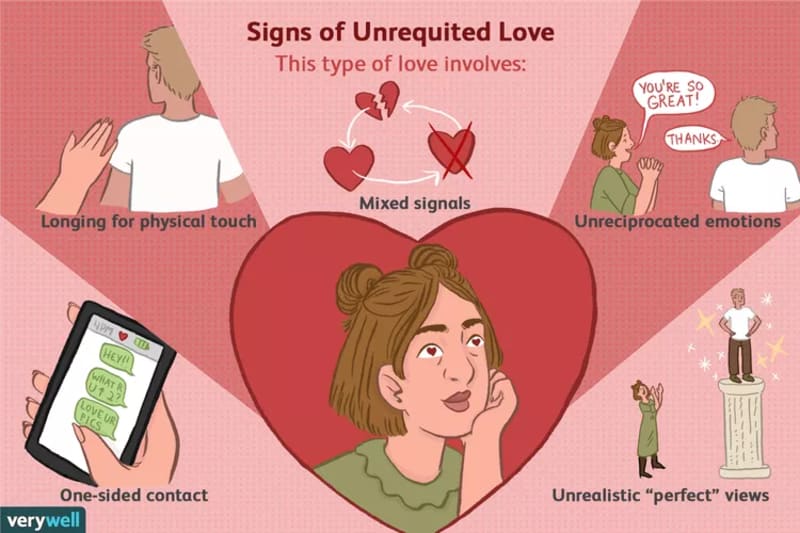
Many people believe they are receiving mixed signals from someone they care about, only to discover that the affection is not mutual. Several indicators may suggest that a relationship lacks emotional reciprocity.
"Am I Unlovable?"
One of the most damaging consequences of unrequited love is the tendency to question one's worth. However, another person's inability or unwillingness to return romantic feelings is not evidence that you are unworthy of love.
You Are Always the One Reaching Out
Do you find yourself initiating every conversation, checking in regularly, and making all the effort to stay connected? In healthy relationships, both individuals are motivated to communicate and invest in the connection. Emotional energy flows in both directions. When only one person consistently pursues contact, it may indicate a one-sided attachment. Research suggests that individuals who reject someone's affection often experience feelings of guilt. At the same time, those experiencing rejection may perceive the other person as confusing or inconsistent, making it harder to let go.
You Are the Only One Seeking Physical Affection
Physical closeness is often a natural expression of mutual attraction. In healthy romantic relationships, both people generally desire appropriate forms of physical connection. If you are always initiating hugs, hand-holding, or other forms of affection while the other person consistently withdraws or appears uncomfortable, this may be a sign that the feelings are not shared.
You Place the Person on a Pedestal
People experiencing unrequited love often idealize the object of their affection, overlooking flaws and exaggerating positive qualities. Healthy relationships allow both partners to see each other's strengths and weaknesses realistically. Genuine intimacy grows when individuals accept one another as imperfect human beings. In contrast, unrequited love often involves seeing someone through an unrealistic lens, making it difficult to establish healthy emotional boundaries.
They Show Little Interest in Getting to Know You
Meaningful relationships develop through mutual curiosity and shared experiences. Healthy partners ask questions, listen attentively, and make efforts to understand one another's dreams, values, and interests. In an unrequited dynamic, one person often carries the emotional burden. You may find yourself constantly initiating conversations and sharing personal information while receiving little interest in return.
Possible Reasons for Unrequited Love
The reasons someone does not return romantic feelings are often more about their circumstances than your value as a person. Sometimes individuals become attached to an idealized version of someone rather than seeing them as a complete person with both strengths and weaknesses. For others, the attraction may stem from wanting someone who feels unattainable. In such situations, the emotional distance itself becomes part of the appeal. Attachment patterns may also play a role. People with insecure attachment styles may unconsciously gravitate toward emotionally unavailable partners because doing so allows them to avoid the vulnerability required in genuine intimacy.
The Role of Attachment Style
According to renowned psychologist John Bowlby, attachment refers to the deep emotional bonds that connect people. While attachment theory originally focused on parent-child relationships, research has demonstrated its significant influence on adult romantic relationships as well.1 Understanding your attachment style can provide valuable insights into your relationship patterns, emotional needs, and the ways you connect with others.
The Emotional Impact of Unrequited Love
Unreturned affection can create significant emotional distress and may affect several areas of life.
Reduced Self-Esteem
Repeatedly investing emotionally in someone who does not reciprocate can gradually erode self-confidence and create feelings of inadequacy or rejection.
Loneliness and Isolation
When affection is not returned, individuals may withdraw from others or neglect opportunities to pursue healthier relationships, increasing feelings of loneliness.
Increased Stress and Emotional Distress
Research shows that healthy relationships can help protect people from the harmful effects of stress.2 In contrast, continually pursuing unavailable affection can increase emotional strain and contribute to anxiety, sadness, and even depression.
How to Heal from Unrequited Love
Although the healing process may feel overwhelming, recovery is possible. Many people emerge from the experience with greater self-awareness, emotional resilience, and a clearer understanding of what they need in future relationships.
Allow Yourself to Grieve
The end of a hoped-for relationship often feels like a significant loss. Give yourself permission to acknowledge the pain and disappointment. Avoid interpreting rejection as proof that something is wrong with you. Relationships fail to develop for many reasons, most of which have little to do with personal worth.
Stay Engaged in Life
While it is important to process your emotions, becoming trapped in constant rumination can prolong suffering. Spend time with supportive friends and family, engage in meaningful activities, and continue pursuing interests that bring you joy. As time passes, the emotional intensity will gradually lessen.
Examine Your Relationship Patterns
Consider whether unrequited love has been an isolated experience or part of a recurring pattern. Reflecting on past relationships, family influences, and attachment styles can provide valuable insights into how you choose partners and relate to others emotionally.
Invest in Yourself
One of the healthiest responses to unrequited love is redirecting your emotional energy toward personal growth. Take time to:
Reconnect with hobbies and interests.
Clarify your personal values.
Pursue meaningful goals.
Strengthen your emotional and physical well-being.
Build a life that reflects who you are beyond any romantic relationship.
As your sense of self grows stronger, your confidence and emotional resilience are likely to increase as well.
When Professional Help May Be Beneficial
Sometimes the pain of rejection becomes difficult to manage alone. Seeking support from a qualified mental health professional may be helpful if you:
Struggle to return to your normal daily activities.
Experience prolonged sadness or symptoms of depression.
Become trapped in persistent negative thinking.
Have thoughts of self-harm or suicide - if this is you now, see helplines and suicide hotlines worldwide.
Notice unhealthy relationship patterns repeating themselves.
Professional counseling can provide support, healing strategies, and deeper insight into the emotional challenges contributing to relationship difficulties.
If You Are the One Who Does Not Return Someone's Feelings
Rejecting another person's affection can also be difficult. While honesty may feel uncomfortable, it is often the kindest approach.
Be Direct Rather Than Avoidant
Avoiding the conversation may unintentionally create false hope and prolong emotional pain.
Avoid Sending Mixed Messages
Being vague or ambiguous can leave the other person confused and struggling to move forward.
Respond with Compassion
Although honesty is important, it should be delivered with kindness, empathy, and respect for the other person's feelings.
A Final Word of Hope
Unrequited love can be deeply painful, but it does not define your worth or determine your future. The fact that someone cannot return your feelings says more about their circumstances, preferences, or emotional readiness than it does about your value as a person. By accepting reality, allowing yourself to grieve, understanding your relationship patterns, and investing in your own growth, you can move beyond the pain and create space for a relationship built on mutual love, respect, and commitment. The love you truly deserve is not one-sided—it is shared, reciprocated, and freely given.
References
- [1] Hazan, C., & Shaver, P. (1987). Romantic love conceptualized as an attachment process. Journal of Personality and Social Psychology, 52(3), 511-524. https://pubmed.ncbi.nlm.nih.gov/3572722/
- [2] Holt-Lunstad, J., Smith, T. B., & Layton, J. B. (2010). Social relationships and mortality risk: a meta-analytic review. PLoS Medicine, 7(7), e1000316. https://pubmed.ncbi.nlm.nih.gov/20668659/
Important: TherapyRoute does not provide medical advice. All content is for informational purposes and cannot replace consulting a healthcare professional. If you face an emergency, please contact a local emergency service. For immediate emotional support, consider contacting a local helpline.
Find Therapists
Must Read
Creating Space for Growth: How Boundaries Strengthen Relationships
Setting healthy boundaries fosters respect, protects emotional well-being, and strengthens relationships by defining personal limits and maintaining self-care.
International Mutual Recognition Agreements for Mental Health Professionals
Mutual recognition agreements for mental health professions are rare and uneven, with major gaps in counselling, social work, and allied therapies. Read on to understand ...
Mental Health Licensing & Regulation in New York State: 2026 Guide
Mental Health Licensing & Regulation in Singapore: 2026 Guide
Jumping to Conclusions
Jumping to conclusions is a thinking habit where we assume the worst or make judgments without enough evidence. By recognising this pattern, therapy can help you slow dow...
About The Author

“A Licensed and experienced Counselling Psychologist/Marriage and Family Therapist working with families, couples, parents, adolescents, groups, and individuals”
Peter Mugi Kuruga is a qualified Certified Marriage and Family Therapist, based in Kasarani, Nairobi, Kenya. With a commitment to mental health, Peter Mugi provides Counseling, Divorce Counseling, Family Therapy, Relationship Counseling, Marriage and Family Therapist Associate, Mediation, Online Therapy, Stress Management and Adolescent Therapy.