
How Does Online Counseling Work? Complete Guide 2025

❝Wondering how does online counseling works? Learn what to expect, benefits, and whether it’s right for your mental health needs in this guide.❞
In this Article
- What is Online Counseling?
- Is Online Counseling Effective?
- How Does Online Counseling Work?
- How Does Online Therapy Work For Different Needs?
- What are the Benefits Of Online Counseling?
- When is Online Counseling Not Effective?
- Exploring Online Therapy? TherapyRoute Helps You Find the Right Match
- Final Thoughts
- Frequently Asked Questions
TL;DR
|
Online counseling has become a lifeline for many seeking emotional support, guidance, and professional care, especially in a world where flexibility, accessibility, and safety are more important than ever.
In fact, India’s National Mental Health Survey of 2015-16 found that 10.6% of adults surveyed had a mental disorder at the time of the survey, and 13.7% had experienced one at some point in their lives (figures as cited in the Indian Journal of Psychiatry). These numbers underscore a growing need for timely, accessible mental health care, and online counseling is rising to meet that need.
Whether you're new to therapy or considering a switch from face sessions to virtual ones, online counseling offers flexible and accessible support that fits your lifestyle. This guide explains exactly how it works, what to expect annd its key benefits, so you can make informed choices for your mental health.
What is Online Counseling?
Online counseling, also known as virtual therapy or teletherapy , offers mental health support using digital tools like video conferencing, phone calls, or even text messages. It connects you with a licensed therapist through secure platforms, making therapy more accessible for people in remote areas or those with busy schedules.
Instead of commuting to a therapist’s office, you can attend sessions from the comfort of your own home, a quiet place at work, or wherever you feel safe. All you need is a stable internet connection and a device like a smartphone or laptop.
Sometimes you just need someone qualified to talk to. Find a counsellor near you — independent, professional, and ready to listen.
Find a Counsellor
Is Online Counseling Effective?
One of the most common concerns is: does online therapy work? And the short answer is yes, it does.
Studies have shown that online therapy is just as effective as in-person sessions for many mental health conditions, including anxiety, depression , PTSD, and panic disorder.
For individuals struggling to access face therapy due to distance, cost, or a lack of availability, online therapy options offer a significant step forward.
How Does Online Counseling Work?
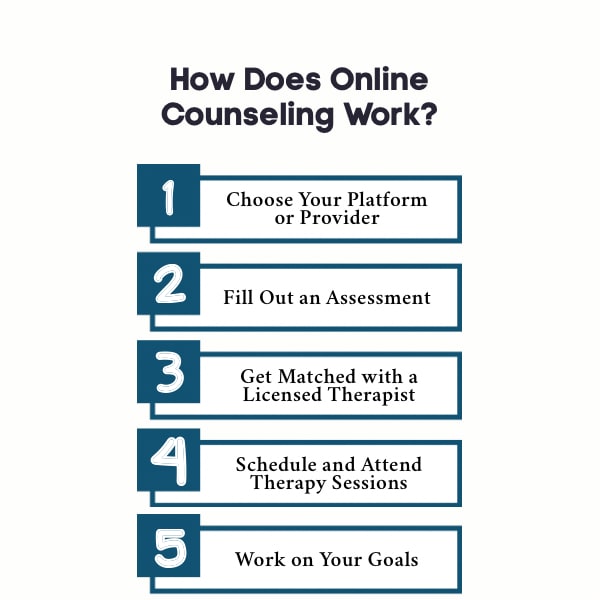
Online counseling works much like traditional therapy, but the mode of delivery is digital. Here's what the process typically involves:
1. Choose Your Platform or Provider
You can opt for a reputable platform like TherapyRoute, which connects you with verified mental health professionals in your region. Many online services offer options based on your specific needs, like relationship issues, anxiety, depression, or chronic illnesses.
2. Fill Out an Assessment
Most platforms begin with a short intake form or mental health questionnaire. This helps match you with a therapist who fits your needs, whether that’s cognitive behavioural therapy , trauma-informed care, or another type of therapy.
3. Get Matched with a Licensed Therapist
After reviewing your concerns, you’ll be paired with a therapist qualified to address your mental health issues. At TherapyRoute, you can also choose based on preferences like gender, language, cultural understanding, or therapeutic style.
4. Schedule and Attend Therapy Sessions
Therapy sessions are usually conducted over video conferencing, but depending on the platform, you may also use phone calls or text messaging. Some services offer unlimited use, while others schedule regular therapy sessions weekly or biweekly.
5. Work on Your Goals
Just like in traditional therapy, you and your therapist will set goals, explore thought patterns, and develop coping strategies. Over time, you'll track progress and adapt your therapeutic needs accordingly.
How Does Online Therapy Work For Different Needs?
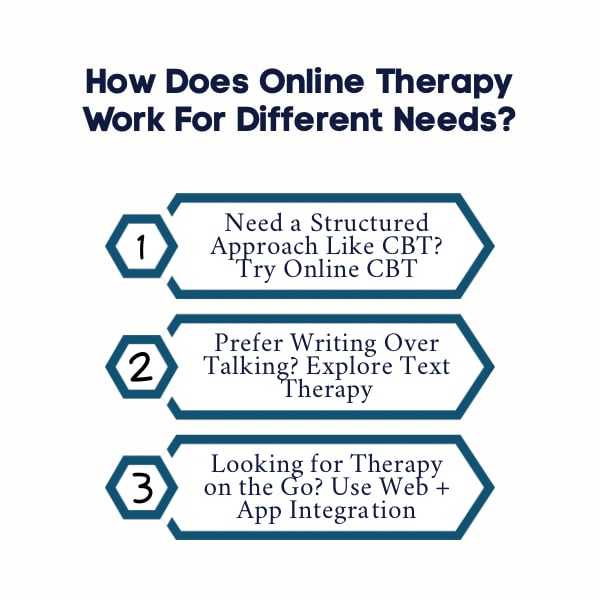
Online therapy can be tailored to suit a range of emotional and psychological concerns, from mild stress to more complex mental health conditions. Depending on your preferences and goals, here are some common formats:
1. Need a Structured Approach Like CBT? Try Online CBT
Cognitive Behaviour Therapy (CBT) is a structured, evidence-based approach often used to treat depression and unhelpful thought patterns. Online CBT sessions may include exercises, worksheets, and goal setting, delivered through video or secure platforms.
2. Prefer Writing Over Talking? Explore Text Therapy
Ideal for those who prefer writing over speaking, text therapy allows you to communicate with your therapist through secure messages. It offers flexibility and is helpful if live sessions feel overwhelming or hard to schedule.
3. Looking for Therapy on the Go? Use Web + App Integration
Some platforms combine video or text-based sessions with mobile apps, offering tools like journaling, mood tracking, or guided exercises. It’s a convenient option for those who want support at their fingertips, especially while travelling or managing daily stress.
What are the Benefits Of Online Counseling?
Online counseling isn’t just a digital substitute for in-person therapy. It offers a set of unique advantages that make mental health care more accessible, flexible, and personalised for today’s world. Here are some of the key benefits:
1. Wider Accessibility
For those living in remote areas, dealing with mobility issues, or managing tight schedules, online therapy bridges the gap. It’s especially beneficial for younger adults, caregivers, and individuals who may not have mental health services available locally. You can connect with qualified professionals without the barriers of distance or transportation.
2. Convenience and Flexibility
Therapy no longer has to disrupt your routine. Whether you’re in between meetings, travelling, or winding down after a long day, online sessions let you choose a time and setting that work for you.
You can talk to your therapist from the comfort of your home, your parked car, or even during a walk in a quiet park, whatever feels safe and convenient.
3. Enhanced Privacy
Online therapy offers discretion that traditional face-to-face settings sometimes lack. There’s no need to sit in waiting rooms or worry about running into someone you know. Your sessions are private and secure, often encrypted end-to-end to ensure confidentiality and peace of mind.
4. Cost-Effective Options
Many online platforms offer pricing models that are more affordable than traditional in-person sessions. Some even provide subscription-based services, student discounts, or plans covered by insurance providers. It’s worth checking with your insurance company to explore coverage options that apply to virtual therapy.
5. Access to Specialised Care
Online counseling opens the door to a broader range of therapists, some of whom may not be available in your immediate locality. Whether you're seeking support for trauma, relationship challenges, or mental health concerns like anxiety or depression , online therapy can help. You're more likely to find a good fit with options that align with your specific therapeutic needs, including culturally informed care.
When is Online Counseling Not Effective?
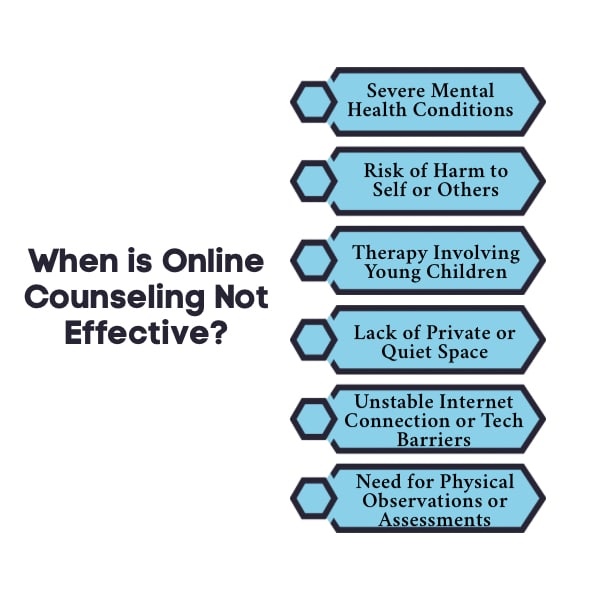
While online counseling has opened up access to mental health care for many, it’s not always the right solution for everyone. In certain situations, in-person therapy or more intensive support may be necessary to ensure safety, accurate assessment, and consistent care.
Here are some scenarios where online counseling may not be the best fit:
1. Severe Mental Health Conditions
Individuals experiencing severe mental illness, such as active psychosis, suicidal ideation, or untreated bipolar disorder or borderline personality disorder often require close monitoring, crisis intervention, or coordinated care. These situations are better managed in face-to-face settings where immediate support is available.
2. Risk of Harm to Self or Others
If there’s a risk of self-harm, harm to others, or a mental health emergency, online therapy may not offer the real-time support required. In such cases, immediate in-person care or hospital-based interventions are more appropriate and potentially life-saving.
3. Therapy Involving Young Children
Very young children often need play-based or hands-on techniques that are hard to replicate through a screen. Nonverbal cues, attention span, and emotional regulation are also more challenging to address virtually. In such cases, in-person sessions may be more developmentally appropriate.
4. Lack of Private or Quiet Space
Therapy requires a confidential, distraction-free environment. If you don’t have a quiet place to speak freely, due to shared living spaces, lack of privacy, or household interruptions, your sessions may feel less safe or productive.
5. Unstable Internet Connection or Tech Barriers
Reliable technology is key to effective online therapy. Frequent disconnections, poor video/audio quality, or difficulty using mobile apps can interrupt the therapeutic flow, reduce emotional engagement, and make it harder to build trust.
6. Need for Physical Observations or Assessments
Certain conditions may require the therapist to observe physical symptoms, body language, or behavioural changes up close. In cases where nonverbal cues are crucial for diagnosis or progress tracking, face therapy might be a better option.
Exploring Online Therapy? TherapyRoute Helps You Find the Right Match
Thinking about online counseling? TherapyRoute makes it easier to find a therapist who truly fits, based on your needs, language, gender preference, cultural background, and therapy style. Whether it’s anxiety, relationship struggles, or trauma, you can filter for what matters most.
Created by mental health professionals, TherapyRoute is a people-first platform that manually verifies each therapist. From culturally informed care to specific approaches like CBT, it lets you choose trusted support that aligns with your life, right from the comfort of home.
Final Thoughts
If you’ve been asking yourself, “How does online counseling work?”, know this: online therapy is a flexible, evidence-backed option that meets you where you are. It removes barriers, respects your pace, and helps you take meaningful steps toward better mental health.
Whether you're exploring online options for the first time or looking to switch providers, TherapyRoute offers a safe, credible, and empowering path forward.
Frequently Asked Questions
1. What should I expect in an online therapy session?
You’ll need a quiet space and a stable internet connection. While some nonverbal cues may be limited, therapists can still read tone and expressions. Most platforms ensure confidentiality through encryption, and ask your therapist if you have privacy concerns.
2. Is online counseling safe?
Yes, online counseling is generally safe when conducted through secure platforms. Most use encryption and follow privacy regulations to protect your data. Choose licensed therapists and reputable services, and always confirm what confidentiality measures are in place before starting sessions.
3. Can I switch my online therapist if it’s not a good fit?
Yes, many online platforms allow you to change therapists if the connection doesn’t feel right. Finding someone who understands your needs and communication style is key to building trust and making progress in therapy.
4. Does online marriage counseling work?
Online counseling can be highly effective for marital concerns, including communication breakdowns, trust issues, or emotional distance. Couples can join sessions from different locations, making it easier to seek support even with conflicting schedules.
5. What kind of devices do I need for online therapy?
You can use a smartphone, tablet, laptop, or desktop computer for online therapy. Just ensure your device has a camera and microphone, and that you have a stable internet connection for smooth, uninterrupted sessions.
Important: TherapyRoute does not provide medical advice. All content is for informational purposes and cannot replace consulting a healthcare professional. If you face an emergency, please contact a local emergency service. For immediate emotional support, consider contacting a local helpline.
Find Therapists
Must Read
Creating Space for Growth: How Boundaries Strengthen Relationships
Setting healthy boundaries fosters respect, protects emotional well-being, and strengthens relationships by defining personal limits and maintaining self-care.
International Mutual Recognition Agreements for Mental Health Professionals
Mutual recognition agreements for mental health professions are rare and uneven, with major gaps in counselling, social work, and allied therapies. Read on to understand ...
Mental Health Licensing & Regulation in New York State: 2026 Guide
Mental Health Licensing & Regulation in Singapore: 2026 Guide
Jumping to Conclusions
Jumping to conclusions is a thinking habit where we assume the worst or make judgments without enough evidence. By recognising this pattern, therapy can help you slow dow...
About The Author

TherapyRoute
Cape Town, South Africa
“Our in-house team, including world-class mental health professionals, publishes high-quality articles to raise awareness, guide your therapeutic journey, and help you find the right therapy and therapists. All articles are reviewed and written by or under the supervision of licensed mental health professionals.”
TherapyRoute is a mental health resource platform connecting individuals with qualified therapists. Our team curates valuable mental health information and provides resources to help you find the right professional support for your needs.



