
Emotion Regulation

❝What is it and how can you get better at it?❞
Ever snapped at someone you care about, and then felt awful about it? In Indian families and workplaces, where emotions are often brushed aside or misunderstood, moments like these can leave lasting guilt.
But here’s the truth: your emotions are valid, even when they feel overwhelming. That said, they’re not always accurate, and letting them take over can cloud judgment, damage relationships, and affect your health.
This blog offers practical, proven strategies to help you understand and control your emotions in daily life. Whether you're dealing with negative thoughts, frequent outbursts, or emotional shutdowns, we’ll guide you through:
- Improving your emotional intelligence.
- Regulating your nervous system through physical activity.
- Using everyday tools for better emotion regulation.
Let’s explore how to control your emotions and build healthier responses, one step at a time.
In this Article
How to Control Emotions and Feelings? 11 Ways to Stay Calm Daily
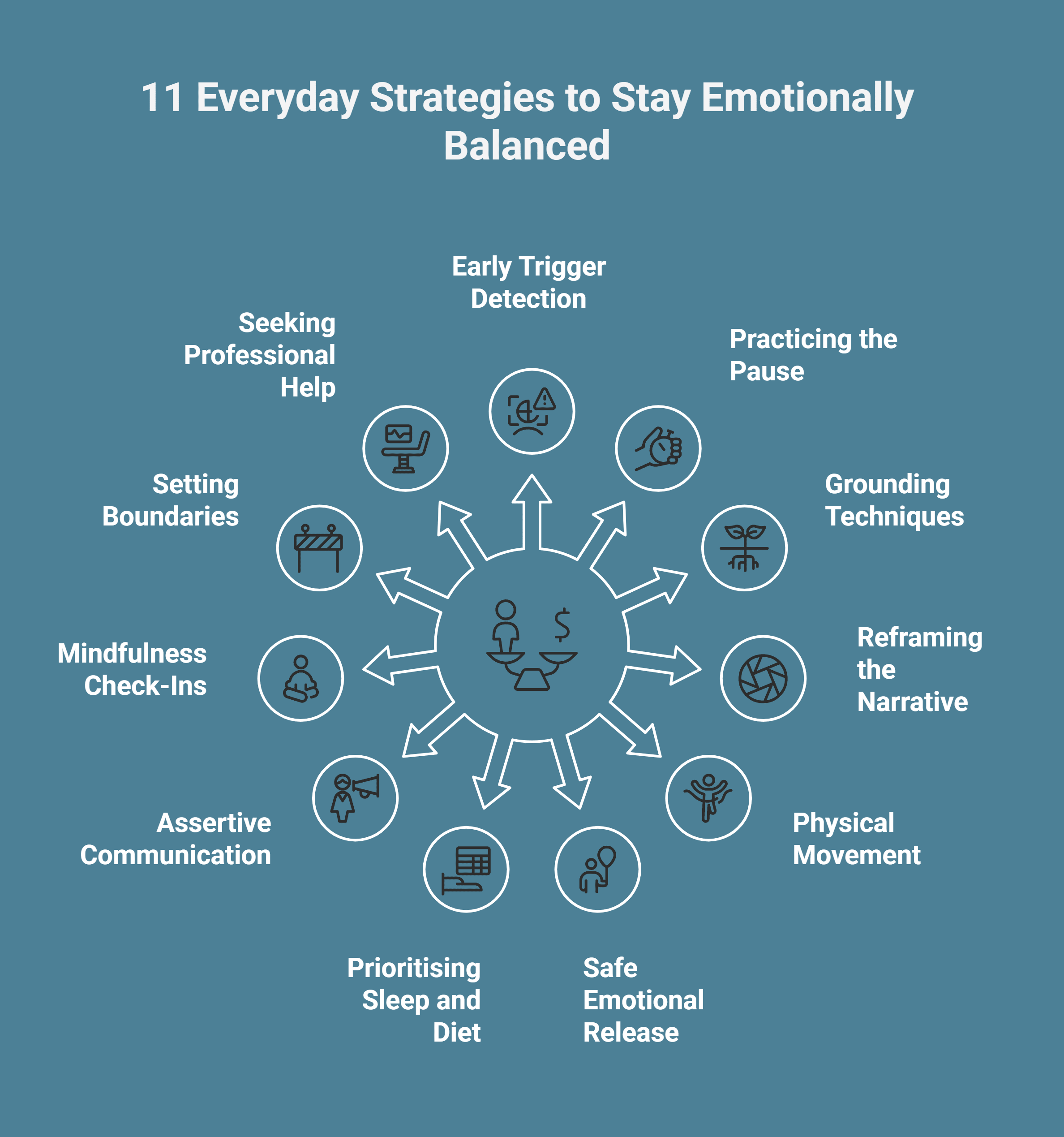
If you’ve ever asked yourself, How to control my emotions and anger? know that managing emotions isn’t about suppressing them. Here are 11 simple daily strategies to help you stay calm and build emotional resilience over time.
Sometimes you just need someone qualified to talk to. Find a counsellor near you — independent, professional, and ready to listen.
Find a Counsellor1. Spot the Triggers Early
Have you ever felt like one small comment from a colleague or family member ruins your entire day? You’re not alone. We often tend to dismiss triggers until they explode.
The best way to regain emotional control is to first spot what sets you off. It could be a tone, a deadline, or unresolved tension with a family member.
Try these simple tools:
- Journaling to track emotional responses.
- Self-check-ins to notice patterns before things escalate.
Being aware of your triggers brings you closer to emotional balance and helps you respond, not react.
2. Practice the Pause
That rush of anger or hurt, you don’t have to act on it immediately. Emotions, no matter how intense, usually peak and pass within 90 seconds if you don’t feed them with negative thinking.
This is called the 90-second rule, and it can be life-changing.
Next time you feel a wave of strong emotions, try:
- Taking a deep breath.
- Focusing on the present moment.
- Practising mindfulness for a few seconds.
This simple pause can protect your emotional health and improve your emotional regulation over time.
3. Grounding Techniques That Work Instantly
Feeling overwhelmed or spiralling with intense emotions? Grounding techniques can bring you back to the present moment, especially when your emotional state feels out of control.
These simple, science-backed tools work instantly:
- Try the 5-4-3-2-1 technique: Name 5 things you see, 4 you can touch, 3 you hear, 2 you smell, 1 you taste.
- Deep breathing slows down the nervous system.
- Cold water splash shocks your body back into awareness.
These are healthy ways to handle difficult feelings and build long-term emotional stability.
4. Reframe the Narrative
That voice in your head saying, “This is the worst”? It’s not always true. With a little practice, you can shift that thought to “This is hard, but I can handle it.” This is called cognitive reframing, a powerful tool to replace negative thinking patterns with more balanced ones.
Here's how it helps:
- It reduces feelings of anxiety.
- Helps with managing emotions during intense moments.
- Builds long-term emotional resilience.
Not sure how to shift your mindset? A therapist can guide you in rewiring thought patterns for lasting emotional balance.
5. Move Your Body, Shift Your Mood
Feeling restless, angry, or weighed down by anxiety? Your body might be holding on to more than you realise. Physical activity is a natural way to release negative emotions and restore emotional balance.
Just 20 minutes of movement can:
- Reduce mood swings and intense feelings.
- Boost positive emotions naturally.
- Help you process difficult emotions in a healthy way.
Whether it's a brisk walk, yoga, or dancing, moving your body helps shift your emotional state and supports overall mental health.
6. Don’t Bottle It, Release It Safely
In many Indian homes, we’re taught to stay silent and “be strong”, but that silence can hurt more than help. Bottled-up emotions often lead to emotional dysregulation, anxiety, or even health issues over time.
Instead, try safe ways to express emotions like:
- Recording a voice note to vent privately.
- Writing your thoughts in a journal.
- Creating art or music.
- Talking to someone you trust.
Releasing emotions is not weakness; it’s a step toward better mental health and lasting emotional balance.
7. Sleep and Food: Your Hidden Emotional Allies
Ever felt more irritable or anxious after skipping meals or losing sleep? It’s not just in your head; poor sleep and diet directly affect your emotional state.
To support emotional stability, try these simple lifestyle shifts:
- Balance blood sugar with regular, nourishing meals.
- Hydrate well throughout the day.
- Prioritise sleep as seriously as work or chores.
These small habits can make a big difference in managing mood swings, negative feelings, and overall mental health in daily life.
8. Practice Assertive Communication
Many of us were never taught how to speak up without sounding rude or shutting down. But assertive communication is key to expressing your emotions without creating conflict or guilt.
Here’s a simple script:
“I felt hurt when my opinion was dismissed. I’d appreciate being heard next time.”
This approach:
- Helps you express emotions clearly.
- Reduces emotional dysregulation.
- Strengthens relationships and emotional health.
You don’t need to shout or stay silent, there’s a respectful middle ground.
9. Use Mindfulness for Daily Check-Ins
We often rush through the day without checking in on how we truly feel. But a few minutes of mindfulness can shift your entire emotional state.
Try this daily:
- Do a 5-minute body scan to notice tension.
- Label emotions: “I feel anxious” or “I feel angry”.
This simple habit builds emotional awareness, reduces emotional outbursts, and supports better mental health, especially if you're prone to strong emotions or mood swings. Mindfulness isn’t a luxury; it’s a powerful everyday tool.
10. Create Boundaries Without Guilt
In India, we’re often taught to say “yes” out of respect, even when it drains us. But constantly putting others first can lead to burnout, resentment, and emotional dysregulation.
Setting boundaries is not selfish; it’s self-respect.
Start small:
- Say “no” without overexplaining.
- Prioritise rest over social pressure.
- Limit interactions that trigger negative emotions.
Emotional boundaries protect your peace, improve your mental health, and help you stay connected to your own emotions, without guilt.
11. Seek Therapy When Emotions Feel Unmanageable
If you’ve tried everything and still feel overwhelmed, it’s okay to ask for help. In fact, therapy is one of the smartest, most empowering steps you can take for your mental health.
A trained therapist can help you:
- Manage intense emotions and mood swings.
- Work through negative thinking patterns.
- Learn healthier ways to express emotions.
You can find mental health professionals across India at TherapyRoute.
Conclusion
Learning how to control your emotions and anger isn’t about shutting down your feelings; it’s about understanding them so they don’t control you.
In a world full of triggers, emotional balance doesn’t come naturally, but it can be built over time. Whether you're dealing with frequent outbursts, internal turmoil, or moments of guilt after reacting, the goal is to respond thoughtfully, not impulsively.
When you learn to control your emotions, you begin to protect your peace, relationships, and overall well-being. With small, consistent efforts, like pausing, reframing narratives, or setting boundaries, you teach your mind that calm is an option.
Control your emotions, learn to react less, and you’ll feel more in charge of your life.
Frequently Asked Questions
What is emotional regulation disorder?
Emotional regulation disorder refers to difficulty managing intense emotions like anger, sadness, or fear. It often leads to overreactions or emotional shutdowns and is commonly linked to conditions like borderline personality disorder or ADHD.
What causes emotional dysregulation?
Emotional dysregulation can be caused by childhood trauma, chronic stress, unresolved grief, or certain mental health conditions. It may also stem from learned behaviours in emotionally neglectful environments or neurological differences affecting impulse control and emotional processing.
How to control your emotions in a relationship?
Start by identifying your emotional triggers and practising mindful communication. Use “I feel” statements, take pauses before reacting, and prioritise emotional awareness. Building trust, setting healthy boundaries, and seeking support can also improve emotional regulation in relationships.
How to stop letting people affect you?
Learn to separate your self-worth from others’ opinions. Practice emotional boundaries, reframe negative thoughts, and validate your own feelings. You can’t control how others behave, but you can choose how you respond. Protecting your peace is one of the most powerful forms of self-care.
Is it normal to cry easily or get angry often?
Yes, strong emotional reactions are part of being human. However, if crying or anger feels uncontrollable or disrupts daily life, it may signal emotional dysregulation or unresolved issues. It’s okay to seek help to better understand your feelings.
Important: TherapyRoute does not provide medical advice. All content is for informational purposes and cannot replace consulting a healthcare professional. If you face an emergency, please contact a local emergency service. For immediate emotional support, consider contacting a local helpline.
Find Therapists
Must Read
Creating Space for Growth: How Boundaries Strengthen Relationships
Setting healthy boundaries fosters respect, protects emotional well-being, and strengthens relationships by defining personal limits and maintaining self-care.
International Mutual Recognition Agreements for Mental Health Professionals
Mutual recognition agreements for mental health professions are rare and uneven, with major gaps in counselling, social work, and allied therapies. Read on to understand ...
Mental Health Licensing & Regulation in New York State: 2026 Guide
Mental Health Licensing & Regulation in Singapore: 2026 Guide
Jumping to Conclusions
Jumping to conclusions is a thinking habit where we assume the worst or make judgments without enough evidence. By recognising this pattern, therapy can help you slow dow...
About The Author

“I offer 1:1 online therapy & coaching for anxiety, emotional overwhelm & relationship concerns. I have 7 years of experience working with individuals globally & helping them improve their quality of life. I offer support to people in creating meaningful & lasting change in their own ways.”
Lakshmi Ravi Kumar is a qualified Psychologist, based in Bangalore, India. With a commitment to mental health, Lakshmi provides ACT (Acceptance & Commitment Therapy), Advocacy, Coaching, Conflict Management, Consultation, Counseling, Online Therapy, Psychotherapy, CBT and Individual Therapy.
