When to Stop Marriage Counseling? 7 Signs to Know for Sure

❝Wondering when to stop marriage counseling? Learn 7 clear signs it may no longer be working and explore compassionate next steps with support from TherapyRoute.❞
Marriage counseling can be a transformative journey. For many couples, it offers a neutral space to reconnect, understand each other better, and begin healing from past wounds. But like any form of therapy, it doesn’t guarantee results for every relationship. Sometimes, even after months of work, the same issues linger.
(Assumption here is that marraige counselling is about fixing the relationship. Whereas its often about ending the relationsjp gracfully and in a way that matiaings good parenting and extraned family relationships - this is an important ommission throughout).
The truth is, not all marriages are meant to be “fixed,” and that’s okay. So, how do you know when to stop marriage counseling?
How can you tell whether to stay the course, try a different path, or step away altogether? Let’s explore the signs that it might be time to re-evaluate, gently and honestly.
- What Are the Signs That It Might Be Time to Stop Marriage Counseling?
- What to Do After Stopping Therapy?
- Why TherapyRoute Is the Right Place to Reassess Your Relationship Journey?
- Conclusion
- Frequently Asked Questions
TL;DR
|
What Are the Signs That It Might Be Time to Stop Marriage Counseling?
Marriage counseling isn’t just about fixing problems, it’s about seeing if growth together is still possible. While many couples do experience breakthroughs through therapy, others may find that progress slows, or stops altogether. And sometimes, couples discover that they’ve simply grown apart. (is this not a bit obvious?)
Sometimes you just need someone qualified to talk to. Find a counsellor near you — independent, professional, and ready to listen.
Find a CounsellorIf you’re unsure whether your sessions are truly helping, these signs might help you reflect on your journey:
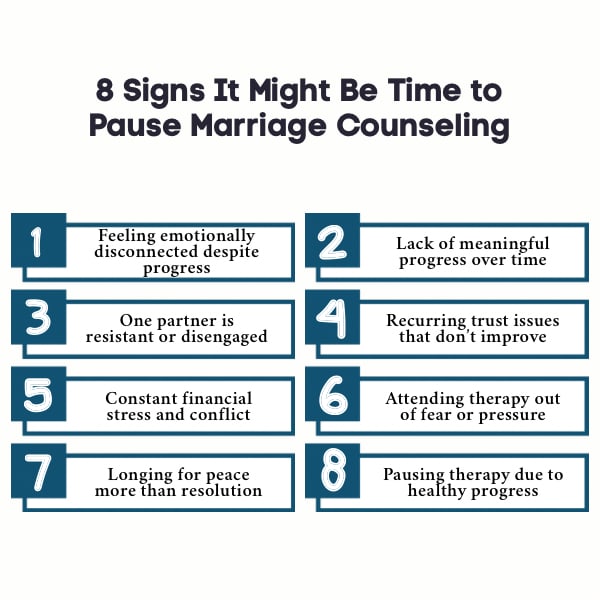
1. What if you’ve made progress but still feel emotionally disconnected?
You’ve both shown up, done the hard work, and made changes your therapist suggested. Communication has slightly improved, arguments may have reduced, and you've tried new ways of interacting.
But if, despite these efforts, you still feel lonely in your relationship, or like strangers living under the same roof, it might be a sign that emotional disconnection runs deeper than therapy can reach.
Not sure what to do next? A brief session with a couples counselor from TherapyRoute can help assess whether a new direction is needed.
2. What does it mean when there’s been little or no progress for months?
It’s normal for therapy to take some time, especially when trust is broken or communication styles are deeply misaligned. But if you’ve spent an embarrassing amount of time revisiting the same arguments, with no meaningful shift in outcomes, that could be a red flag.
A sustained lack of progress can lead to discouragement and therapy fatigue. It may also affect the effectiveness of counseling, especially if one or both partners begin to feel like the sessions are no longer worth the amount of time and energy invested.
3. How does one partner’s resistance affect the counseling process?
For couples therapy to work, both individuals need to be present, not just physically, but mentally and emotionally. If your partner often cancels appointments, barely speaks in sessions, or treats the process dismissively, it places an uneven burden on the willing partner.
While a skilled couples therapist can sometimes re-engage a resistant partner, long-term progress is unlikely without shared commitment. In such cases, moving toward individual therapy might be a better starting point for healing.
Wondering why your partner seems disconnected in sessions? Our blog Is it normal to hate therapy? offers insight into what they might be feeling and how to navigate it.
4. What if trust issues keep coming back despite counseling?
Infidelity, whether emotional, physical, or digital, can severely damage a relationship. Maybe you’ve found evidence of your partner’s activity on a dating profile, or noticed they have multiple burner emails or fake names linked to various social media websites or bunch of dating apps.
Even after discussing these breaches in therapy, if new incidents keep occurring, trust may no longer be possible. No amount of counseling can rebuild broken trust when honesty is absent.
5. Could ongoing financial stress signal deeper problems?
Disagreements about money are one of the most common issues couples bring to therapy. Maybe your partner has a hidden separate account, a separate high interest savings account, or regularly moves funds without discussion. These secretive money habits can signal deeper issues around trust and control.
Arguments over shared expenses, budgeting, or handling of credit card debt can also overshadow progress. If you’re constantly fighting over money, therapy might feel like it’s not touching the root of the conflict.
6. Are you continuing therapy out of fear or social pressure?
Sometimes, the pressure to “make it work” comes not from within the relationship, but from outside, like relatives, friends, or what others might think. If you’re attending sessions just to avoid judgement, it can make the therapy space feel more like a performance than a safe zone for growth.
7. What if you’re craving peace more than reconciliation?
Not every ending has to be loud or bitter. Sometimes, you're no longer in conflict, but you're not connected either. You may dream of separate paths, a quiet space of your own, or just the relief of not having to try so hard anymore.
If every first session feels like déjà vu, or stepping through the front door of your therapist’s office feels heavier each time, you may already know it’s time to step back. There’s nothing wrong with wanting peace more than resolution.
8. What if things are going well and therapy no longer feels necessary?
Not all endings are negative. Sometimes, couples grow stronger and learn to handle conflict, communicate better, and support each other without constant guidance.
In such cases, pausing therapy can be a healthy sign of progress—not giving up, but moving forward with confidence. You can always return if needed.
Trying to heal after a rough patch? Discover the 7 key truths to understand when rebuilding a broken marriage and take the first steps toward real restoration.
What to Do After Stopping Therapy?
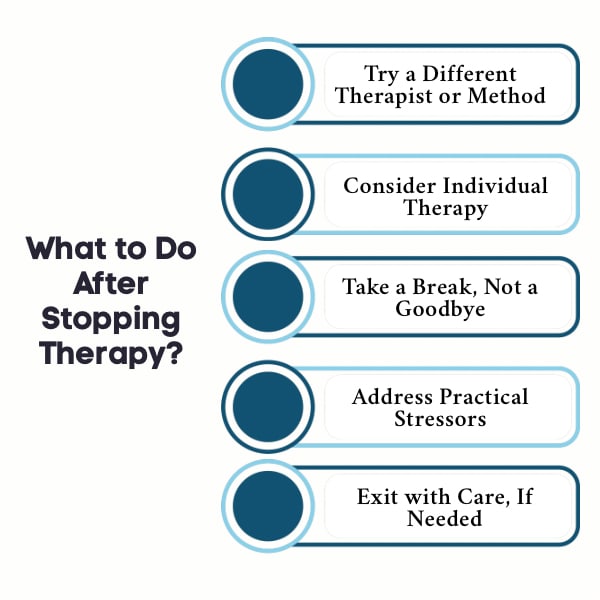
Realising that therapy isn’t helping can feel disheartening, but it’s also an opportunity to pause, reflect, and choose your next steps with intention. Stopping doesn’t mean failure; it simply means it’s time to reassess what your relationship (or you) truly need. Here are a few compassionate paths to consider:
1. Try a Different Therapist or Method
Sometimes, progress stalls because the therapeutic approach isn’t the right fit. A new marriage counselor or a different method, like emotionally focused therapy, may offer fresh insights and renewed momentum.
2. Consider Individual Therapy
If joint sessions aren’t working, you might benefit from focusing on your own healing. Individual therapy can help you process your emotions, clarify your needs, and support your growth, regardless of your partner’s choices.
3. Take a Break, Not a Goodbye
A structured pause can offer space to breathe. Use the time to reflect, have honest conversations outside the therapy setting, or try alternative formats like workshops or guided journals.
4. Address Practical Stressors
External issues like hidden spending or unresolved credit card debt can quietly fuel emotional distance. Tackling financial concerns, perhaps through a debt relief program, can relieve pressure and open space for healing.
5. Exit with Care, If Needed
If parting feels inevitable, it can still be done gently. Closure sessions with your therapist can help both of you honour the relationship and move on without bitterness.
Not sure which direction to take next? TherapyRoute connects you with trusted professionals who can support you, wherever you are in your journey.
Struggling with recurring issues? Read our guide on common marriage problems and how to handle them for practical insights and support.
Why TherapyRoute Is the Right Place to Reassess Your Relationship Journey?
Need support making the next move? Whether you’re thinking about continuing, pausing, or shifting your approach, TherapyRoute can help you take the next step with confidence. As a clinician-led platform with helpful tools, TherapyRoute connects you with verified marriage counselors, couples therapists, and individual therapists who understand where you are, and where you’re trying to go.
Each profile is transparent and easy to browse, so you can find someone who truly fits your journey. Start exploring your options available today and discover compassionate support that meets you exactly where you are.
Conclusion
Deciding to stop therapy sessions can be difficult. Many worry they’re making one of the biggest mistakes people make, and that’s quitting too soon. But sometimes, stepping away is what brings clarity and relief. The effectiveness of marriage counseling depends on timing, openness, and whether both partners are engaged. If the counseling process feels stuck or exhausting, it may be time to consider a “stop it now counselling” mindset, one that prioritises your emotional well-being and acknowledges when enough is enough.
Some couples find their own way back outside therapy. Others realise that growing apart brings more healing than staying. In either case, the goal is to move toward honesty, emotional well-being, and lasting peace of mind. Still unsure? TherapyRoute can help you reflect, explore your options, and find support that aligns with your journey.
Frequently Asked Questions
1. Can marriage counseling make things worse?
It can, in rare cases, especially when a therapist is biased, lacks training, or doesn’t manage sessions effectively. Unresolved trauma or intense conflict can also cause sessions to feel more volatile than healing. That’s why choosing a well-trained marriage counselor is essential.
2. Should we stop therapy if arguments increase after sessions?
Some tension is expected early on as tough topics emerge. However, if arguments become more frequent or aggressive after sessions, it may indicate that therapy is triggering unresolved pain. Speak to your therapist about pacing or consider a temporary pause.
3. How do I bring up stopping therapy without sounding blaming?
Use “I” statements. For example, “I feel like we’re stuck and I wonder if trying something different might help.” Avoid saying things like “You’re not even trying.” Expressing your perspective openly but gently is key to productive dialogue.
4. How many sessions should we try before deciding if marriage counseling is working?
There’s no fixed timeline. However, most therapists recommend reassessing after 6–8 sessions. If there are significant reductions in conflict or improved communication, that’s encouraging. If things remain unchanged, it might be time to reflect or adjust your goals.
5. Can therapy help if only one partner is willing?
Yes. While joint sessions are ideal, one person can still benefit from therapy, whether to gain clarity, build resilience, or prepare for future conversations. Even if your partner isn’t open to therapy now, you don’t have to wait to seek support.
Important: TherapyRoute does not provide medical advice. All content is for informational purposes and cannot replace consulting a healthcare professional. If you face an emergency, please contact a local emergency service. For immediate emotional support, consider contacting a local helpline.
Find Therapists
Must Read
Creating Space for Growth: How Boundaries Strengthen Relationships
Setting healthy boundaries fosters respect, protects emotional well-being, and strengthens relationships by defining personal limits and maintaining self-care.
International Mutual Recognition Agreements for Mental Health Professionals
Mutual recognition agreements for mental health professions are rare and uneven, with major gaps in counselling, social work, and allied therapies. Read on to understand ...
Mental Health Licensing & Regulation in New York State: 2026 Guide
Mental Health Licensing & Regulation in Singapore: 2026 Guide
Jumping to Conclusions
Jumping to conclusions is a thinking habit where we assume the worst or make judgments without enough evidence. By recognising this pattern, therapy can help you slow dow...
About The Author

TherapyRoute
Cape Town, South Africa
“Our in-house team, including world-class mental health professionals, publishes high-quality articles to raise awareness, guide your therapeutic journey, and help you find the right therapy and therapists. All articles are reviewed and written by or under the supervision of licensed mental health professionals.”
TherapyRoute is a mental health resource platform connecting individuals with qualified therapists. Our team curates valuable mental health information and provides resources to help you find the right professional support for your needs.