What Therapy Does

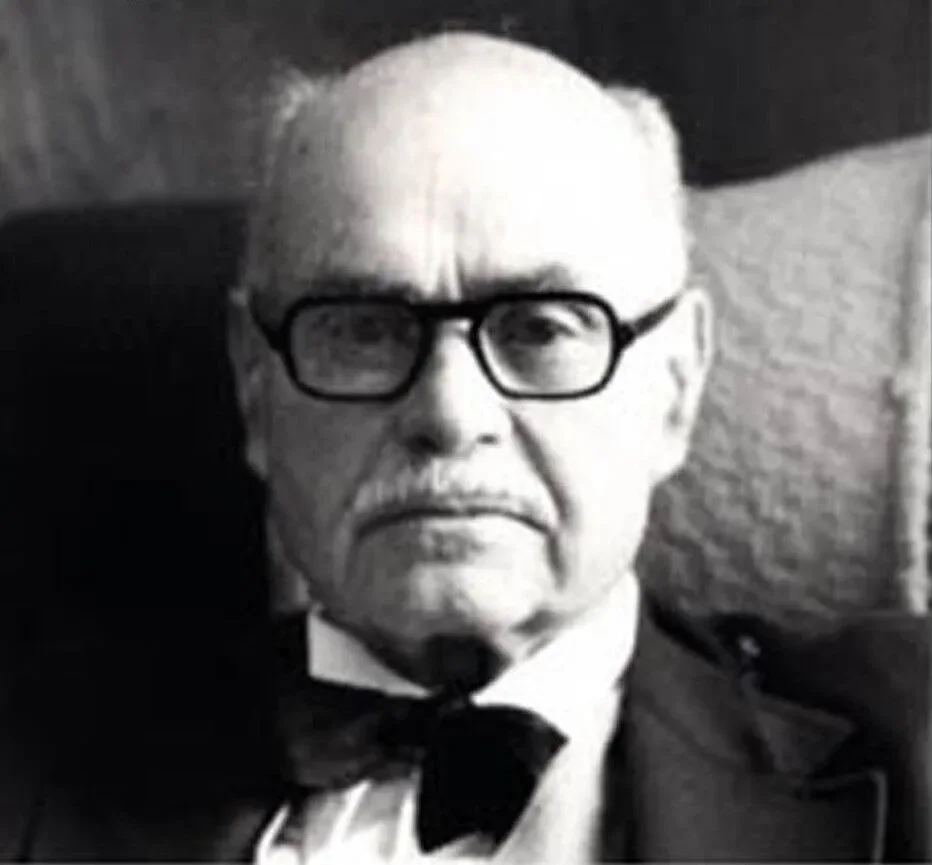
Henry Zvi Lothane
Psychiatrist
New York, United States
❝Psychotherapy, i.e. therapy of the word, addresses both the inward and the outward realms in a person’s life.❞
Dedicated to my South-African friends Barnaby Barratt and
Mark Solms
Looking for evidence-based support? Find a qualified psychologist near you through TherapyRoute.
Find a PsychologistTHE METHOD
Everyone is engaged both in the (1) outward realm of actions upon things and (2) interpersonal actions, or interactions, among persons and communications of the inward realm of feelings, emotions, imaginings, memories, thoughts, and intentions. The inward states either persist as an impression, conscious or unconscious, or, they become motives of an expression, the passage from a potentiality to the actuality of action. Psychotherapy , i.e. therapy of the word, addresses both the inward and the outward realms in a person’s life.
Traditionally, therapy has for generations focused on the inward realm, leaving actions, i.e., behaviours, to take care of themselves, or refer them to cognitive behaviour therapy. My approach, which I call dramatology, addresses both realms, the inward and the outward. The ancient Greek word drama means action, as shown in the invented dramas staged in theatre, film, or television, in which art imitates life. In the dramas of everyday life, crises as events, scenes of communion or conflict, are also expressed in dialogues and gestural interactions: real, not fictional, communications. Invented dramas are the stuff of dramaturgy, distinct from dramatology. It is also distinct from psychodrama, based of roles and dialogues invented by the therapist.
Dramatology addresses the two forms of the human ability called dramatization: (1) in fantasy, in dreams, as scenic images with action suspended, (2) in act, in waking daydream scenarios that may pass into actions and interactions (see “Dramatology” in Wikipedia).
One of the central forms of crisis is trauma, and trauma is a form of drama. Trauma/drama is a ubiquitous element that to be worked through in therapy.
HOW IT WORKS
Dramas are scenes mutually experienced, enacted, and witnessed in the here-and-now. As historic facts, such scenes remain unchangeable. Recalled scenes of the there-and-then become narratives, told to oneself or to others, and these are as changeable as the person who recounts the scene or scenes. We all carry our personal narratives as part of our identity, of our presentation to ourselves to others. These narratives constitute the person’s life history. This history is either veridical or variously invented, consciously or unconsciously. The unravelling of that history recalled in the various narratives may, at the end of therapy, present a picture that is veridical and in all essential details complete. So armed, and with the advantage of insights gained in therapy, the patient can give up past maladaptive character defences and traits and lead a more productive life.
The patient usually seeks therapy following a crisis related to career, family or other relationships, and hits a wall. The crisis may be temporary, and may thus be resolved with the help of brief therapy. Or it may be tied to old problems and patterns of character, and requires a prolonged therapy.
WHAT IS ACTION AND INTERACTION IN THERAPY
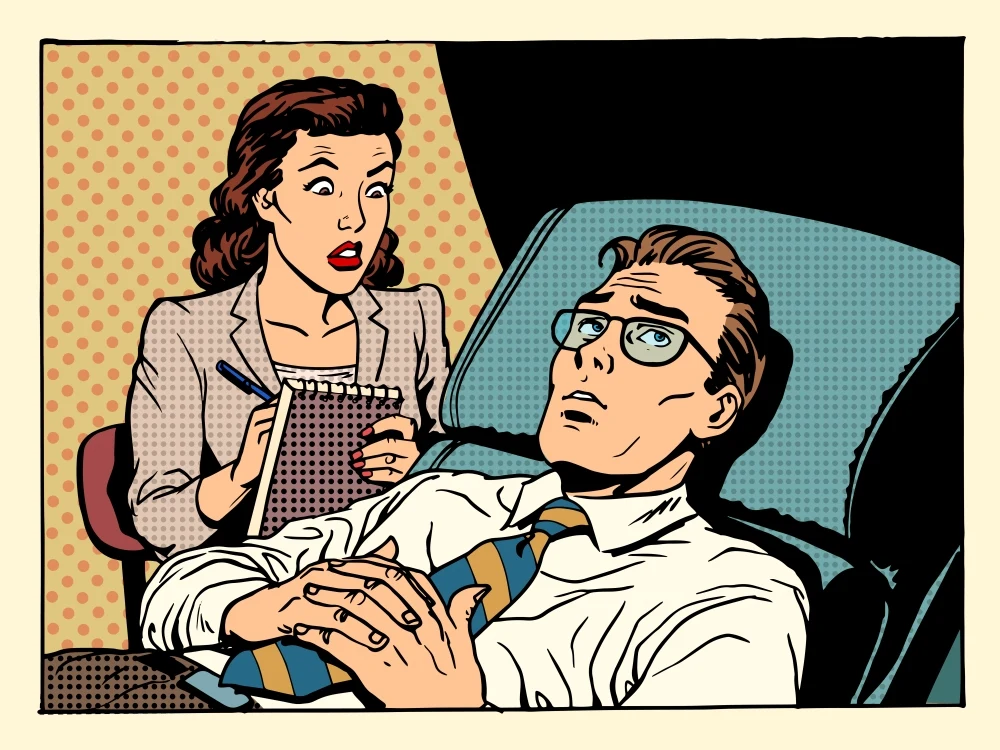
Like other dramatic situations of everyday life, whether personal or political, therapy is an inherently dramatic situation of communications in words or in gestures, mimicry or impersonation, in it is witnessed by both participants in the here and now. The patient’s images, thoughts and his or her associations are expressed in words that evoke corresponding images, thoughts and associations in the therapist as listener. The activities of speaking and listening alternate between both participants. This mutually evocative interchange utilizes free association as a fundamental therapeutic instrument which I renamed reciprocal free association. Therapy is based on this team-work between patient and therapist.
THE TECHNICAL AND THE ETHICAL ASPECTS
Free association in both patient and therapist is the heart the varieties of therapy (including psychoanalytically oriented psychotherapy) is ubiquitous in any act of memory, in any intelligent application of past experience to solving a present problem.
The technical role of association and free association is joined with the ethical requirement that the patient be candid, sincere, and honest with the therapist as the therapist is required to embody the same qualities. Speech can both disguise thoughts and emotions and disclose thoughts and emotions. The lack of candour is one of the resistances to the process of therapy. Candour guarantees the disclosure of all thoughts and feelings, overcoming any resistance either due to self-criticism or other peoples’ criticism. That takes a lot of therapy work to overcome. Any departure from candour adds confrontation to interpretation.
THE ROLE OF LOVE IN THE PATIENT-THERAPIST PARTNERSHIP
The guiding principle follows the spirit of the Biblical precept: love your patient as yourself. What is meant here is love writ large, the love of humanity as embodied in this particular time and place, as a show of friendship, sympathy, tolerance and acceptance offered by the therapist to the patient, and the trust of the patient in the therapist, which is in keeping with the aforementioned ethical character of free association.
Henry Zvi Lothane, MD, New York
Clinical Professor of Psychiatry
Icahn School of Medicine at Mount Sinai
Member of the American and International
Psychoanalytic Associations
 Henry Zvi Lothane
Important: TherapyRoute does not provide medical advice. All content is for informational purposes and cannot replace consulting a healthcare professional. If you face an emergency, please contact a local emergency service. For immediate emotional support, consider contacting a local helpline.
Find Therapists
Must Read
Creating Space for Growth: How Boundaries Strengthen Relationships
Setting healthy boundaries fosters respect, protects emotional well-being, and strengthens relationships by defining personal limits and maintaining self-care.
International Mutual Recognition Agreements for Mental Health Professionals
Mutual recognition agreements for mental health professions are rare and uneven, with major gaps in counselling, social work, and allied therapies. Read on to understand ...
Mental Health Licensing & Regulation in New York State: 2026 Guide
Mental Health Licensing & Regulation in Singapore: 2026 Guide
Jumping to Conclusions
Jumping to conclusions is a thinking habit where we assume the worst or make judgments without enough evidence. By recognising this pattern, therapy can help you slow dow...
About The Author

TherapyRoute
Mental Health Resource
Cape Town, South Africa
“Our mission is to help people access mental healthcare when they need it most.”
TherapyRoute is a mental health resource platform connecting individuals with qualified therapists. Our team curates valuable mental health information and provides resources to help you find the right professional support for your needs.