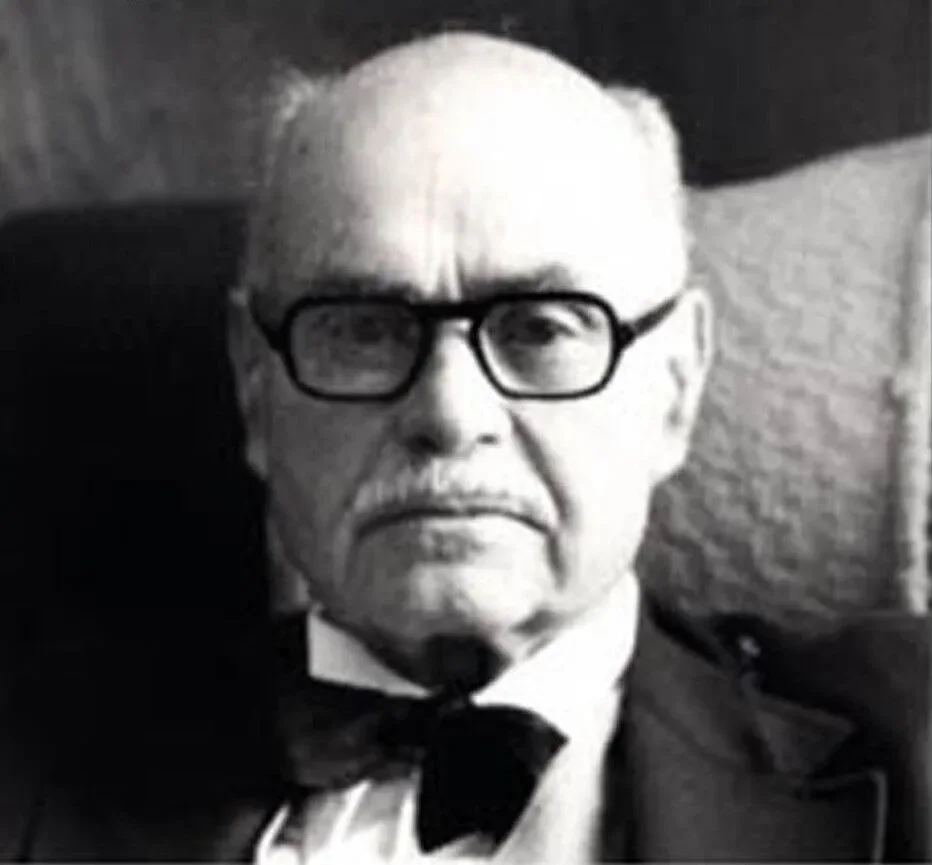
Truth Does not Need a Thinker

Rafael E. López-Corvo
Training and Supervising Psychoanalyst
Toronto, Canada
❝Psychoanalysis trains the conscious to contain the truth released by the unconscious, for growth, not a tragedy. For Bion, 'Truth is to the mind what food is to the body.’❞
A Clinical application of W. R. Bion’s theories, by
Rafael E. López-Corvo1
The sky is blue by itself, it does not need a thinker to decide its colour.
Looking for evidence-based support? Find a qualified psychologist near you through TherapyRoute.
Find a PsychologistOf all things the measure is Man, of the things that are,
for what they are, and of the things that are not,
for what they are not.-Protagoras
Be not too hasty, skimming over the bookOf Heraclitus; 'tis a difficult road, for mist is there,and darkness hard to pierce, but if you have the truthas a guide, then everything is clearer than the sun. -Diogenes Laertius
About truth
As I read Bion, I experienced the challenge of attempting to find a clinical continuity between Classical Psychoanalysis and new conceptions introduced by him; after all, truth would be available to any mind willing to access it. Different conclusions could often represent dissimilar perspectives or vertexes used in order to approach the same truth. Let us take two different issues very much present in human beings, apparently unrelated to each other, to which not great significance has yet been adjudged, notwithstanding the extraordinary importance both appear to represent when they seem to disclose a powerful presence of nature. I am referring to the existence of hymen in women and the unconscious’ universal illiteracy we are born with.
The ‘culture of pain’ associated with virginity and sexual penetration at the age of 11 or 12 years -at a time when pregnancy is already possible- induces a girl to postpone sexual intercourse to an older age, five or more years, granting herself an opportunity to manage better the unprecedented ‘violence’ brought by maternity as well as the opportunity to provide the baby with a mother better endowed.
We are born unable to understand the complex and puzzling language of the unconscious, as observed in dreams for instance, and will require the need of a translator such as the psychoanalyst in order to unravel its cryptic meaning. I believe this illiteracy represents a protection from the ‘violence’ implicit in truth, which is continuously revealed by the unconscious and only grasped by consciousness once there is a willingness to deal properly with such revelation. Bion suggested that Oedipus’ insistence to obtain the truth from Tiresias at any cost, at a time when he was not prepared to deal with it, represented the existence in his character, of a combination of “curiosity, arrogance, and stupidity”.
The Oedipus myth is a narrative dealing with lies and concealed truth; the Sphinx for instance, presented people with a riddle, and they were instantly killed by the monster once they failed to provide the right answer. Oedipus however, after killing the king at the cross road without knowing he was his father, provided the right answer to the Sphinx, who, not withstanding the power of truth, committed suicide. Grateful for this accomplishment, the city presented Oedipus with the tragedy’s true substance: the ‘recently-vacated’ crown of Thebes from the King his father, and the ‘recently-widowed’ Queen Jocasta his mother. Psychoanalysis trains the conscious to receive and contain the truth continuously released by the unconscious, in a manner that will induce growth instead of tragedy.
Bion presents three possibilities in the interaction between contained and container: i) the three benefit from each other, meaning the unconscious as a revealer of truth, the pre-conscious as a receptor of the unconscious, and the truth itself; ii) or one destroys the other, like dreams that do not have a mind to read them become stray thoughts or disappear; iii) or the terror of truth is so great that consciousness closes itself completely to the unconscious revelations, forcing the unconscious to overflow the conscious like a dam unable to contain the water, thereby producing a psychotic condition.
‘Truth is to the mind what food is to the body’, expressed Bion and he used the digestive system as a model to understand the mechanisms of the mind. Food, similar to ‘realistic facts’, follow three alternatives: a) either it is assimilated and transformed into energy and physical growth; b) or stored as fat which might be used later on in case of famine, like provisions for an emergency; c) or expelled as ‘undigested food’ through the emunctories (urine, sweat, feces). Following Bion, ‘reality facts’ like food, conceived as raw material or beta elements, are perceived through the sense organs and will also follow three alternatives: a) either they are digested by alpha function and transformed into mental growth; b) or are stored (like fat) in the memory as indigested thoughts, beta elements, or wild thoughts waiting for a mind to digest them; c) or are expelled through ‘mental emunctories’ (sense organs) with the use of dream s, myths, hallucinations or projective identifications. Alternatives b and c result from lack of alpha function, capable of containing the always menacing violence of truth. In this condition, consciousness, -or more precisely the psychotic part of the personality- being influenced by the pain-pleasure principle, experiences reality as a threat. Such threat induces the need for the use of defence mechanisms which act as lies to cover up awareness of a presumed menace from reality. Undigested facts are then stored in the memory, some of them representing wild thoughts waiting for a mind (alpha function), like a psychoanalyst, capable of making proper use of them.
Just imagine a thirsty dinosaur, possibly a tyrannosaurus, walking slowly one early summer morning to the edge of what might be now a vanished lake or sea. 180 millions years later, a group of geologists, for instance, while examining some interesting sandstones in a ditch freshly washed out by heavy showers, discover footprints engraved in the limestone revealing the footsteps of that thirsty dinosaur’s early walk. It might have been a regular uneventful act repeated regularly, although this time, at that particular morning, the presence of a series of variables conjoined at once to preserve the footsteps forever. The massive weight of the animal, plus the quality of the sand or mud, together with weather conditions, such as temperature, humidity and so on, managed to safeguard the tracks. It meant in summary that now, when there is no longer a lake and the dinosaur has been erased from the face of the earth, its footprints, produced in just one instant, became preserved for eternity. In other words, what should have been otherwise a temporary event became a permanent fact; an overwhelming absence became a significant presence.
Similar to a wheel running on a track, reality only touches one point, rests on one instant, the present, while incessantly flowing from the past to the future, at the pace of Heraclitus’ river. If reality represents a temporary event circumscribed by one instant, we could then ask, what penumbra of circumstances, similar to those which granted eternity to the dinosaur’s footprints, would implement sufficient weight in order to change what otherwise would have been a person’s transient moment, into something permanent,? What would make a temporary absence a permanent presence? There are conditions that by their very nature, would break through Freud’s ‘protective shield’, would not be contained by the mother’s reverie, and eventually could inflame the self forever, like fossilized “footprints”. They will be changed into the substance for dreams, phantasies or transference and countertransference dimensions, ‘wild thoughts’ eternally preying for a mind that by containing them would provide a history and a truthful meaning that, eventually will allow them to be forgotten.
The ‘alive’ mind, different from a dinosaur’s ‘inanimate’ footprints, provides ‘life’ or emotions to the prints, similar to the mind that invents a ghost to compensate for a lost limb. In other words, ‘undigested truth keeps returning searching for a thinker’. Such “aliveness” I consider analogous to Freud’s “instinct of mastery”, an implacable search for truth that Grotstein (2004) -considering the intensity with which wild thoughts search for a thinker- has very recently considered as representing a veritable “truth instinctual drive”. In the same line, Bion (1967) has suggested that, Freud’s analogy of an archaeological investigation with psycho-analysis was helpful if it were considered that we were exposing evidence not so much of a primitive civilization as of a primitive disaster. The value of the analogy is lessened because in the analysis we are confronted not so much with a static situation that permits leisurely study, but with a catastrophe that remains at one and the same moment actively vital and yet incapable of resolution into quiescence2. (p.101)
Let us look at a session from Bertha, a 34 year old school teacher, single and in her second year of analysis. She has lately been dealing with the mental pain induced by her parents' divorce when she was only three years of age. In the transference, it was obvious that her apprehension of trust, as well as her need to control, was possibly a defence against her fear of being rejected, forgotten or ignored as she felt her father did. She always takes off her shoes before she lies down on the couch. This time she is wearing boots and does not take them off, something I noticed but said nothing about. She mentioned an argument with her father, and realized she shelters great amount of resentment against him. She had a dream: there was a huge cockroach and she killed it but then, out of the dead insect came like a thousand of smaller ones. She refers to a classmate that is rather contradictory, will say terrible things, and then says the opposite. The other day this friend told her that Bertha’s feet smelled, and then, when at a given moment Bertha stood up to put a book on a shelf; she said that Bertha had a “tight ass”, and that she could “crack all the books with her ass”.
I said that I was wondering if her fear of being dirty made her not wants to take off her boots. She denied it and said that she didn’t do it because it was too much trouble; however, I did not believe what she said, but said nothing. Then I said, that feet, if dirty, could be washed, it is something temporary, but if the dirt is related to her feeling that her father left her because she had a dirty ‘tight ass’ that attacked and destroyed any “knowledge” of him, it was then a permanent issue, like the cockroach that if multiplied into a thousand, became permanent and impossible to get rid of.
Because external reality is incessantly becoming, it will present for this reason, a temporary status continuously changing. We could avoid external reality, but internal reality, such as ‘unthought thoughts in search of a thinker’, stands for an inner and permanent threat. It is the continuous pressure from these wild thoughts that, according to Bion (1967), will manufacture an apparatus for thinking. While the non-psychotic part of the personality deals with reality and transient issues, the psychotic part is contained by the permanency of ‘wild print-thoughts’. While splitting of space changes a fact from private to universal (like in projective identification), splitting of time changes a fact from temporary to permanent (like in transference). Dinosaur’s footprints have been there for many years, meaning nothing to the neophyte’s eye, until becoming significant to the geologist’s gaze, similar to the penicillin to Fleming or the unconscious to Freud.
‘O’ or countertransference?
Since I have already referred to ‘O’ in more detail, I will now only pass on briefly, and guide the reader to the previous chapter. It is my feeling that, although there is a growing interest in the psychoanalytic community about several of Bion’s contributions, his description of O is not a popular one. It has produced opposite reactions in Latin American psychoanalysts to those observed in North American colleagues, that is, it is of great interest amid the former while usually ignored and never mentioned amongst the latter. The Symingtons (1966) for instance, stated that when Bion introduced the concept of O, “some in the Klein group were quick to dissociate themselves from his thinking from that time onwards”; and later on, after he published “Memoir of the future”, many British analysts, according to the same authors, considered Bion had mentally deteriorated after leaving England, to the point that “everything he wrote subsequent to his departure was to be dismissed as the rambling of a senile man” (Symington, 1966, p. 10). For Bion the use of O during the analytic therapy , together with the absence of memory, desire, and understanding, stands for an essential instrumentation that eases the grasp of the unconscious message3.
Not all the associations that appear in the analyst’s mind during an analytic session are induced by the unconscious production of the patient. Elucidating between those phantasies that are the product of the countertransference and those induced by the transference, is not an easy task. For Bion, this operation is absolutely indispensable, and O must be picked up with an act of faith and then transformed into K in order to construct an interpretation. How is one to know then, if the phantasy that appears at a given moment in the analyst’s mind is an expression of O, instead of an unconscious pathological element that is now surfacing? Attempting to avoid this dilemma, I use a simple rule: if I hear the material absolutely concentrated without memory, desire and understanding, all the phantasies that appear could represent O, but if, while listening, I get lost in my own associations and do not follow the thread of the patient’s production, then my own countertransference might be responsible for whatever is causing my distraction. I have also found it useful to observe, that sometimes such distractions take place with some particular patients.
I remember, for instance, the case of Helen, a 33 year old, married woman in analysis for 7 years, referred by her GP because of anxiety, agoraphobia, and suicidal ruminations. She was the oldest of five siblings, and her mother who was adopted, grew up, according to Helen, as a sort of ‘Cinderella’ often displacing her own childhood sufferings on to her children in the form of a strict and frequently unfair discipline. At one point, at the beginning of her analysis, Helen remembered how her mother forced her and her siblings to remain in the garden after school until the time to go to bed, with the excuse that they would dirty and mess the house up if they were to remain inside. From the beginning of the treatment, I started to observe that I had great difficulty concentrating on the material presented by Helen, often finding myself lost in a multitude of associations. During one of her sessions, seconds after lying down on the couch, she started to talk about the difficulty she had in parking her car in front of my house: “it seems that your neighbours are very busy”, she said. “I had to wait until your previous patient left to be able to park and at the end I had to park in front of a garage. I hope I will not be obstructing anybody wanting to get out of the house…I hate to be in somebody’s way, I don’t really want to interfere…” After a long pause she continued talking about her father in law who discriminates against women, saying that their place is in the house having children and looking after them.
At this particular moment I started to have phantasies about what to do in order to change some investments to have better dividends; and I also felt, that these phantasies were not related to the patient’s discourse, because I remembered also being previously in a similar predicament, even though the material brought then by the patient, was completely different. Becoming aware that I was on the verge of losing the thread of my patient’s associations, I tried to concentrate again, but I found it extremely difficult, almost painful -similar to previous sessions- to give up the mental tactics I was applying in order to ‘improve’ my finances. I felt that, although the contents of my phantasies were my own, the repetitious need to disconnect from this patient’s discourse, and the painful difficulty in keeping my concentration on her communication, made me wonder, whether there was something in the form of a projective identification I was dealing with, but was not then aware of. In other words, I thought there were two different issues taking place at the same time; on the one hand there was a ‘needy’ element of my own which was concerned with improving my investments, representing my countertransference in Bion’s terms; on the other hand there was also an emotional counterpart product of a projective identification which required an investigation in order to understand the true nature of its meaning.
My patient spoke about a young sister-in-law who was still living with her parents and was very much emotionally dependent on them. At this moment, it came to my mind what she had said at the beginning of the session, that there ‘were too many cars in front of my house, and she had had to wait until my previous patient left and that she had parked in front of somebody’s garage’. I then felt certain that there was a relationship between these aspects of her discourse and my difficulty concentrating. I had the feeling that I was abandoning her, leaving her alone to talk to herself, while I absented myself, as if the interaction between us was very painful. I also thought that there was an important schizoid aspect about her, since I often have the phantasy that I could have abandoned the office without her noticing it. I felt it was like a revelation of something, which had been going on in the session for quite some time, without my being able to figure it out. In other words, I thought it was like capturing Bion’s O.
Then I said that I believed she felt threatened by other patients-siblings and their ‘busyness’ she imagined I was ‘sharing’ with them, something that made her feel painfully excluded and filled her with anger to the point that she wanted to stop the ‘exit’ (like parking in front of the garage) of other siblings-patients; that perhaps she felt so threatened by the birth of so many brothers and sisters after her, that she might have tried to continuously ignore them. She was silent for a while and then said that not only was she the oldest of all, but she was five years older than her immediate brother, and that there was only one year difference between him and the next. She stated: “They were always together, always playing among themselves and never allowed me to participate, I always felt left out”. When her sister was born, she remembered thinking that perhaps, since she was a girl, this sister could have been a good playmate, but the difference in age was so great that it made it impossible. She remembered growing up alone, discriminated against not only because she was the oldest but also because she was a girl. Her voice at this moment was significantly sad, and I was, different from other moments, extremely attentive and receptive of her emotions, listening to her gloomy account about her feeling of exclusion, always lonely and with a considerable amount of envy towards the capacity of her siblings to play with each other. She was talking in a low voice, frequently interrupted by quivers and sudden bursts of crying.
She also referred to her own nine year old daughter who is an only child, and to her fear of having other children, because she did not wish to expose her daughter to the presence of other siblings, as it had happened to her. I thought that my difficulty following her associations was related to a projective identification that attempted to protect her from a painful history of continuous exclusions and mistreatments, of feeling neglected and uncertain, as if she did not have a place of her own or the right to ‘be’. What I experienced in the countertransference was the presence of an absence, the feeling of someone cast off in her own phantasies, which induced again her childhood experience of being left completely isolated without a companion to play with.
The next session was the fourth and last of the week. She described in detail her daughter’s birthday party, while I struggled again with my tendency to turn to my own phantasies. Then she mentioned -almost at the end of a session where I have remained completely silent- that her doctor, the one who had referred her to see me, had sent me his greetings, and she added with a certain tone I perceived as a kind of reprimand, that I should not forget my friends. At this moment, I felt present for the first time in the session and tried to build the interpretation around this issue. I said that she wanted not to forget about me and that I did not forget about her either, that I had been absent from the whole session without saying anything, that she wanted to make me present, however, this desire frightened her. She preferred to talk about other things, perhaps because this made her remember painful matters from her infancy.
On the next session, she started to talk about her work, with the same previous monotonous details and again I experienced the same difficulty following her. Suddenly, she became silent and remained like that for a long time. I felt uncomfortable and the need to say something. After 20 minutes, I said that it seemed to me that she was very determined to make me present, in a way she had never tried before. She agreed and added that she was feeling the struggle to see who was going to remain silent longer. She also remembered that her mother often would order her around or give her directions and that, in reality, her mother did not care if what she ordered was accomplished or not, for it seemed that the important thing for her was to make herself present and to show who the boss was. She continued: “My mother talked to me with the only purpose of debasing me as if I did not exist. Then I started to do the same with her, to talk in order to make her disappear, just to say anything in order to get rid of her, so she would leave me alone. I often thought that it was dangerous to try to make her know what I wanted; it was very painful to feel that I meant nothing to her, that I was only someone with whom she could practice being the owner. It was easier to ignore it all and to remain distant”.
During the next session, she saw through the office window, a cat that was walking through the garden and expressed that she did not like cats, “they are distant, very clean but ungrateful, not very friendly, interested only in what is convenient for them, different from dogs which are friendly, faithful, and grateful”. She remembered a dog she had when she was a child. This dog always followed her through the garden as she moved inside the house. Every morning, it moved its tail looking for her attention, “like saying good morning”. As she talked, I remembered about something she had previously said about her mother forcing her and her siblings outside of the house; that she could have felt like the dog, moving around the garden trying not to be ignored by those that were inside of the house, painfully aware and trying not to be forgotten.
Then she remembered a dream and explained that they were really two dreams. In the first dream, she felt a deep feeling of longing, sadness, and nostalgia, because her husband was away on a trip. The second dream was related to her work. She was told that her program at work, where she was a supervisor, had changed. The supervision was going to take place during different hours, something she felt was not right for the personnel because it was not providing her with enough time to prepare for it. However, she also thought that this change was convenient for her because it did not interfere with playing tennis. She provided no associations and I said that it seemed as if the dream was portraying the existence of two different parts in her, one was like a ‘dog part’: grateful, aware, friendly, and so on; and another one like a cat part: aloof, distant, ungrateful and concerned only with her things. That these dog-cat parts were similar to these two dreams which also seemed to represent both parts, the first dream depicting a dog part and the second one the cat part.
In the first part, she is deeply taken by the absence of her husband, by how important he is for her, and by how much she cares for him. The second part is impersonal and based on insignificant details about what might or might not be convenient. It was similar to what she talked about during the previous session, when, under the influence of the ‘cat part’, she attempted to ignore my presence, projecting the ‘dog part’, needy and sensitive, in order that she might avoid suffering, or when feeling excluded, I might become like a ‘forgotten dog’ and attempt to think about other things, similar to what she said she did in order to protect herself from suffering, when she felt mistreated or ignored by her mother. Also, she could project the ‘cat part’ into me, and then we could both become distant and ignore each other, like being and not being together or trying to make an analysis without really doing it. The problem perhaps was the difficulty in allowing us to become the dog part even if it implies suffering. She approved and started a recount of painful childhood memories about feeling abandoned and ignored and how she learned to feel numbness in order not to suffer.
I am completely convinced that it would have been much more difficult to understand her inner tragedy, or perhaps it would have taken more time, if I had used the transference only, instead of following my intuition about other feelings -or O in Bion’s terminology- in order to build the interpretation, in the way I have just described it. After this revelation, the analysis followed, for both of us, a completely different course, ending in mutual agreement a year and something later. From time to time I hear about her from our common friend the physician, who originally sent her for treatment. After several years, she appeared to be doing well with her family, remaining completely free of her original symptoms. She continued her work as a recognized historian and even managed to publish a book.
----
References
Bion, W. R. (1962). Learning from Experience. London: Karnac Books,1984.Bion W. R. (1965). Transformation. London: Karnac Books, 1984.Bion, W.R. (1967). Second Thoughts: Selected Papers on Psycho-Analysis. London: Karnac Books, 1993.Grotstein, J.S. (2004). Notes on the Superego. Psychoanal. Inq., 24:257-270. López-Corvo, R. E. (2003). The Dictionary of the work of W. R. Bion. London: Karnac Books.López-Corvo, R. E. (2006). Wild Thoughts Searching for a Thinker, a Clinical Application of W.R. Bion’s Theories. London: Karnac Books.Symington J. and N. 1966 The Clinical Thinking of Wilfred Bion, London: Routledge.
Notes
1Training and Supervising Psychoanalyst: International (IPA), Venezuelan (ASOVEP) Canadian (CPS), and American (APsA) Psychoanalytic Associations.2 My italics
3 Some have compared Bion’s O with Lacan’s Real. However, the latter do not carry the practical importance and essentiality, Bion has provided to O, at the moment of seizing the unconscious phantasy in order to create the interpretation.
Important: TherapyRoute does not provide medical advice. All content is for informational purposes and cannot replace consulting a healthcare professional. If you face an emergency, please contact a local emergency service. For immediate emotional support, consider contacting a local helpline.
Find Therapists
Must Read
Creating Space for Growth: How Boundaries Strengthen Relationships
Setting healthy boundaries fosters respect, protects emotional well-being, and strengthens relationships by defining personal limits and maintaining self-care.
International Mutual Recognition Agreements for Mental Health Professionals
Mutual recognition agreements for mental health professions are rare and uneven, with major gaps in counselling, social work, and allied therapies. Read on to understand ...
Mental Health Licensing & Regulation in New York State: 2026 Guide
Mental Health Licensing & Regulation in Singapore: 2026 Guide
Jumping to Conclusions
Jumping to conclusions is a thinking habit where we assume the worst or make judgments without enough evidence. By recognising this pattern, therapy can help you slow dow...
About The Author

TherapyRoute
Mental Health Resource
Cape Town, South Africa
“Our mission is to help people access mental healthcare when they need it most.”
TherapyRoute is a mental health resource platform connecting individuals with qualified therapists. Our team curates valuable mental health information and provides resources to help you find the right professional support for your needs.