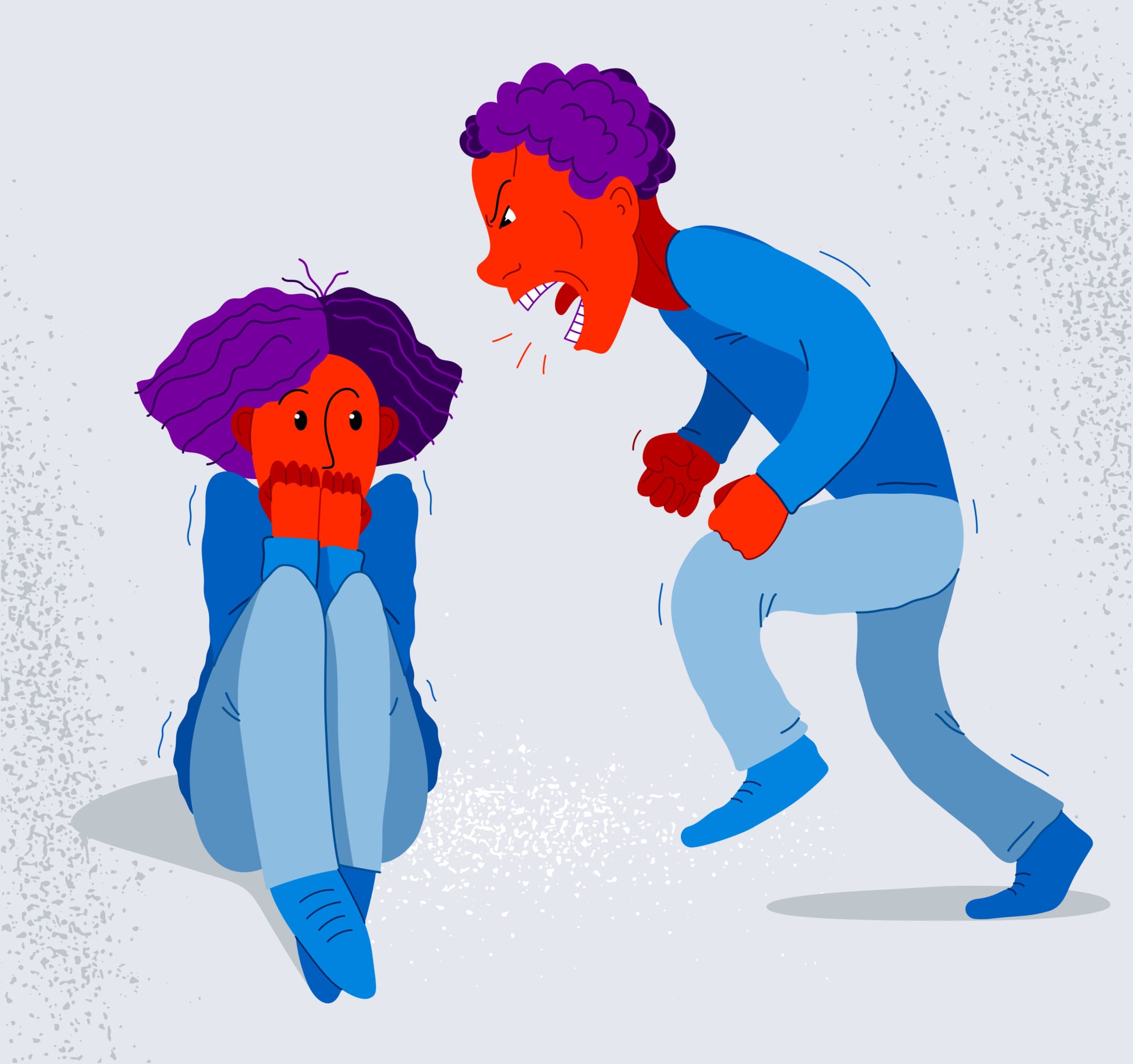
Trauma Bonding

❝It is difficult to imagine that someone can become attached to their abuser. This is what you should know.❞
You know something isn’t right when the relationship feels heavy, filled with confusion, fear, and flashes of tenderness that keep pulling you back in. You might find yourself justifying their behaviour, making excuses, or hoping that the kind version of them will stay for good this time.
This emotional tug-of-war has a name: trauma bonding.
It’s a powerful, often invisible tie that forms through repeated cycles of abuse and reconciliation, where kindness follows harm, and control masquerades as care. And it’s not just about romantic relationships. Trauma bonds can also exist between children and caregivers, in cults, or even within toxic workplaces.
Recognising that you’re in a trauma bond can be deeply unsettling, but it’s also the first step toward reclaiming your emotional safety and sense of self.
In this blog, we’ll explore what trauma bonding really looks like, why it happens, and most importantly, how to begin breaking free.
Table of Contents | Jump Ahead
- What is The Psychology Behind Trauma Bonds?
- How to Break a Trauma Bond in 7 Steps?
- What Causes Trauma Bonds?
- How Trauma Bonds Form: The 4-Phase Cycle
- Why It Feels Impossible to Walk Away?
- Finding the Right Kind of Help with TherapyRoute
- Conclusion
- Frequently Asked Questions
What is The Psychology Behind Trauma Bonds?
Trauma bonding isn’t just about being “stuck” in a bad relationship; it’s about how your mind and body respond to a cycle of pain and affection. It is the attachment an abused person feels for their abuser, specifically in a relationship with a cyclical pattern of abuse.
It forms when someone repeatedly hurts you but occasionally shows care or remorse. That mix of harm followed by kindness creates a powerful emotional tie that feels hard to explain and even harder to break.
Healing from trauma is possible with the right therapist. TherapyRoute lists trauma-informed professionals ready to support you.
Find a Trauma Therapist
It’s not just romantic.
Trauma bonds can happen in:
- Abusive romantic relationships
- Parent-child relationships with neglect, child abuse, or violence
- Cults, gangs, or groups with strict control
- Hostage or trafficking situations
- Workplaces where manipulation and dependency are present in any type of relationship, especially among victims of traumatic events.
What makes these bonds so intense isn’t just the abuse, it’s the unpredictability of the affection that follows. One moment you’re being controlled or hurt, and the next you’re being told you’re loved, needed, or special. That cycle is what traps you.
What about Stockholm syndrome?
There’s some overlap.
But while Stockholm syndrome describes the emotional attachment a hostage forms with their captor under extreme stress in hostage situations, this type of trauma bond shows up in more everyday relationships and tends to build positive feelings over time.
It’s a learned survival response, not a rare psychological twist.
When trauma shapes attachment, it takes the right kind of help to untangle it. Use TherapyRoute to find therapists who specialise in abuse recovery and attachment issues.
→ Browse by Therapy Type or Specialisation
How to Break a Trauma Bond in 7 Steps?
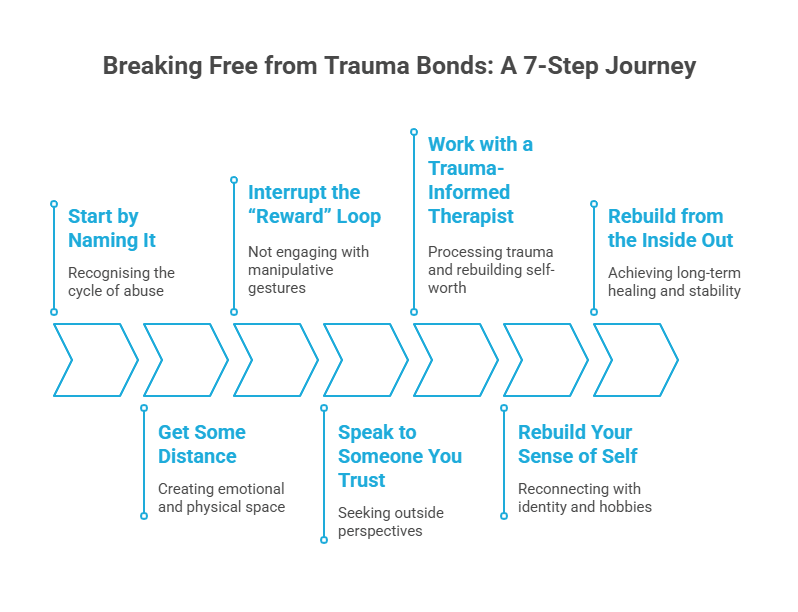
Breaking a trauma bond isn’t about “snapping out of it.” It’s a layered process that involves awareness, safety, and professional support from a mental health professional, as well as a support network and a lot of emotional work, especially if it stems from an abusive relationship.
Getting professional help can be crucial in this process. You’re not just leaving a relationship, you’re unlearning a pattern your nervous system has come to rely on.
Here’s where that process begins:
Step 1. Start by Naming It
The first step is recognising the cycle of abuse and the red flags for what they really are, abusive behaviour, followed by just enough hope to keep you attached.
- Many people don’t realise they’re in a trauma bond until someone names the pattern.
- Acknowledging the cycle, abuse, apology, hope, repeat, is the first real shift.
- Journaling daily events can help reveal subtle patterns that you’ve been rationalising or minimising.
Step 2. Get Some Distance
Creating emotional or physical space helps interrupt the influence of the bond and gives your nervous system a chance to reset.
- If it’s safe to do so, create physical and emotional distance.
- Limit or cut off contact where possible. If you can’t (e.g., in co-parenting situations), try low contact with clear boundaries and support in place.
- Find a safe place, this could mean staying with a friend, family member, or accessing community support services.
Step 3. Interrupt the “Reward” Loop
Trauma bonds are sustained by unpredictable kindness. Breaking the loop starts by not responding to it.
- Try not to engage with gestures that reset the cycle, texts, apologies, gifts, or declarations of love.
- Recognise them as part of the pattern, not proof that things will change.
- Give yourself time to feel the discomfort without reaching back for temporary relief.
Step 4. Speak to Someone You Trust
You don’t have to do this alone; outside perspectives can cut through confusion and offer clarity.
- Isolation feeds trauma bonds. Connection helps break them.
- Talk to someone outside the situation, a friend, therapist, or support group, who can validate your experience and reflect things you may no longer see clearly.
Step 5. Work with a Trauma-Informed Therapist
Therapy provides a safe space to process trauma, rebuild your self-worth, and learn new coping skills.
A therapist can help you:
- Make sense of your emotional reactions and coping strategies.
- Set boundaries and rebuild your self-trust.
- Address symptoms of complex trauma, like dissociation or self-blame.
- Learn to regulate your nervous system and respond instead of reacting.
Not every therapist is trained in this. Look for someone who understands complex PTSD, attachment trauma, and abuse dynamics. TherapyRoute makes it easier to find qualified, trauma-informed professionals.
Step 6. Rebuild Your Sense of Self
Healing means reconnecting with who you are outside of the relationship by doing new things, one small step at a time, while establishing healthy boundaries.
- Trauma bonds erode your self-esteem and identity.
- Start small: practice saying no, reconnect with hobbies or people you lost, and re-establish routines that belong to you.
- Use daily affirmations to challenge internalised blame, like “I am not responsible for someone else’s abuse” and "I am still healing, everything doesn't need to make sense to me right away."
Breaking free is a process, not a single decision. You may leave, return, question yourself, and leave again. That doesn’t mean you’re failing. It means you’re healing in real time.
Step 7. Rebuild from the Inside Out
Long-term healing is about stability, safety, and slowly becoming your own safe space.
- Reclaim small choices: What do you like? What brings a sense of calm or joy? Start there.
- Challenge self-blame: Abusive dynamics distort reality. Affirmations and self-talk aren’t fluff, they help you rewire how you relate to yourself.
- Process at your pace: You don’t need to “bounce back.” Recovery isn’t linear. Some days you’ll feel strong. Other days, you might grieve or second-guess. Both are part of moving forward.
Real healing starts with the right help. TherapyRoute’s verified directory lets you filter by trauma expertise, therapy type, and cultural fit, so you get support that actually works.
→ Explore Trauma-Informed Therapists Now
What Causes Trauma Bonds?
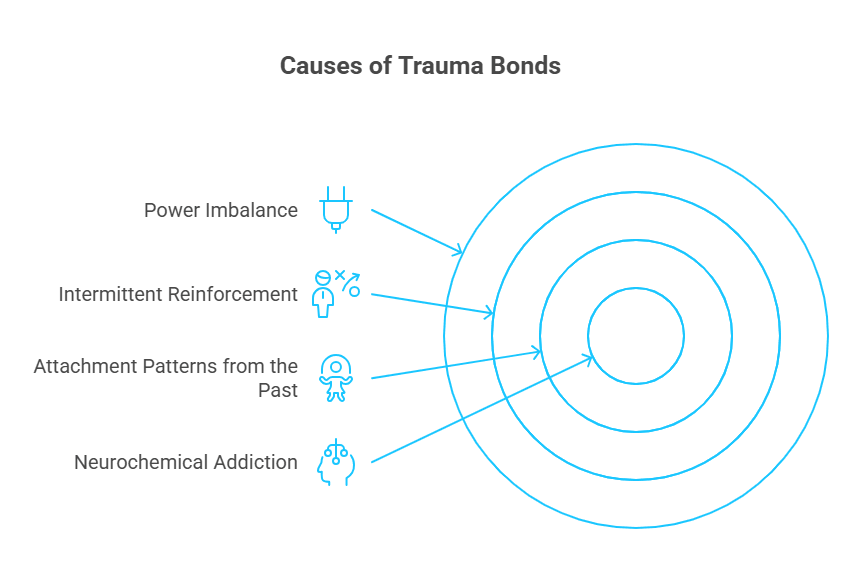
There are a few key forces that explain why trauma bonds form and why they’re so difficult to break, none of which mean you're weak, broken, or choosing emotional abuse.
Here are the 4 major ones of them-
1. Power imbalance
One person holds the emotional or physical power and uses it to control the other. You might feel like they decide:
- When you’re safe or not.
- Whether you're loved or punished.
- What you’re allowed to say, feel, or do.
When the other person has this kind of control, it becomes harder to see your own options clearly.
2. Intermittent reinforcement
This is a behavioural pattern where cruelty is interrupted by brief moments of care, apologies, gifts, and promises. It creates confusion and false hope:
You stay because you’re waiting for the “good version” to return.
Your brain links relief with affection, which makes leaving feel like losing something.
3. Attachment patterns from the past
If you grew up around emotional neglect, unpredictability, or conditional love, these patterns can feel familiar, even comforting. You might not even recognise them as harmful at first.
This isn’t your fault. It’s how the brain adapts to survive difficult environments. And that adaptation can follow you into adult relationships.
4. Neurochemical addiction
Occurs when the brain becomes reliant on the chemicals released during intense emotional experiences, making it difficult to break free from unhealthy relationships.
- Dopamine spikes when abuse is followed by kindness, reinforcing the cycle.
- Oxytocin is released through affection or sex, deepening trust, even when trust isn’t safe
Over time, this rewiring makes the bond feel less like a choice and more like a need. That’s why it can feel harder to leave than it should.
How Trauma Bonds Form: The 4-Phase Cycle
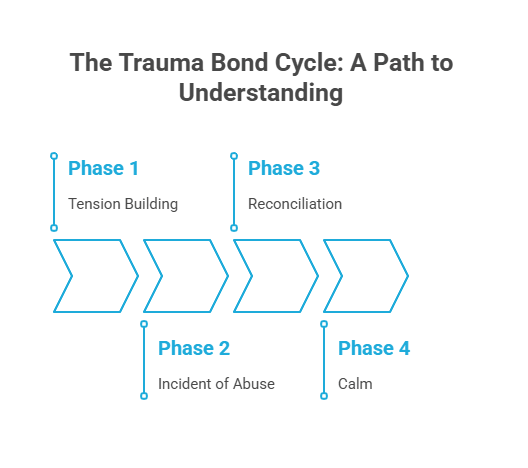
Trauma bonds don’t form overnight. They usually follow a repeating pattern, one that conditions you to stay, even when you're being harmed.
Here’s how the cycle typically plays out:
Phase 1: Tension Building
Things start to feel off. You might notice:
- Walking on eggshells to avoid conflict
- Subtle criticism, control, or emotional withdrawal
- Anxiety about when the “next time” will come
Tension builds, but there's no clear explosion, just pressure that keeps rising.
Phase 2: Incident of Abuse
Eventually, that tension snaps. Abuse can show up as:
- Verbal outbursts, insults, or threats
- Physical harm or intimidation
- Silent treatment or manipulation
It may feel like a sudden shift, or a continuation of something you've quietly endured.
Phase 3: Reconciliation
After the harm comes the apology, or at least the appearance of one. This is where it gets confusing:
- They may cry, beg, or promise to change
- You might receive gifts, affection, or grand gestures (“love bombing”)
- They could blame stress, your actions, or the past to excuse their behaviour
You start to question your memory of the signs of abuse. You might even feel guilty for being upset.
Phase 4: Calm
Everything settles down for a while.
- They act like nothing happened
- You try to “move on” without resolution
- Hope creeps back in
But over time, the tension starts again… and the cycle repeats.
This pattern doesn’t just wear you down, it trains your nervous system to expect pain, then relief, then pain again. And that rhythm creates the emotional trap of a trauma bond.
Why It Feels Impossible to Walk Away?
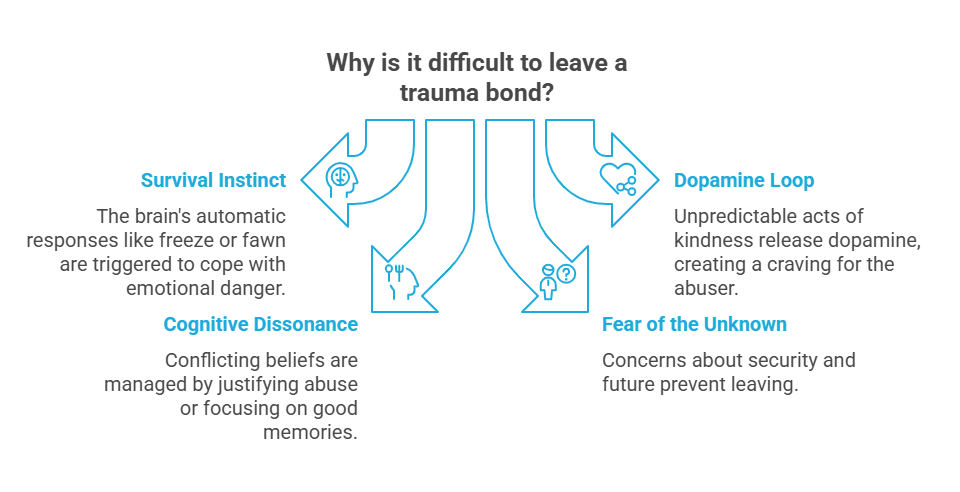
Leaving a trauma bond isn’t just an emotional decision, it’s a neurological and survival-driven one. That’s why even people who know they’re dealing with conflicts in an unhealthy relationship can’t always leave right away.
Here’s what’s really going on:
1. Your Brain’s Survival Instinct Kicks In
Most people have heard of “fight or flight,” but trauma also triggers:
- Freeze: You shut down or feel stuck, emotionally or physically.
- Fawn: You try to please the abuser to stay safe.
These responses are automatic, they’re your nervous system trying to keep you alive in the face of emotional danger. Over time, the pattern becomes internalised.
2. The Dopamine Loop
Every apology, gift, or rare act of affection gives you a burst of relief, and with it, a hit of dopamine. That reward chemical trains your brain to associate unpredictable kindness with hope.
The result? You crave the person who’s hurting you, just to get back to that “high.”
3. Cognitive Dissonance
You’re constantly holding two conflicting truths:
- “They hurt me.”
- “They love me.”
To cope, your brain works overtime to reduce the discomfort. That might look like:
- Justifying the abuse
- Blaming yourself
- Focusing only on the good memories
4. Fear of the Unknown
Leaving often means:
- Losing financial or emotional security
- Facing isolation or retaliation
- Letting go of a future you imagined
All of that fear is valid. But trauma bonds thrive in that fear, and healing begins when you can name it, face it, and begin choosing safety over familiarity.
Finding the Right Kind of Help with TherapyRoute
If you’ve recognised signs of a trauma bond, you might be wondering: Where do I even begin to find the right support?
Not every therapist understands the complexities of trauma bonding. What you need is someone trained in trauma-informed care, someone who won’t rush your process or downplay your experience.
That’s where TherapyRoute comes in.
- Our platform is designed by clinicians who understand that recovery isn’t one-size-fits-all.
- You can filter for therapists by specialisation (like abuse recovery or complex PTSD), therapy approach, language, and location.
- Whether you’re looking for in-person sessions or online therapy, we help you connect with professionals who match your needs, ethically, safely, and on your terms.
Healing starts with finding the right fit. Explore TherapyRoute’s directory to take that next step, quietly, confidently, and at your own pace.
Conclusion
Trauma bonding can feel disorienting, like loving someone who’s hurting you, yet still justifying an abusive partner's actions and feeling like you can’t walk away. But naming the pattern is powerful. The best way to turn confusion into clarity and helplessness into the beginning of choice is by understanding the importance of building healthy relationships.
Leaving isn’t always immediate, and recovery doesn’t happen in a straight line. But every time you question the cycle, set a boundary, or reach out for help, you’re breaking a piece of that bond.
Whether you're just beginning to recognise these dynamics or already taking steps to leave, know this: you're not overreacting, you're not weak, and you're not alone.
Support exists. Healing is possible. And when you’re ready, you deserve guidance that’s informed, safe, and grounded in compassion.
Frequently Asked Questions
How to break a trauma bond?
How to break trauma bond begins with recognising the abuse cycle and creating space. Support from a trauma-informed therapist can help you safely rebuild boundaries and regain emotional independence.
How to break a trauma bond with a narcissist?
Can a trauma bond become healthy? In short, no. To break a trauma bond with a narcissist, reduce or cut contact, avoid reacting to manipulation, and work with a therapist to rebuild self-worth and emotional clarity.
How to get out of trauma bond?
How to heal from trauma bond involves naming the pattern, creating physical and emotional distance, and learning new coping tools through therapy or community support.
How to get rid of trauma bond & heal?
To get rid of trauma bond, focus on building a support system, setting firm boundaries, and addressing self-blame. Healing from trauma bond requires consistent emotional care and self-awareness.
Can trauma bond become true love or be fixed?
Can you fix a trauma bond relationship? Many wonder if trauma bond withdrawal symptoms can lead to a loss of self, especially for a target of abuse, rather than true love. The truth is, without safety, mutual respect, and positive reinforcement, an imbalance of power in a trauma bond makes it impossible for the relationship to become healthy or be truly fixed.
Important: TherapyRoute does not provide medical advice. All content is for informational purposes and cannot replace consulting a healthcare professional. If you face an emergency, please contact a local emergency service. For immediate emotional support, consider contacting a local helpline.
Find Therapists
Must Read
Creating Space for Growth: How Boundaries Strengthen Relationships
Setting healthy boundaries fosters respect, protects emotional well-being, and strengthens relationships by defining personal limits and maintaining self-care.
International Mutual Recognition Agreements for Mental Health Professionals
Mutual recognition agreements for mental health professions are rare and uneven, with major gaps in counselling, social work, and allied therapies. Read on to understand ...
Jumping to Conclusions
Jumping to conclusions is a thinking habit where we assume the worst or make judgments without enough evidence. By recognising this pattern, therapy can help you slow dow...
Case Conceptualisation
Case conceptualisation is how a therapist thoughtfully pulls together your concerns, experiences, and strengths into a clear understanding of what’s going on. This shared...
Guided Discovery
Guided discovery invites clients to arrive at their own insights through collaborative questioning and reflection. Instead of being told what to think, individuals learn ...
About The Author

Hope Counseling and Psychotherapy Services Ltd.
Nairobi, Kenya
“Hope Counselling and Psychotherapy Services is a registered Psychological and Training Consultancy that was established as a service provider offering Counselling and Psychological service to individuals, Family/Couple Therapy and Group Therapy. In addition, we offer Employee Assistance program.”
Hope Counseling and Psychotherapy Services Ltd. is based in Nairobi, Kenya.