
Ten Dimensions of Dream Meaning

❝Uncovering the meaning of dreams in psychotherapy from a Jungian perspective.❞
Over the years in which I have helped people work on dreams and understand better what their dreams might be saying, a scheme of ten dream meaning dimensions gradually became apparent and, when working on a dream, I have found it helpful to keep this scheme in the back of my mind as a sort of orientation. I use the term “dimensions” instead of levels because a given dream can readily have meaning on more than one level, just like something can be localised based on its associated dimensions of up/down, left/right and front/back.
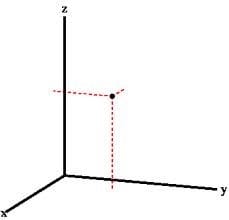
However, rather than the Cartesian scheme shown above, I prefer to think of the dimensions I describe in the following as being arranged like the layers of an onion. With the first dimension, we’ll begin at the innermost layer and proceed ever outwards.


There are two additional dimensions, though, that are not included in the scheme of 10 but must be mentioned. These are always present more or less importantly at every level and are associated with every element and activity present in a dream as well as with the dream as a whole. The first has to do with feeling: concerning each element and activity in a dream one can ask whether the dreamer experienced it as negative (painful, distasteful, unacceptable, etc.), neutral or positive (pleasant, nice, attractive, etc.). The other has to do with time: does the dreamer have the impression that the dream element or activity has to do with something in their past, the present or the future.
In this Article
- 1. The somatic or bodily dimension
- 2. The instinctual dimension
- 3. The collective unconscious dimension
- 4. The personal (subjective) unconscious dimension
- 5. The relationship dimension
- 6. The outer (objective) dimension
- 7. The club/tribe/political party dimension
- 8. The national/cultural dimension
- 9. The nature/environment dimension
- 10. The spiritual dimension
- The light in the woods
- The Golden Light in the Doorway
- She wanted to see God
1. The somatic or bodily dimension
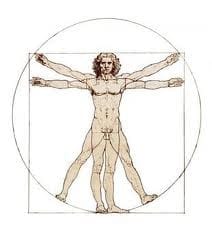
Some dreams provide information about the state of the dreamer’s physical health. Unfortunately, these can sometimes be interpreted symbolically when actually there is something physically amiss that needs attention. Dr Arnold Mindell in his fascinating book Dreambody points out that bodily symptoms like small pains or even itches can be interpreted like dreams. Using one’s imagination, the pain or itch can be asked, “Why are you plaguing me?” or “What message do you have for me?” and sometimes receive useful or even important answers.
Therapy should be personal. Therapists listed on TherapyRoute are qualified, independent, and free to answer to you – no scripts, algorithms, or company policies.
Find Your Therapist

2. The instinctual dimension
There is hardly anyone, I think, who would deny or be surprised to learn that our instinctual needs and desires appear in our dreams. If we need water, we can dream of being stranded in a desert or the contrary: faced with a large amount of water (as in “water, water everywhere but not a drop to drink”). If we had too little nourishment before going to bed we can dream of an empty refrigerator or the contrary: a large table filled with the finest food! The need for sexual pleasure and release as well as erotic needs for touch and intimacy are the dreams that many have, especially in younger years, and some even seek lucidly. Like with somatic dream images, such dream images can also be understood symbolically but the prosaic meaning possibility should not be forgotten or ignored.



3. The collective unconscious dimension
In the dreams of his patients, C. G. Jung sometimes noticed symbols appearing that had universal significance and meaning. These types of dreams differed from more ordinary ones in that they were deeply meaningful and even life-changing. He referred to them as “big” dreams. With time he became convinced that the unconscious part of our mind can be roughly divided into what he called the personal unconscious from where common, everyday dreams arise and the collective unconscious that provides us with such remarkable and impressive dreams containing highly symbolic images and situations. Those wishing to learn more are referred to
Man and His Symbols
(Jung & von Franz, 1964).
4. The personal (subjective) unconscious dimension
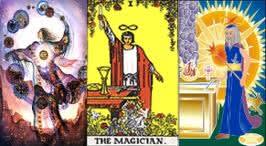
For most people, roughly 80 to 90% of their dreams arise from the personal layer of the unconscious and are what we might call “everyday dreams”. Such dreams serve many purposes but many of them can, I think, be divided between those that deal with what has happened in the recent past and those that try to prepare the dreamer for what lies ahead. Those that deal with events and issues from the previous day(s) serve as a sort of digestion process while many of those anticipating the future subject us to worst-case scenarios of what could go wrong like arriving late for an important meeting or not having what we need for some function we are to fulfil. In this way (if we pay attention) we are helped to be on time and to have with us what we will need.
With time, Jung came up with a scheme for categorising four types of subjective figures that appear on the inner stage. There are those who represent those sides of our personality that have to do with our identity. They are figures that we are somehow comfortable with and may even appear as outer surfaces of things (clothing, facades, style and so on). Paying attention to them we learn about what we are showing others and these identities may well vary depending on which group we are with. Jung gave these the name “persona”, a Greek word meaning mask.
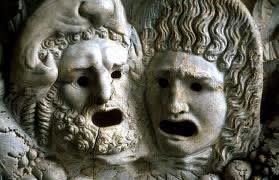
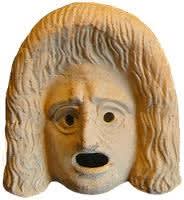
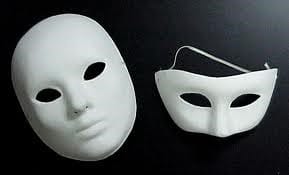
A mask, though, has an inner side, one that others don’t see. In our dreams, these sides of ourselves show up as figures that we find unacceptable or even threatening. Jung labelled them as shadow figures and said our job is to accept that they are part of us and determine the extent that we can integrate them into our lives. If we don’t learn to accept that they are within us, we have a tendency to project them onto others. This is how prejudices come about. I think it is important to distinguish between what one might term collective, evil shadow figures that are malicious and destructive (and, thus, should not be lived out) and those that we have acquired during our childhood and can now, in the light of the maturity we have achieved, be re-examined and re-evaluated.

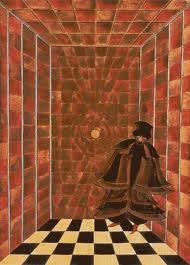
Another category of important inner figures that appear in our dreams are those of the opposite sex and are also parts of our inner makeup (or else we could not dream about them). Today I believe this is more acceptable to most people than it was in Jung’s time which tended to be more patriarchal. Jung termed the inner feminine side of the man as his anima and that of the woman as her animus (Latin words that mean “soul”). These inner contrasexual parts have a lot to do with our fears and expectations of the opposite sex. For the man, his inner feminine often has to do with his gentle, emotional, feeling side and it is good for him to get to know and express this aspect of himself (and not project it onto the women he meets, expecting them to express his feelings for him). For the woman, her inner masculine side often serves as her ability to assert herself, set and defend her boundaries.


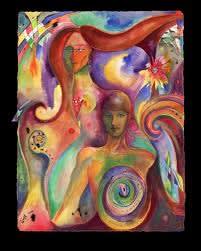
The fourth category of subjective inner dream figures appears rarely, if at all. It has to do with our inner wisdom, that part of us that in some sense knows what we are here for and what we are to do. Jung named this inner figure the Self. If we don’t know it in ourselves, we will project the inner Self onto persons we look up to and admire, especially those we deem to be wiser and more knowledgeable than we are. This figure can appear in our dreams as a wise old person but even as a very wise child. We feel instant respect for this dream figure who tends to turn up at important junctures in our lives to provide guidance and direction.

5. The relationship dimension
This dream meaning dimension serves as a bridge between our inner, subjective selves and the outer, objective reality because it has aspects of both. In this dimension, the dream figure does not so much embody an inner attitude but also not the outer person it portrays. It represents the relationship the dreamer has (did have or wishes to have) with that individual. As an example, if I dream that my uncle has died, “he” could represent a part of myself that has qualities similar to my uncle, i.e., the fourth dimension. It could be that I don’t mind that “he” has died and this would indicate that this part myself is no longer needed. On the other hand, if I am upset by this news in the dream, it could indicate that this inner part has been neglected and needs attention. It does happen, though, that one dreams that someone that one is close to has died and it turns out that this is really true, as if the unconscious is somehow able to give us this information before we learn about it otherwise. That then would be an example of dimension 6, having to do with outer reality. What often occurs, though, after such a dream is we pick up the telephone and call our uncle to see how he is getting along. If he answers the phone and all is well, the dream has possibly shown us that we have neglected our relationship with him and, thanks to the dream which shocked us, the relationship with him has been restored or at least enlivened again.

6. The outer (objective) dimension
In contrast with the previous five dimensions, there are dreams that show us things we might not have known about outer figures, issues, and places are far more seldom, but it seems many are not aware of this. As an example, we may be planning to buy a used car and we dream that it is a real lemon or the salesperson is not to be trusted. Or we may find ourselves attracted to someone but our dream may provide hints concerning sides of that person that we need to ask about. Of course, such dreams may equally well encourage us to proceed in getting to know him or her better. It is always a good idea, though, to ask oneself whether or not what we’ve learned might be truer of an inner figure representing hope and fears rather than the actual outer person.



The following dimensions also have to do with the outer, objective world but are less personal (as you’ll see).
7. The club/tribe/political party dimension
The first impersonal dimension has to do with gatherings that the dreamer may participate and be active in. This could be her or his office staff, club, tribe (if indigenous), church or some other society that the person is a member of. Such dreams may offer a fresh perspective, a new direction, or point out issues that need to be addressed. As I write this, racial and cultural diversity are major and pressing topics for such organisations. Gender equality is another one. I contend that such dreams should be told and shared with the other members of the group, something that appears to happen regularly in many indigenous societies but, sadly, not so much in the western world.
Here are two examples of what I mean:
For his diploma at the C. G. Jung Institute, Howard Tyas wrote a dissertation concerning the archetypal aspects of ball games. In his 1995 thesis, he tells of a new ceremonial rite that appeared in the 1800s among the Lakota Sioux in South Dakota that included, among other ritual objects, a ball fashioned from buffalo hide. It seems High Hollow Horn, a member of the tribe, was given a dream in which he was told that another member of the tribe named Moves Walking had had an important vision via the buffalo that was basically instructions for the new sacred rite. When High Hollow Horn spoke of this with Moves Walking, the latter admitted that he had had the vision and would share it. This then led to the ritual that was adopted for their ceremonies (Black Elk, 1953, pp. 136-7).
Some years ago while chatting with the pastor of local Swiss Reformed Church, I suggested he put up an empty bulletin board and invite the members of his congregation to contribute (anonymously) examples of dreams that they had had that involved the church in some way. He proceeded to do this and before long the bulletin board was full of such dream accounts. This experiment showed how deeply involved many were in the life of their church and how they were reacting unconsciously to what transpired there.



8. The national/cultural dimension
We are not only members of a church, a club, a varsity squad, a SWAT unit, and so on, we are also members of and owe some allegiance to a culture and some sort of national entity. As recounted in the Bible, the dreams of Pharaoh that Joseph interpreted are examples of this dimension. Concerning the dreams that US Democrats and Republicans have, I highly recommend the 2008 book by Kelly Bulkeley in which he shares the results of the research he carried out on the dreams collected from members of those political parties.
I live and work in Switzerland. In a 1992 referendum, the Swiss electorate had to vote on the question of whether or not the country should join the European Economic Area (Europäischer Wirtschaftsraum). A small notice was put into a national TV magazine asking for citizens to send in dreams they had had concerning that issue. A surprisingly large number were collected that had a direct bearing on the proposal, showing that the unconscious minds of many individuals were deeply concerned about it because for many, it had primarily to do with national sovereignty. The majority of the dreams were critical of the country taking this step and that was reflected in the subsequent election results.



9. The nature/environment dimension
Around the world, and especially among the younger generation, there is a growing concern about global warming, depletion of natural resources, air-earth-water pollution, species extinction, and other environmental issues, and, although this has not been adequately studied, there is no doubt that these issues and concerns are showing up in people’s dreams. One area, though, that is being intensely studied just now (September, 2020) has to do with the Covid-19 pandemic and the effect this has had on dreams (cf. Barrett, 2020; Mota et al., 2020; Young & MacMahon, 2020).
To say that people are only having nightmares about such dire developments is only half the picture. Dreams often bring ideas and possible solutions to the problems we face and, if these dreams are shared, collected and studied, it could well be that new directions for combating these evils can be found.
It must be also said that many have beautiful dreams where they experience the environment as a wholesome, healing and positive place. In them people stroll through forests, they swim among dolphins and whales, and they delight in the colourful vegetation and flowers. Such dreams often bring a sense of peace and healing as a compensation for all that is amiss and needs correcting.



10. The spiritual dimension
I suppose some would say that what will be said about this dimension of dream meaning and the examples I give should more properly be included in the collective unconscious dimension. The only counter-argument I can bring is that spiritual dimension dreams do not need much (or even any) interpretation: the meaning usually seems pretty obvious. I think you’ll see this in the three examples I’ll now give.
The light in the woods
A young carpenter once told me this dream: he was walking in a forest and came upon a stream or brook. On the other side, he saw a very bright, white light but could not make out what its source was. This made him curious but, as he was crossing over a little bridge, a voice said to him, “Not yet”. It was obviously not his time to go to the Light.
The Golden Light in the Doorway
At a workshop on dreams I once led, a woman told about a dream she’d had in which she saw an angel standing in a doorway and golden light was shining out from behind him. Below the doorway was the dreamer’s young niece (whom she knew was very ill). She asked the angel to take the girl into his arms which he did. As it then turned out, the girl passed away very soon afterwards.
She wanted to see God
Another woman once dreamed that she was in Heaven and there she told an angel that she wanted to see God. The angel said, “Okay, follow me.” She was led through enormous doors into a mammoth hall. At the far end, there was a very high, thick curtain. On the other side, there was a very bright light. So much light in fact that it was flowing over the top of the curtain and drops of white light were slowly descending down its front. She told the angel, “That’s enough.” And that was the end of her dream.


In the Bible and the Koran, there are any number of instances in which transcendent reality breaks through into ours by means of dreams and visions, too numerous to list them all here. I think the three examples I’ve just given provide some evidence that this is still happening. Revelation continues!
As with the preceding dimensions I urge dreamers to find ways to share such dreams when they come along and it is my hope that churches, synagogues, mosques and other religious institutions will make a place for them, honouring them as they should be honoured and divining what can be learned from them. In crisis times, such as during the current pandemic, knowledge acquired this way may prove life-saving. We constantly need new directions and fresh perspectives. I am sure these are being provided all around the planet. We just need to listen and pay attention.
References:
Barrett D (2020) Pandemic Dreams. Cambridge, MA: Oneiroi Press.
Black Elk (1953) The Sacred Pipe: Black Elk’s Account of the Seven Rites of the Ogala Sioux, recorded and edited by Joseph Epes Brown. Baltimore, MD: Penguin Books.
Bulkeley K (2008) American Dreamers: What Dreams Tell Us about the Political Psychology of Conservatives, Liberals and Everyone Else. Boston: Beacon Press.
Jung CG & Franz M-L (1964) Man and His Symbols. New York: Dell Publishing Company.
Mota NB et al. (2020) Dreaming during Covid-19 pandemic: Computational assessment of dreams reveals mental suffering and fear of contagion. medRXiv Posted May 30, 2020. doi:
https://doi.org/10.1101/2020.05.19.20107078
Tyas H (1995) Ball Games and the Human Psyche: Baseball as a Field of Male Individuation. Diploma Thesis. Zurich: C. G. Jung Institute.
Young R & McMahon S (2020) It Was All A 'Pandemic Dream': New Book Captures Visions of Bugs, Whales, Polar Bears. Accessed via https://www.wbur.org/hereandnow/2020/07/09/coronavirus-dreams-nightmares.
Important: TherapyRoute does not provide medical advice. All content is for informational purposes and cannot replace consulting a healthcare professional. If you face an emergency, please contact a local emergency service. For immediate emotional support, consider contacting a local helpline.
Find Therapists
Must Read
Creating Space for Growth: How Boundaries Strengthen Relationships
Setting healthy boundaries fosters respect, protects emotional well-being, and strengthens relationships by defining personal limits and maintaining self-care.
International Mutual Recognition Agreements for Mental Health Professionals
Mutual recognition agreements for mental health professions are rare and uneven, with major gaps in counselling, social work, and allied therapies. Read on to understand ...
Mental Health Licensing & Regulation in New York State: 2026 Guide
Mental Health Licensing & Regulation in Singapore: 2026 Guide
Jumping to Conclusions
Jumping to conclusions is a thinking habit where we assume the worst or make judgments without enough evidence. By recognising this pattern, therapy can help you slow dow...
About The Author

“An experienced, competent and compassionate psychotherapist, trained at the C. G. Jung Institute and leading four online dreamwork groups.”
Arthur Funkhouser is a qualified Jungian Analyst, based in Elfenau, Bern, Switzerland. With a commitment to mental health, Arthur provides Dream Analysis, Jungian Analysis, Individual Therapy and Relationship Counseling.


