
Marriage Counselling: Does It Truly Help Couples?

❝Marriage counseling, its benefits, limitations, and factors that contribute to successful outcomes. Gain insights into the importance of relationship therapy and navigate the challenges that couples may face on their journey towards a healthier and happier partnership.❞
You’re in the same room, but it feels like you’re miles apart. Conversations turn into arguments, and silence becomes easier than speaking. The intimacy, laughter, and connection that once felt so natural now feel strained or absent.
If this sounds familiar, you’re not alone. Across India, more couples than ever are facing the pressure of modern life of balancing demanding careers, family expectations, and personal growth, while trying to keep their relationship intact. Yet, despite the growing stress, most suffer in silence, unsure where to turn or how to begin repairing the bond.
That’s where marriage counseling comes in, not as a last-ditch attempt to “save” a broken marriage, but as a powerful, proactive step toward reconnecting. In a culture where seeking help has long been stigmatised, couples today are beginning to see therapy not as a weakness but as a wise investment in emotional well-being.
Remember that waiting too long can turn fixable problems into permanent damage. So, whether you're newly married, raising children, or dealing with years of unspoken tension, marriage counseling offers tools specific to your situation to navigate partnership together.
In this blog, we’ll explore how marriage counseling works, the benefits it offers, common limitations, and what factors can influence whether therapy is truly effective for your relationship.
In this Article
- What Is Marriage Counseling?
- What Are The Different Types Of Marriage Counseling?
- What Are The Benefits Of Marriage Counseling?
- 5 Limitations of Marriage Counseling
- What Happens During Marriage Counseling?
- Does Marriage Counseling Work: Factors That Contribute to The Successful Outcome of Marriage Counseling
- Who Should Seek Marriage Counseling?
- Ready to Reconnect With Your Significant Other? TherapyRoute Makes Finding Marriage Counseling Services Effortless
- Conclusion
- Frequently Asked Questions
What Is Marriage Counseling?

Marriage counseling is a safe space for couples to pause, reflect, and reconnect.
Sometimes you just need someone qualified to talk to. Find a counsellor near you — independent, professional, and ready to listen.
Find a CounsellorIt’s a form of guided talk therapy where a trained, licensed professional helps couples navigate the challenges that often feel too overwhelming to handle alone, whether it’s constant arguments, emotional distance, or unresolved pain from the past through various forms of therapy.
A marriage counselor creates a non-judgmental space where both partners can speak openly, be heard deeply, and start understanding each other in new, healthier ways. With gentle guidance, couples learn how to communicate better, rebuild trust, and rediscover the emotional closeness that may have been lost along the way.
At its heart, marriage counseling is not just about fixing problems; it’s about growing together, even through the hard parts.
What Are The Different Types Of Marriage Counseling?
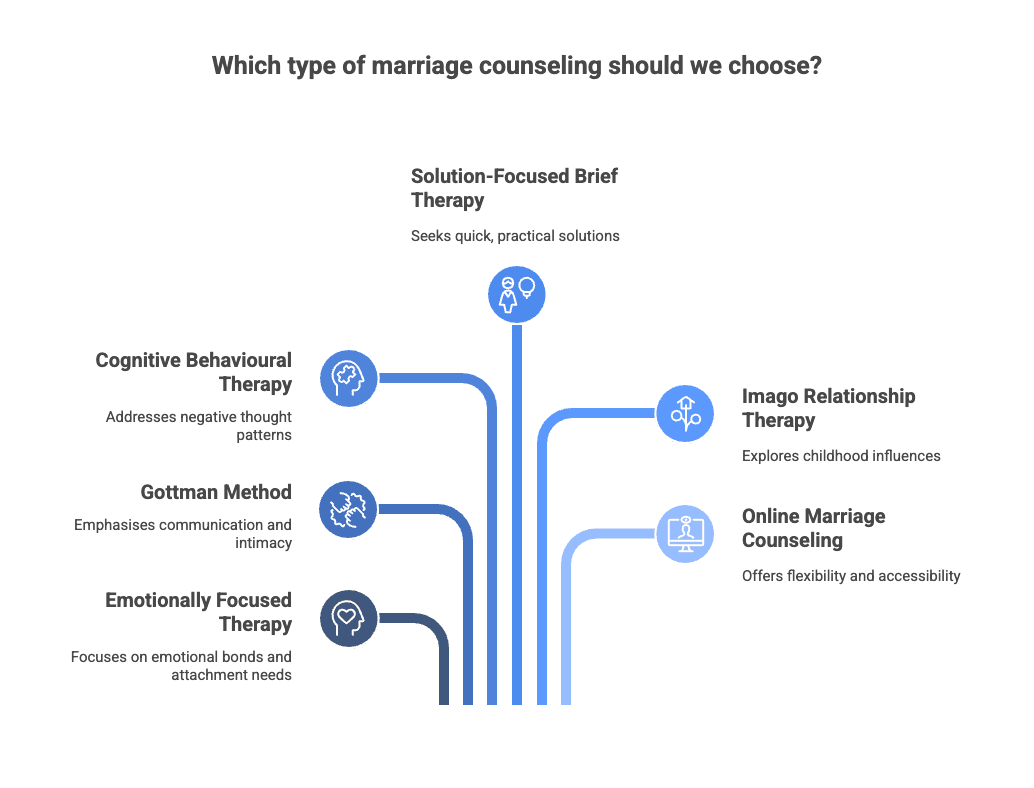
Different types of counselling approaches work for different relationship challenges. Here are some of the most commonly used methods:
1. Emotionally Focused Therapy (EFT)
EFT helps couples understand and reshape the emotional patterns that lead to conflict. This approach focuses on building secure emotional bonds by addressing unmet attachment needs, like feeling unloved, unimportant, or unheard.
2. Gottman Method
Based on decades of relationship research, the Gottman Method teaches couples how to communicate better, manage conflict, and build emotional intimacy, as well as enhance the level of intimacy. It often includes structured exercises and “homework” to practice skills between sessions.
3. Cognitive Behavioural Therapy (CBT) for Couples
CBT helps couples recognize negative thought patterns and behaviors that contribute to conflict. The therapist guides them to replace these patterns with healthier responses and improved problem-solving.
4. Solution-Focused Brief Therapy (SFBT)
This future-oriented approach helps couples identify what’s working in the relationship and build on those strengths. It's ideal for couples seeking quick, practical solutions rather than deep analysis.
5. Imago Relationship Therapy
Imago therapy encourages couples to explore how childhood experiences shape current relationship patterns. It promotes empathy and deeper emotional insight, helping partners heal old wounds together.
6. Online Marriage Counseling
For couples facing time, distance, or mobility constraints, online marriage counseling offers a flexible and accessible option. With video sessions, couples can get professional help from the comfort of home, no matter where they live.
Not sure which type of marriage counseling is right for you? On TherapyRoute, you can explore therapists by approach, language, and format—online or in-person. Start here.
What Are The Benefits Of Marriage Counseling?
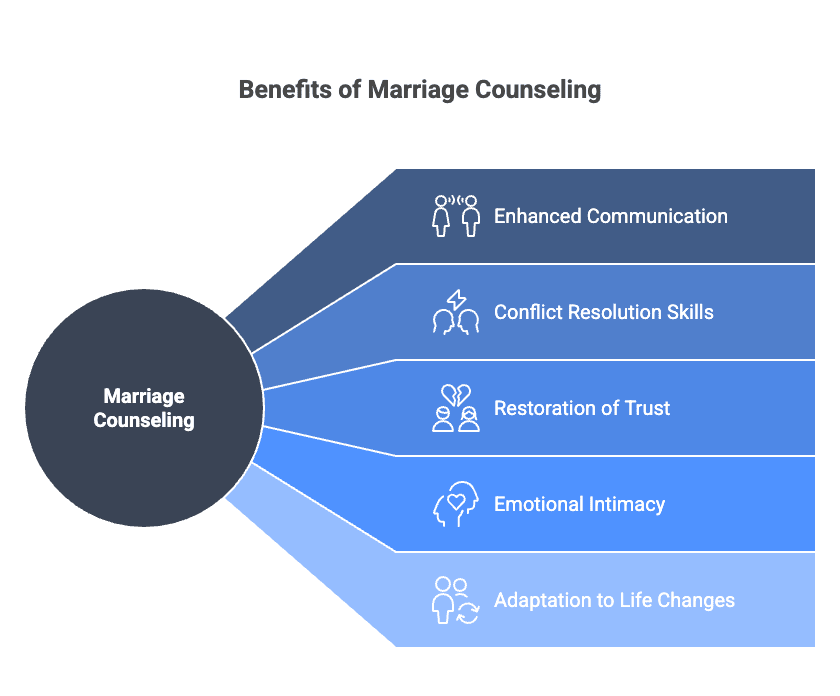
Marriage counseling offers numerous benefits, including improved communication, conflict resolution skills, and emotional connection. It provides a safe space for couples to express feelings and address issues. Additionally, counseling can help partners develop a deeper understanding of each other, ultimately fostering a healthier, more resilient relationship.
Here's how it can help:
1. Enhanced Communication
Many couples struggle not because they don’t care, but because they don’t know how to express themselves clearly, or listen without reacting. Counseling equips partners with the tools to communicate more effectively, reducing assumptions, misinterpretations, and emotional shutdowns.
2. Conflict Resolution Skills
Disagreements are normal, but when couples go through a rough patch, how they handle them determines the health of the relationship. Therapy helps partners address conflicts with empathy and respect, rather than falling into patterns of blame, avoidance, or escalation.
3. Restoration of Trust
Trust, once broken, can feel impossible to restore—but it’s not. With time, honesty, and structured guidance, couples can rebuild what was lost. Counseling facilitates honest conversations around betrayal, helping couples work through the pain and rebuild trust instead of brushing it under the rug.
4. Emotional Intimacy
Over time, emotional closeness can fade, especially when life gets busy or unresolved intimacy issues pile up. Counseling helps couples rediscover connection, affection, and vulnerability that often get buried under day-to-day stress.
5. Adaptation to Life Changes
Whether it’s a demanding job, the birth of a child, or caring for ageing parents, major life changes can destabilise even strong relationships. Therapy provides tools for navigating these transitions as a team instead of turning on each other.
However, it is important to note the challenges of marriage counseling in India before taking the first step. Let's take a look at them.
5 Limitations of Marriage Counseling
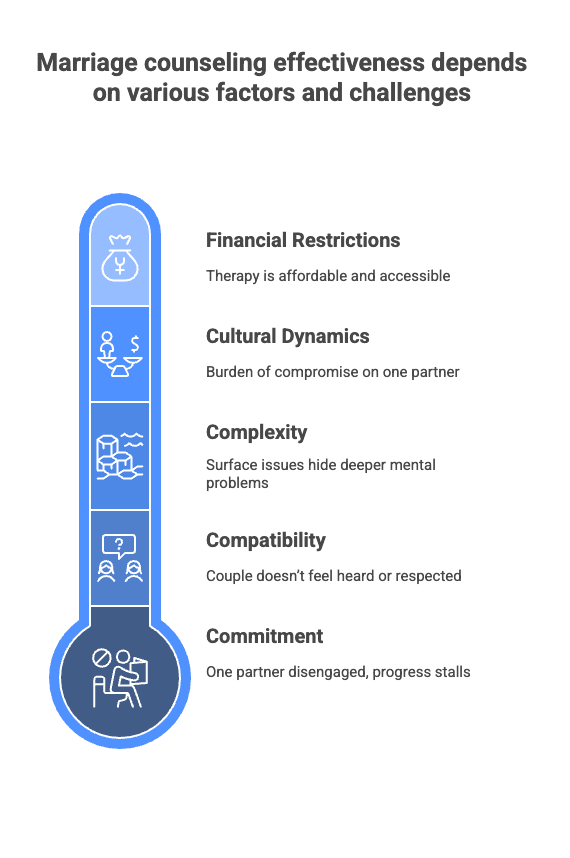
Marriage counseling can be a valuable tool for couples seeking to improve their marital relationship. However, it's essential to recognise that the effectiveness of the counseling process can be influenced by various factors, and couples should set realistic expectations regarding potential challenges. Here's an overview of common limitations and challenges couples may face while finding common ground.
1. Commitment and Participation
Marriage counseling only works when both partners are equally willing to show up, emotionally and mentally. If one person is disengaged, defensive, or resistant to the process, progress can be slow or even stall altogether.
It’s normal for one partner to be more hesitant than the other in the beginning. However, therapy becomes truly effective when both individuals commit to being honest, vulnerable, and open to change. Even the best therapist can’t bridge the gap if one person has mentally checked out.
2. Cultural and Gender Dynamics
In India, traditional gender roles and deeply ingrained cultural expectations often find their way into the therapy room—sometimes subtly, other times overtly. There have been cases where the burden of compromise is unconsciously placed on the woman, reinforcing outdated norms rather than challenging them.
It’s important to recognise these imbalances. A good therapist will be culturally aware and intentional about creating a space where both voices are equally valued. But couples should also feel empowered to question therapeutic advice that feels one-sided or dismissive.
3. Complexity of Underlying Issues
Sometimes, the visible relationship issues like arguments, infidelity, or lack of intimacy are only surface-level symptoms of deeper problems. Mental health disorders, past trauma, addiction, or ongoing emotional neglect may require specialised attention beyond couples therapy alone.
This doesn’t mean counseling won’t help, but it may need to be part of a broader support system. For example, one partner may benefit from individual therapy while the couple continues joint sessions. Addressing these deeper layers often leads to more lasting healing.
4. Compatibility with Therapist
The connection you have with your couples therapist can make or break your counseling experience. If a couple doesn’t feel heard, understood, or respected, progress will be limited, no matter how skilled the couples therapist may be.
It’s absolutely okay to seek a second opinion or switch therapists. Every couple deserves a therapist who respects their values, communicates in a way that resonates, and adapts the approach to their unique relationship dynamic.
5. Financial and Other Restrictions
Therapy is an investment, and for many couples in India, the cost of regular sessions can be a significant barrier. On top of that, finding time amid work, family responsibilities, and urban commutes, or access to a qualified therapist in a smaller town, and considering the potential for insurance plans to alleviate some costs, can feel nearly impossible.
But progress is still possible. With the rise of affordable online therapy platforms and flexible scheduling options, many couples are now able to start counseling from the comfort of their homes. Even short-term guidance can spark meaningful change.
What Happens During Marriage Counseling?
Marriage counseling provides a structured setting where couples can address their relationship challenges with the guidance of a trained therapist.
The process typically unfolds over several stages, each aimed at fostering understanding and improving relationship dynamics.
| Stage | What Happens | Purpose |
|---|---|---|
| Initial Assessment | The therapist gathers relationship history, current issues, and individual viewpoints | Identify key problems and set therapy goals |
| Open Communication | Guided discussions between partners to share thoughts and feelings | Improve empathy, understanding, and emotional safety |
| Identifying Patterns | Recognise recurring negative behaviours (e.g., criticism, avoidance) | Break unhealthy cycles and raise awareness |
| Skill Development | Learn communication tools, conflict resolution, and trust-building techniques | Equip couples with long-term strategies for relationship health |
| Homework Assignments | Tasks like practising new skills or spending quality time | Reinforce changes and build new habits outside of sessions |
| Duration and Frequency | Weekly sessions, about 60 minutes each; total duration varies | Maintain consistency and track progress over time. |
Now, let's take a look at how the different factors can impact your marriage counseling sessions.
Does Marriage Counseling Work: Factors That Contribute to The Successful Outcome of Marriage Counseling
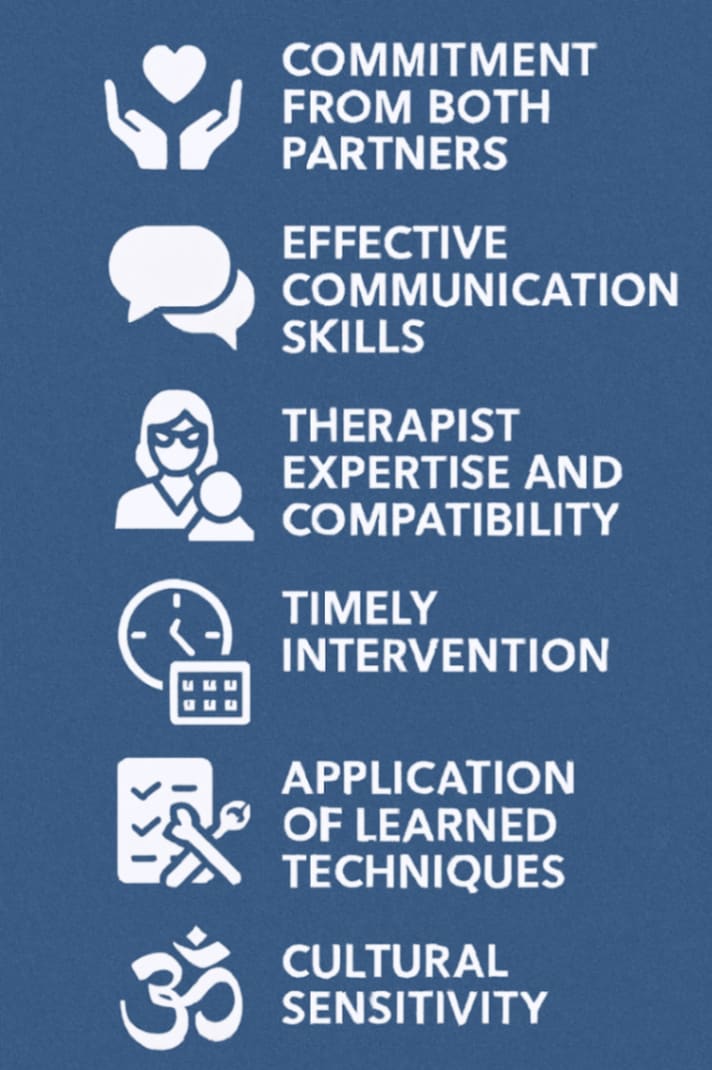
Marriage counseling can be highly effective, but its success hinges on several key factors. Drawing insights from Indian contexts and global research, here are the primary elements that influence positive outcomes:
1. Commitment from Both Partners
Therapy isn’t something that “happens” to you; it requires active participation. Couples who show up with an open mind consistently, engage honestly, and put effort into applying what they learn are far more likely to see lasting results.
2. Effective Communication Skills
Learning to speak your truth without attacking and to listen without defensiveness is at the heart of successful behavioural couples therapy. Counseling helps couples move away from blame and toward dialogue, replacing reactivity with reflection.
3. Therapist Expertise and Compatibility
Even the best intentions can fall flat without the right guide. That is why a therapist who understands your unique dynamic, communicates clearly, and offers culturally relevant insights can make a world of difference.
4. Timely Intervention
Many couples wait until they’re at a breaking point to seek help, but early intervention leads to better outcomes. Addressing issues before they harden into resentment gives therapy a stronger foundation to work with.
5. Application of Learned Techniques
What happens between sessions is just as important as what happens during them. Couples who actively use the tools they learn, like managing triggers, setting boundaries, or resolving conflict, tend to see more consistent progress.
6. Cultural Sensitivity
In India, where family, religion, and societal expectations often shape marital dynamics, it’s essential that therapy reflects these realities. A culturally sensitive therapist can help couples navigate challenges without asking them to abandon their identity.
Who Should Seek Marriage Counseling?
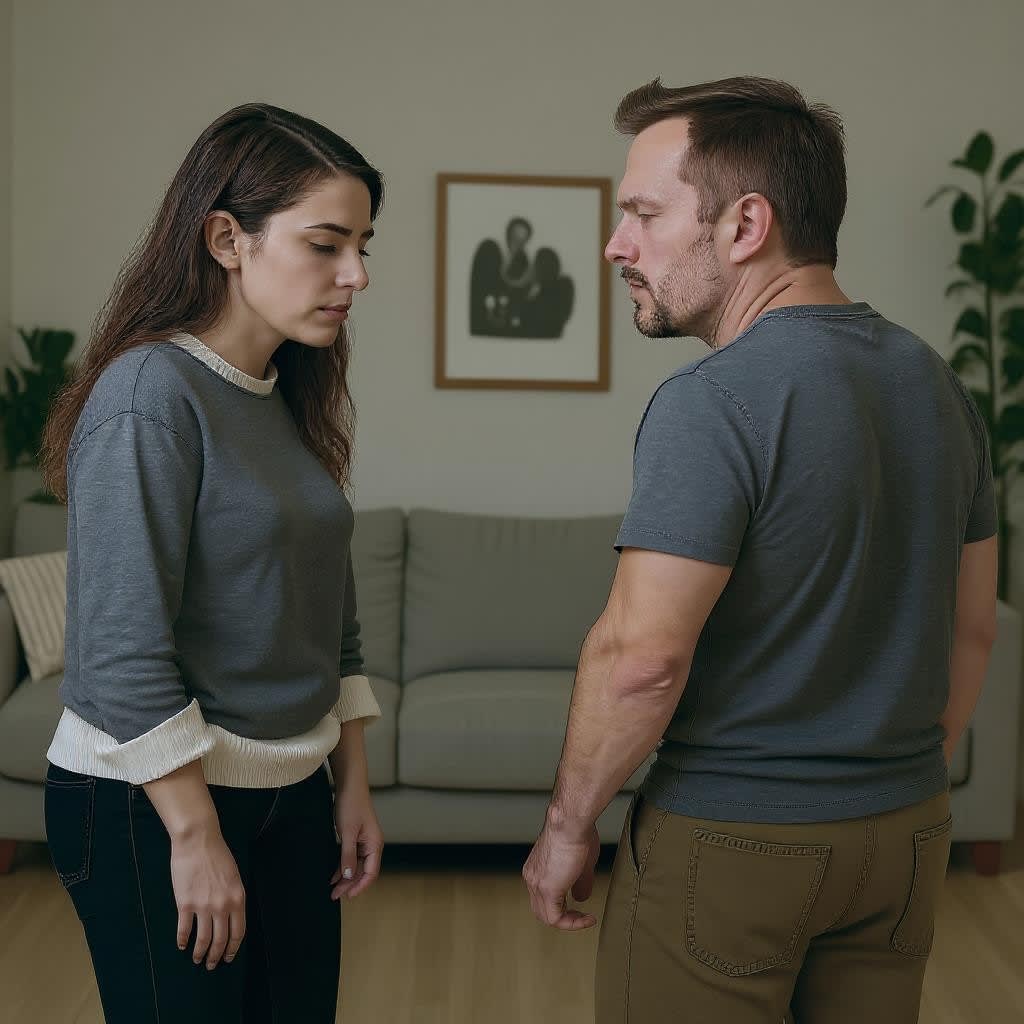
Marriage counseling isn't just for couples in crisis; it's a valuable resource for any partnership aiming to strengthen its bond, resolve conflicts, or navigate significant life changes through couples therapy.
People who can benefit from marriage counseling include:
- Heterosexual couples
- LGBT couples
- Couples who are dating
- Couples in long-distance relationships
- Couples in open relationships
- Couples who’ve separated
When to Consider Marriage Counseling?
Here's a guide to help you determine if counselling might be beneficial:
| Scenario | Why It Matters |
|---|---|
| Frequent Arguments | Constant disagreements, even over minor issues, can erode the relationship's foundation. Counselling helps identify underlying causes and improve communication. |
| Emotional Distance or Apathy | Feeling disconnected or indifferent towards your partner may indicate deeper issues. Therapy can assist in rekindling emotional intimacy and understanding. |
| Infidelity or Trust Issues | Betrayal can severely damage a relationship. Counselling provides a space to rebuild trust and address the root causes of infidelity. |
| Major Life Transitions | Events like moving, changing jobs, or having children can strain relationships. Therapy can help couples navigate these changes together. |
| Parenting Conflicts | Disagreements on parenting styles can lead to tension. Counselling can aid in aligning approaches and improving co-parenting dynamics. |
| Financial Stress | Money-related issues are a common source of conflict, often leading to relationship issues involving family members. Therapy can help couples manage financial disagreements and plan collaboratively. |
| Desire for Relationship Enhancement | Even in healthy relationships, counselling can strengthen communication, intimacy, and overall satisfaction. |
| Considering Separation or Divorce | If you're contemplating ending the relationship, counselling can provide clarity and facilitate amicable decisions. |
Ready to Reconnect With Your Significant Other? TherapyRoute Makes Finding Marriage Counseling Services Effortless
Feeling overwhelmed by the idea of searching for the right counselor for marriage? You're not alone. Many couples face the challenge of finding a qualified marriage counselor who truly understands their unique relationship dynamics.
At TherapyRoute, we simplify this journey. Our platform is designed to connect you with licensed marriage counsellors who are not only qualified but also align with your specific needs and preferences. We offer:
- Geo-Matched Results: Our advanced geo-enabled technology ensures you find qualified marriage counsellors near you, saving you time and effort.
- Comprehensive Filters: Easily filter counsellors by specialisation, approach, and even identity factors, ensuring a personalised match.
- Clinician-Run Platform: Founded and operated by mental health professionals, we prioritise your well-being and the sanctity of the therapeutic relationship.
- Transparent Listings: Access detailed profiles of therapists, including their qualifications, treatment approaches, and areas of expertise, to make an informed choice.
Take the First Step Towards Healing.
Conclusion
Understanding how marriage counseling works, including cognitive behavioural therapy, can be a game-changer for couples navigating marital problems and relationship challenges while maintaining a strong relationship. Whether you’re facing constant arguments, emotional distance, or communication breakdowns, couples counseling offers better communication through therapy in a structured, supportive space to work through those issues together.
Now that you know what marriage counseling and marital therapy involve and how they can help, you can take steps to rebuild trust, improve communication, and strengthen your relationship. From exploring the different types of therapy, including various type of therapy options, to learning about its benefits and limitations, making informed choices is key.
Don’t wait for things to reach a breaking point. Support and healing are closer than you think.
Frequently Asked Questions
1. When should couples consider marriage counseling?
Couples should seek counselling when communication breaks down, conflicts escalate, or emotional distance grows. Early intervention often leads to better outcomes and prevents long-term damage.
2. How long does marriage counseling typically last?
Marriage counseling often lasts 8 to 12 weekly sessions, but the timeline may vary depending on the couple’s needs, goals, and progress during therapy.
3. Can marriage counseling work if only one partner is willing?
Yes, individual therapy can still offer insight and improve relationship dynamics. However, joint sessions are usually more effective for resolving shared issues.
4. Is online marriage counseling as effective as in-person sessions?
Yes, studies show that online counselling can be just as effective, especially when couples actively engage and the therapist is experienced in virtual settings.
5. Will the therapist take sides during sessions?
No, a good therapist remains neutral, helping both partners feel heard while guiding balanced discussions to address core issues respectfully and constructively.
Important: TherapyRoute does not provide medical advice. All content is for informational purposes and cannot replace consulting a healthcare professional. If you face an emergency, please contact a local emergency service. For immediate emotional support, consider contacting a local helpline.
Find Therapists
Must Read
Creating Space for Growth: How Boundaries Strengthen Relationships
Setting healthy boundaries fosters respect, protects emotional well-being, and strengthens relationships by defining personal limits and maintaining self-care.
International Mutual Recognition Agreements for Mental Health Professionals
Mutual recognition agreements for mental health professions are rare and uneven, with major gaps in counselling, social work, and allied therapies. Read on to understand ...
Mental Health Licensing & Regulation in New York State: 2026 Guide
Mental Health Licensing & Regulation in Singapore: 2026 Guide
Jumping to Conclusions
Jumping to conclusions is a thinking habit where we assume the worst or make judgments without enough evidence. By recognising this pattern, therapy can help you slow dow...
About The Author

“I'm Arun Mathews, a Psychology Counselor (specializing in Narcissism issues & Marriage/Relationships). I help depressed and anxious adults/couples to find relief and deepen their relationships by first understanding their relationship with themselves. Contact me to schedule a session to discuss what's best for you.”
Arun Mathews is a qualified Counseling Psychologist, based in Bangalore, India. With a commitment to mental health, Arun provides Divorce Counseling, Counseling, Relationship Counseling, Spiritual or Faith-Based Counseling, Trauma Counseling, Online Therapy, Psychology and Health Psychology.
