Introduction To Gestalt Therapy (Part I)

❝Gestalt therapy sees you as a whole: mind, body, emotions, and soul. It helps uncover patterns shaped by past experiences, reconnect with exiled parts of yourself, and reclaim your authentic presence, awareness, and freedom to respond fully in the present.❞
In this Article
People often ask me, “What is Gestalt therapy?” What does Gestalt actually mean? There are different answers to that. Basically, Gestalt is the German word for form or figure.
Seeing the Individual as a Whole
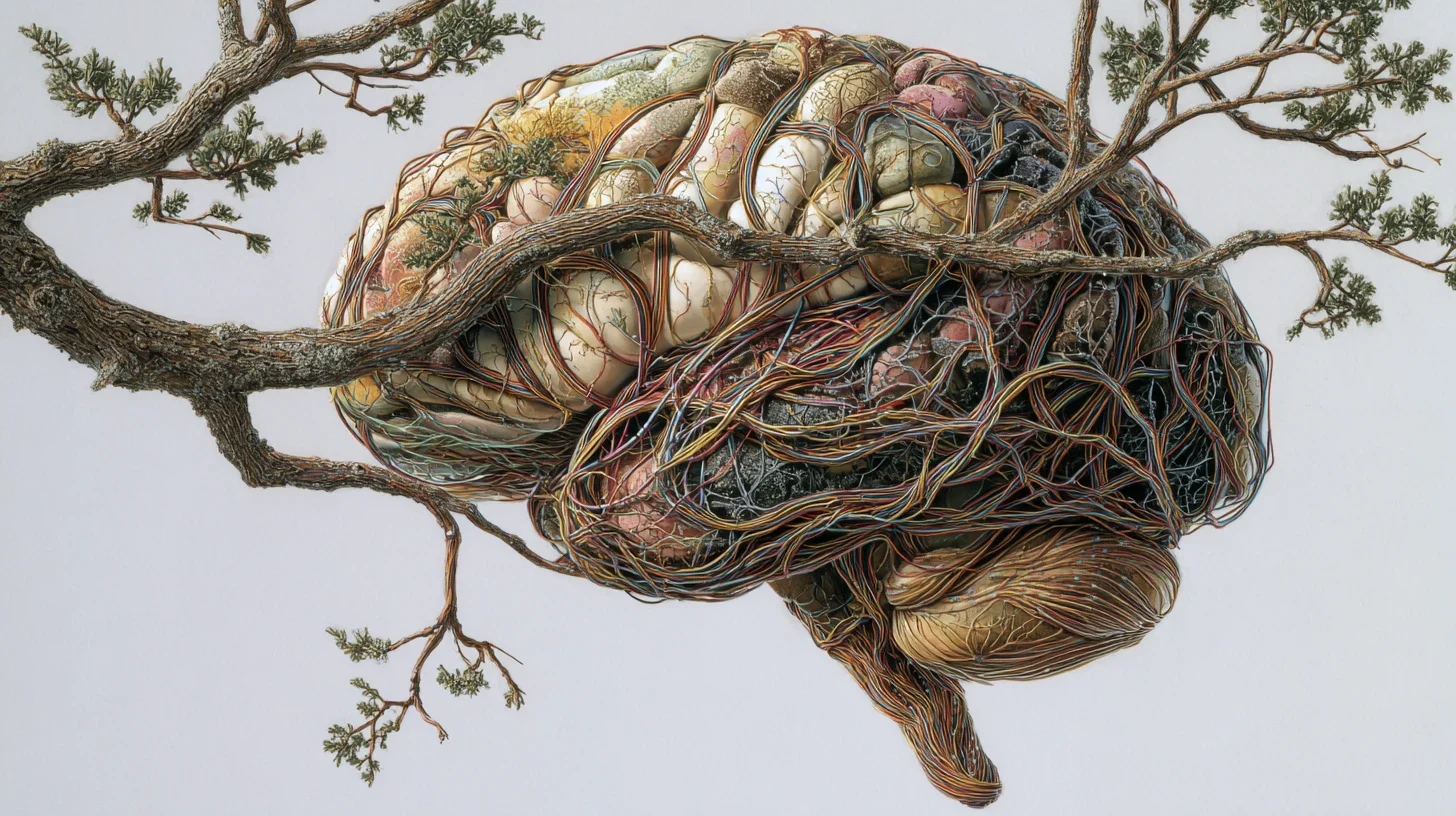
One way of looking at it is that the philosophy behind Gestalt therapy sees the individual as a whole, comprised of mind, emotions, body, and soul. We often tend to separate those elements or even think of them as dichotomous with one another, for example: feelings vs. thoughts, my mind says "no", but my heart says "yes", or body vs. psyche, are you really sick or is it just psychological?) But the philosophy of Gestalt views the individual as one organism, as a full Gestalt, or form in its environment.
Therapy should be personal. Therapists listed on TherapyRoute are qualified, independent, and free to answer to you – no scripts, algorithms, or company policies.
Find Your TherapistAnother way of understanding it is that human beings are born as meaning-making organisms; we see three dots, and we immediately connect them in our mind's eye into a triangle. We do not just hear, see, touch and taste things; we naturally try to make meaning out of them.
This natural inclination to make meaning may be related to our organism's innate need for survival; in order to do that, we constantly process and test our environment. What we make sense of, we assimilate, and in assimilation, growth occurs.
The Gestalt of the Moment
When we are intrinsically motivated, our organism focuses on one thing or another, which becomes the gestalt of the moment, the form appearing to us from the background of the environment. In our contact with our reality, we aim to assimilate and integrate the different gestalts and move on to the next.
But the way that I like to think of the term Gestalt the most is a bit different; it has to do with Michelangelo's famous sculpture of David in the city of Florence. There is this story that when Michaelangelo was asked how he created this masterpiece, how he managed to make something so full of life out of that crude piece of rock, out of that marble, he is said to have replied (somewhat tongue in cheek I guess) that it was easy, he just chipped away all the parts of the rock that didn't belong to David.
In our formative years, when we are so young and so dependent on our parents for... well, for everything, we are tossed into a reality which is not of our choosing. With the best of intentions, parents often inadvertently hurt their children in ways that they are completely oblivious to.
In our constant attempt for survival, we adjust ourselves creatively, one of the ways by which we do this is by exiling parts of ourselves. We internalise the voices of our parents, as well as of our teachers, with their moralistic judgement, with prohibitions and duties, with "shoulds" and "ought tos", with shame or guilt for our natural impulses and inclinations, out of a healthy need to adapt to what is perceived by our organism as no less than life-threatening experiences.
Now, while it may have been necessary to our survival as children to exile parts of ourselves rather than risking losing our caregivers, when we grow older, these internalised forms of behaviour that do not truly belong to us become patterns of conduct that we don't even notice, that we moulded ourselves into. We are not reacting to what is alive in us at the moment; we do not come into true contact with our environment in the here and now, but react, unwittingly, to an adverse childhood experience which is long gone.
The danger is no longer there, but our free movement is restricted by our own survival techniques. However, those inherited beliefs and internalised should's and ought to's, guilt and shame, like that rock around us, can be chipped and chiselled away; we can learn to free ourselves and be lively, moving organisms, we can find our true gestalt, our own inner David if you will. Regaining our ability to respond to what is really happening in the here and now, we find our true, authentic form or figure, which is full of life, movement, and growth.
The Four Pillars of Gestalt Therapy
The philosophy of Gestalt therapy stands on four different pillars: the Freudian concept of the conscious and the unconscious, the incorporation of the body in the therapeutic setting, an emphasis on the here and now and last but not least, the importance of freedom and personal responsibility.
Pillar One: Conscious and Unconscious
The first pillar is the idea of the conscious and the unconscious as were introduced to the world by Sigmund Freud, and as we, these days, take for granted, and treat as a matter of course. Back in the day, though, when Freudian psychoanalysis was taking its first steps, this was not so obvious at all, and Fritz Perls, who coined the term Gestalt therapy, was naturally influenced by Freud. Exploring the unconscious with the attempt of illuminating and increasing awareness, and expanding what is conscious, plays a vital role in Gestalt therapy, though the path taken there is quite different from that of Freudian psychoanalysis.
One way in which the path of Gestalt diverges from the Freudian is that the therapist is not only allowed to, but also encouraged to show up fully as themselves in the therapeutic setting. Rather than an authoritative impartial, almost white canvas-like analyst, as was the idea in Freudian psychoanalysis, the gestalt therapist is present as his or her full self, since the themes of the client will show themselves more fully and readily through the "I and thou" relationship that is formed between client and therapist, than just by the told narratives of the client's life.
Pillar Two: The Body in Therapy
The second pillar stands on the theories of the psychoanalyst Wilhelm Reich, who observed that the personality, state of mind and wellbeing of the individual express themselves in body language. If, for instance, while speaking lovingly about his mother, a person would clench his fists, his body might be communicating something that this person does not consciously even allow himself to feel. Gestalt takes a holistic approach to treating the human organism, and therefore encourages working with the body in the therapeutic context. The idea being that while cognitive understanding of one's inner workings may offer us insight about ourselves, it is through learning to feel our body and expanding our awareness of our bodily sensations that we pave the road to living consciously.
Pillar Three: Awareness of the Here and Now
The third pillar was drawn from the eastern philosophies of Daoism and Zen Buddhism, which brought to the fore the focus on the here and now. While we tend to ruminate over the past and worry about the future, in the here and now, there is action, there is contact, and there is presence. Gestalt is about increasing awareness of the present moment. That is not to say that the past is irrelevant, but only insofar as it influences me in the present moment. Here as well, we diverge from the Freudian approach of analysing the past ad nauseam. The past manifests itself through the present moment in my unresolved issues, in my open gestalts, if you will, that once I am able to bring to a close, do not stand in my way of being present in the here and now.
Pillar Four: Freedom and Personal Responsibility
The final pillar was influenced by the existential school of philosophy and stresses the importance of freedom and personal responsibility. While freedom and responsibility are often viewed as antonyms, and many people understand freedom as "freedom from responsibility", I believe that these two conditions are not only compatible, but are actually two sides of the same coin. My responsibility is my ability to respond. There may be many things in my world that I do not control, that are beyond my sphere of influence, but the way I respond to the world around me, that is my choice, it belongs to me, and it is in my actions that I exercise my freedom.
This self-evident truth, however, is often obscured in our society through language that denies choice, the notion of duty, and the view of self-sacrifice as a virtue, through deflecting our personal responsibility onto authority, as we have learned in twelve years (or fifteen thousand hours) of compulsory schooling.
Exercising Choice in Daily Life
From a very early age we learn to deflect personal responsibility either to figures of authority: "do as you're told" or "I am only following orders" or implying that our actions are dictated by the behaviour of others "you made me do it" or "this is the only way you'll learn", or even viewing ourselves as victims to our own emotions "I simply couldn't help myself", and "I was so angry, I had to hit him."
But between stimulus and response there is a space, and in that space lies our freedom. We are not mindless "input/output" machines. We can choose. Gestalt is about increasing our awareness of ourselves and by doing so, regaining the capacity to choose, expanding my sense of self, my ability to respond, and so, my freedom.
Important: TherapyRoute does not provide medical advice. All content is for informational purposes and cannot replace consulting a healthcare professional. If you face an emergency, please contact a local emergency service. For immediate emotional support, consider contacting a local helpline.
Find Therapists
Must Read
Creating Space for Growth: How Boundaries Strengthen Relationships
Setting healthy boundaries fosters respect, protects emotional well-being, and strengthens relationships by defining personal limits and maintaining self-care.
International Mutual Recognition Agreements for Mental Health Professionals
Mutual recognition agreements for mental health professions are rare and uneven, with major gaps in counselling, social work, and allied therapies. Read on to understand ...
Mental Health Licensing & Regulation in New York State: 2026 Guide
Mental Health Licensing & Regulation in Singapore: 2026 Guide
Jumping to Conclusions
Jumping to conclusions is a thinking habit where we assume the worst or make judgments without enough evidence. By recognising this pattern, therapy can help you slow dow...
About The Author

“I believe that healing and growth require a holding environment and an authentic counterpart. As a Gestalt counsellor I work with increasing awareness, believing that change is built on a foundation of self acceptance, and reintegration of mind and body.”
Ori Harmelin is a qualified Counselor, based in Basel, Switzerland. With a commitment to mental health, Ori provides Counseling, Online Therapy and Individual Therapy.