Human Aggression: A Mysterious and Puzzling Force

❝Seeking deeper insights into this puzzling aspect of human nature.❞
"We have decided to execute you straight away", he says to me as he briskly enters the room where I have been sitting since dawn, picking up an R4 rifle and pointing it at my chest. There is little emotion in his voice.
This member of the notorious Security Branch of the South African Police tells me this is their decision. His colleague has been guarding me all day since my detention before dawn that winter Monday morning. I am being held under the State of Emergency Security Laws allowing indefinite and incommunicado detention. I find myself on the infamous 10th floor of John Vorster Square Police Headquarters, thee notorious blue and white building in downtown Johannesburg.
Therapy should be personal. Therapists listed on TherapyRoute are qualified, independent, and free to answer to you – no scripts, algorithms, or company policies.
Find Your TherapistAny organism must either resist impingement to maintain itself and its homeostasis or adapt to changing conditions to enable survival. In this sense, 'survival of the fittest' is about how any organism can adapt to new challenges and become 'compliant' to these demands to master challenges. Sometimes, as Freud noted in a letter to Einstein in 1933 addressing the question Einstein put to him about war [iv], the "organism preserves its own life, so to say, by destroying an extraneous one". The drive of preservation turns to destructiveness but only, it seems, to better protect itself.
But is this true? So much human-on-human aggression ends up being both self-defeating and often self-destructive, both to the individual and to the species. On the face of it, this does not seem to align with theories of evolution or adaptation. Whilst human aggression and destructiveness is all around us all of the time and seems ubiquitous to everyday existence throughout the ages of humanity, it also remains a mysterious and puzzling force the moment we probe deeper into it.
Why on earth would humans be so destructive to other humans? It makes little sense in the context of science, evolution, and survival, let alone the psychology of well-being and actualisation. How can the human species thrive whilst simultaneously having the capacity to destroy itself and often seems intent on so doing? Closer to home, why do the majority of intimate relationships flame out in a tailspin of hurt and conflict, often leading to terrible costs to the children, mental health, and the purses of everyone involved? How do we explain road rage that leads to jail terms, violence against women that attacks the fabric of family and community, or sexual violence that tears apart societal cohesion? Or serial killers who relentlessly pursue their grim compulsion and invariably trigger their own eventual demise. Or suicide bombers that fly into buildings in pursuit of their cause in the full knowledge of ensuring their own premature entropy, hardly a natural course to end life as the theories would suggest? The list goes on, and none of these examples makes much evolutionary or adaptive sense. Unlike other species, we kill ourselves and others with what to an outside species might appear to be with relentless and unfathomable gusto.
My book is not about philosophical speculation or ideological judgment about matters of aggression and destructiveness. I use ideological and theological references not as a religious or ideological plug but because human narratives are captured through history, and this gives us useful data. Human history also has memory captured in the rich complexity of theological memory and its reflections on human nature. I draw on some of these to provide deep and rich data on the universality and timelessness of the themes we explore in science. There is no necessary contradiction between these narratives - even when they use different language to describe the same phenomena.
My book is about the science of aggression - delving deeper into the mysteries of this side of human nature. It is a psychological investigation that strives to draw upon and unify the good works of science and neuroscience with the less tangible or quantifiable qualities of feelings and consciousness. This may sound like an overly ambitious project requiring me to 'stay in my lane' of psychological expertise. However, even the great pioneer of the mind, the neurologist Sigmund Freud, who provided us with some groundbreaking, profound and timeless insights into the mechanisms of the aggressive drive that we draw upon here, also lamented the limitations of his research works into aggression in his time.
Struggling with the inadequacies of science and biology in his day over one hundred years ago, he nonetheless drew on the natural sciences to assist him in completing what he saw as his theoretical speculations around the mind and its aggressive drive. In fact, Freud made the point reflectively that "uncertainty of our speculation has been greatly increased by the necessity for borrowing from the science of biology", and that since biology is a land of unlimited possibilities, "we may expect it to give us the most surprising information and we cannot guess which answers it will return in a few dozen years to the questions we have put to it".
Freud's theory of aggression was incomplete as was his consideration of the implications of what he discovered. He noted how his theoretical observations raised many other questions "to which we can at present find no answer" - we must, he wrote, "be patient and await fresh methods and occasions of research". My book follows Freud's advice and takes a small step forward to complete our understanding of aggression, its origins in nature and its mechanisms in human life. To do this, we will draw on the current knowledge of science and biology to build a more unified theory of the psychology of human aggression and conflict.
Click here for a podcast between Adrian Perkel and Christopher Russell
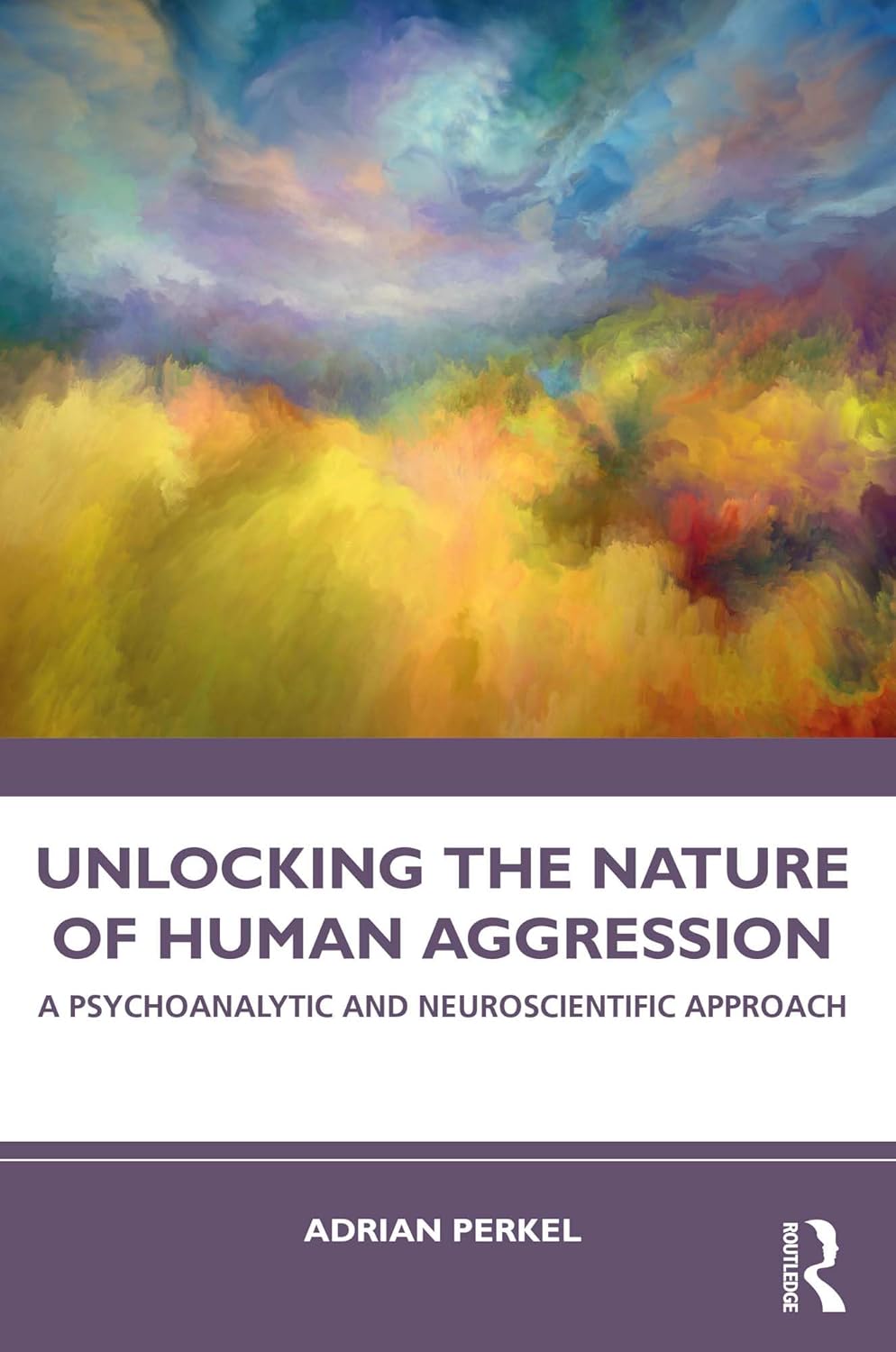
Article posted on the British Psychological Society.
Important: TherapyRoute does not provide medical advice. All content is for informational purposes and cannot replace consulting a healthcare professional. If you face an emergency, please contact a local emergency service. For immediate emotional support, consider contacting a local helpline.
Find Therapists
Must Read
Creating Space for Growth: How Boundaries Strengthen Relationships
Setting healthy boundaries fosters respect, protects emotional well-being, and strengthens relationships by defining personal limits and maintaining self-care.
International Mutual Recognition Agreements for Mental Health Professionals
Mutual recognition agreements for mental health professions are rare and uneven, with major gaps in counselling, social work, and allied therapies. Read on to understand ...
Mental Health Licensing & Regulation in New York State: 2026 Guide
Mental Health Licensing & Regulation in Singapore: 2026 Guide
Jumping to Conclusions
Jumping to conclusions is a thinking habit where we assume the worst or make judgments without enough evidence. By recognising this pattern, therapy can help you slow dow...
About The Author

“Individual adult & couple psychotherapy and assessment. Specialises in couple psychotherapy.”
Adrian Perkel is a qualified Clinical Psychologist, based in Gardens, Cape Town, South Africa. With a commitment to mental health, Adrian provides Relationship Counseling and Individual Therapy.