
How to Help a Friend with Depression? A Practical Guide

❝Worried and unsure how to help a friend with depression? This guide explains the signs, support options, and how to be there, whether you're nearby or miles apart.❞
In this Article
- What is Depression?
- What are the Signs Your Friend May Be Depressed?
- How to Help a Friend with Depression? A Step‑By‑Step Guide
- What are the Common Treatment Options for Depression?
- What Should You Do if Your Friend is in Crisis?
- What Actions Should You Take Immediately if Your Friend is in Crisis?
- Need Professional Help? TherapyRoute Can Guide the Way
- Final Thoughts
- Frequently Asked Questions
TL;DR
|
Watching a friend sink into depression can leave you feeling helpless. You may notice changes in their mood, energy, or behaviour, but not know how to bring it up or what to do without making things worse. If you are asking “how can I help a friend with depression” or “how to handle a depressed friend”, this blog is here to help.
This blog will walk you through how to recognise the signs of depression, offer meaningful support, encourage professional help when needed, and care for your own well-being in the process. Whether you're nearby or supporting from afar, you'll find practical, compassionate ways to truly be there.
What is Depression?
Depression is more than just feeling sad or having a few bad days; it’s a serious mental health disorder that affects how a person thinks, feels, and functions in daily life. It can interfere with work, relationships, and overall well-being.
Depression is one of the most widespread mental health disorders globally. According to WHO , the National Mental Health Survey 2015–16 found that nearly 15% of adults in India require active intervention for one or more mental health conditions. Specifically, around 1 in 20 Indians, or approximately 5% of the population, experience depression during their lifetime.
If you're struggling with low mood or depression, talking to a professional can make a real difference. Find a therapist who understands.
Find a Therapist for DepressionDespite this, the treatment gap remains alarmingly high. Limited mental health resources, social stigma, and lack of awareness prevent many individuals from accessing timely diagnosis and support from a qualified mental health provider. Understanding the scope and seriousness of depression is essential, especially when you're trying to help someone navigate it.
What are the Signs Your Friend May Be Depressed?
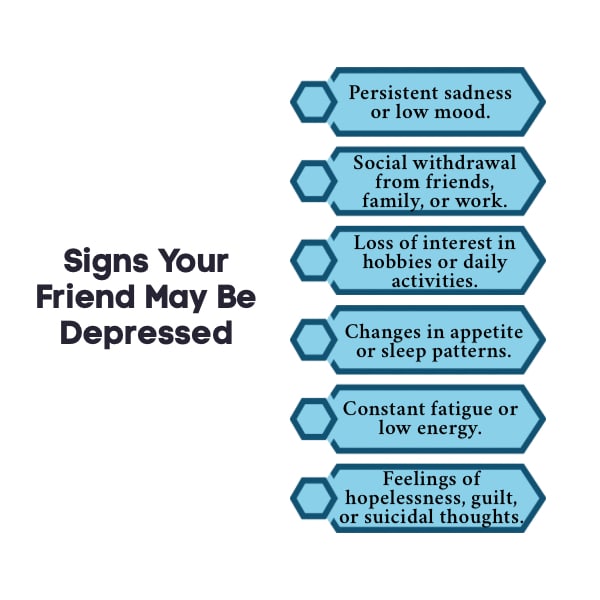
If you are asking, “How do I help my depressed friend?”, the first thing you need to know is that you can’t help someone if you don’t recognise they’re struggling. Depression isn’t always obvious, and many people mask their emotions with a smile or brush off their pain as tiredness or stress. But if you look closely, there are signs that something deeper might be going on.
Here are some key symptoms of depression to watch out for:
1. Is Your Friend Struggling with Persistent Sadness or Low Mood?
If your friend seems unusually sad, tearful, or emotionally numb for more than two weeks, it may be more than just a rough patch. This low mood often lingers without an obvious reason and affects their day-to-day functioning.
2. Have They Withdrawn from Friends, Family, or Work?
Has your friend been cancelling plans or avoiding people? Social withdrawal is a classic sign of depression. They may stop replying to texts, miss deadlines, or isolate themselves without explanation.
3. Have They Lost Interest in Hobbies or Activities They Once Loved?
When someone no longer finds joy in things they once loved, like music, sports, art, or even conversations, it could indicate a loss of interest, a defining feature of major depression.
4. Have You Noticed Changes in Their Appetite or Sleep Patterns?
Watch for sudden weight loss or gain, binge eating, or skipping meals. Similarly, if they’re sleeping too much or struggling with insomnia, these shifts could reflect depression symptoms affecting physical health.
5. Are They Constantly Tired or Lacking Energy?
If your friend constantly says they're tired or looks physically drained, even after resting, it may be due to a lot of energy loss. This isn’t ordinary tiredness, but it’s mental exhaustion that weighs down every action.
6. Are They Expressing Hopelessness, Guilt, or Thoughts of Suicide?
Phrases like “I don’t see the point,” “I’m a burden,” or “Things will never get better” are red flags. These suicidal thoughts can surface subtly or directly, and always require serious attention and immediate support.
Want to guide your friend toward professional help? TherapyRoute can help you find trusted therapists across India who can support your friend’s recovery.
How to Help a Friend with Depression? A Step‑By‑Step Guide
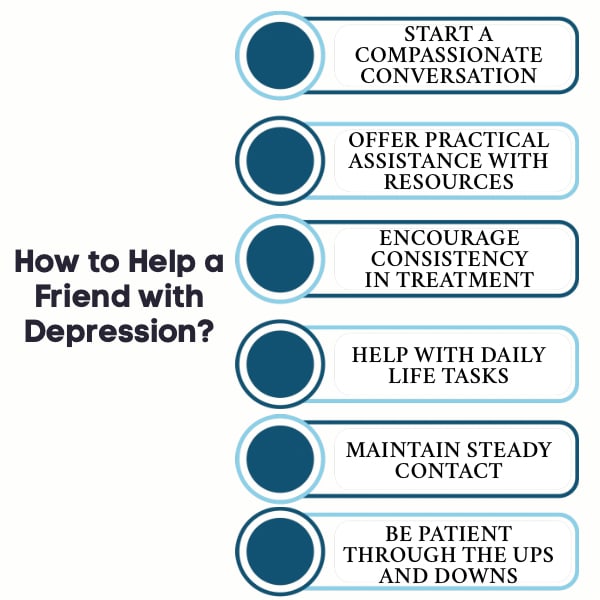
If you’ve noticed your friend isn’t quite themselves, it can be difficult to know what to say or do. But even small, thoughtful actions can go a long way. Here's a step-by-step guide to supporting a friend through depression , gently, respectfully, and consistently.
1. Start a Compassionate Conversation
Begin by checking in genuinely and without pressure. You could say something like, “I’ve noticed you’ve seemed a little off lately; want to talk about it?” Then just listen. Let them share at their own pace, reflect back what they’re feeling, and let silence be okay. Sometimes, just knowing someone truly cares can open a door.
2. Offer Practical Assistance with Resources
Depression can make even basic tasks feel overwhelming. Offer to help them look up therapists, mental health professionals, or local support services. If they’re open to it, guide them through options like therapy or medication. You don’t have to be an expert, but just being willing to help with research is enough.
3. Encourage Consistency in Treatment
If your friend has started therapy or medication, gently remind them to stick with it. Check in before appointments or ask how it’s going. If they’re dealing with side effects or doubts, encourage them to speak with their mental health provider rather than stopping abruptly. Your support can help them stay committed when things feel tough.
4. Help with Daily Life Tasks
Sometimes, showing up means doing something simple but meaningful. Offer to cook together, pick up groceries, help with errands, or even sit with them while they tidy up. These small actions can relieve the mental load and remind them they’re not alone in managing life.
5. Maintain Steady Contact
Don’t wait for them to reach out. Consistently check in, even with a short “Just thinking of you today” message. You can send voice notes, memes, or extend a casual invite for a call. Even if they don’t respond right away, they’ll remember that you cared enough to show up.
6. Be Patient Through the Ups and Downs
Recovery isn’t quick or linear. There will be good days, and hard ones. Celebrate small victories when they come, and don’t take setbacks personally. Your calm presence, especially when things feel shaky, is a quiet form of strength that speaks louder than advice ever could.
If you're unsure how to guide your friend in finding the right therapist, check out our guide on how to find a good therapist, to help you support them better.
What are the Common Treatment Options for Depression?
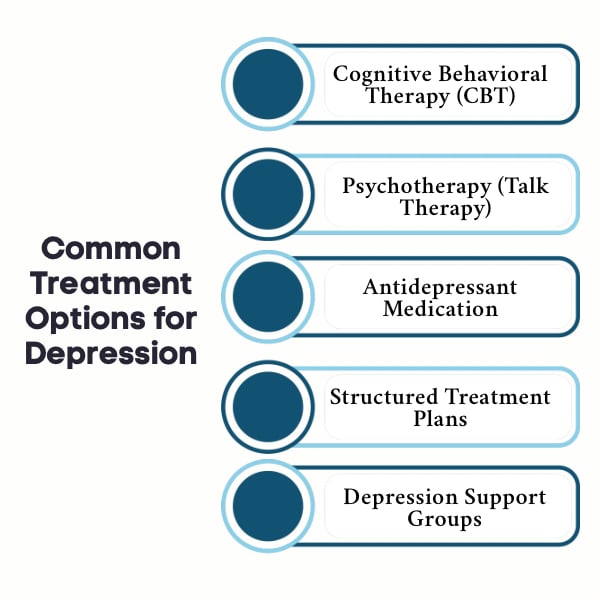
When your friend is ready to seek help, understanding the available treatment options can help you support them better. Depression is treatable, and many people recover with the right combination of care. Here are some of the most common treatment options available for depression:
1. Cognitive Behavioural Therapy (CBT)
CBT is one of the most effective and widely used forms of therapy for depression. It’s practical and structured, helping people recognise unhelpful thought patterns and replace them with more balanced ones.
It also equips them with tools to manage low mood, stress , and negative feelings. Many individuals with major depression or seasonal affective disorder find significant relief through CBT.
2. Psychotherapy (Talk Therapy)
Sometimes, having a safe space to talk things through with a professional can be incredibly healing. Psychotherapy, often called talk therapy, allows your friend to explore their emotions, past experiences, and current challenges without judgment. It can help them understand what they’re going through and gradually rebuild hope and self-worth.
3. Antidepressant Medication
Doctors may prescribe antidepressants to help balance brain chemicals. These are often used in moderate to severe cases. Regular follow-ups with a psychiatrist or health care provider are essential to monitor side effects and ensure the treatment is working. Medication is often paired with therapy for better outcomes.
4. Structured Treatment Plans
A personalised treatment plan may include therapy sessions, medications, and lifestyle changes such as improving sleep and following a balanced diet. These plans are typically developed by a mental health provider or primary care doctor. In India, both public and private mental health services support this approach.
5. Depression Support Groups
Support groups connect individuals facing similar struggles. They help reduce loneliness, offer coping tools, and provide emotional support between therapy sessions. In India, various platforms run both virtual and in-person support groups.
Want to understand which talk therapy approach works best? Read our guide on what type of talk therapy is right for you.
What Should You Do if Your Friend is in Crisis?
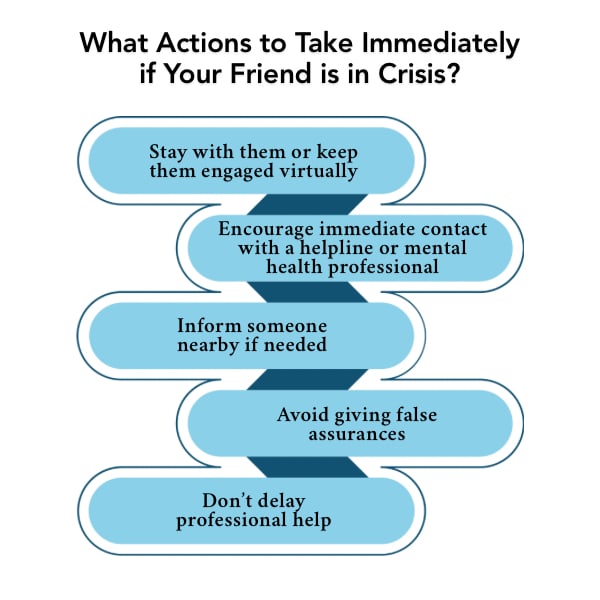
Sometimes, depression can intensify into a crisis, especially when it involves suicidal thoughts, self-harm, or emotional shutdown. Recognising the warning signs early and knowing how to respond can be life-saving.
How Do You Know It’s a Crisis Situation?
Here are serious warning signs to look out for:
- Talking about death, hopelessness, or feeling like a burden.
- Sudden calmness after a long period of distress (which may signal a decision to act).
- Giving away belongings or writing goodbye messages.
- Open references to thoughts of suicide or self-harm.
If your friend expresses any of these signs, take them seriously. Never assume they’re exaggerating or “just seeking attention.”
What Actions Should You Take Immediately if Your Friend is in Crisis?
If you recognise that your friend is in crisis, your response in that moment can make a real difference. While it may feel overwhelming, staying calm and knowing what steps to take can help you support them safely and effectively. Here's what you can do right away:
1. Stay with them or keep them engaged virtually
If you're physically with them, stay present and calm. If you're not nearby, stay on a call or video chat. Let them know, through your tone and words, that you're not going anywhere.
This sense of connection can be a lifeline in that moment. Don’t leave them alone until you’re sure they’re safe and stable, or until help has arrived.
2. Encourage immediate contact with a helpline or mental health professional
Let them know it’s okay to ask for help, and that support is available. Offer to make the call with them or help them write a message. Sharing trusted contacts makes it easier for them to take that next step.
Contact suicide helplines available in your state and locality, if needed. These services are staffed by trained professionals who are equipped to guide people through emotional crises.
3. Inform someone nearby if needed
If your friend becomes unresponsive or you fear for their safety, reach out to someone who can physically be there, like a family member, roommate, neighbour, or even their workplace supervisor. In emergencies, don’t hesitate to contact local authorities or emergency services. Their safety takes priority over their temporary discomfort or privacy concerns.
4. Avoid giving false assurances
It’s tempting to say things like “You’ll be fine” or “Everything will work out”. However, these may feel empty or dismissive when someone is in deep distress. Instead, offer honest, grounding support. Say: “You’re not alone, and I’m here for you.” Or, “Let’s talk to someone who knows how to help.”
Simple, sincere words can be far more comforting than forced optimism.
5. Don’t delay professional help
If the situation feels serious, do not try to manage it on your own. Encourage your friend to contact a mental health provider, a health care provider, or go to an emergency psychiatric service. The earlier they get help, the greater the chances of avoiding harm and beginning the path to recovery.
For deeper insight into how therapy can support recovery, explore our blog on counselling and psychotherapy as a doorway to mental health help.
Need Professional Help? TherapyRoute Can Guide the Way
If your friend is ready for therapy but doesn’t know where to begin, TherapyRoute is a great place to start. We connect you to licensed therapists, psychologists, and counselling services, both in-person and online.
You can easily filter options by language, gender, therapy approach, or location to find a mental health provider who truly fits your friend’s comfort and needs. Whether you’re looking for cognitive behavioural therapy, trauma-informed care, or culturally sensitive support, TherapyRoute helps take the guesswork out of finding the right help because no one should have to navigate depression alone.
Final Thoughts
Helping a friend with depression isn’t about fixing them; it’s about walking beside them, patiently and compassionately. From recognising the early warning signs to encouraging professional help and checking in consistently, your support can become a crucial part of their healing process. But remember, you can’t pour from an empty cup. Take care of yourself, seek support when needed, and know that your presence, even when it feels small, is deeply valuable.
True support lies in showing up, not just once but over and over again, even when the journey is messy and uncertain. And when in doubt, pointing your friend towards trusted professional help is always the right step forward.
Frequently Asked Questions
1. How can I take care of myself while supporting someone with depression?
Being a carer can be emotionally taxing. Set clear boundaries to avoid burnout, practise self-care through rest and nutrition, and speak to a therapist or support group if you’re feeling overwhelmed yourself.
2. When should I encourage my friend to seek professional help?
If their symptoms last longer than two weeks or worsen, it’s time to gently suggest therapy. Offer to help them find a mental health provider or accompany them if they’re feeling nervous.
3. What should I avoid saying to a depressed friend?
Avoid saying things like “just snap out of it” or “others have it worse.” This can worsen their pain. Instead, offer your presence, listen with empathy, and avoid giving unsolicited advice.
4. What lifestyle habits can support someone with depression?
Encourage a balanced diet, gentle exercise, and consistent sleep. Discourage the use of alcohol to cope. Help them stay on track with their treatment plan and check in on their progress regularly.
5. How to help a depressed friend who lives far away?
Stay connected through regular messages or video calls. Send thoughtful care packages or reminders. Share helpline contacts or local support groups, and be available during emotional lows or moments of crisis.
6. How can I support a friend emotionally through depression?
Listen with empathy, validate their feelings, and avoid giving unsolicited advice. Let them know you’re available and that you care. A steady, compassionate presence can go a long way when someone is experiencing emotional pain or a low mood.
Important: TherapyRoute does not provide medical advice. All content is for informational purposes and cannot replace consulting a healthcare professional. If you face an emergency, please contact a local emergency service. For immediate emotional support, consider contacting a local helpline.
Find Therapists
Must Read
Creating Space for Growth: How Boundaries Strengthen Relationships
Setting healthy boundaries fosters respect, protects emotional well-being, and strengthens relationships by defining personal limits and maintaining self-care.
International Mutual Recognition Agreements for Mental Health Professionals
Mutual recognition agreements for mental health professions are rare and uneven, with major gaps in counselling, social work, and allied therapies. Read on to understand ...
Mental Health Licensing & Regulation in New York State: 2025 Guide
Mental Health Licensing & Regulation in Singapore: 2025 Guide
Jumping to Conclusions
Jumping to conclusions is a thinking habit where we assume the worst or make judgments without enough evidence. By recognising this pattern, therapy can help you slow dow...
About The Author

TherapyRoute
Cape Town, South Africa
“Our in-house team, including world-class mental health professionals, publishes high-quality articles to raise awareness, guide your therapeutic journey, and help you find the right therapy and therapists. All articles are reviewed and written by or under the supervision of licensed mental health professionals.”
TherapyRoute is a mental health resource platform connecting individuals with qualified therapists. Our team curates valuable mental health information and provides resources to help you find the right professional support for your needs.