How Long Does Marriage Counseling Usually Last? Explained

❝Wondering how long does marriage counseling usually last? This blog breaks down average timelines, what to expect, and how different factors affect the counseling process.❞
In this Article
- What is Marriage Counseling and Why Do Couples Consider it?
- Is There a One-Size-Fits-All Timeline for Counseling?
- What are the Factors that Influence the Length of Marriage Counseling?
- How to Make the Most of Counseling?
- Is There a “Too Long” in Therapy?
- Start Your Healing Journey with TherapyRoute
- Final Thoughts
- Frequently Asked Questions
TL:DR
|
When couples first decide to seek help, one of the most common questions they ask is, "How long does marriage counseling take?" It’s a fair concern, especially when you're investing your time, emotions, and resources into healing your relationship. But as with most things in therapy, the answer isn’t one-size-fits-all.
In this blog, we’ll explore what determines the length of marriage counseling, how to set realistic expectations, and why the time you spend in therapy can deeply impact your relationship in the long run.
What is Marriage Counseling and Why Do Couples Consider it?
Marriage counseling, also known as couples therapy, is a structured and guided process where partners work with a trained professional to improve their relationship. It's not just about resolving conflict ; it’s about learning to understand each other better, rebuild trust, and strengthen the emotional bond.
In a safe and neutral space, a marriage counselor helps couples navigate issues like communication breakdowns, recurring arguments, emotional disconnection, financial stress, infidelity, or intimacy challenges. The goal isn't to place blame but to promote healing, clarity, and healthier relationship patterns.
Sometimes you just need someone qualified to talk to. Find a counsellor near you — independent, professional, and ready to listen.
Find a CounsellorCouples consider marriage counseling for various reasons:
- They feel stuck in negative communication cycles.
- Trust has been broken and they want to rebuild it.
- They’re facing new challenges, such as parenting or relocation stress.
- Emotional or physical intimacy has declined.
- They want to clarify whether to stay together or part ways peacefully.
- They’re preparing for marriage through premarital counseling.
For many, seeking therapy is the first step toward healing, and not a sign of failure. It’s a commitment to make the relationship work.
Is There a One-Size-Fits-All Timeline for Counseling?
The duration of couples therapy can vary based on your goals, your therapist’s approach, and the specific couple's needs. On average, couples attend therapy for 12 to 20 sessions, typically spread across several months. However, some couples may see improvement sooner, while others with complex issues may need longer support.
So, if you are asking “how long is marriage counseling”, the average length of marriage counseling often depends on how early couples seek help. Addressing relationship problems before they escalate can shorten the process significantly. Waiting until you're on the brink of separation may require more intensive and long marriage counseling.
Thinking about starting counseling? Find a licensed couples therapist through TherapyRoute and take the first step towards clarity and connection.
What are the Factors that Influence the Length of Marriage Counseling?
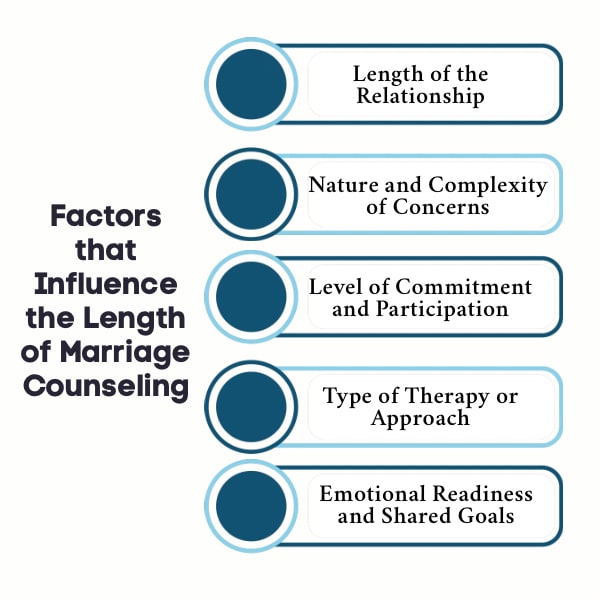
The truth is, there’s no universal timeline for how long marriage counseling takes, because no two relationships are the same. Every unique relationship brings its own story, history, and set of expectations into the therapy room. That’s why the length of marriage counseling can vary greatly from couple to couple.
Several key factors influence how long your journey might take:
1. How does the length of the relationship affect counseling duration?
The longer the relationship, the deeper the emotional layers. A couple married for 20 years may need more time to untangle old patterns than those who’ve been together for a shorter period. Deep-rooted habits often take longer to shift, but with time and effort, change is possible.
2. How do the nature and complexity of issues influence the process?
What you're hoping to address in therapy plays a huge role. Are you working through minor communication gaps, or trying to heal after infidelity or betrayal? The complex issues in a relationship, such as broken trust, long-term resentment, or emotional disconnection, typically require more sessions and a deeper therapeutic process.
3. Why does commitment and participation matter in therapy?
Therapy isn’t a passive process. Couples who show up consistently, engage honestly, and do the work between sessions often make faster progress. In contrast, when only one partner is actively participating or sessions are skipped often, progress slows down significantly. Active participation truly accelerates healing.
4. How does the type of therapy or approach impact the timeline?
Different therapists use different methods. Structured models like the Gottman Method or Emotionally Focused Therapy (EFT) often have clearer timelines and stages. Other therapists may use a more flexible, insight-based approach that adapts to your relationship's pace and needs. The type of therapy you pursue can influence not just the duration, but also the direction of counseling.
5. How do emotional readiness and shared goals shape progress?
When both partners come in with a willingness to reflect, change, and grow, therapy tends to progress more smoothly. A strong foundation of emotional intimacy, or at least the desire to rebuild it, can significantly shorten the time needed in counseling. Shared intentions and relationship goals offer direction and focus.
How to Make the Most of Counseling?
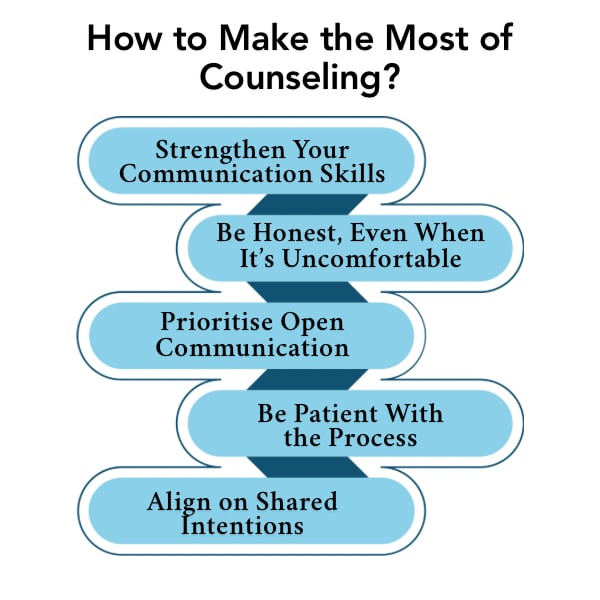
Starting therapy is a brave and hopeful step, but for it to truly work, it requires more than just showing up. Marriage counseling isn’t a quick fix; it’s a shared process of reflection, vulnerability, and effort. If you're investing your time and energy, you deserve meaningful progress.
To make your counseling journey more impactful, keep the following in mind:
1. Strengthen Your Communication Skills
One of the most valuable takeaways from therapy is improved communication skills. Learning to express your thoughts clearly, listen actively, and respond with empathy can transform how you relate to each other, not just during sessions, but in everyday life.
2. Be Honest, Even When It’s Uncomfortable
Therapy is a space where honesty matters more than perfection. If you’re holding back out of fear, guilt, or embarrassment, it can slow progress. Bring your whole self into the room, including the uncomfortable truths. Growth begins where pretense ends.
3. Prioritise Open Communication Between Sessions
The work doesn’t stop when the session ends. Make time to connect outside therapy, even if it’s just checking in emotionally. Practising open communication in daily life reinforces what you're building together in the therapy room.
4. Be Patient With the Process
Healing isn’t linear. Some weeks will feel like breakthroughs, while others may feel stuck or difficult. That’s normal. Long marriage counseling takes persistence and emotional safety to truly unpack and rebuild. Trust the process, and trust that growth takes time.
5. Align on Shared Intentions
You don’t have to agree on everything, but having relationship goals, like rebuilding trust or reconnecting emotionally, can give your sessions a clearer direction. A shared sense of purpose helps you stay motivated, even during tough conversations.
Struggling to see the bigger picture in your relationship? Don’t miss these five hard truths in marriage couples recognise too late.
Is There a “Too Long” in Therapy?
You might wonder, how long should marriage counseling last?
There’s no strict cut-off, but if progress stalls for months, it might be time to reassess. A good fit with your therapist is crucial. Sometimes a change in the type of therapy or therapist can reinvigorate progress. Always discuss goals and check-ins to measure the effectiveness of couples therapy.
Staying in therapy indefinitely without direction isn’t helpful. But staying long enough to truly change patterns? That’s invaluable.
Start Your Healing Journey with TherapyRoute
Every relationship has its ups and downs, but with the right support, lasting change is possible. TherapyRoute connects you to experienced, compassionate professionals who specialize in marriage counseling, couples therapy, and individual therapy. Whether you prefer in-person sessions or the flexibility of online therapy, you’ll find options tailored to your relationship’s unique needs.
With easy filters for location, language, and therapeutic approach, TherapyRoute helps you find a therapist who truly understands your journey. Because meaningful change begins with the right connection.
Discover trusted experts at TherapyRoute and take the first step towards healing today!
Final Thoughts
So, how long does marriage counseling last?
It lasts as long as it needs to, for your healing, your growth, and your connection. Whether that’s 10 sessions or 50, the key is not in the number but in your dedication to the process. Each couple, each story, and each session is different.
If you’re ready to invest in your relationship’s future, now is the time to act. With support from a qualified marriage counselor, you're not just buying time, you’re building a stronger foundation.
Frequently Asked Questions
How often should you attend marriage counseling?
Weekly couples therapy sessions are ideal at the beginning. Over time, the frequency might reduce to bi-weekly or monthly check-ins. Skipping sessions often can delay healing and reduce momentum. Couples of all types, whether newlyweds, long-time partners, or those in premarital counseling, benefit most when therapy becomes a consistent rhythm.
Can therapy save every relationship?
Not always, but that doesn’t mean it failed. Sometimes, therapy helps couples separate with peace and mutual understanding. But in many cases, successful marriage counseling leads to a stronger, healthier connection than ever before. The chances of success improve when both individuals are open, committed, and honest about their needs and limitations.
Does marriage counseling actually work?
Yes, marriage counseling works, especially when both partners come in with an open mind and genuine willingness to grow. Its effectiveness increases when couples attend sessions consistently, apply insights in daily life, and align on shared relationship goals. It takes effort, but the rewards can lead to lasting relationship satisfaction.
Is a short-term or long-term approach better in marriage counseling?
There’s no one-size-fits-all answer. A short-term approach (8–12 sessions) may help resolve specific, surface-level concerns. A long-term approach is often better for rebuilding trust, improving relationship dynamics, and addressing deeper emotional issues. Both are valid, as long as therapy stays focused and goal-oriented.
What should couples keep in mind before starting the counseling process?
The counseling process takes time and emotional effort. If issues have been building for a long time, progress may be gradual. Be clear about your goals, stay open to different approaches, and focus on specific things you want to improve. It also supports your individual mental health.
Important: TherapyRoute does not provide medical advice. All content is for informational purposes and cannot replace consulting a healthcare professional. If you face an emergency, please contact a local emergency service. For immediate emotional support, consider contacting a local helpline.
Find Therapists
Must Read
Creating Space for Growth: How Boundaries Strengthen Relationships
Setting healthy boundaries fosters respect, protects emotional well-being, and strengthens relationships by defining personal limits and maintaining self-care.
International Mutual Recognition Agreements for Mental Health Professionals
Mutual recognition agreements for mental health professions are rare and uneven, with major gaps in counselling, social work, and allied therapies. Read on to understand ...
Mental Health Licensing & Regulation in New York State: 2026 Guide
Mental Health Licensing & Regulation in Singapore: 2026 Guide
Jumping to Conclusions
Jumping to conclusions is a thinking habit where we assume the worst or make judgments without enough evidence. By recognising this pattern, therapy can help you slow dow...
About The Author

TherapyRoute
Cape Town, South Africa
“Our in-house team, including world-class mental health professionals, publishes high-quality articles to raise awareness, guide your therapeutic journey, and help you find the right therapy and therapists. All articles are reviewed and written by or under the supervision of licensed mental health professionals.”
TherapyRoute is a mental health resource platform connecting individuals with qualified therapists. Our team curates valuable mental health information and provides resources to help you find the right professional support for your needs.