Have You Internalised Ableism?

❝People with disabilities may develop negative self-beliefs because of societal prejudices. These are the effects of internalized ableism and ways to manage it.❞
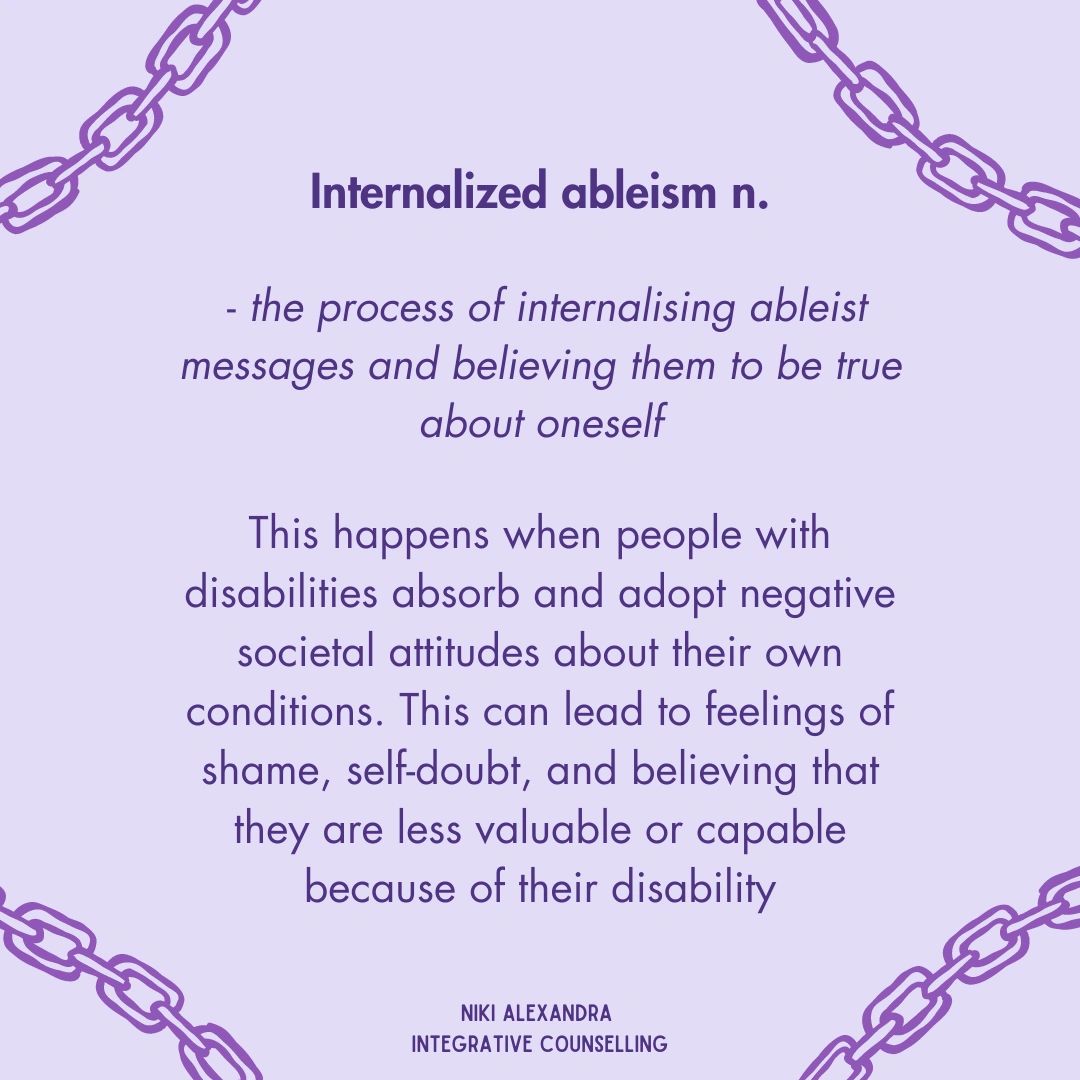
Living with a chronic illness and being neurodivergent has taught me a lot about the hidden struggles many of us face. One of the most insidious challenges is internalised ableism—the process of adopting negative societal attitudes about disabilities and turning them inward. This often stems from broader ableism in society, where people with disabilities are marginalised or misunderstood. Let's explore what internalised ableism is and how it affects those of us with invisible, dynamic disabilities and offer tips on how to overcome it.
Understanding Ableism
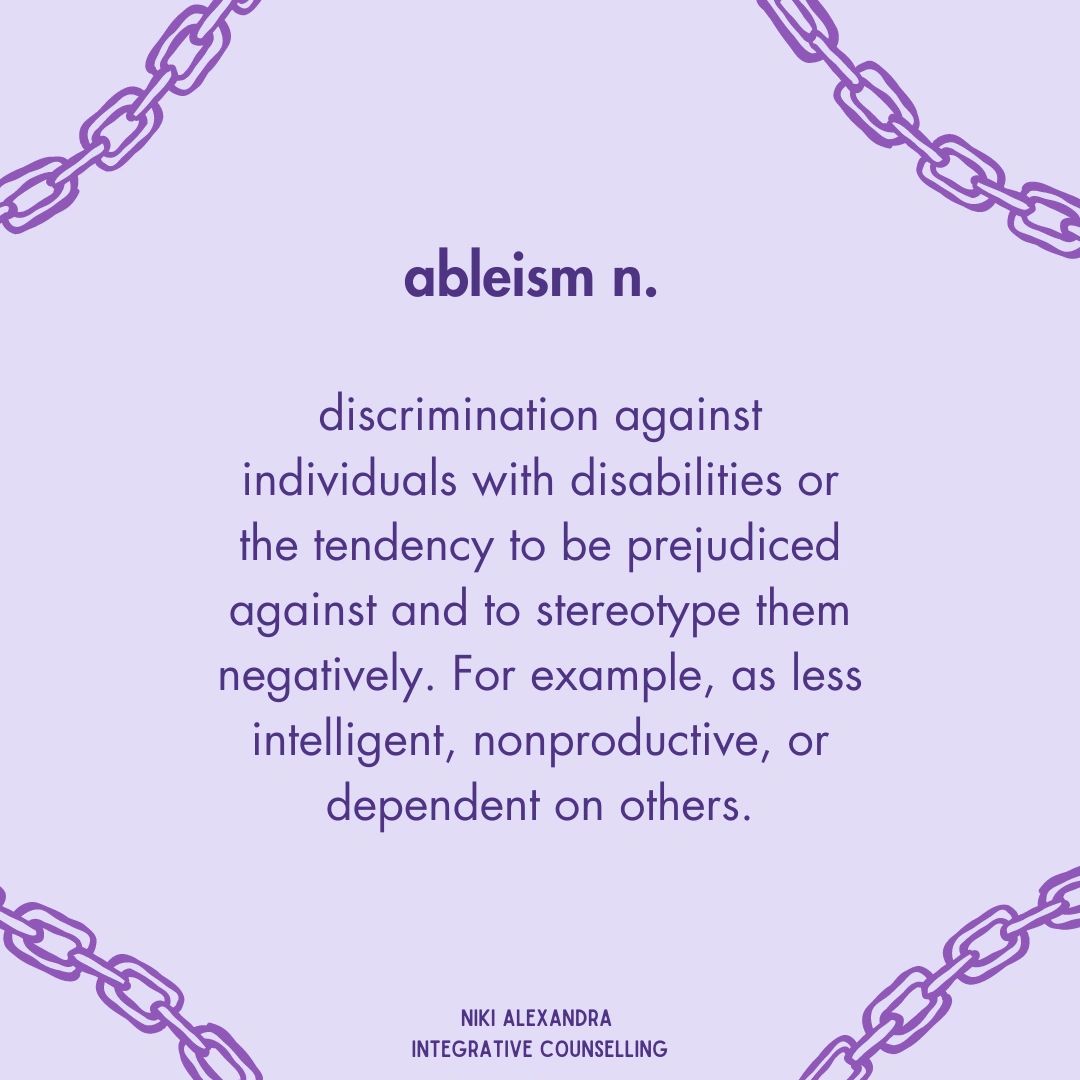
To understand internalised ableism, we first need to look at ableism. Ableism is when society, often unintentionally, prioritises non-disabled experiences and overlooks or dismisses the needs of people with disabilities. It's like an invisible barrier that makes everyday life more challenging for those with disabilities, whether it's through physical obstacles, like buildings without ramps, or social attitudes that unfairly judge or underestimate them. This can deeply affect how people with disabilities see themselves, sometimes leading them to internalise these negative views. Recognising and challenging ableism is important to create a more inclusive and understanding world.

Therapy should be personal. Therapists listed on TherapyRoute are qualified, independent, and free to answer to you – no scripts, algorithms, or company policies.
Find Your Therapist
Understanding Internalised Ableism
When ableism influences one's sense of self, it results in internalised ableism. This can manifest in various ways, affecting self-esteem and mental health. Here are some key points to understand:
- Negative Self-Perception: Believing you're less capable or valuable because of your disability.
- Comparing to Others: Constantly measuring yourself against able-bodied or neurotypical standards, including social-media-triggered harsh self-criticism.
- Self-Sabotage: Avoiding opportunities or not pushing for accommodations because you feel unworthy.
- Acceptance of Stereotypes: Believing negative stereotypes about your disability.
- Overcompensation: Pushing yourself beyond your limits to appear "normal".
The Challenge of Having Invisible or Dynamic Disabilities
If you have an invisible or dynamic disability, you might experience a higher level of internalised ableism. An invisible, dynamic disability is a condition that isn't immediately apparent to others and can fluctuate in severity. Here's a breakdown:
- Invisible: The symptoms aren't visible, so others may not realize you're struggling.
- Dynamic: The condition's impact varies day-to-day or even hour-to-hour.
- Misunderstood: People often don't understand the unpredictability and may question the legitimacy of the disability.
- Social Challenges: Difficulty explaining your condition to others, leading to misunderstandings and lack of support.
- Emotional Toll: The fluctuating nature can cause feelings of guilt or inadequacy, especially when cancelling plans or needing extra rest.
My Story: Battling Misdiagnosis and Internalised Ableism
A personal example from my own life is the 15-year journey I faced, moving from specialist to specialist, trying to find the correct medical diagnosis for my genetic connective tissue disorder (hypermobile Ehlers-Danlos syndrome or hEDS). Despite severe symptoms, my tests kept coming back 'normal' because the doctors didn't look beyond the standard tests. This led to repeated misdiagnoses, which often attributed my symptoms to psychiatric issues. As a result, I pushed myself to work, exercise, and study like a healthy, non-disabled person, leading to several episodes of burnout, multiple depressive episodes, a stress fracture, and two surgeries.
I had internalised the belief that my symptoms were mental, which made me feel ashamed whenever I couldn't keep up with non-disabled family members and friends. Unfortunately, my social circle at the time reinforced this belief, often telling me it was a case of "mind over matter." Because my genetic disorder is an invisible, dynamic disability, I wasn't believed. It has taken time and distancing myself from ableist influences to rebuild my sense of self and understand my condition.
Overcoming Internalised Ableism
The world we live in is an ableist society. This means that whether you are disabled or not, you should challenge whatever ableism or internalised ableism you may have. For those who are disabled, here are five tips to overcome internalised ableism:
- Educate Yourself: Learn about ableism and how it affects perceptions of disability. Understanding the issue is the first step toward challenging it. Knowledge is power!
- Challenge Negative Thoughts: When you catch yourself thinking negatively about your abilities or worth, question those thoughts and reframe them positively. Cognitive-behavioural techniques can help with this.
- Seek Support: Connect with others who understand your experience, whether through support groups, friends, or professionals. Sharing experiences can help reduce feelings of isolation. There are many online communities and support groups for various disabilities and illnesses.
- Advocate for Yourself: Don't be afraid to ask for accommodations or explain your needs. Your health and well-being are important, and you deserve support. It's okay to state your needs at work or at home - you may well be helping the next generation of disabled people who won't need to ask because you already created the awareness and instigated the changes.
- Practice Self-Compassion: Be kind to yourself. Recognize that your value isn't diminished by your disability, and it's okay to prioritise self-care. Those who truly love and support you will understand and accept this
Embracing Self-Acceptance
Internalised ableism can be a significant barrier to living a fulfilling life with a disability or chronic illness. By understanding and challenging these internalised beliefs, we can start to embrace our true worth and advocate for ourselves in a world that often doesn't fully understand. Remember, you're not alone in this journey, and there's strength in sharing and supporting one another.
Important: TherapyRoute does not provide medical advice. All content is for informational purposes and cannot replace consulting a healthcare professional. If you face an emergency, please contact a local emergency service. For immediate emotional support, consider contacting a local helpline.
Find Therapists
Must Read
Creating Space for Growth: How Boundaries Strengthen Relationships
Setting healthy boundaries fosters respect, protects emotional well-being, and strengthens relationships by defining personal limits and maintaining self-care.
International Mutual Recognition Agreements for Mental Health Professionals
Mutual recognition agreements for mental health professions are rare and uneven, with major gaps in counselling, social work, and allied therapies. Read on to understand ...
Jumping to Conclusions
Jumping to conclusions is a thinking habit where we assume the worst or make judgments without enough evidence. By recognising this pattern, therapy can help you slow dow...
Case Conceptualisation
Case conceptualisation is how a therapist thoughtfully pulls together your concerns, experiences, and strengths into a clear understanding of what’s going on. This shared...
Guided Discovery
Guided discovery invites clients to arrive at their own insights through collaborative questioning and reflection. Instead of being told what to think, individuals learn ...
About The Author

TherapyRoute
Mental Health Resource
Cape Town, South Africa
“Our mission is to help people access mental healthcare when they need it most.”
TherapyRoute is a mental health resource platform connecting individuals with qualified therapists. Our team curates valuable mental health information and provides resources to help you find the right professional support for your needs.