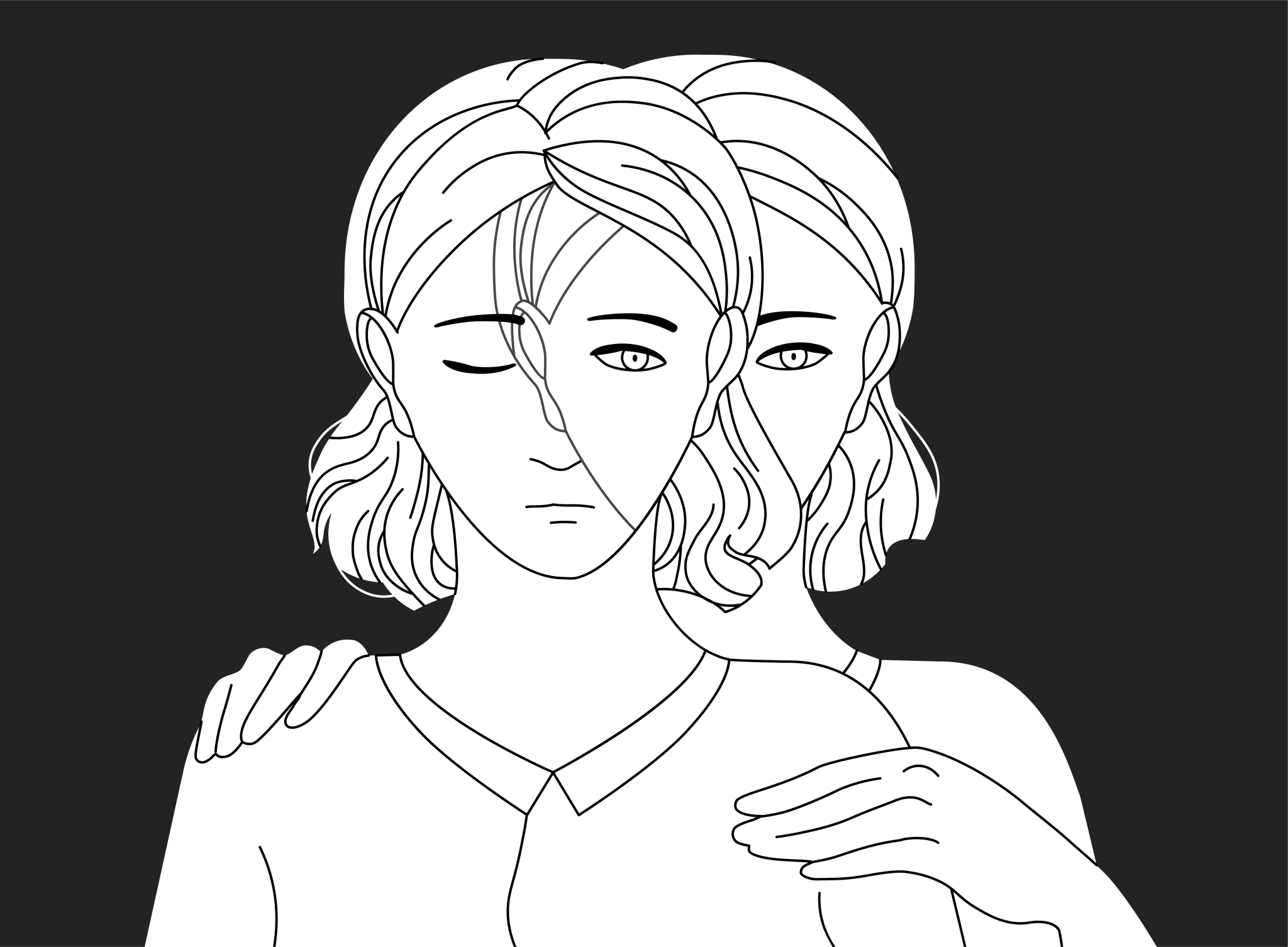
Psychoanalysis and the Internal World

❝How different theories understand the concept of mind.❞
From the 1930s onwards psychoanalysis has seen a paradigmatic shift away from Freudian drive theory towards a relational perspective. The work of Fairbairn, Klein, Winnicott, and Balint provided momentum to this shift, which gave rise to the development of British object relations theory. The British Psycho-Analytical Society was in a state of flux at this time, reflecting fierce disagreement between the Kleinian and Freudian camps about theoretical issues. These disputes were fuelled by the arrival in Britain in the 1940s of a group of psychoanalysts from Vienna which included Sigmund Freud and Anna Freud 51.
Table of Contents | Jump Ahead
- Psychoanalytic Theories of the Internal World
- Sigmund Freud
- Anna Freud
- Melanie Klein
- Ronald Fairbairn
- Margaret Mahler, Fred Pine & Anni Bergman
- Phyliss & Robert Tyson
- Donald Winnicott
- Christopher Bollas
- Wilfred Bion
- Thomas Ogden
- Jessica Benjamin
- Stephen Mitchell
- Intersubjectivity and the Internal World
- Hermeneutics Versus Empiricism?
- The Problem of Integrating Neuroscience and Psychoanalysis
A compromise was agreed in 1944 following what became known as the Controversial Discussions. This resulted in the Society being divided into three groups – the Kleinians, the Freudians and the Independents. The Discussions reflected longstanding tensions and disagreements between the way in which British psychoanalysis had developed, as influenced by Klein, and the more traditional approach favoured by the supporters of Sigmund Freud and his daughter, Anna. A major aspect of the dispute between Anna Freud and Melanie Klein focused on the principles of child analysis 44.
Bowlby became increasingly disenchanted by the lack of scientific rigour characterising psychoanalytic thinking. He thought that neither Melanie Klein nor Anna Freud understood the nature of the scientific method and the importance of empirical evidence 60. He took particular issue with Kleinian theory because of its emphasis on the role of unconscious phantasy in the aetiology of neurotic and psychotic symptoms at the expense of environmental factors, especially in relation to clinical issues of separation and loss. In an attempt to provide psychoanalysis with scientific legitimacy, Bowlby turned to the newly emerging science of ethology. By linking the latter to neo-Darwinian evolutionary biology, he developed the idea that social as well as intrapsychic behaviour could be instinctive; that the child becomes attached to the person with whom he or she has the most interactions, and not necessarily to the person who feeds him or her. Bowlby therefore suggested that human relationships could be the subject of empirical observation. His basic hypothesis, and that underpinning the development of attachment theory, is that infants have an innate psychobiological system that motivates them to form an emotional bond with their primary attachment figure who, in Western societies, more often than not, is the mother 13. Moreover, his clinical experience led him to propose that when deprived of this relationship through separation and loss, the resultant fear, anxiety, and distress has a deleterious and long-lasting effect on the infant’s overall physical and psychological development. For Bowlby, then, attachment is a goal-corrected instinctual system, and separation anxiety a purely instinctive reaction to an external danger which activates a distinct behavioural system.
Quinodoz (1993) acknowledges that Bowlby’s approach poses a challenge to psychoanalytic theory, but considers that his re-evaluation of this theory, with its introduction of control systems and instinctive behaviour, departs from the specific field of psychoanalysis, coming closer to experimental psychology. Quinodoz’s views encapsulate many aspects of the critiques that were levelled against Bowlby by major figures in the world of psychoanalysis following the launch of attachment theory in the late 1950s 13. It may, however, be said that Bowlby contributed in no small measure to his being ostracised by failing to acknowledge and engage with colleagues whose views had much in common with his own thinking. For example, Anna Freud and Dorothy Burlingham (1944) had already established that the child has an instinctual need to be attached to the mother 32. Moreover, Freud’s (1905d) observations of children led him to conclude that the child’s anxiety was an expression of the loss of the person they loved. The main difference between Bowlby and Freud centred on the theory underpinning drive theory. Whereas Freud saw love relations as dependent upon the primary need for drive satisfaction, Bowlby, influenced by Fairbairn (1946), argued that the child’s primary motivation consists of the need to form an emotional attachment to the mother 53.
Although Bowlby (1984, 1988) theorised the aetiology of aggression, attachment theory may legitimately be criticised for omitting the importance of sexuality as a motivating factor in human behaviour. Attempts to rectify this omission have been made in recent years, most notably by Lichtenberg (2007, 2008). This notwithstanding, the essence of the dispute between attachment theory and psychoanalysis that arose some 60 years ago focused on what Bowlby (1988) saw as the reluctance in analytic circles to examine the impact of real-life traumatic events in the genesis of pathology. Instead, classical thinking emphasised drive theory, unconscious phantasy, the Oedipus complex, and the death instinct.
From the very beginning, then, attachment theory was informed by a range of disciplines: object relations theory, ethology, evolution theory, and developmental psychology. Contemporary attachment theory has continued in this vein, broadening its theoretical base to encompass cognitive science, cybernetics, social learning theory, linguistics, narrative theory, personality theory, philosophy, and sociology. Holmes (1996) suggests that attachment theory has the potential to synthesise the most productive ideas from these various disciplines into a coherent new paradigm. Mitchell (2000), too, emphasises convergence and integration, stating: “At this point in the evolution of psychological ideas, attachment theory and psychoanalytic theory, rather than offering alternative pathways, offer the exciting possibility of a convergence that is mutually enriching” (p. 102).
Psychoanalytic Theories of the Internal World
In broad terms, the internal world refers to the organisation, structure, and functioning of the mind and has been conceptualised in a variety of ways by different theorists. Psychological theories of the mind are inevitably linked to what philosophically is termed the mind-body problem. Here, the dichotomy is whether to approach the mind from an objective point of view, that is, the workings of the brain, or from a subjective point of view - as a psychology of personal experience 48. The following section briefly outlines the thinking of some of the major theorists in psychoanalysis.
Sigmund Freud
Freud (1911), on discussing the topic of mental functioning in terms of drive theory, drew a distinction between primary and secondary processes. Primary process relates to the unconscious system and method of functioning. Here, infantile instinctual wishes and desires of a sexual and aggressive nature are the source of unconscious phantasy and determine the content of internal objects. Instinctual impulses are repressed and become subject to mental defences of displacement, condensation, and symbolism. However, repressed material returns in altered form and is expressed through, for example, dreams, parapraxes, and psychosomatic symptoms. As the child matures and undergoes a process of socialisation, sexual and aggressive impulses are brought under the sway of the reality-principle. This principle characterises the secondary process and incorporates the mature mental defence of sublimation whereby prohibited wishes and desires are channelled into culturally acceptable activities. For Freud, psychopathology is an external manifestation of unconscious neurotic conflict between an instinctual wish that is seeking discharge and a moral imperative, or between two contradictory emotions, such as ambivalent feelings of love and hate. Conflict is also given a central place in Freud’s later structural theory of mind, operating among the psychical agencies of id, ego, and superego 62.
Looking for evidence-based support? Find a qualified psychologist near you through TherapyRoute.
Find a PsychologistIt may be seen, then, that Freud’s concept of mental life is both physiological, in terms of biological instincts and impulses, and psychological, in terms of the personal meanings that the developing infant comes to attribute to his or her instinctual life, and the way in which these meanings are assumed to motivate subsequent behaviour and activities. Hinshelwood (1991) therefore argues that Freud’s view on the mind-body problem reflects the philosophical position of psychophysical parallelism. This position holds that there is both a mind and a brain, and that each work in their own particular ways. Hinshelwood (1991) suggests that Freud’s approach to this problem, as found in his writings, indicates a conflict between Freud the scientific neurologist and Freud the humanist psychologist, and that Freud never quite managed to extricate himself from the physiological psychology that was his starting point.
Anna Freud
Anna Freud remained faithful to her father’s psychoanalytic theory, but placed greater emphasis on the ego and its functions than did Freud. She argues that it is from the ego that we observe the work of the id and the super-ego and, indeed, of the unconscious generally. Her focus on the ego led to the development of ego psychology. In this endeavour, she brought together a group of child psychoanalysts that included Margaret Mahler and Erik Erikson 26.
Anna Freud devised the concept of “developmental lines” to chart the progress of normal growth from dependency to emotional self-reliance. Her thinking combined drive theory with the more recent emergence of object relations theories, and she emphasised the importance of parents in child developmental processes. This emphasis was informed by her work at the Hampstead Child Therapy Clinic in London which she helped to found in the 1940s (A. Freud, 1944). Her observations of children separated from their parents during the Second World War helped her to understand their need to attach to substitute parents, as well as the development both of defence mechanisms and of the ego and super-ego (A. Freud, 1968).
Melanie Klein
As noted above, Anna Freud and Melanie Klein profoundly disagreed on theoretical issues. Klein’s model of the mind elaborates on Freud’s assumptions. Her theory posits that we live in two worlds consisting of inner psychic reality and external reality. The internal world is built up through the introjection of objects and comes to be experienced in as real and concrete a fashion as the outside world 58. Klein views the mind as also consisting of mental representations which include memories, ideas and, most significant of all, unconscious phantasies. Body-based sensations are linked to unconscious phantasies in relation to internal objects, as well as to paranoid fears of actual external objects. Indeed, for Klein internal objects are the very stuff of unconscious phantasy, a level of psychology that is closely linked to biological functions and bodily contents. Furthermore, in Klein’s formulation, identity itself is deeply bound up with the internalisation, introjection or incorporation of objects, with the degree of hostility towards these objects in the internalising phantasies, and in the resulting alienation from, or assimilation to, the internalised objects. These representations, then, together with relations with introjected objects, constitute the psychic structure of the Kleinian inner world.
As Hinshelwood (1997) points out, Klein was the first theorist to describe the forms that childhood anxieties took, conceptualising these as objects and part-objects in the child’s inner world. She also insisted on the significance of the parent-infant relationship from the very start of life for the development of the human psyche. Klein developed play technique with young children from the 1920s onwards, using drawings and a small array of simple toys. She found that the invitation to play quickly produced in the child the expression of acute anxieties. The use of male and female toy figures pointed towards relations with and between internal objects. For Klein, these configurations showed unconscious phantasies active in the child’s mind. She linked the fate of the toy figures to the child’s worries about what would happen in reality between the child and the important people in his or her life 99.
Klein would speak to the child about his or her worries in a direct manner. She found that children were remarkably responsive to being taken seriously. Correct interpretations brought the alleviation of anxiety. Klein sought to understand the child’s own logic and found a consistent unconscious content in anxious play, which she related to deeper unconscious meanings in the child’s mind. The process starts with the child’s play, proceeds to a direct and explicit interpretation, and results in a response of some kind in the further play of the child. The sequence is anxiety – interpretation – response. The alleviation of anxiety and the immediate change in the character and content of the child’s play were important markers for Klein in assessing the validity of her interpretations and of the technique itself 49
In Klein’s formulation, splitting allows the ego to emerge out of the chaos of the paranoid-schizoid position and to order its emotional experiences and sensory impressions. This is a pre-condition of later integration and the basis of the faculty of discrimination - the capacity to differentiate between good and bad. The leading anxiety in the paranoid-schizoid position is that of persecutory objects getting inside the ego and overwhelming and annihilating both the ideal object and the self. This position is termed paranoid-schizoid because the leading anxiety is paranoid and the state of the ego and its objects is characterised by splitting, which is schizoid 59. In addition to splitting, manic defences against overwhelming persecutory anxiety include denial, idealisation and projective indentification. With regard to the latter, parts of the self and parts of internal objects are split off and projected into an external object which, in unconscious phantasy, then become possessed by, controlled by, and identified with, the projected parts. The aims of projective identification are manifold and include the avoidance of separation from the ideal object and an attempt to gain control of the bad, persecutory object. The effects on the self, however, are feelings of depletion and desolation. In the depressive position, the manic defences are primarily directed against psychic reality, specifically the experience of depressive guilt and the anxiety consequent on valuing and being dependent on the object whose loss is feared 49.
In terms of the child’s inner world, fears of persecutors and of the bad mother and the bad father lead him or her to feel unable to protect loved internal objects from the danger of destruction and death. Moreover, the death of good internal objects would inevitably mean the end of the child’s own life. Klein sees this situation as constituting the fundamental anxiety of the depressive position because the good internal object forms the core of the ego and the child’s internal world. The depressive conflict consists of a constant struggle between the child’s aggression and destructiveness (the death instinct) and his love and reparative impulses (the life instinct) 59. In Klein’s formulation, the depressive position is never fully worked through. She argues that the anxieties pertaining to ambivalence and guilt, as well as to situations of loss which reawaken depressive experiences, are always with us 49.
In a contribution to the Controversial Discussions in 1943, Susan Isaacs argued that unconscious phantasy underlies every mental process and accompanies every mental activity. Hinshelwood (1991) suggests that this conceptual framework is informed by the philosophical position of psychophysical interactionism. From this position, the mind is viewed as emerging from the activity of the brain which, in turn, may be manipulated by the mind. This interactive process may be seen in Kleinian theory, which, as we have seen, postulates that biological processes are mirrored in activities of the mind called unconscious phantasies. Equally, this theory holds that unconscious phantasies mould both the personality of the developing infant and his or her social world.
From this perspective, it is suggested that the infant exists in a world of so-called primitive emotions and, therefore, that introjected objects are initially experienced in an emotional rather than a physical way. The distinction between mind and body, then, comes about in the course of development and is generated psychologically by a process of splitting. This process creates a psychical space within which the infant may experience the physical and the psychological. Hinshelwood (1991) therefore concludes that Kleinian theory assumes an interaction between physical events and psychological events and that each will influence the other.
Writing from a relational perspective, Greenberg and Mitchell (1988) question the degree to which Klein focuses on aggression at the expense of other motives. In line with the views of Fairbairn, Winnicott and Bowlby, the authors contend that Klein’s theoretical formulation is over generalised and privileges unconscious phantasy over real people and events. Moreover, because Klein views psychopathology as arising predominantly from internal, constitutional sources she tends to derive good objects from outside and bad objects internally. Greenberg and Mitchell (1988) argue that this tendency minimises the importance of parental anxiety, ambivalence and character pathology in the aetiology of the child’s psychopathology. In contrast, the parents in Klein’s formulation are seen as important primarily because they represent universal human attributes. This theoretical position is reflected in Klein’s presentation of relationships as constitutional and universal – as being a direct and predetermined result of the nature of the drives, particularly of constitutional aggression in the form of the death instinct. The idea that problematic features of the parents’ own personalities and difficulties in living may contribute in a more direct and immediate way to the original establishment of bad objects, and thus to the beginnings of psychopathology in the child, is missing from Klein’s formulation of the internal world. Greenberg and Mitchell (1988) argue that in deriving all salient emotional factors from inside the child’s own mind, Klein fails to give due weight to the extent to which depressive anxiety and guilt often stem from actual parental suffering and difficulties.
Ronald Fairbairn
Fairbairn lived and worked in Edinburgh and thus was far away from the political maelstrom going on in London in the 1940s. However, he had a profound influence on the development of object relations, developing his theories independently from the Kleinian mainstream as a member of the Middle or Independent Group. Indeed, Klein accused him of not following Freud, and of giving insufficient weight to hate and aggression in his theories 98. For Fairbairn, however, the problem of human development was not hate but love. His clinical experience led him to argue that failures in the external world could produce the intrapsychic structures described by Klein. He made a significant move away from drive theory in the mid-1940s, contending that human beings are object-seeking rather than pleasure-seeking 29.
More generally, Fairbairn postulates that feelings of security vitally influence the manner by which the infant affectively relates to internalised, split off idealised objects and rejecting objects. In a marked shift away from the Kleinian emphasis on unconscious phantasy, he acknowledged the subject’s real experience, averring that insecurity stems primarily from separation anxiety and the conflicts attendant on a persisting state of “infantile dependence”. He suggests that this type of anxiety is a causative factor in the development of “schizoid” aspects of personality which engender a sense of futility and hopelessness in the subject’s inner world of object relations. Such a person, he contends, lacks the capacity to differentiate self from other and thus is unable to attain a state of “mature dependence” 30. As Mitchell (2000) observes, Fairbairn’s “important contributions of the 1940s and early 1950s remained almost completely unrecognised until Harry Guntrip began to make them more accessible in the very different climate of the 1970s” (p. 79).
Margaret Mahler, Fred Pine & Anni Bergman
The development of relations with objects is also central to Mahler and her colleagues’ (1985) theory of the way in which the infant’s inner world is structured and organised. The authors’ observations of mothers and their infants are informed by ego psychology and object relations. As we have seen, this perspective is derived from an integration of classical drive theory and object relations theory stemming from the work of Anna Freud. Ego psychology grants the ego more autonomy and flexibility than drive theory in understanding human behaviour. However, the adaptive aspect of this perspective was criticised for emphasising social conformity to the status quo 98.
Mahler et al. (1985) hypothesise that the infant’s initial experience is one of symbiotic attachment to the mother. This is followed by a gradual build up of a differentiated inner mental representation of the mother and the self through progressive steps in the development of relations with objects. Mahler et al. (1985) conceptualise this developmental progression in terms of a process of separation-individuation that has two distinct but intertwining aspects. Separation refers to the process whereby the infant gradually forms an intrapsychic self-representation distinct and separate from the mental representation of the mother, individuation refers to the infant’s attempts to form a unique individual identity.
Mahler et al., (1985) argue that the process of separation-individuation leads to a normative “rapprochement crisis” in the second year of life. This is characterised by behaviour that alternates between avoidance and pursuit of closeness with the mother. The authors’ observations show that the process of separation-individuation is forestalled when the mother keeps the infant in a dependent position so as to meet her own symbiotic needs or, alternatively, pushes the infant precipitately into autonomy. By contrast, they found that the infant’s autonomous strivings are facilitated by the mother’s continuing emotional availability.
From an attachment theory perspective, the child’s ambivalent or avoidant behaviour noted by Mahler et al. (1985) would not be seen as ‘normative’, but rather as indicating the development of insecure attachment. Indeed, Lyons-Ruth (1991) suggests that the first two years of life should be reframed as an attachment-individuation process rather than as a separation-individualtion process. Bowlby (1973), in comparing attachment theory to the process of separation-individuation, points out that his usage of the word separation differs from that employed by Mahler (1968). Whereas she uses the term to refer to a process of differentiation on a psychological level, Bowlby’s (1973) use of the term implies that the infant’s primary attachment figure is inaccessible in a physical sense. Nevertheless, he agrees with Mahler’s (1968) theoretical proposition that self-confidence, self-esteem and pleasure in independence develop out of trust and confidence in others, specifically through the infant’s experience of an emotionally available mothering person.
Phyliss & Robert Tyson
Tyson and Tyson (1990) also embrace an ego psychology perspective. However, they adopt an integrative approach to describe the child’s early development. This is informed by Freud’s early affect-trauma model, infant research, ego psychology, self psychology, and object relations theories. The authors stress the significance of affects in structuring the infant’s internal world. Affects are defined as mental structures that have motivational, somatic, emotional, expressive, and communicative components, as well as having an associated idea or cognitive component. The good enough, attuned caregiver is responsive to the infant’s differentiated affective behavioural patterns and discrete emotional expressions. During the course of such continuous interactions between mother and infant, ideas and memories take on mental representation for the infant, who also constructs wishes and fantasies. The Tysons (1990) argue that affective behavioural responses, and their physiological counterparts, come to be associated with these ideas and fantasies. Through this process, the infant’s behaviour and the response of the caregiver begin to take on meaning for the infant. Thus, the connection between affective behavioural response patterns on the one hand, and memories and ideas, both conscious and unconscious, on the other, develops into an inner psychological experience endowed with individual meaning.
Tyson and Tyson (1990) make the point that once a feeling has come to be linked with an idea it has the potential to be verbalised. Feelings or affective states are then more easily recognised, defended against and controlled by the ego. Extending Spitz’s (1959) model of ego formation, the Tysons (1990) argue that, given optimal development, affects come to serve a signal function enabling the child to master and regulate his or her own affects, instead of being overwhelmed by their disorganising effects. According to the Tysons’ (1990) integrated conceptual framework, the use of signal function comes about through the child’s successful internalisation of, and identification with, the mother’s organising and regulating functions. The authors therefore contend that the achievement of signal function indicates the accomplishment of an important developmental step. However, following Kohut (1971), the Tysons (1990) argue that where there is a failure of parental empathy or traumatic interference of one form or another, this process is disrupted and the development of a coherent sense of self is compromised leading to a fragmentation of experience and, therefore, of personality. From this perspective, psychopathology is viewed in interpersonal terms and traumatic affect as playing a part in organising mental functioning, in that painful affect may become a significant motivating force in the manifestation of psychopathology 111.
Donald Winnicott
By the end of the 1950s, the British object relations school was in competition with Freud’s and Klein’s instinctual paradigm. Following the Controversial Discussions, Winnicott positioned himself in the Middle or Independent Group, that is, between the Kleinians and the Anna Freudians. Winnicott was a paediatrician prior to training as a psychoanalyst. His work with children and their mothers influenced many of his concepts, as discussed below, such as the holding environment, transitional objects, the good-enough mother, and the importance of play, which he considered as taking place in the potential space between the infant and the mother. Indeed, in clinical work with adults, he viewed the initial task of the therapist as that of enabling the patient to become able to play and be creative. Moreover, for Winnicott (1988) cultural experience was a third area deriving from this very capacity to play. The ability for creative play is linked to the development of the “true self”, which Winnicott (1960) saw as the instinctive core of the personality and as flourishing in response to the repeated success of the mother’s responsiveness to the infant’s spontaneous gestures. By contrast, the “false self” is overly compliant to external demands and to the gestures of the mother who is not good-enough. The primary function of the false self is to protect the true self from threat and destruction.
Winnicott disagreed with Klein’s insistence that ambivalence and aggression are biologically inherited, and he saw her as being temperamentally incapable of relating her observations to real-life experience 98. For her part, Klein thought that Winnicott did not understand her theories. On one occasion she is said to have referred to him as “that dreadful man”. While Klein’s theories about child development jarred with Winnicott’s long experience in paediatrics, he acknowledged that they made the child’s inner psychic reality very real 56.
Notwithstanding these disagreements, Winnicott (1988), in a somewhat similar way to Klein, sees Freud’s primary and secondary processes as complementary, rather than in opposition. Moreover, he envisages a similar outcome to that proposed by Mahler et al. (1985), though the process of psychological separation expounded by him is characteristically idiosyncratic. He assumes the existence of a transitional space, viewing this as an intermediate area of experience between mother and child in which imagination and reality coincide. Under optimal conditions of good enough mothering within a holding environment the infant is gradually disillusioned of subjective omnipotent phantasies, leading to an integration of personality and a sense of continuity within an objective reality. In Winnicott’s theory of mind, transitional objects, in the form of a favourite teddy bear or blanket, are used by the infant to bridge the space between inner and outer reality. Such phenomena provide a non-compliant solution to the loss of omnipotence and assist the child to separate from the merged state with the mother. A key aspect of the mother’s role is to mirror or reflect back the child’s own being, thereby facilitating the development of an authentic sense of self. In a critique of this aspect of Winnicott’s theoretical position, Bowlby (1969) construes transitional objects as substitute attachment figures, arguing that the child redirects or displaces his or her attachment behaviour onto such objects because the ‘natural’ object, that is the primary caregiver, is not emotionally or physically available.
Fonagy (1998) considers Winnicott’s description of the ‘capacity to be alone’ as constituting a central aspect of the process of change. Winnicott (1958) argues that being alone in the presence of someone is based on the assumption that the other “is available and continues to be available when remembered after being forgotten” (p. 55). As we have seen, for Winnicott (1958), this capacity is gradually built up within an environment that is good enough. It becomes part of the child’s personality through a process of introjection and, thereby, is equated unconsciously with the internalised comforting presence of the mother. An important aspect of this developmental process is a shift from a state of “ruthlessness” to a state of “ruth”, reflecting the infant’s capacity to recognise the other as a separate person. Winnicott (1969) links this process to a theory of “object usage” during which the infant destroys the object, only to find that it survives.
Much of Winnicott’s thought would seem to resonate with the philosophical writings of Sartre from an existentialist perspective, and Husserl, Heidegger and Merleau-Ponty from a phenomenological perspective. Phenomenology is concerned with the description of pure subjective experience - the phenomena of consciousness. Consciousness is viewed as being the bearer of experience. These writers stress the significance of direct awareness of subjective experience and draw a distinction between authentic and inauthentic modes of being or existence. For example, Heidegger (1962) argues that a sense of self is accomplished through a process of “being-in-the-world”. This process is underpinned by a doctrine of intentionality and characterised by the subject’s active participation and involvement in the world. Similarly, Merleau-Ponty (1945, in Copleston 1979) suggests that the body-subject exists in a milieu in which its perceptual behaviour is in dialogue: that a dialectical relationship exists between the subject and his or her environment. For Merleau-Ponty perceptual experience consists of the exceptional relation between the subject and its body and its world. The influence of Heidegger’s thinking about the “dreadful that has already happened” may also be seen in Winnicott’s final paper, Fear of Breakdown 121. Moreover, the pathology of Winnicott’s (1960) “false self” concept may be equated with Heidegger’s inauthentic existence, and the concept of the true self with Heidegger’s description of authentic “being-in-the-world”.
Christopher Bollas
Christopher Bollas is an American psychoanalyst who divides his time between London and North Dakota. He is a member of the British Psycho-Analytical Society and a theoretical contributor to the Independent Group. However, he is a great admirer of Bion as well as of Winnicott. Indeed, he incorporates aspects from diverse analytic approaches into his thinking.
Bollas (1987) contends that the infant’s internal world is structured, in part, by both Freud’s notion of primary process and Kleinian concepts of unconscious phantasy. He suggests that during the early stage of development the infant experiences the mother as a transformational object associated with an intersubjective process. He subscribes to the view that no clear distinction exists between internal and external perception at this time. In using the concept of intersubjectivity, Bollas (1987), too, is emphasising the phenomenological element of experience - the process by which the infant-mother dyad participate in and identify with their respective inner subjectivities, thereby creating a shared psychological experience. For Bollas (1987), the process of intersubjectivity “instructs” the infant into the logic of being and relating. This is achieved by means of the mother’s countless exchanges with her child. However, the earliest levels of psychic experience are not readily available for mental representation or symbolic processing leading Bollas (1987) to call this form of ‘knowledge’ the “unthought known”. This term stands for everything that on some deep level is known, such as moods, somatic experiences and personal idiom, but which has not yet been thought, in that the phenomena have remained unavailable for mental processing.
On discussing the unthought known, Bollas (1987) links Winnicott’s concept of the true self and Freud’s concept of the ego to the notion of primal repression. He argues that the primal repressed must be the inherited disposition that constitutes the core of the personality. He suggests that: “At the very core of the concept of the unthought known, therefore, is Winnicott’s theory of the true self and Freud’s idea of the primary repressed unconscious” (p. 278). Bollas (1987) argues that the unthought known becomes thought through object relations: “It is only through the subject’s use and experience of the other that mental representations of that experience can carry and therefore represent the idiom of a person’s unthought known” (p. 280).
This aspect of Bollas’s (1987) theory has resonances with D. B. Stern’s (1997) concept of “unformulated experience”. Unformulated experience is composed of vague tendencies and refers to “content without definite shape” (p. 39). Stern (1997) suggests that: “The way in which each of us shapes moment-to-moment experience is the outcome of our characteristic patterns of formulation interacting with the exigencies of the moment” (p. 38). Given this “the resolution of the ambiguity of unformulated experience is an interpersonal event” (ibid).
Wilfred Bion
Bollas’s concept of the unthought known would also seem to be influenced by Bion (1984), who argues that we all have sense impressions and emotional experiences. Bion (1984) suggests that there is a specific function of the personality which transforms sense impressions and emotional realities into psychic elements. These then become available for mental work by such means as thinking, dreaming, imagining and remembering. Bion (1984) terms the latter “alpha elements”, and the process by which they are transformed, “alpha function”. This process requires the mother to enter a state of calm receptiveness - a state of mind Bion (1984) terms reverie. The mother is thereby amenable to containing the infant’s inchoate state of mind and thus able to give meaning to the anxiety and terror inserted into her in unconscious phantasy by means of projective identification. “Beta elements”, on the other hand, consist of untransformed sense impressions and emotional experiences. These elements are experienced as split off, unintegrated “things-in-themselves” and are therefore evacuated by means of projective identification, leaving the self feeling depleted, fearful of persecution, and in a state of “nameless dread”. Bion (1990) developed Klein’s concept of projective identification, arguing that it may function as a form of normal communication between subject and object, as well as being a sadistic pathological act of expulsion of split off, disowned parts of the self experienced as intolerable.
Thomas Ogden
Ogden (1994), also writing from a Kleinian perspective and, like Bion, seemingly influenced by phenomenology, posits that the paranoid-schizoid position and depressive position are, in essence, states of being which coexist dialectically. These defensive organisations consist of constellations of phantasies, relations with objects, and characteristic anxieties and defences 55. Ogden (1994), in line with Bion (1990), argues that there is a continuous interplay between these two defensive organisations, rather than one largely transcending the other, as postulated by Klein. Furthermore, Ogden (1994) suggests that this interpenetrative process is also in operation between conscious and unconscious states of mind, and between the past and the present. He concludes that our experience of inner and external reality is vitally affected by this dialectical interplay, as this process indicates a coexistence of multiple states of consciousness.
Jessica Benjamin
Along a similar theoretical line of thought to Bollas (1994), Benjamin (1992) equates the development of mind or inner reality with the experience of the self as a subject in relation to the subjectivities of others. This form of intersubjectivity assumes that a “shared reality” comes to be established by means of a subtle intertwining of both intrapsychic and interpersonal processes. Both Benjamin (2004) and Ogden (1994) suggest that something unique emerges from the meeting of two subjectivities. The emergent property of the therapeutic dyad is termed the “analytic third”, a property that can take many and various forms 2. For Ogden (2004), the analytic third is generated intersubjectively and consists of the jointly created unconscious life of the analytic pair. Benjamin (2004) argues that a co-created shared intersubjective “thirdness” helps to break down sterile, complementary aspects of the therapeutic relationship that characterise impasses and enactments. The restoration of thirdness facilitates mutual recognition.
Stephen Mitchell
For Mitchell (1993), interactional processes of the type described by Benjamin (1992), Ogden (1994) and Bollas (1987) give rise to a manifold organisation of self or mind patterned around different self and object images and mental representations, as derived from different relational contexts. Psychological meaning is negotiated through interaction in the relational field, rather than regarded as universal and biologically inherent, as in drive theory 74. Indeed, Mitchell (1993) suggests that relational theories would seem to have been confirmed and validated by recent infant research on the communication of affect between mother and infant. These findings indicate that the mother’s emotions in some way become part of the infant’s emotional experience, thereby supplying the tone and contours that make up the world in which the baby lives 3.
Mitchell (1993), then, points out that the model of mind or self found in relational theories emphasises its multiplicity and discontinuity, with experience portrayed as being embedded in particular relational contexts. He therefore argues that psychic organisation and structures are built up through, and shaped by, the interactions we have with different others, and through different interactions with the same other. From this position, Mitchell (1993) suggests that our experience of self is discontinuous and composed of different selves with different others, rather than consisting of a singular entity. Moreover, at times we may identify with an aspect of our self or with an aspect of the other, and this will affect the way in which we organise experience and construct our sense of meaning.
Somewhat paradoxically, Mitchell (1993) argues that despite the discontinuous aspect to our experience, we nevertheless retain a sense of self as enduring and continuous. He depicts this in Winnicottian terms as consisting of an unbroken line of subjective experience which forms the core of the personality. However, if it is accepted that the self is both multiple and discontinuous and integral and continuous, a creative tension arises requiring a balance to be struck. As Mitchell (1993) puts it, “where there is too much discontinuity there is a dread of fragmenting, splitting and dislocation. On the other hand, where there is too much continuity there is a dread of paralysis and stagnation” (p. 116). In formulating this paradox, Mitchell (1993) acknowledges Winnicott’s (1988) concept of the true and false self. He also refers to McDougall’s clinical description of “normopathic” characterological traits 72, and to Bollas’s (1994) concept of the “normotic” personality, suggesting that pseudonormality is the clinical problem of our time. The clinical picture depicted here would seem to mirror the bleak and desolate aspect of our own existentialist experience and constitute what Sartre (1966) refers to as “bad faith”, that is the turning away from an authentic form of existence and choosing, instead, to become a passive agent of external influences.
Intersubjectivity and the Internal World
As we have seen, relational and interpersonal theorists view the internal world as developing through a process of intersubjectivity. For Mitchell, all meaning is generated in “the symbolic textures of the relational matrix” 74. He conceptualises the relational matrix in broad, paradigmatic terms, seeing it as integrating the theories of Bowlby, Fairbairn, Klein, Winnicott, and Kohut. Mitchell (1993) argues that the dynamics and life history of the person in analysis are actually co-created by the analyst’s participation during the course of the therapeutic process. This assumption constitutes a shift in theory, with truth now being viewed in terms of narrative intelligibility and discourse coherence, rather than historical veracity. Thus, there is no singular correct version of reality, and experience may be understood in various ways. Moreover, the distinction between fantasy and reality that became a problem for Bowlby because of its link with drive theory is not drawn so sharply in current psychoanalytic theorising. Indeed, it is generally accepted that “reality is encountered, inevitably, through imagination and fantasy. Fantasy and actuality are not alternatives; they interpenetrate and potentially enrich one another” 77.
From a postmodern perspective, as articulated by Mitchell (1993), the past is not reconstructed, but co-constructed and given meaning in the here and now, with reality being mediated by personal narrative. It follows, therefore, that in the analytic situation the patient’s inner world of experiences, associations and memories can be integrated and organised in many different ways. Mitchell (1993) argues that the scheme arrived at is a dual creation, shaped partly by the patient’s material, but also inevitably moulded by the analyst’s patterns of thought, theory, and systems of ideas. He goes on to stress the enormous importance that the analyst’s theory has on the analytic process, arguing that the theory itself influences what is seen in the clinical material and also shapes and organises it.
From this standpoint, the therapeutic process is redolent of the subtle intersubjective process that takes place between the mother and the child, which is assumed to structure, shape and organise the child’s internal world. It is, therefore, perhaps not surprising that Mitchell (1993), in a similar way to Winnicott (1988), views the mother-infant relationship as the prototypical therapeutic model.
Hermeneutics Versus Empiricism?
Mitchell’s thinking in regard to the therapeutic process is influenced by hermeneutic interpretive theory, a discipline closely associated with phenomenology. Recent exponents of this theory are Heidegger (1962), Habermas (1972) and Gadamer (2007). In broad terms, a hermeneutic may be defined as a set of practices or techniques used for the purpose of revealing intelligible meaning (Shotter, 1986, in Harré and Lamb, 1986). The task in the hermeneutic tradition is to understand the subjective inner reality of the mind by reference to the person’s historical and cultural context. This approach requires a splitting of reality into two: an outer reality to be explained causally, and an inner reality which needs to be understood, that is given meaning. Hermeneutics, then, may be seen as acting to reveal the hidden subjectivity, intentions and purposes of the inner world. The approach involves drawing a distinction between historical truth and narrative truth; between real events and events that may or may not have occurred, but which may be regarded as “true” by the individual in a psychological, subjective sense. Shotter (1986) suggests that the recent renewal of interest in hermeneutics reflects the view that empiricism is an inadequate approach to use in the understanding of mental phenomena.
The inner world as portrayed by attachment theory would seem to have little space for the stuff of primary process such as dreams, fantasies, wishes and desires. Indeed, Bowlby’s view of hermeneutics in relation to psychoanalysis was trenchant and dismissive, as summed up by his terse comment that “There are people who think psychoanalysis is really a hermeneutic discipline. I think that’s all rubbish quite frankly” (Bowlby et al., 1986, quoted in Holmes, 1993, p. 145). It is of interest to note, therefore, that attachment theory’s position would seem to have shifted in this respect, in that hermeneutic interpretive theory may now be seen to be embraced in the form of narrative theory, metacognitive knowledge, and self-reflexivity 41. Being conversant with such research may enable the clinician to tap into implicit-procedural memory, in the form of sub-optimal representational models, and thus creatively co-construct with the patient the way in which his or her early intersubjective and phenomenological experience is being repeatedly enacted in the here and now. Indeed, as Mitchell (2000) notes in relation to research utilising the Adult Attachment Interview (AAI), the “emphasis in recent conceptualisations of attachment bears close resemblance to the importance in recent psychoanalytic theorising of the themes of hermeneutics, constructivism, and narrativity” (p. 85).
More generally, the integration of narrative theory into attachment theory would seem to be a yet further example of the interplay between theory informed by prospective empirical infancy research, on the one hand (Ainsworth et al., 1982), and theory developed retrospectively from clinical phenomena with adults, on the other hand. Therefore, hermeneutics, applied empirically in order to interpret or code a semi-structured AAI, may be viewed as bridging the divide between empiricism and phenomenology. This paradigmatic shift would appear to lend weight to the respective claims of Mitchell (1993), Holmes (1996), and Renn (2017a) that a convergence is taking place between the different relational approaches. Indeed, adult attachment research data are increasingly being used to inform clinical work with individuals and couples, as are empirical findings from developmental studies and neuroscience (Beebe & Lachmann, 2002; Beebe et al. 2005; Bowlby, 1988; Bruschweiler-Stern et al. 2002, 2007; Cozolino, 2002, 2006; Diamond & Kernberg, 2008; Johnson, 2004; Lichtenberg, 2007, 2008; Mancia, 2007; Pally, 2000, 2005; Renn, 2006, 2012, 2013, 2017b; Shimmerlik, 2008; Slade, 1999; Stern et al. 1998a, 1998b; Target, 2008; Teicholz, 2009; Turnbull & Solms, 2003; van der Kolk, 1989, 1994; van der Kolk & Fisler, 1995; Wilkinson, 2010; Wallin, 2007).
The argument between those who staunchly advocate either empiricism or hermeneutics would seem to be missing the point, in that it is not a matter of choosing one over the other. Indeed, as Aron (2010) points out, Freud’s greatness lay in his ability to bring together the sciences and humanities of his time to form a creative new discipline that transcended such polarities. In emphasising the need for a dialogue between different systems of epistemologies, Aron (2010) states: “I do think that psychoanalysis needs to be in contact with other disciplines. We cannot function in isolation. Whether you favour hermeneutics or empirical science, we have to be in discussion with other fields”.
A certain convergence between postmodern theory, attachment theory, infant research, neuroscience, and psychoanalysis is also noted by Teicholz (2009). Ogden (1994), however, is somewhat more cautious in this regard, viewing psychoanalytic theory as characterised by “an uneasy coexistence of a multiplicity of epistemologies” (p.193). Indeed, he suggests that the task of theoretical integration needs to be accomplished at the level of the individual practitioner. He therefore argues that clinicians need to develop their thinking within the context of different systems of ideas which together “in a poorly integrated way constitutes psychoanalysis” (ibid).
The Problem of Integrating Neuroscience and Psychoanalysis
As we saw at the beginning of this paper, Freud’s concept of mental life is both biological and psychological, reflecting the fact that he was both a scientific neurologist and humanist psychologist. To briefly recap, Hinshelwood (1991) critiques Freud’s theory for failing to overcome the mind-body problem, which holds that there is both a mind and a brain, with each working in their own particular ways. This, in turn, reflects the philosophical position of psychophysical parallelism. Hinshelwood (1991) sees this problem as being resolved in Kleinian theory, which views the mind as emerging from the activity of the brain which, in turn, may be influenced by the mind. Thus, Kleinian theory assumes an interaction between biological events and psychological events, and that each will influence the other. This conceptual framework is informed by the philosophical position of psychophysical interactionism. I would argue that this philosophical position underpins all relational perspectives.
We see, then, that the link between our psychic life and biology is nothing new, and that this was of great interest to Freud. While acknowledging the essential differences between psychoanalysis and the empirical sciences, and that mental life and biology cannot be conflated, it may be accepted that what emerges from one field may influence the other; that biology and psychology interpenetrate and may be used to inform one another. This was certainly Freud’s position and, indeed, Bowlby’s in developing attachment theory. Being open to exploring the potential links between different epistemologies or systems of ideas reflects the view that no single paradigm or methodology can explain the complexity of the human mind 42. For example, the finding that the brain is shaped and sculpted by experience in the environment and retains plasticity across the life span 27 has important implications for psychoanalysis, not least that new relational experiences can effect therapeutic change 22. As we know from the history of psychoanalysis, all disciplines have their disagreements and disputes. Research findings supporting brain plasticity and the dynamic nature of memory challenge reductionist views from neuroscience that compares the human brain to a digital computer or mechanical filing system.
More generally, it may be argued that whatever psychodynamic model of mind we hold, it needs to be congruent with our present state of knowledge. If a psychoanalytic model draws on too narrow a range of organising principles it, too, may be seen as being reductionist and as failing to do justice to the complexity of the human mind 42. In this context, Turnbull and Solms (2003) argue that no topic is of more importance for psychoanalysis than a neuroscience understanding of the dynamic nature of human memory. Indeed, Solms (in Pally, 2000) argues that the neuroscience literature on memory, emotion regulation, and perceptual processing may provide insights into clinical phenomena such as transference, projection, and projective identification. The Boston Change Process Study Group (BCPSG, 2008, 2010) argue that their own exposure to, and engagement with, ideas from empirical disciplines, such as cognitive science, have illustrated aspects of therapeutic action in the implicit/enactive domain that might otherwise have remained invisible (BCPSG, 2008, 2010). Green (2003) and Teicholz (2009) respectively contend that a convergence is occurring between psychoanalysis and neuroscience and that integration is on the agenda.
This notwithstanding, legitimate concerns exist about such a process of integration. For example, Modell (2008) sees a risk in employing the terminology of cognitive science, such as implicit memory, because this may lead to a confusion of memory categories and the loss of the unique knowledge obtained from psychoanalytic practice. For similar reasons, Westen and Gabbard (2002) suggest that simply importing concepts from cognitive neuroscience into psychoanalytic discourse, such as implicit-procedural memory, may do psychoanalysis a disservice. The authors argue that integration implies a two-way process. Another important concern is that the focus on individual subjectivity may be lost by the integration of psychoanalysis and the empirical sciences. However, Mancia (2006) and Panksepp (1999) respectively suggest that the time is ripe for a productive dialogue between the two disciplines characterised by co-operation, mutual influence, and reciprocal contributions to understanding the mind’s functions.
In my view, and despite the development of neuropsychoanalysis, we are a long way off from developing a meta-theory that integrates psychoanalysis and neuroscience. Moreover, I am not sure that such a development would be entirely desirable. Rather, I would endorse Ogden’s (1994) sentiments, as noted above, that theoretical integration is best accomplished by the individual practitioner. Admittedly, this is an arduous and time consuming task. Indeed, I have spent many a long hour sifting through theories and empirical findings, discarding many, but embracing those with which I felt an affinity and which, therefore, are in some way personally meaningful and of potential clinical use to my patients. The key consideration here is that what we take on board, from whatever discipline, becomes an authentic expression of our unique personality and may be used to deepen our understanding of our patients’ phenomenological experience.
The following may be seen as an example both of my own process of individual integration 76, and of how the theories that I embrace influence what I see in clinical material 75. The example consists of the thoughts and associations I had after reading a clinical vignette by Wallin (2007) of his work with “Ellen”. Wallin writes:
I’m feeling calm, quietly taking in her presence without experiencing the familiar internal pressure to quickly respond. Staying with her, I’m also turning my attention to my breathing and my body. I have the not unfamiliar sense that I’m “knowing” her through my belly: My “gut sense” is that, as I’m relinquishing the lead, she’s taking it 117.
Wallin (2007) is working from an attachment perspective, and also bringing a ‘mindfulness’ approach to bear on his experience of being with Ellen. For me, his sense of “knowing” Ellen through his belly and of allowing his “gut sense” to inform the interaction (allowing Ellen to take the lead) may be seen as an example of body countertransference. From my reading of the neuroscience literature, my particular understanding of body countertransference is informed by the knowledge that there is an entire nervous system in the gut – the enteric nervous system – with nigh on as many billions of neurons as the brain itself 94. As well as emphasising the interconnectivity of brains and bodies, Rose (2005) suggests that we do, indeed, often feel with our bowels!
To my mind, the existence of the enteric nervous system adds credence to Damasio’s (1999) assertion that the source of feelings lie in the internal milieu and viscera of the body – that the body is the main stage for the emotions and for what Damasio calls ‘background feelings’. Moreover, I would suggest that the experience of “embodied simulation” that occurs when the mirror neuron system is activated has a part to play in understanding body countertransference 40. As Wallin’s (2007) example suggests, bringing focal attention to bear on our bodies in a mindfulness way may help us to become consciously aware of such background moods and feelings in ourselves, and inform what is occurring between therapist and patient in the implicit/enactive mode of experiencing (Bruschweiler et al., 2002, 2007; Lyons-Ruth et al., 1998; Renn, 2012, 2013, 2017a; Stern et al., 1998a, 1998b).
Similarly, I often find that when the dialogue in a session has touched upon an issue that is too painful, threatening or overwhelming for the patient to think about and symbolise, there may, instead, be a motoric discharge of the dissociated affect. A common example of the bodily discharge of a state of mind that cannot be mentalised is the vigorous shaking of a leg. Other examples are facial contortions, the rapid crossing/uncrossing of legs, the ringing of hands, becoming suddenly fidgety, blushing and/or the appearance of red blotches on the throat and upper chest, and attempts at self-soothing such as stroking the face or hair. Following Freud (1914g), neuroscience findings indicate that the somatisation and behavioural manifestation of traumatic experience is itself a form of memory expressed by the body 112.
In my own clinical practice, if the timing feels right and I sense that the patient will not feel shamed, persecuted or impinged upon, I might well draw attention to his or her bodily behaviour, linking this to what we were discussing at the specific point in the session that such behaviour became manifest. I might also share my own bodily experience in the context of our interaction and of what I had observed in the patient’s expressive bodily display. I have found that developing mutual awareness of this kind, and sharing bodily, as well as emotional experiences, can facilitate the process of transforming right brain, body-based experience into left brain, subjective states of consciousness. Via this process, visceral-somatic experiences may become available for verbal reflection and elaboration 97. This aspect of therapeutic action is also informed by my familiarity with van der Kolk’s research into the psychobiology of trauma, and the finding that the “speechless terror” that characterises traumatic experience gets locked into the body 112.
More generally, in a given context I might ask the patient to describe what he or she is experiencing bodily – tightness in the chest, constriction of the throat, tension in the neck or shoulders, restriction in breathing, butterflies in the stomach, and so on. We would than wonder together what such bodily states might represent in emotional terms – anxiety, fear, shame, hate, anger, disgust, sadness, despair. Not infrequently, a patient whose childhood productions were routinely squashed as inadequate or shameful may, paradoxically, become dysregulated by positive experiences associated with pride, joy, and interest-excitement. Patients who, for reasons of cumulative developmental trauma or dramatic abuse, have developed alexithymia or dissociation may, when asked what they are feeling, routinely respond with a thought – for such patients thoughts are habitually equated with feelings. These patients often have difficulty in linking emotions to a given interpersonal context, particularly when in a stressed psychobiological state. This may, in turn, leave them feeling confused about what other people’s behaviour really means – the capacity to mentalise is compromised by the dysregulation of bodily and emotional states. Introducing the language of emotions into the therapy, and helping the patient to appraise what he or she is feeling, can be powerfully transformative, enhancing the capacity to regulate bodily and affective states and thus mentalise one’s own and the other’s emotional and intentional states of mind under increased levels of stress. The therapeutic benefit of integrating a sensorimotor perspective with the emotional and cognitive aspects of clinical work with traumatised individuals has been elaborated by Ogden and her colleagues 79.
References
- [1] Ainsworth, M. D. S., Blehar, M. C., Waters, E., & Wall, S. (1978). Patterns of attachment: A psychological study of the Strange Situation. Hillsdale, NJ: Erlbaum.
- [2] Aron, L. (2008). Analytic impasse and the third: Clinical implication of intersubjectivity. International Journal of Psychoanalysis, 87(2), 349-368.
- [3] Beebe, B., Jaffe, J. and Lachmann, F.M. (1992). A Dyadic Systems View of Communication. In N. Skolnick and S. Warshaw (Eds). Relational Perspectives in Psychoanalysis, Hillsdale, NJ: Analytic Press. Beebe, B., & Lachmann, F. M. (1992). The Contribution of Mother-Infant Mutual Influence to the Origins of Self- and Object Representations. In N. J. Skolnick & S. C. Warshaw (Eds.), Relational Perspectives in Psychoanalysis, (pp. 83-117). Hillsdale, NJ: Analytic Press.
- [4] Beebe, B., Knoblauch, S., Rustin, J., & Sorter, D. (2005). Forms of Intersubjectivity in Infant Research and Adult Treatment: A Systems View. New York: Other Press.
- [5] Benjamin, J. (1992). Recognition and destruction: An outline of intersubjectivity. Like subjects, love objects: Essays on recognition and sexual difference, 27-48. New Haven CT: Yale University Press.
- [6] Benjamin, J. (2004). Beyond Doer and Done to: An Intersubjective View of Thirdness, Psychoanalytic Quarterly, 73, 5-46.
- [7] Bion, W. (1984). Elements of Psycho-Analysis. London: Routledge.
- [8] Bion, W. (1990). Second Thoughts. London: Routledge.
- [9] Bollas, C. (1987). The shadow of the object: Psychoanalysis of the unthought known. London: Free Association Books.
- [10] Bollas, C. (1994). The Shadow of the Object: Psychoanalysis of the unthought known. London: Free Association Books.
- [11] Boston Change Process Study Group (2008). Forms of Relational Meaning: Issues in the Relations Between the Implicit and Reflective-Verbal Domains. Psychoanalytic Dialogues, 18, 125-148.
- [12] Boston Change Process Study Group (2010). Change Processes in Psychotherapy: Towards a Paradigm. New York: Norton.
- [13] Bowlby, J. (1958). The Nature of a Child’s Tie to His Mother. International Journal of Psycho-Analysis. 39: 350-371.
- [14] Bowlby, J. (1984). Violence in the family as a disorder of the attachment and caregiving systems. American Journal of Psychoanalysis, 44, 9-27.
- [15] Bowlby, J (1988). A Secure Base: Clinical Applications of Attachment Theory. Bristol: Arrowsmith.
- [16] Bowlby, J (1979). The Making and Breaking of Affectional Bonds. London: Routledge.
- [17] Bowlby, J. (1969). Attachment and loss, Vol.1: Attachment. London: Penguin.
- [18] Bowlby, J. (1973). Attachment and loss, Vol. 2: Separation: anxiety and anger, London: Pimlico.
- [19] Bruschweiler-Stern, N., Harrison, A. M., Lyons-Ruth, K., Morgan, A. C., Nahum, J. P., Sander, L. W., Stern, D. N., & Tronick, E. Z. (2002). Explicating the implicit: The local level and the microprocess of change in the analytic situation. International Journal of Psychoanalysis, 83, 1051-1062.
- [20] Bruschweiler-Stern, N., Harrison, A. M., Lyons-Ruth, K., Morgan, A. C., Nahum, J. P., Sander, L. W., Stern, D. N., & Tronick, E. Z. (2007). The foundational level of psychodynamic meaning: Implicit process in relation to conflict, defense and the dynamic unconscious. Process of Therapeutic Change Involving Implicit Knowledge: Some Implications of Developmental Observations for Adult Psychotherapy. International Journal of Psychoanalysis, 88, 843-860.
- [21] Copleston, F. (1979). A History of Philosophy, vol. 9. New York: Doubleday.
- [22] Cozolino, L.J. (2006). The Neuroscience of Human Relationships: Attachment and the Developing Social Brain. Norton: New York.
- [23] Cozolino, L.J. (2002). The Neuroscience of Psychotherapy: Building and Rebuilding the Human Brain. Norton: New York.
- [24] Damascio, A. (2000). The Feeling Of What Happens: body, emotion and the making of consciousness. London: Vintage.
- [25] Diamond, D., & Kernberg, O. (2008). Discussion. In F. N. Busch, (Ed), Mentalisation: Theoretical Considerations, Research Findings, and Clinical Implication, (pp. 235-260). Hove: The Analytic Press.
- [26] Edcumbe, R. (2000). Anna Freud: A View of Development, Disturbance and Therapeutic Techniques. London: Routledge.
- [27] Edelman, G. (1987). Neural Darwinism. London: Basic Books.
- [28] Edelman, G. (1989). The Remembered Present. London: Basic Books.
- [29] Fairbairn, W. R. D. (1946). Object-Relations and Dynamic Structure. In D. E. Scharff & E. Fairbairn Birtles (Eds.), Psychoanalytic Studies of the Personality, (pp. 137-151). London: Routledge.
- [30] Fairbairn, W.R.D. (1996). Psychoanalytic Studies of the Personality. London: Routledge.
- [31] Fonagy, P. (1998). Moments of Change in Psychoanalytic Theory: Discussion of a New Theory of Psychic Change. Infant Mental Health Journal, 19 (3): 346-353.
- [32] Fonagy, P. (1999). Psychoanalytic Theory from the Viewpoint of Attachment Theory and Research. In J. Cassidy and P. R. Shaver (Eds.), Handbook of attachment: Theory, research and clinical applications, (pp. 595-624). New York: Guilford Press.
- [33] Freud, A., & Burlingham, D. (1944). Infants without families. New York: International Universities Press.
- [34] Freud, A. (1968). The ego and the mechanisms of defence. London: Karnac Books.
- [35] Freud, S. (1905a). Three Essays on the Theory of Sexuality. In J. Strachey (Ed. & Trans.). The standard edition of the complete psychological works of Sigmund Freud (Vol. 7, pp. 125-245). London: Hogarth Press.
- [36] Freud, S. (1905b). Fragment of an Analysis of a Case of Hysteria. In J. Strachey (Ed. & Trans.). The standard edition of the complete psychological works of Sigmund Freud (Vol. 7). London: Hogarth Press.
- [37] Freud, S. (1911b). Formulations on the Two Principles of Mental Functioning. Metapsychology, Vol. 11: The Penguin Freud Library. London: Penguin.
- [38] Freud, S. (1914). Remembering, Repeating and Working-Through. In J. Strachey (Ed. & Trans.). The standard edition of the complete psychological works of Sigmund Freud (Vol. 12). London: Hogarth Press.
- [39] Gadamer, H-G. (2007). The Gadamer Reader: A Bouquet of the Later Writings. In R. E. Palmer, (Ed & Trans). Evanston, Illinois: Northwestern University Press
- [40] Gallese, V. (2009). Mirror Neurons, Embodied Simulation, and the Neural Basis of Social Identification. Psychoanalytic Dialogues, 19, 519-536.
- [41] George, C., Kaplan, N., & Main, M. (1985). Adult Attachment Interview, (2nd ed.). Unpublished manuscript, University of California, Berkeley.
- [42] Green, V. (2003). Emotional development – biological and clinical approaches – towards an integration. In V. Green (Ed.) Emotional Development in Psychoanalysis, Attachment Theory and Neuroscience, (pp. 1- 20). Hove: Brunner-Routledge.
- [43] Greenberg, J. R., & Mitchell, S. A. (1988). Object Relations in Psychoanalytic Theory. Cambridge MA: Harvard University Press.
- [44] Grosskurth, P. (1986). Melanie Klein. Her world and work. London: Hodder & Stoughton.
- [45] Habermas, J. (1972). Knowledge and human interests. Trans. J. Shapiro. London: Heinemann.
- [46] Harré, R. and Lamb, R. (Eds) (1986). The Dictionary of Personality and Social Psychology. Oxford: Basil Blackwell.
- [47] Heidegger, M. (1962). Being and Time. Oxford: Basil Blackwell.
- [48] Hinshelwood, R. D. (1991). A Dictionary of Kleinian Thought. London: Free Association Books.
- [49] Hinshelwood, R.D. (1994). Clinical Klein. London: Free Association Books.
- [50] Hinshelwood, R. D. (1997). The Elusive Concept of “Internal Objects” (1934-1943). International Journal of Psycho-Analysis, 78, 877-897.
- [51] Holmes, J. (1993). John Bowlby and Attachment Theory. London: Routledge.
- [52] Holmes, J. (1996). Attachment, Intimacy, Autonomy. New York: Jason Aronson.
- [53] Hurry, A. (1998). Psychoanalysis and developmental therapy. A. Hurry (Ed), Psychoanalysis and developmental therapy, 32-73. London: Karnac Books.
- [54] Johnson, S. M. (2004). The Practice of Emotionally Focused Couple Therapy: Creating Connection. New York: Routledge.
- [55] Joseph, B. (1994). Psychic Equilibrium and Psychic Change. London: Routledge.
- [56] Kahr, B. (1996). D.W. Winnicott: A Biographical Portrait. London: Karnac Books.
- [57] King, P. H. M. & Steiner, R. (1991). The Freud-Klein controversies 1941-1945. Hove: Routledge.
- [58] Klein, M. (1935). The early development of conscience in the child. In S. Lorand (Ed.), Psycho-Analysis Today, (pp. 149-162). New York: Covici-Friede.
- [59] Klein, M. (1945). The Oedipus complex in the light of early anxieties. In The Oedipus Complex Today (1989). J. Steiner (Ed). London: Karnac Books.
- [60] Knox, J. (2003). Archetype, Attachment, Analysis: Jungian psychology and the emergent mind. Hove: Brunner-Routledge.
- [61] Kohut, H. (1971). The analysis of the self: A systematic approach to the psychoanalytic treatment of narcissistic personality disorders. New York: International University Press.
- [62] Laplanche, J. and Pontalis, J. B. (1988). The Language of Psychoanalysis. London: Karnac Books.
- [63] LeDoux, J. (1994). Emotion, memory and the brain. Scientific American, 270, 32-39.
- [64] Lichtenberg, J. D. (2007). A Discussion of Eight Essays That Propel Attachment and Sexual Theories Into the 21st Century. In D. Diamond, S., J. Blatt, & J. D. Lichtenberg, (Eds.), Attachment and Sexuality, (pp. 237-261. New York: The Analytic Press.
- [65] Lichtenberg, J. D. (2008). Sensuality and Sexuality Across the Divide of Shame. New York: The Analytic Press.
- [66] Lyons-Ruth, K. (1991). Rapprochment or approchment: Mahler’s theory reconsidered from the vantage point of recent research on early attachment relationships. Psychoanalytic Psychology, 8, 1-23.
- [67] Lyons-Ruth, K., Bruschweiler-Stern, N., Harrison, A. M., Morgan, A. C., Nahum, J. P., Sander, L.W., Stern, D. N., & Tronick, E. Z. (1998). Implicit Relational Knowing: Its role in development and psychoanalytic treatment. Infant Mental Health Journal, 19(3), 282-289.
- [68] Mahler, M. S. (1969). On Human Symbiosis and the Vicissitudes of Individuation. Infantile Psychosis, Vol.1. New York: International Universities Press.
- [69] Mahler, M. S., Pine, F., & Bergman, A. (1985). The Psychological Birth of the Human Infant: Symbiosis and Individuation. London: Karnac Books.
- [70] Main, M. (1991). Metacognitive knowledge, metacognitive monitoring, and singular (coherent) vs. multiple (incoherent) models of attachment: Findings and direction for further research. In C.M. Parkes, J. Stevenson-Hinde, and P. Marris (Eds), Attachment across the life cycle, 127-159. London: Routledge.
- [71] Main, M. & Goldwyn, S. (1995). Interview-based adult attachment classifications: related to infant-mother and infant-father attachment. Developmental Psychology, 19, 227-239.
- [72] McDougall, J. (1990). Plea for a measure of abnormality. London: Free Association Books.
- [73] Mancia, M. (2006). Introduction. In M. Mancia (Ed.), Psychoanalysis and Neuroscience, (pp. 1-32). New York: Springer
- [74] Mitchell, S.A. (1988). Relational Concepts in Psycho-Analysis: An Integration. Cambridge, Massachusetts: Harvard University Press.
- [75] Mitchell, S.A. (1993). Hope and Dread in Psycho-Analysis. New York: Basic Books.
- [76] Ogden, T.H. (1994). Subjects of Analysis. London: Karnac Books.
- [77] Mitchell, S.A. (2000). Relationality: From Attachment to Intersubjectivity. Hillsdale, NJ: The Analytic Press.
- [78] Modell, A. H. (2008). Implicit or Unconscious? Commentary on Paper by the Boston Change Process Study Group. Psychoanalytic Dialogues, 18, 162-167.
- [79] Ogden, P., Minton, K., & Pain, C. (2006). Trauma and the Body: A Sensorimotor Approach to Psychotherapy. New York: Norton.
- [80] Ogden, T.H. (2004). The Analytic Third: Implications for Psychoanalytic Theory and Technique. Psychoanalytic Quarterly, 73, 167-195.
- [81] Pally, R. (2000). The Mind-Brain Relationship. London: Karnac Books.
- [82] Pally, R. (2005). A Neuroscience Perspective on Forms of Intersubjectivity in Infant Research and Adult Treatment. In Beebe, B., Knoblauch, S., Rustin, J., & Sorter, D. Forms of Intersubjectivity in Infant Research and Adult Treatment: A Systems View, (pp. 191-241). New York: Other Press.
- [83] Panksepp, J. (1999). Emotion as viewed by psychoanalysis and neuroscience: an exercise in consilience. Neuro-Psychoanalysis, 1(1), 15-39.
- [84] Quinodoz, J-M. (1993). The Taming of Solitude: Separation Anxiety in Psychoanalysis. Trans. P. Slotkin. London: Routledge.
- [85] Renn, P. (2006). Attachment, trauma and violence: Understanding destructiveness from an attachment theory perspective. C. Harding (Ed), Aggression and Destructiveness: Psychoanalytic Perspectives, London: Routledge.
- [86] Renn, P. (2007). Stop Thief! But What Has Been Stolen and By Whom? Discussion of Paper by John Bowlby. Attachment: New Directions in Psychotherapy and Relational Psychoanalysis, Vol. 1, No. 1, 71-77.
- [87] Renn, P. (2008a). Attachment, Affect Regulation and Trauma: The Transmission of Patterns Across Generations. In: E. Arnold & B. Hawkes (Eds.), Internalising The Historical Past: Issues for Separation and Moving On (Ch. 2, pp. 24-33). Newcastle: Cambridge Scholars Press.
- [88] Renn, P. (2008b). The Relational Past as Lived in the Interpersonal Present: Using Attachment Theory to Understand Early Trauma and Later Troubled Relationships. In: E. Arnold & B. Hawkes (Eds.), Internalising The Historical Past: Issues for Separation and Moving On (Ch. 6, pp. 59-69).Newcastle: Cambridge Scholars Press.
- [89] Renn, P. (2012). The Silent Past and the Invisible Present: Memory, Trauma, and Representation in Psychotherapy. New York: Routledge.
- [90] Renn, P. (2013). Moments of Meeting: The Relational Challenges of Sexuality in the Consulting Room. British Journal of Psychotherapy, 29, 2, 135-153.
- [91] Renn, P. (2017a). Prologue: Creative Attachments: Clinical Practice Through an Attachment Theory Lens. Psychoanalytic Inquiry, Vol. 37(5), 275-280.
- [92] Renn, P. (2017b). Relational Lacunae: Gaps in the Relational Literature and Clinical Practice? Commentary on Paper by Paul Wachtel. Psychoanalytic Dialogues, Vol. 27(5), 522-529.
- [93] Rose, S. (2003). The Making of Memory: From Molecules to Mind. London: Vintage.
- [94] Rose, S. (2005). The 21st Century Brain: Explaining, Mending and Manipulating the Mind. London: Jonathan Cape.
- [95] Sartre, J-P. (1966). Being and Nothingness. Trans. H. Barnes. New York: Basic Books.
- [96] Schacter, D.L. (1996). Searching for Memory: the brain, the mind, and the past. New York: Basic Books.
- [97] Schore, A. (1994). Affect regulation and the origin of the self: The neurobiology of emotional development. Hillsdale, NJ: Earlbaum.
- [98] Schwartz, J. (1999). Cassandra’s Daughter: A History of Psychoanalysis in Europe and America. London: The Penguin Press.
- [99] Segal, H. (1988). Introduction to the Work of Melanie Klein. London: Karnac Books.
- [100] Slade, A. (1999). Attachment theory and research: Implications for the theory and practice of individual psychotherapy with adults. In J. Cassidy & P. R. Shaver (Eds), Handbook of attachment: Theory, research and clinical applications, (pp. 575-594). New York: Guildford Press.
- [101] Spillius, E.B. (Ed) (1988a). Melanie Klein Today. Vol. 1. Mainly Theory. London: Routledge.
- [102] Spillius, E.B. (Ed). (1988b). Melanie Klein Today. Vol. 2. Mainly Practice. Hove: Routledge.
- [103] Spitz, R. A. (1959). A genetic field theory of ego formation: Its implications for Pathology. New York: International University Press.
- [104] Steiner, J. (1989). The Oedipus Complex Today. London: Karnac Books.
- [105] Stern, D. B. (1997). Unformulated Experience: From Dissociation to Imagination in Psychoanalysis. Hillsdale, NJ: The Analytic Press.
- [106] Stern, D.N. (1998). The Motherhood Constellation. London: Karnac Books.
- [107] Stern, D.N., Sander, L.W., Nahum, J.P., Harrison, A.M., Lyons-Ruth, K., Morgan, A.C., Bruschweiler-Stern, N., and Tronick, E.Z. (1998). The Process of Therapeutic Change Involving Implicit Knowledge: Some Implications of Developmental Observations for Adult Psychotherapy. Infant Mental Health Journal. Vol.19 (3), 300-308.
- [108] Target, M. (2008). Commentary. In F. N. Busch, (Ed), Mentalisation: Theoretical Considerations, Research Findings, and Clinical Implications, (pp. 261-280). New York: The Analytic Press.
- [109] Teicholz, J.G. (2009). A strange convergence: Postmodern theory, infant research, and psychoanalysis, pp. 69-91. In: R. Frie & D. Orange (Eds.), Beyond Postmodernism: New Dimensions in Clinical Theory and Practice. London: Routledge.
- [110] Turnbull, O. & Solms, M. (2003). Memory, amnesia and intuition: a neuro-psychoanalytic perspective. In V. Green (Ed.), Emotional Development in Psychoanalysis, Attachment Theory and Neuroscience: Creating Connections, (pp. 55-85). Hove: Routledge.
- [111] Tyson, P., & Tyson, R. L. (1990). Psychoanalytic Theories of Development: An Integration. New York: Yale University.
- [112] van der Kolk, B. A. (1989). The Compulsion to Repeat the Trauma. Psychiatric Clinics of North America, 12(2), 389-411.
- [113] van der Kolk, B. A. (1994). The body keeps the score: Memory and the evolving psychobiology of post-traumatic stress. Harvard Review of Psychiatry, 1, 253-265.
- [114] van der Kolk, B. A., & Fisler, R. (1995). Dissociation and the Fragmentary Nature of Traumatic Memories: Overview and Exploratory Study. Journal of Traumatic Stress, 8(4), 505-521.
- [115] Westen, D., & Gabbard, O. G. (2002). Cognitive neuroscience, conflict and compromise. Journal of the American Psychoanalytic Association, 50 (1), 53-98.
- [116] Wilkinson, M. (2010). Changing Minds in Therapy: Emotion, Attachment, Trauma and Neurobiology. London: Norton.
- [117] Wallin, D.J. (2007). Attachment in Psychotherapy. New York: The Guilford Press.
- [118] Winnicott, D. W. (1958). The capacity to be alone. International Journal of Psychoanalysis, 39, 416-420.
- [119] Winnicott, D. W. (1960). Ego Distortion in Terms of True and False Self. Maturational Processes and the Facilitating Environment: Studies in the Theory of Emotional Development. London: The Hogarth Press.
- [120] Winnicott, D. W. (1969). The Use of an Object. International Journal of Psycho-Analysis, 50, 711-716.
- [121] Winnicott, D. W. (1974). Fear of Breakdown
- [122] Winnicott, D.W. (1988). Playing and Reality. London: Penguin.
Important: TherapyRoute does not provide medical advice. All content is for informational purposes and cannot replace consulting a healthcare professional. If you face an emergency, please contact a local emergency service. For immediate emotional support, consider contacting a local helpline.
Find Therapists
Must Read
Creating Space for Growth: How Boundaries Strengthen Relationships
Setting healthy boundaries fosters respect, protects emotional well-being, and strengthens relationships by defining personal limits and maintaining self-care.
International Mutual Recognition Agreements for Mental Health Professionals
Mutual recognition agreements for mental health professions are rare and uneven, with major gaps in counselling, social work, and allied therapies. Read on to understand ...
Jumping to Conclusions
Jumping to conclusions is a thinking habit where we assume the worst or make judgments without enough evidence. By recognising this pattern, therapy can help you slow dow...
Case Conceptualisation
Case conceptualisation is how a therapist thoughtfully pulls together your concerns, experiences, and strengths into a clear understanding of what’s going on. This shared...
Guided Discovery
Guided discovery invites clients to arrive at their own insights through collaborative questioning and reflection. Instead of being told what to think, individuals learn ...
About The Author

“I am a relational psychoanalytic psychotherapist and I work with individuals and couples. My approach is informed by attachment theory.”
Paul Renn is a qualified Psychoanalytic Psychotherapist, based in Twickenham, United Kingdom. With a commitment to mental health, Paul provides Psychoanalysis.