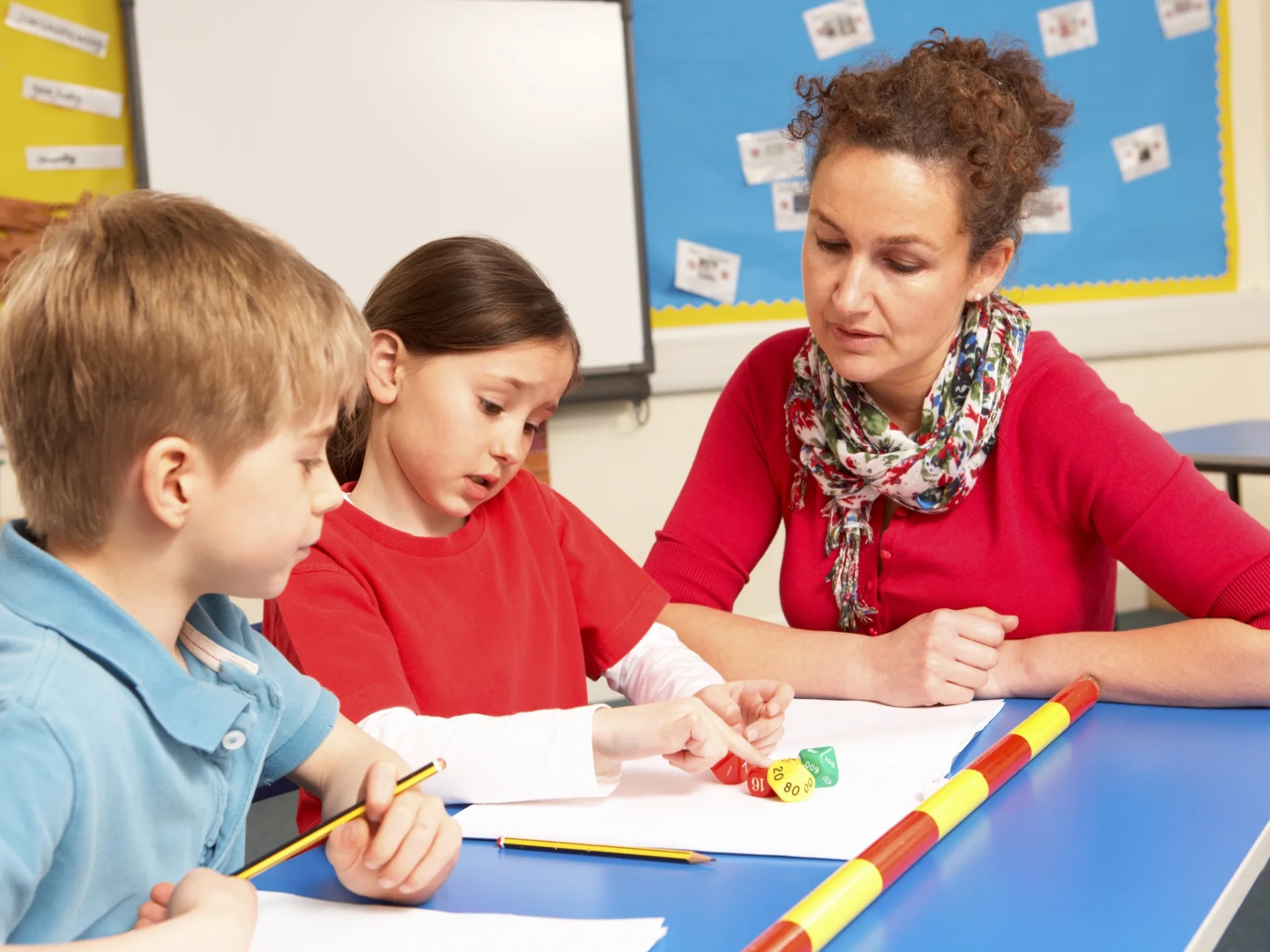
Mentoring young minds

❝Mentoring young minds at early stages of childhood plays an important role in shaping their personality and self image. The challenge to shape young minds so that they grow as individuals with a strong foundation.❞
During early childhood years, specially pre-primary and primary classes, the teacher plays an important role in shaping the identity and personality of the student. During this phase, the teacher acts as a mentor who shapes the child's self-image and creates a platform for the child to choose their aspirations, dreams, and goals for the future.
At this time, the teacher is a central factor as they play an important part in shaping a child's social and intellectual foundation, which becomes the base for his adult life.
Children express struggles differently. A child psychologist can help your child build resilience and feel understood.
Find a child psychologistThe question now arises:
How can teachers mould these young minds and mentor them in the best way in these changing times?
The most important factor is to create a balance between learning and education. Even though both are interrelated topics, they are two independent aspects of teaching. The right balance between these two aspects leads to innovation and experimentation in teaching, leading to mentoring young minds towards a much better learning graph.
Only when we can create this balance can we also make teaching fun, as the child becomes the part of the learning process, they no longer act as the beneficiary of the system.
Let us know a few strategies and techniques that can be implemented at the classroom level to help mentor young minds and make learning fun.
Conferencing is an interactive method that a teacher can use while helping a child learn delegation and teamwork. For each assignment, small groups can be made, and each member can contribute to the learning based on their interests, likes and strengths. Activities and homework can be tailored as per the need of the group. Apart from the regular conference, everyday mini-conference can be planned at the beginning of the class to help clarify doubts, monitor progress and keep everyone on the same page in the group.
The play method, which is so often used in academic teaching, should be initiated to inculcate social behaviour, values and skills to mentor social and emotional development in the children.
To help children learn the importance of cooperation, respect and camaraderie, peer learning or cooperative learning play an important role. This also helps the student learn and focus on things they can control and change. It helps builds social character in them along with emotional stability.
At this stage, the teacher is more of an ideal and is considered as a model for imitation children try to act and behave like the teacher; therefore, the teacher must speak their language are well be versed with technology and conversant in the current lingo, jargons and slangs that young are so well versed with, even at this stage. This helps build a bond and trust, which fosters a learning environment and encourages better creativity, problem-solving, communication, and awareness.
Mentoring will be successful only when children are made responsible and are encouraged to take ownership of their education and learning. This makes them active participants in the process. This can be initiated by helping them set class goals, individual goals and plan daily activity organisers and charts with specific goals and ways to achieve them.
When we talk about mentoring young minds at such an early age, we need to focus on multidirectional learning where different subjects can be interlinked along with real life-based project work, which creates curiosity, motivates children, and initiates collective efforts.
Setting firm and realistic expectations for children helps them become realistic and effective in planning their schedule. This also helps them to learn to evaluate and make reasonable changes to their planning regularly.
Open and honest communication is the key to mentoring because it helps children acknowledge their feelings and emotions and know how to communicate them effectively in a proactive manner rather than in a reactive manner. At the end of class, leave ten minutes aside to talk to children and to allow them to share. Have a special meet the mentor session where children can interact with you and discuss anything they want to.
Give them choices and let them choose, help them understand that every choice they make they have to learn to take it to a logical conclusion and also help them understand that to make choices is not wrong, what is important is that we work honestly and be prepared for what consequence our choice leads to. This understanding will help them master the art of not giving up and work towards their goals with sincerity.
In the end, we can say that by giving children choices, making them responsible, and part of the learning process, teachers, can make remarkable progress in the classroom setting. This leads to their learning being permanent and education being an integral part of their personality.
The teacher moves from being an educator to a mentor, helping children become empowered and well-adjusted individuals in life.
Important: TherapyRoute does not provide medical advice. All content is for informational purposes and cannot replace consulting a healthcare professional. If you face an emergency, please contact a local emergency service. For immediate emotional support, consider contacting a local helpline.
Find Therapists
Must Read
Creating Space for Growth: How Boundaries Strengthen Relationships
Setting healthy boundaries fosters respect, protects emotional well-being, and strengthens relationships by defining personal limits and maintaining self-care.
International Mutual Recognition Agreements for Mental Health Professionals
Mutual recognition agreements for mental health professions are rare and uneven, with major gaps in counselling, social work, and allied therapies. Read on to understand ...
Suicide statistics worldwide
Where to find help, what the evidence says about preventing suicide, and what the World Health Organization's latest estimates show worldwide, by region and by country, p...
Bullying and cyberbullying statistics worldwide
How many young people are bullied at school and online worldwide and in countries on every continent, how bullying is linked to depression and anxiety, and how common bul...
Self-harm statistics worldwide
How many young people and adults self-harm worldwide and in different countries, how reported self-harm has changed over time, and what trials show about therapy that hel...
About The Author

“Professional Counsellor, Behavior Therapist, Psychotherapist, Trainer, CBT Practitioner, Motivational Speaker with 18 plus years of experience.”
Priyanka Charan is a qualified Counselor, based in Sector 45, Gurgaon, India. With a commitment to mental health, Priyanka provides Corporate Workshops, Counseling, Mediation, Online Therapy, CBT and Skills Training.