
In-Person or Online Therapy - Which one is the right one for me?

❝Have you been contemplating therapy but not sure how to choose between in-person and online therapy? Here are a few factors to consider that may help you with your decision.❞
Not sure whether to try therapy online or face-to-face? You're not alone. With mental health care becoming more accessible, many people are trying to figure out which format works best for them.
Both options offer real support, but the experience can be very different. This guide breaks down the key differences to help you choose the type of therapy that fits your needs, lifestyle, and comfort level.
In this Article
- What exactly happens in therapy, and how does it differ online vs offline?
- Is One More Effective Than the Other? Here's What the Research Says
- How Do You Decide What’s Best for You? Key Factors to Weigh
- Not Sure Which Therapy Format Fits You Best? TherapyRoute Makes It Easier to Decide
- Final Thoughts
- Frequently Asked Questions
What exactly happens in therapy, and how does it differ online vs offline?

At its core, therapy is a structured conversation that helps you better understand your thoughts, emotions, and behaviours. Whether you meet online or in person, the goal is the same: support and growth. But how it feels and functions can vary depending on the format. Understanding these differences can help you feel more comfortable and prepared, whichever option you choose.
Therapy should be personal. Therapists listed on TherapyRoute are qualified, independent, and free to answer to you – no scripts, algorithms, or company policies.
Find Your TherapistIn-Person Therapy: What Happens During a Face-to-Face Session?
In-person therapy means meeting your therapist face-to-face in a private, calm setting, usually at a clinic or counselling office.
During a session, your therapist may observe more than just what you say. They’ll pick up on:
- Body language
- Facial expressions
- Tone of voice
- Emotional cues
These details help them tailor support in real time.
Common approaches used in-person include:
- Cognitive Behavioural Therapy (CBT) – For reframing negative thoughts and behaviours.
- Psychodynamic Therapy – For exploring past experiences and patterns.
- Mindfulness-Based Techniques – For building present-moment awareness and stress reduction.
Curious about why one-on-one therapy remains a powerful choice for personal growth? Find out the key benefits of individual therapy here.
Online therapy: How does remote counselling actually work?
Online therapy takes place virtually through secure video calls, phone sessions, or chat-based platforms. You connect with a licensed therapist from the comfort of your own space.
All you need is:
- A smartphone, tablet, or computer
- A stable internet connection
- A quiet, private setting where you feel safe to speak openly
Why choose online therapy?
- Fits into your schedule – Book sessions at times that work best for you.
- No commute required – Perfect for busy days or if travel is difficult.
- More therapist options – Access professionals beyond your local area, including culturally matched or language-specific providers.
Online therapy became popular during the pandemic, and for many, it’s now a convenient, reliable way to access mental health support.
Is One More Effective Than the Other? Here's What the Research Says

When considering therapy options, a common question arises: Is online therapy as effective as in-person sessions? Research indicates that both modalities can be effective, particularly for common mental health conditions such as anxiety, depression, and posttraumatic stress disorders. For instance, a systematic review published in JMIR Mental Health found that guided internet-based cognitive behavioural therapy (iCBT) can be just as effective as in-person CBT for treating common mental health conditions such as depression and anxiety. This means that for many people, online therapy isn’t a compromise, it’s a valid, evidence-based choice.
However, factors such as personal comfort, accessibility, and the quality of the therapeutic relationship also play a crucial role in the success of therapy, regardless of the format. To help you weigh your options more clearly, here’s a side-by-side comparison of how online and in-person therapy differ across key aspects like effectiveness, accessibility, cost, and more.
Comparative Overview: Online vs. In-Person Therapy
Still unsure which format fits your lifestyle or therapy goals? Here's how online and in-person therapy compare across the most important dimensions:
| Aspect | Online Therapy | In-Person Therapy |
| Effectiveness | Comparable to in-person for many conditions like anxiety and depression | Effective across a wide range of conditions, including severe mental health issues. |
| Therapeutic Alliance | Can establish strong connections, though some nuances may be missed. | Allows for full observation of non-verbal cues, enhancing connection. |
| Accessibility | Highly accessible; ideal for those in remote areas or with mobility constraints. | May be limited by geographical location and availability of therapists. |
| Flexibility | Offers greater scheduling flexibility and eliminates travel time. | Requires adherence to scheduled appointments and travel to the therapist's location. |
| Cost | Potentially lower costs due to reduced overheads. | May involve higher costs due to facility expenses. |
| Privacy | Offers privacy at home, but may be challenging if the home environment isn't conducive. | Provides a controlled, private setting away from personal environments. |
| Technology Dependence | Relies on stable internet and technology; technical issues can disrupt sessions. | No dependence on technology; sessions proceed without technical interruptions. |
Not sure which format suits you best? At TherapyRoute, you can explore both online and in-person therapy options, all in one place. Browse verified therapists, compare approaches, and take the first step toward support that fits your life.
What are the Real Advantages and Challenges of Each Type?
Choosing between online and in-person therapy isn’t just about preference. It often depends on your lifestyle, comfort level, mental health needs, and even location. Each format comes with its own set of strengths and limitations. Understanding these can help you make a more informed, confident decision about the kind of support that works best for you.
In-Person Therapy: When Being There Matters
Meeting face-to-face with a therapist in a physical setting remains a preferred option for many, especially when emotional nuance, structure, and deeper interpersonal dynamics are important. This traditional format offers certain advantages, but also some limitations depending on your lifestyle and needs.
Why Choose In-Person Therapy:
- Stronger connection: Being physically present often deepens trust and makes it easier to build rapport.
- Non-verbal clarity: Therapists can read body language and facial cues more accurately.
- Structured setting: A calm, neutral space encourages open expression without distractions.
- Better for complex cases: Especially helpful for trauma, personality disorders, or emotional intensity.
- Routine and rhythm: Scheduled, in-person sessions support accountability and consistency.
Limitations of In-Person Therapy:
- Time and travel constraints: Commuting to appointments can be difficult, especially with traffic or a packed schedule.
- Higher out-of-pocket costs: Office-based therapy often comes with added fees for space and overheads.
- Limited availability in some areas: Rural areas may lack licensed therapists.
- Longer waitlists: High-demand therapists may have limited slots, delaying support.
- Accessibility issues: Those with mobility challenges, chronic illness, or caregiving duties may struggle to attend in person.
Online Therapy: Flexible Support on Your Terms
With video, phone, or chat-based platforms, online therapy offers greater convenience and accessibility, especially for those balancing tight schedules, health concerns, or living in underserved areas. While it opens up new possibilities, it also comes with its own considerations.
Why Choose Online Therapy:
- Convenient and flexible: Attend sessions from home, no commuting, and often available on evenings or weekends.
- Access from anywhere: Ideal for those in remote areas, with mobility issues, or living abroad.
- Wider therapist options: Choose from professionals across cities or countries to find the right fit.
- Comfort of your own space: Being in a familiar environment can make it easier to open up, especially early on.
- More privacy: Online therapy offers a discreet alternative for those hesitant to attend in person.
Limitations of Online Therapy:
- Not ideal in a crisis: Virtual sessions may not provide timely help during emergencies or severe mental health episodes.
- Technology disruptions: Glitches, lag, or poor internet can interrupt sensitive conversations.
- Harder to read emotions: Therapists may miss subtle non-verbal emotional cues, especially in phone or text-based formats.
- Lack of private space: Without a quiet, confidential environment, it can be difficult to speak freely.
- Can feel detached: Extended screen time may lead to fatigue and a reduced emotional connection.
How Do You Decide What’s Best for You? Key Factors to Weigh
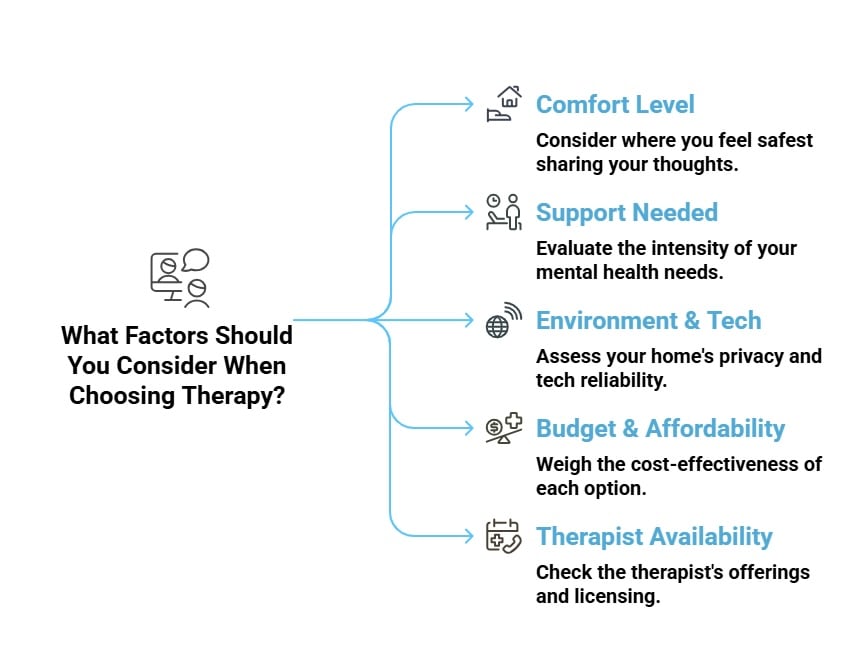
Choosing between online and in-person therapy is a personal decision, and there’s no one-size-fits-all answer. Here are some key things to consider to help you decide what feels right:
1. Comfort Level
Ask yourself: Where do you feel safest sharing your thoughts? Some people find comfort in sitting across from a therapist in a calm, neutral space. Others feel more at ease talking from their own home, without the pressure of a face-to-face setting.
2. Type of Support Needed
Are you dealing with something intense like trauma, severe anxiety, or a complex mental health condition? In-person therapy might provide the extra support and presence you need. On the other hand, if you’re managing stress, burnout, or low mood, online therapy could be just as effective.
3. Your Environment & Tech Setup
Online therapy relies on a stable internet connection and a private, quiet place to talk. If your home isn’t the most confidential space, or tech issues are common, in-person therapy may feel more secure and consistent.
4. Budget and Affordability
Cost matters. Online sessions can be more affordable because therapists don’t have the same overheads. But don’t just go by price, consider what offers you the right balance of accessibility and quality care.
5. Therapist Availability
Not every therapist offers both online and in-person sessions. Start by checking what your preferred therapist provides, and whether they’re licensed to practise in your area (especially for online care).
Not Sure Which Therapy Format Fits You Best? TherapyRoute Makes It Easier to Decide
Your mental health journey is personal, and so is the kind of support that works for you. Whether you thrive in face-to-face conversations or feel safer opening up from the comfort of your home, TherapyRoute helps you find the right match.
With filters for therapy style, format (online or in-person), location, language, and cultural background, you’re not just choosing a therapist, you’re choosing someone who gets you. No guesswork, no corporate bias, just access to qualified, independent professionals who meet you where you are.
Explore TherapyRoute today and find support that fits, not just your schedule, but your story.
Final Thoughts
Therapy isn’t one-size-fits-all. Some people find comfort in speaking to a therapist face-to-face, while others prefer the ease and privacy of online sessions. Virtual therapy, often done through video calls, offers flexibility and easier access, especially helpful for those managing anxiety, depression, or busy schedules. On the other hand, in-person therapy can be more effective for complex mental health disorders that benefit from direct, real-time support.
Whether you're navigating panic attacks, addiction, or another challenge, the most important thing is choosing the format that feels right for you. Studies show that both virtual and in-person therapy can be equally effective, what matters most is finding the approach that fits your needs and helps you feel supported.
Frequently Asked Questions
In what situations is in-person therapy the better choice?
In-person therapy can help people with mental health problems who need nonverbal communication, like body language. It is also good for those with serious mental illness who need the therapist to step in right away. Being in the therapist’s office gives a safe place for people, and this is especially important for those with special challenges, like personality disorders or psychosis. This controlled setting can make a significant difference for them to get the help they need for their mental health.
Is online therapy effective for treating depression and anxiety?
Yes, research shows that online treatment can be good for people with mental health problems like depression, anxiety disorder, panic disorder and other mental disorders. Cognitive behavioral therapy given through virtual mental health care can help you just as much as face treatment. Studies have shown that both ways bring about similar improvements, which means use of telehealth has a lot of value in mental health care.
How do I make sure online sessions are private and secure?
Make sure you have a safe internet connection before you start. Pick platforms that be HIPAA-compliant. Let your family or the people you live with know your session times. This way, you can cut down on anyone walking in or making noise. Talk with your online therapist about privacy and ways to keep your mental health information safe. This helps protect your mental health care from data breaches.
Can I switch formats later if my needs change?
Of course. Flexibility is very important in mental health services. You can switch between online therapy and in-person therapy when you need to. Talk with your therapists about any changes to your therapy sessions. This helps the therapy fit your changing mental health treatment needs.
How do I find a qualified therapist for online or in-person sessions?
You can look for licensed therapists on trusted websites like TherapyRoute. You can also check your health insurance provider’s list or use directories for mental health professionals. Many health insurance companies offer group sessions and other mental health interventions. This helps you get care that is right for you from people who know what they are doing.
Important: TherapyRoute does not provide medical advice. All content is for informational purposes and cannot replace consulting a healthcare professional. If you face an emergency, please contact a local emergency service. For immediate emotional support, consider contacting a local helpline.
Find Therapists
Must Read
Creating Space for Growth: How Boundaries Strengthen Relationships
Setting healthy boundaries fosters respect, protects emotional well-being, and strengthens relationships by defining personal limits and maintaining self-care.
International Mutual Recognition Agreements for Mental Health Professionals
Mutual recognition agreements for mental health professions are rare and uneven, with major gaps in counselling, social work, and allied therapies. Read on to understand ...
Mental Health Licensing & Regulation in New York State: 2026 Guide
Mental Health Licensing & Regulation in Singapore: 2026 Guide
Jumping to Conclusions
Jumping to conclusions is a thinking habit where we assume the worst or make judgments without enough evidence. By recognising this pattern, therapy can help you slow dow...
About The Author

“Competent, compassionate, collaborative social worker and psychotherapist working with individuals and families in a trauma-informed way.”
Durel Williams is a qualified Registered Social Worker, based in North York, Canada. With a commitment to mental health, Durel provides Psych & Diagnostic Assessment, Online Therapy and Psychotherapy.
