Fragility on a Stampede

❝The concept 'white fragility' explored by drawing from Adam Phillips' lecture (2021) titled Reviewing ‘White fragility’ by Robin DiAngelo: Psychoanalysis with racism.❞
I watched the talk by Adam Phillips (2021) titled Reviewing ‘White fragility’ by Robin DiAngelo: Psychoanalysis with racism. I found myself thinking about the term, 'white fragility' which was coined by DiAngelo. The concept seems to open a hornet's nest whenever it is raised. In this short essay, I will briefly explore the concept, drawing from Phillips' thought-provoking and in-depth lecture which I encourage readers to listen to. The link to his lecture on Youtube is included in the references below.
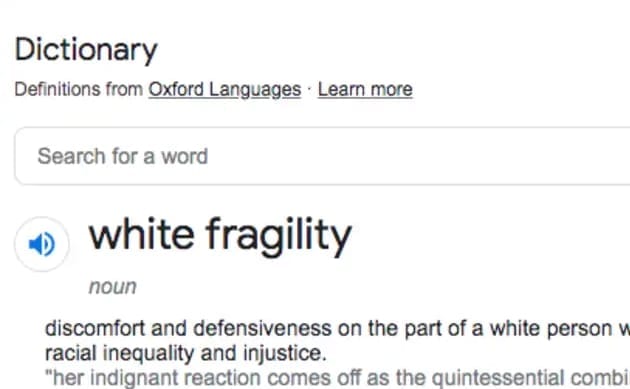
'White fragility' describes defensive responses of white people who feel directly or indirectly accused of racism in one form or another. Phillips (2021) explains that white fragility is about 'the kinds of difficulties, guilty excruciation white people have in talking about race'. Racism in society has evolved over time. Becoming aware that in some ways one is complicit with racist norms may invoke feelings of guilt and conflict. Anger can feel empowering and is perhaps a complimentary defence for fragility, which is most vulnerable. Expressing pain can be a defence to ward off an unbearable attack. Vulnerability may induce a response of sympathy, failing which, anger may induce fear.
Looking for evidence-based support? Find a qualified psychologist near you through TherapyRoute.
Find a PsychologistPhillips (2021) suggests that 'this fragility needs to be redescribed'. He cuts to the chase, describing white fragility as 'a protection racket or a covert demand for compliance', that white fragility exerts pressure to collude 'by minimising their racial experiences, to accommodate white denial and defensiveness'. Phillips suggests that fragility be 'redescribed in a way that might make something else possible'. The sense of unbearable may optimistically be seen as metaphoric sirens calling for change. Acknowledging one's prejudices is perhaps a good place to start. Gaining insight into the concept of White Fragility may assist those suffering from it. However as Phillips (2021) points out, 'to be able to act, to speak, we may need to be less impressed by our guilt'.
It is painful and shaming to be seen as a perpetrator and even more so, to see oneself as such. If we are to believe that generally, we do our best or at least do 'well enough' to be good people, then to perceive oneself as inflicting harm is a fall from grace, perhaps like being caught red-handed by something like a Milgram experiment, however in this case it is not an experiment, but real life. What happens when people go along with social norms which in some way violates human beings, or anything else for that matter? Some researchers who wanted to understand the motivations of ordinary German people who supported or turned a blind eye to Nazism, described the testimonies of interviewees who had been involved with Nazism as 'being quite banal; yet powerful dynamics took place within the interview setting itself. Many of those interviewed were dominating and self-opinionated, and the researchers doing the interviews could feel overrun, bulldozed, emptied, saddened, confused, sickened, abused or knocked down’ and following the interviews, researchers reported nightmares about war or persecution' (Stamenova and Hinshelwood, 2019).
During the apartheid regime of South Africa, Christianity was seen as the official religion. I remember as a child hearing the story of The Good Samaritan which was told in churches and schools. The parable is about extending compassion to everyone, including one's enemies. Many white people listening to the tale identified with or at least saw the good Samaritan as an ideal.
People may experience shame and feel branded if thought of as racist. Phillips (2021) suggests that 'the shame that racism entails is by definition resistant to articulation'. Narcissistic injury is an experience of a wound of self-worth and a source of shameful feelings. Shame is an experience of the pain of being valueless, inferior, unlovable and a defective sense of self. An object relations view of the experience of shame is informed by internalised objects, which ‘involves an internalised gaze of the self or introjected eye of the other’. Persecutory anxiety, typical of a Kleinian paranoid-schizoid position ‘is an intense source of shame, where the self is experienced as unlovable by a rejecting, exploiting and humiliating other’. A phantasised ‘ideal self’ is measured against a ‘worthless’ self. In the adult psyche, this translates as a conflict with the ego-ideal which informs a person's ideals and role expectations. Shame is the negative feeling which stems from the narcissistic wish ‘to be special to the significant (m)other’. If this wish is unmet in early development, instead of developing a ‘coherent, stable and well-esteemed’ sense of self, an infant experiences self as ‘chaotic, deficient or fragmented, opening the self to narcissistic vulnerability and shame’ (Vanderheiden and Mayer 2017: 44-45, 48-49, 52).
Phillips (2021) defines prejudice as an 'absolute antipathy to change, a state of unassailable conviction, an attempt to freeze time, an attempt to preempt or foreclose the future. What Psychoanalyst Christopher Bowles calls 'a fascist state of mind' in which all self-doubt is dispelled, desires simply and solely confirmation of what one already believes'. He points out that 'one of the striking facts about racism, that its language never evolves, there's never any real news in the language of supremacism and its racism'.
Perhaps speaking openly about the topic of race, although different, is similarly taboo and provocative in our era as the topic of sex was in Freud's? Phillips suggests that 'almost any book on racism that's not merely banal will unleash ferocity of feeling and this can make people frightened to talk and frighten not to talk'. Speaking directly about the repressed, that which gives rise to defences, may be experienced as an attack. He quotes DiAngelo that 'the prevailing belief that prejudice is bad, causes us to deny its unavoidable reality'. Another defence resorted to is to speak of one's own trauma, to show one has suffered too. Philips mentions that people compete to be 'the aristocrats of trauma' or simply speak in a way that 'privileges one cultural trauma over another' which he explains is 'one of the ways the trauma is replicated and reinforced and muddled' (Phillips, 2021).
Race is widely referred to as a social construct. The children's tale, The Emperor's New Clothes, may metaphorically describe the situation. Social constructs are powerful and deeply embedded in society. Furthermore, they are often inherited and handed down the generations. Dalal (2006) wrote that 'the naming of people as black or white is not so much a descriptive act as an othering. The traits associated with whiteness are idealised while there is the sense of being devalued due to being darker'. Object relations identifies racism as an example of psychological splitting and the 'tendency to (mis)use devalued racial groups as “containers” for disavowed and unwanted aspects of the self' (Berzoff, Flanagan & Patricia Hertz, 2011). It is perhaps in relation to this disavowal of the intolerable aspects of self that Philips (2021) asks question, 'What is supremacism a self-cure for?' and then makes the statement, 'if there was less racism there would be more suicide'.
Those who do not comply with damaging societal norms are required to swim against the stream. On the other hand, if consideration and care for humanity and life are recognised as a desired norm, then adhering to systems which violate others could be seen as going against the flow.
Acknowledgement of racism is perhaps a crucial starting point. Phillips (2021) however, alerts us to the notion of acknowledgement as a defence, pointing out that knowing that one knows that racism is evil, can so easily be followed with feeling one does not need to think about it 'as though by magical thinking racism can be abolished by being recognised and acknowledged.
Racism is almost everywhere. Philips (2021) examines his own profession and notes that it took one and a half centuries for psychoanalysis to add 'the issue of white supremacism to the analytic agenda… as though the infinite suffering, that is racism, was somehow unbearable, or was construed as unbearable by the psychoanalyst themselves - as something unbroachable'.
Prejudice and supremacism act as a means of distancing, separating people from that which they feel are threatening (Philips, 2021). In psychoanalysis, these prejudices and assumptions about oneself are called symptoms. Philips concludes that historically psychoanalysis is 'both a symptom of racism' and a means of healing. He explains that 'by redescribing prejudices as symptoms, Freud made it possible for us to believe that we can reconsider ourselves, that we can revise our more violent and fantasy-fuelled forms of self-protection, our prejudices. A symptom can be redescribed, a prejudice by definition cannot be. A symptom may be cured, a prejudice as a refuge and a tyranny has to be defended and inflicted and endured' (Phillips, 2021).
References
Berzoff, J., Flanagan, L.M. & Hertz, P . 2011. Inside out and outside in: Psychodynamic clinical theory and psychopathology in contemporary multicultural Contexts. 3rd ed. Plymouth: Rowman & Littlefield Publishers.
Dalal, F. (2006). Racism: Processes of Detachment, Dehumanization, and Hatred. The Psychoanalytic Quarterly, 75(1), 131–161.
Image: 'White fragility'. Oxford University Press. 2022. [https://www.google.com/search?q=white+fragility+definition]
Phillips, A. 2021. Reviewing ‘White fragility’ by Robin DiAngelo: Psychoanalysis with racism [youtube https://youtu.be/x05q-kecsb8].
Stamenova, K. & Hinshelwood, R.D., 2018. Methods of Research into the Unconscious Applying Psychoanalytic Ideas to Social Science. New York: Routledge.
Vanderheiden, E. & Mayer, C.H. 2017. The Value of Shame: Exploring a Health Resource in Cultural Contexts. Cham: Springer.
Important: TherapyRoute does not provide medical advice. All content is for informational purposes and cannot replace consulting a healthcare professional. If you face an emergency, please contact a local emergency service. For immediate emotional support, consider contacting a local helpline.
Find Therapists
Must Read
Creating Space for Growth: How Boundaries Strengthen Relationships
Setting healthy boundaries fosters respect, protects emotional well-being, and strengthens relationships by defining personal limits and maintaining self-care.
International Mutual Recognition Agreements for Mental Health Professionals
Mutual recognition agreements for mental health professions are rare and uneven, with major gaps in counselling, social work, and allied therapies. Read on to understand ...
Jumping to Conclusions
Jumping to conclusions is a thinking habit where we assume the worst or make judgments without enough evidence. By recognising this pattern, therapy can help you slow dow...
Case Conceptualisation
Case conceptualisation is how a therapist thoughtfully pulls together your concerns, experiences, and strengths into a clear understanding of what’s going on. This shared...
Guided Discovery
Guided discovery invites clients to arrive at their own insights through collaborative questioning and reflection. Instead of being told what to think, individuals learn ...
About The Author

“My approach is psychodynamic with a focus on early development and the unconscious. I also draw from other approaches such as trauma intervention.”
Anna Varney-Wong is a qualified Psychotherapist, based in Glencairn Heights, Cape Town, South Africa. With a commitment to mental health, Anna provides Psychotherapy, Psychodynamic Therapy, Individual Therapy and Group Therapy.