Anxiety: Understanding the Cycle


❝Anxiety has a powerful way of making you feel powerless or caught in rumination. This article describes how people can get stuck in patterns of anxious avoidance.❞
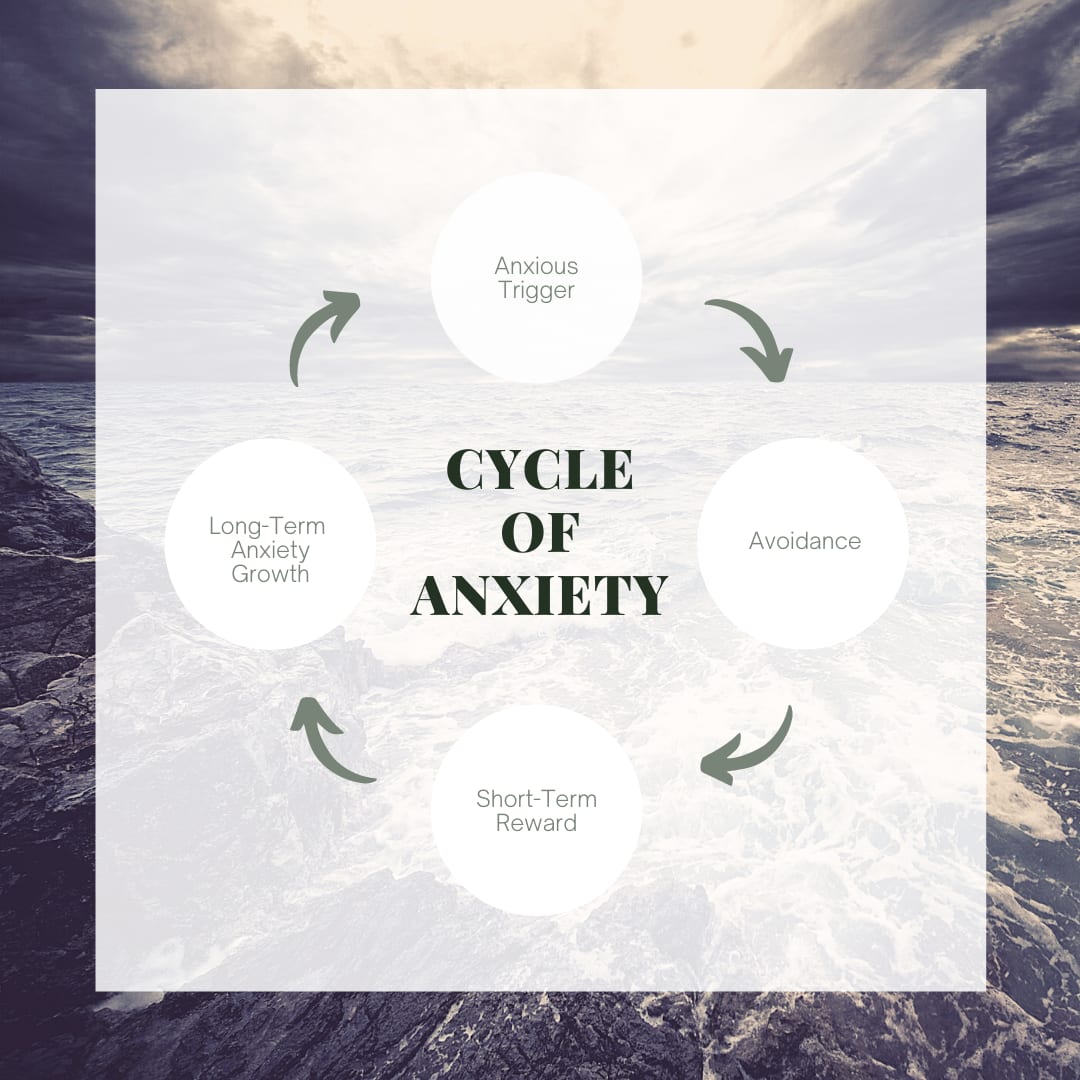
As you begin to manage your anxiety effectively, one of the first steps is to identify how anxiety works. A common model for understanding anxiety is the Cycle of Anxiety illustrated below:
Managing anxiety is easier with the right support. TherapyRoute connects you with qualified therapists who specialise in anxiety and stress.
Find an Anxiety Therapist
Anxious TRIGGERS
Anxiety provoking triggers are uncomfortable situations that produce anxious thoughts, emotions and physical sensations. These situations cause a sense of danger and can be an event like a life transition or a thought such as feelings of guilt or negative self-talk. Triggers can be identified when you notice symptoms such as:
- Racing thoughts
- Difficulty concentrating
- Concerns of looking foolish in front of others
- Feeling tense
- Pressure on your chest or racing heart
Avoidance
The anxiety symptoms can be so overwhelming or uncomfortable that you distract yourself to avoid feeling them when an anxious trigger occurs. Common forms of avoidance are:
- Procrastination, especially during challenging tasks or poorly-defined problems/expectations
- Feeling unable to bring up your needs or communicate your challenges with others.
- Mindlessly watching TV and engaging with other distractions
- Using drugs or alcohol to numb feelings
Short-Term Reward
When you avoid an anxiety-provoking situation, there is a short term reward. The fears that anxiety was telling you would happen did not occur. There was no opportunity for the worst-case scenario you had imagined to occur by avoiding the uncomfortable situation entirely.
Long-Term Anxiety Growth
The reward from avoiding anxiety-provoking situations comes with the cost of increasing your anxiety in the long term. The more you avoid an uncomfortable situation, the more those specific situations are associated with anxiety and fear. Your choice to avoid the situation teaches your brain that the symptoms go away when the anxiety-producing situation is avoided. As a result, anxiety symptoms will be worse, and the next time avoidance will be more likely. This repetitive cycle keeps you stuck in anxiety and can even create phobias.
This is how anxiety can make you feel helpless. How small situations that have been avoided over time can make you feel powerless and isolated.
Can you identify your own cycle of anxiety? If so, how do you typically avoid your anxious feelings? Identifying how your own experiences fit into the cycle is one of the first steps at breaking free from this cycle.
Important: TherapyRoute does not provide medical advice. All content is for informational purposes and cannot replace consulting a healthcare professional. If you face an emergency, please contact a local emergency service. For immediate emotional support, consider contacting a local helpline.
Find Therapists
Must Read
Creating Space for Growth: How Boundaries Strengthen Relationships
Setting healthy boundaries fosters respect, protects emotional well-being, and strengthens relationships by defining personal limits and maintaining self-care.
International Mutual Recognition Agreements for Mental Health Professionals
Mutual recognition agreements for mental health professions are rare and uneven, with major gaps in counselling, social work, and allied therapies. Read on to understand ...
Mental Health Licensing & Regulation in New York State: 2026 Guide
Mental Health Licensing & Regulation in Singapore: 2026 Guide
Jumping to Conclusions
Jumping to conclusions is a thinking habit where we assume the worst or make judgments without enough evidence. By recognising this pattern, therapy can help you slow dow...
About The Author

“I am a Registered Clinical Counsellor who supports men who feel stuck, stressed, or disconnected from their lives. My work focuses on clarity, emotional awareness, and building practical tools that help you move forward with confidence. I believe therapy should feel safe, steady, and honest. Together, we create space to understand what you carry and find your way back to a life that feels meaningful.”
Evan Vukets is a qualified Registered Clinical Counselor, based in Vancouver, Canada. With a commitment to mental health, Evan provides Counseling, Free Consultation, Psychoeducation, Therapy, Addiction Counseling, CBT, Online Counseling and Trauma Counseling.