Working with Family Estrangement: Patterns, Protection, and Psychological Safety


❝Today I wrote about family estrangement from a family therapist perspective. Many adults children today are choosing to step away from family relationships.❞
Many of the adult children I work with somewhat carry the same paradox:
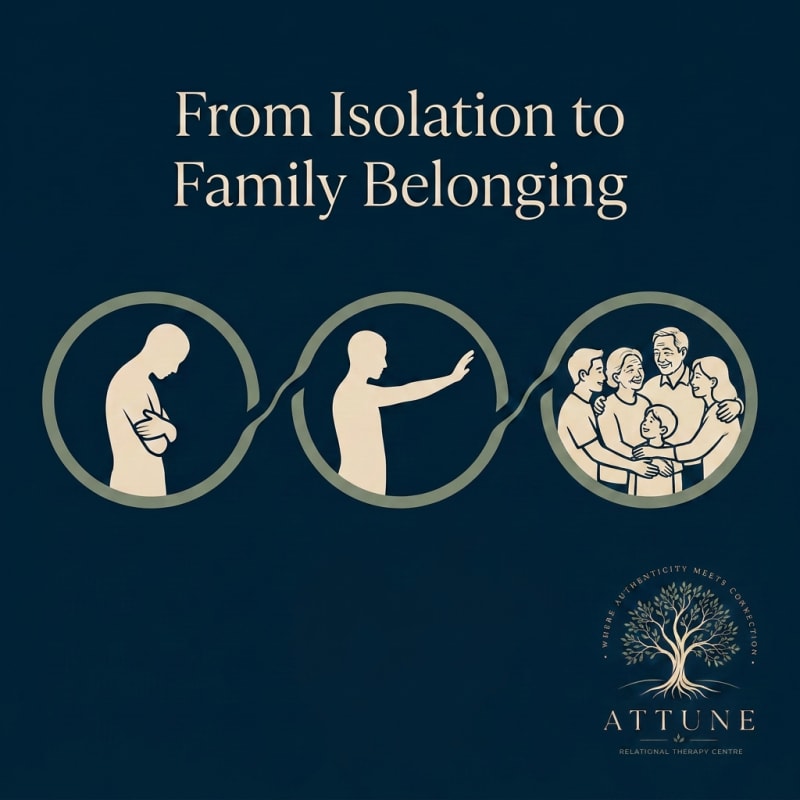
They feel suffocated by closeness, yet deeply lonely in the distance they've created to protect themselves. For many, distance feels like survival.
If you're struggling with low mood or depression, talking to a professional can make a real difference. Find a therapist who understands.
Find a Therapist for Depression"If I get too close, I will lose myself."
The boundary may feel somewhat harsh, but it serves a purpose. It protects them from reactions, expectations, disappointments, and old wounds that still feel too painful to revisit.
Then, as parents age, another emotion often emerges in the background —guilt.
"Should I be trying harder?" "Will I regret this one day?"
These conversations rarely begin with reconciliation. They begin with curiosity.
Together, we trace the story back.
How did distance first become the safer option?
What made connection feel unsafe?
What do you need to feel belonged?
What has been carried across generations that continues to shape your relationship today?
Over the years, I have worked with many estranged adult children and families working through these questions.
Sometimes relationships are rebuilt.
Sometimes boundaries are strengthened.
Sometimes the outcome is not reconciliation, but clarity.
I am an active facilitator in helping families unfold what they have carried from their personal history that make them stuck in the pattern and, often, from generations before them.
Sometimes I also meet parents who worry that therapists automatically side with their adult children.
"No point going to therapy, your therapist will just support whatever you say".
This is not an uncommon statement that keep parents from attending the session together. It tells me the parents fear of being unheard, sidelined. I work through the fear and invite them to join the session as consultant rather than the problematic person.
And then I realise many misunderstand that empathy means supporting blindly.
But a competent therapist learns how to not collude with the dysfunction.
A competent therapist knows that being empathetic does not mean avoiding confrontation.
When conversations become emotionally charged and old patterns reappear, I step in to slow the system down—naming what is happening in real time in a respectful and gentle manner, creating space and helping everyone be more intentional in the way they relate to one another.
The goal is not to determine who is right or wrong. It is to create enough psychological safety for honest conversations to take place for everyone.
When the system is safe, people are honest, families can renegotiate roles, rebalance power and hierarchy, and build relationships that feel more authentic and sustainable.
The family decides who they want to become.
I help them see the patterns, make sense of the story, and choose intentionally rather than react automatically.
Love can feel safe and free.
Love does not have to be always suffocating.
Important: TherapyRoute does not provide medical advice. All content is for informational purposes and cannot replace consulting a healthcare professional. If you face an emergency, please contact a local emergency service. For immediate emotional support, consider contacting a local helpline.
Find Therapists
Must Read
Creating Space for Growth: How Boundaries Strengthen Relationships
Setting healthy boundaries fosters respect, protects emotional well-being, and strengthens relationships by defining personal limits and maintaining self-care.
International Mutual Recognition Agreements for Mental Health Professionals
Mutual recognition agreements for mental health professions are rare and uneven, with major gaps in counselling, social work, and allied therapies. Read on to understand ...
Mental Health Licensing & Regulation in New York State: 2026 Guide
Mental Health Licensing & Regulation in Singapore: 2026 Guide
Jumping to Conclusions
Jumping to conclusions is a thinking habit where we assume the worst or make judgments without enough evidence. By recognising this pattern, therapy can help you slow dow...
About The Author

“I work with individuals, couples, and families who may appear capable and composed on the outside but feel overwhelmed, disconnected, or stuck in patterns they struggle to change. My goal is not only to help you manage symptoms but also to support a deeper understanding of your experiences, create space for new possibilities, and help you build more authentic and meaningful relationships with yourself and others.”
Cheryl Chin Yi Fen is a qualified Family Therapist, based in Mont Kiara, Kuala Lumpur, Malaysia. With a commitment to mental health, Cheryl provides Counseling, Divorce Counseling, Family Therapy, Relationship Counseling and Trauma Counseling.