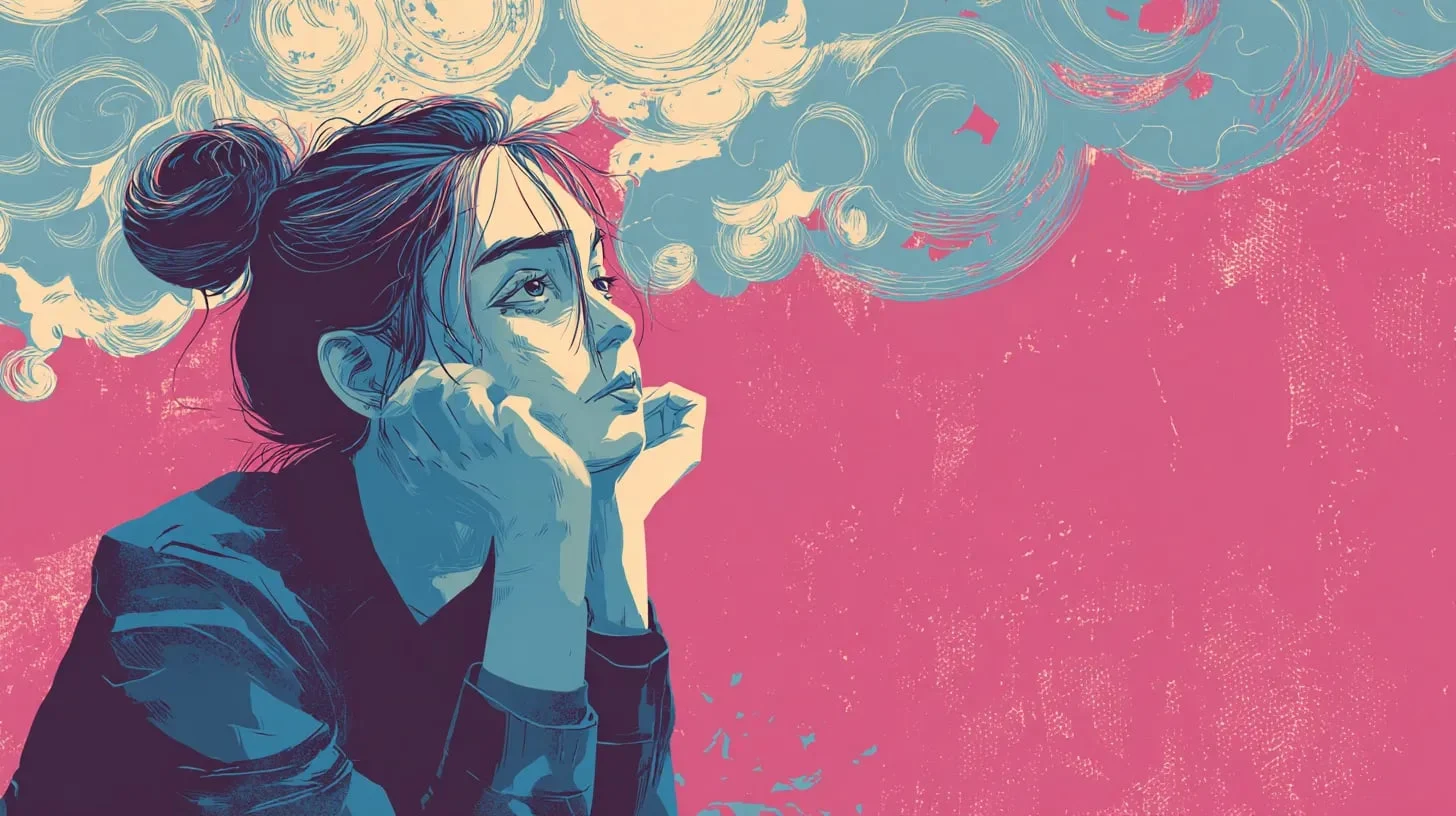
When things seem to be falling apart just go to the bathroom.


❝There you can reset your intentions, strategy, or solutions to your renewed performance on return to the place of tension or pressure.❞
When things seem to be falling apart, and when you are feeling overwhelmed by the emotions and expectations of your performance and perhaps even overwhelmed by life itself, just go to the bathroom…
Wash your face with cold water (if you can splash cold water on your face for approximately 3 minutes, this is scientifically proven to activate the vagus nerve, the source of calming our systems) with the intention of washing off all that has happened in the past few hours, as well as all the emotional discomfort you have felt thus far. Another option for you is also to sit on the toilet, take some slow deep breaths with the intention of exhaling both the past and the negativity experienced thus far. After this brief period of removing yourself from the context of the discomfort or problem and placing yourself in a neutral context such as the bathroom, you will find it far easier to bring yourself to this fresh new moment of the ‘present’. In the quiet of the ‘here and now’, you can reset your intentions, strategy, or solutions of your renewed performance on return to the place of tension or pressure.
Looking for evidence-based support? Find a qualified psychologist near you through TherapyRoute.
Find a PsychologistFor the purpose of this article, the context of discomfort is the physical, emotional, and social intensity of a match or competition.
At the 2019 Australian Open both winners of the Men’s and Ladies Singles requested to go to the bathroom when the domination of the match had swung over to their opponents’ favour after the respective eventual champions had initially been leading. In these matches, Naomi Osaka had 3 match points in the second set to win the match; however, even at this level of tennis, the pressure appeared to get the better of her, losing all 3 match points and then the set. Novak Djokovic had won 2 sets and became angered by floodlights switched on early in the afternoon for TV purposes. His irritation caused by the unpleasant condition of the bright lights, as well as a cajoling foe in the audience shouting out “nervous?”, clearly provoked his usual ‘in charge’ disposition. Both champions obviously lost not only their composure and concentration but even their confidence to regain their domination, which proved to be waning. At their lowest points, after both players had lost the recent set, they chose to use the bathroom...
A bathroom break would offer the potential of breaking their prevailing downward spiral and provide an opportunity for cleansing and resetting firm intentions.
Both players returned to court with a new found presence and the courage to carry out their convictions with a mindset that demonstrated an improved composure, confidence, and concentration. The latter qualities, being the tripod of mental toughness and therefore a platform for these champions to springboard their full performing potential to come to the fore and to finish the match on top.
The above illustrates some crucial facts about human beings, champions and that leaving the competition both literally and figuratively can assist in returning to performing at your peak. The following are 4 important points that can remove the discomfort of competition when things seem to be falling apart:
- 1. Each and every one of us have mental weaknesses or buttons that do get pushed or exposed from time to time depending on the situational and psychological context.
- 2. At the highest level of sport, a person can still get provoked regardless of how many hours of mental toughness training they have invested.
- 3. At times, every mental tool in the book will not work and in this case, if it is possible, go to the bathroom…
- 4. In cases where bathroom breaks are not an option, gratitude and fun, as cliché, as it might sound, in all aspects of a life time and time again, are shown to be the next best thing to redirect momentum toward positivity. In an earlier match in the tournament, Naomi Osaka was playing a really tricky opponent. This experienced player does not have the traditional qualities of a great player; instead, this world ranked Top 30 player from Taipei uses angles, spins, high and soft shots, which is in opposition to the majority of the great players on the tour. Osaka lost the first set and looked mentally and physically down and out. She struggled through the second, taking it eventually and then winning easily in the third. After the match, she reported, “I was overwhelmed and I tried to do things that I know is not my game… I don’t even practise doing these things, so it felt like such a waste. I then remember thinking that I shouldn’t be sad, I am playing a grand slam against a great player, so I need to just enjoy my time and put all my energy into doing the best that I can on every point!
The above 4 points not only can serve to shift the discomfort of competition when things seem to be falling apart, but they can also remind us that renewed, improved thought, action, and creativity are not born out of fighting against or forcing the tide in our direction. The above 4 points reinforce that the source of our best emerges from a calm or clear mind and an awareness that we can choose to appreciate, enjoy or just have fun in this very moment!
Toni Gaddie is a clinical psychologist that specialises in champions, and in particular, sports champions. Based on her experience as an internationally ranked professional tennis player, Toni has dedicated her life to enabling sports champions to achieve top rankings in their particular sport. Toni has participated twice in the World Economic Forum in Davos where she shared her approach with world champions in many disciplines. She is the co-founder of The Champions Academy. Visit her profile for her contact details and more information.
Important: TherapyRoute does not provide medical advice. All content is for informational purposes and cannot replace consulting a healthcare professional. If you face an emergency, please contact a local emergency service. For immediate emotional support, consider contacting a local helpline.
Find Therapists
Must Read
Creating Space for Growth: How Boundaries Strengthen Relationships
Setting healthy boundaries fosters respect, protects emotional well-being, and strengthens relationships by defining personal limits and maintaining self-care.
International Mutual Recognition Agreements for Mental Health Professionals
Mutual recognition agreements for mental health professions are rare and uneven, with major gaps in counselling, social work, and allied therapies. Read on to understand ...
Mental Health Licensing & Regulation in New York State: 2026 Guide
Mental Health Licensing & Regulation in Singapore: 2026 Guide
Jumping to Conclusions
Jumping to conclusions is a thinking habit where we assume the worst or make judgments without enough evidence. By recognising this pattern, therapy can help you slow dow...
About The Author

“Sports/Clinical Psychologist & Performance Coach assisting top sports people, performing artists, business leaders and organisations.”
Toni Gaddie is a qualified Clinical Psychologist, based in Sandton, South Africa. With a commitment to mental health, Toni provides Relationship Counseling, Sport Psychology and Skills Training.