What Makes the Human Brain Human?

❝The human brain shares many similarities to those of other animals. But what makes it different? Professor Mark Solms considers this question and outlines how a bigger prefrontal lobe makes a brain specifically human.❞
Social scientists become twitchy when natural scientists define humanness. But what are humans if not a species of animal? And all animals evolved from other, earlier animals, and therefore carry vestiges of common ancestors. All vertebrates, for example, share the same basic anatomy for generating the raw pleasures and unpleasures of consciousness. This 525-million-year-old brain system occupies exactly the same place in the reptilian brain as it does in ours. And what could be more fundamental to what makes us tick than this system, which compels us to approach things that makes us feel good (because they enhance our chances of surviving and reproducing) and withdraw from things which feel bad (because they do the opposite). Freud called this the ‘pleasure principle’. Drawing attention to such facts never enhances your popularity.
Looking for evidence-based support? Find a qualified psychologist near you through TherapyRoute.
Find a PsychologistMoving swiftly on: of course, there is more to what makes us humans tick than the pleasure principle. In fact, we know that our brains are capable of generating a wide variety of different pleasures and unpleasures. Affective neuroscientists recognise seven such basic emotions, namely SEEKING, LUST, FEAR, ANGER, PANIC, CARE and PLAY. These basic emotions are wonderful things. The PANIC system, for example, is what makes us form affectionate bonds – and feel the pain of social loss, sadness and grief when such bonds are broken. It is what ties babies to their mothers, and sexual partners to each other. It likewise underpins the formation of all affiliative groups. The CARE system is what makes us look after the small, weak, dependent and vulnerable (especially when they are our own offspring). The SEEKING system is what makes us engage with the world, and try to understand how it works.
The problem with all this, however, is that it applies to all mammals. The brain mechanisms that underlie these human behaviours are at least 200 million years old. The brain anatomies and chemistries that make us joyously play with each other, copulate with each other, groom each other, fear and fight each other, are almost identical not only in our primate cousins, but also most barnyard animals – even the rodent vermin.
As I said, drawing attention to such facts doesn’t enhance your popularity ... but that doesn’t make them less true. We ignore such facts at great cost, especially since the fact that we are animals, and therefore subject to instinctual compulsions, does not mean we must give free rein to them. It is up to us to decide what we do about them. But it is hard to imagine how we can manage them if we don’t even acknowledge their existence.
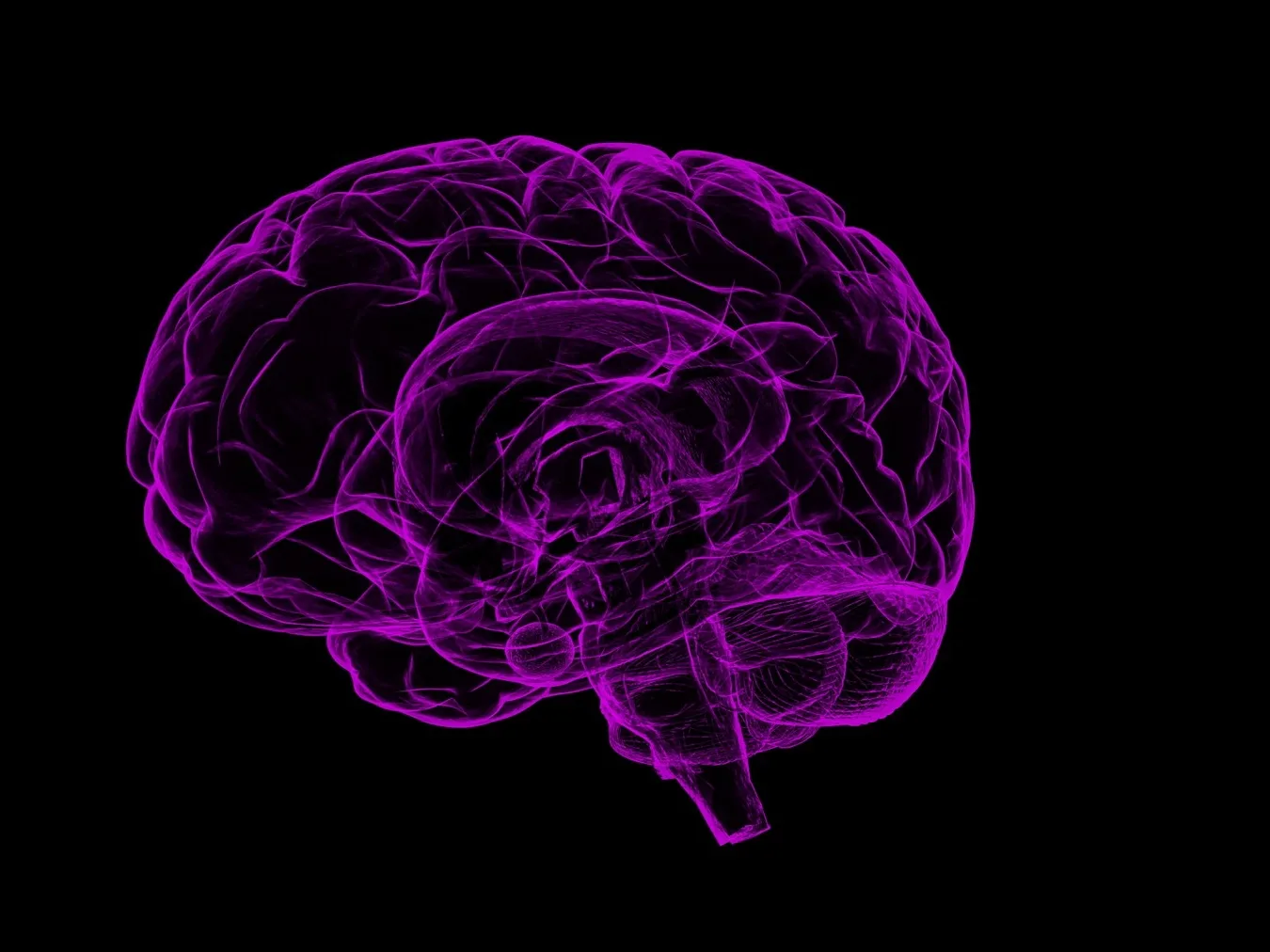
This brings me to the specifically human part of the human brain. Our brain is not the biggest of all the mammals – consider whales, dolphins, elephants. And nor are they the biggest as a ratio of bodyweight – even mice beat us on that score. Nor do we have the most cortex, or the most cortex in relation to subcortex. What distinguishes the human brain is only this: less than a piffling one-million years ago, the volume of the tissue above our eyes and behind our foreheads grew in relation to the rest of our brain. The 1% or so of genetic difference between us and chimpanzees boils down, neuroanatomically speaking, to this: we have bigger prefrontal lobes.
So what do prefrontal lobes do? Two things. First, they inhibit. They inhibit the emotional and behavioural outputs of the instinctual systems enumerated above. This paves the way for the second thing they do: they think. Thinking is not a uniquely human attribute, because other animals have prefrontal lobes too; but we are very good at it because ours are the biggest. Thinking is interposed between instincts and actions. It consists of: (1) not acting on the currently active instinct; (2) running through the other available alternatives, based on prevailing conditions filtered by past experience, in the safety of the virtual space of the mind; and (3) making a choice about which alternative is likely to produce the best future outcome. Thinking permits a flexible approach to the future.
The fact that this entire process is initiated and guided by instinctual compulsions does not do away with the existence of free will, in principle - but it greatly constrains it in reality. You may always choose to enter a lion’s den, but the fear it arouses makes it far less likely that you will actually do so. This is why some neurobiologists prefer to speak of ‘free won’t’ rather than ‘free will’. Free will is the freedom not to act on an instinctual compulsion.
Also important to mention is the fact that the prefrontal lobes are the part of the brain farthest removed from the sensory-motor periphery and the visceral body core. The neural connections that are forged at this level of brain processing are therefore the least determined by concrete bodily facts. They are the most abstract. The peripheral and visceral body facts are recombined (first with themselves, then with each other) so many times by the stage they reach the prefrontal level that they are no longer recognisable as bodily facts at all. They become an abstract set of algorithms bound by their own systems of rules. The best known of these systems is language. Thinking is greatly assisted by the abstract codifications of language, and so too is communication, as is our capacity to design artificial sets of laws.
These then are the uniquely human properties of our brains. But like all evolutionary trade-offs, our enlarged prefrontal lobes, our phylogenetic pride and joy, also came at a price. The price was this. Compared to all other mammals we are remarkably ignorant of our own instinctual emotions. Our basic motivations are opaque to us. We do not know why we are doing much of what we do.
I dare say that if we could interview the early humans that produced those beautiful first works of art that adorn the rocks and caves of Africa, they would not be able to explain their actions. The whole ‘meaning of life’ was by then already unclear to them, just as it is to us today. And rather than acknowledge their self-ignorance, they would most likely make up a story about what they did. They would confabulate, in uniquely human fashion. And they would eventually come to believe their own stories.
MORE POSTS
Psychotherapy: Does one size fit all?
Important: TherapyRoute does not provide medical advice. All content is for informational purposes and cannot replace consulting a healthcare professional. If you face an emergency, please contact a local emergency service. For immediate emotional support, consider contacting a local helpline.
Find Therapists
Must Read
Creating Space for Growth: How Boundaries Strengthen Relationships
Setting healthy boundaries fosters respect, protects emotional well-being, and strengthens relationships by defining personal limits and maintaining self-care.
International Mutual Recognition Agreements for Mental Health Professionals
Mutual recognition agreements for mental health professions are rare and uneven, with major gaps in counselling, social work, and allied therapies. Read on to understand ...
Mental Health Licensing & Regulation in New York State: 2026 Guide
Mental Health Licensing & Regulation in Singapore: 2026 Guide
Jumping to Conclusions
Jumping to conclusions is a thinking habit where we assume the worst or make judgments without enough evidence. By recognising this pattern, therapy can help you slow dow...
About The Author

Mark Solms
Cape Town, South Africa
“Known for discovering the brain mechanisms of dreaming and his use of psychoanalytic methods in neuroscience.”
Mark Solms is based in Rondebosch, Cape Town, South Africa.