What is the Importance of Pre Marriage Counselling Today?

❝The importance of pre marriage counselling lies in preparation, not problems. See how it helps couples grow closer, resolve conflict, and plan their future.❞
In this Article
TL;DR
|
Most couples spend months preparing for their wedding, but far fewer take time to prepare for the marriage that follows.
That’s not a criticism. It’s just reality.
Love can feel so certain in the beginning that it’s easy to believe everything else will fall into place. And yet, even the most connected couples carry differences, about how they were raised, how they handle stress, or what they expect from partnership.
Pre-marriage counselling isn’t about predicting problems; it’s about exploring them before they grow silent and wide. What often surprises couples is how much these conversations deepen, not weaken, their connection.
In the sections ahead, we’ll walk through what pre-marital counselling is like, why it’s worth considering even if things are going well, and how to find support that feels right for both of you.
What Is Pre-Marriage Counselling?
Pre-marriage counselling is a guided process where you and your partner meet with a trained therapist to explore the deeper layers of your relationship before getting legally or spiritually committed.
What is it like? It is not about fixing common marriage problems . It is about creating awareness. Counselling gives you a safe space to talk about things that often get missed in day-to-day conversations. You may explore your views on marriage, emotional needs, family patterns, communication styles, and where your values match or differ.
Therapy should be personal. Therapists listed on TherapyRoute are qualified, independent, and free to answer to you – no scripts, algorithms, or company policies.
Find Your TherapistIt is also important to remember that premarital counselling is not only for couples with doubts. Many couples who are happy and confident in their relationship still choose to attend, simply because they want to build something strong and lasting.
Rather than waiting for challenges to arise, it helps you understand each other better before life becomes more demanding.
Why Should You Consider Pre-Marriage Counselling?
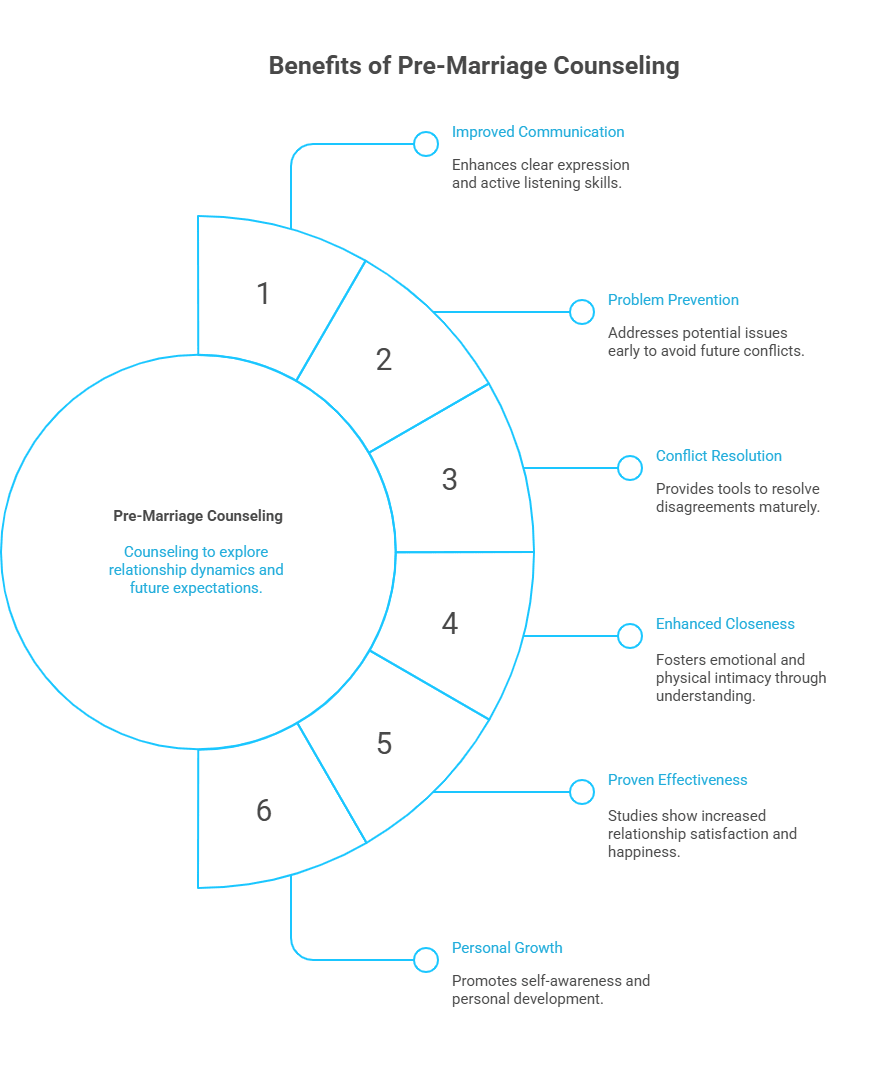
Every relationship brings together two different people with different experiences, habits, and expectations. Pre-marriage counselling gives you a chance to slow down and look at how those differences might shape your future together.
Here are six ways it can make a meaningful difference:
1. Can It Improve the Way We Communicate?
Yes, absolutely. Counselling helps you learn how to express yourself clearly and listen without becoming defensive. You will understand how to talk about difficult topics without letting things spiral into arguments. Good communication is not just about talking. It is about feeling heard.
2. Will It Help Us Avoid Future Problems?
Many problems in marriage do not come out of nowhere. They often begin as small misunderstandings or unspoken expectations. When you discuss important topics early, like money, family, or roles, you are less likely to feel blindsided later.
3. What If We Discover Something We Disagree On?
That can actually be a good thing. Pre-marriage counselling creates space to uncover potential deal-breakers or unresolved issues before they become bigger. Facing differences now gives you both time to respond with maturity rather than reacting under pressure later.
4. Can It Help Us Feel Closer?
Yes. Many couples say that counselling brought them emotionally closer. When you feel understood, not just loved, you are more likely to trust each other, open up, and build deeper intimacy, both emotionally and physically.
5. Is There Proof That This Actually Works?
Yes. Studies have shown that couples who do pre-marital counselling tend to have higher relationship satisfaction. According to a study published in Family Process, by the end of treatment, most people who've participated in couples therapy feel better than 70% to 80% of those who don't get help..
6. Does It Help Us as Individuals Too?
Very much so. Pre-marriage counselling is also a journey of self-awareness. You will reflect on how your past, your beliefs, and your emotional patterns show up in your relationship. This kind of personal growth supports not just your marriage, but your mental health too.
What Therapy Techniques Are Used in Pre-Marriage Counselling?
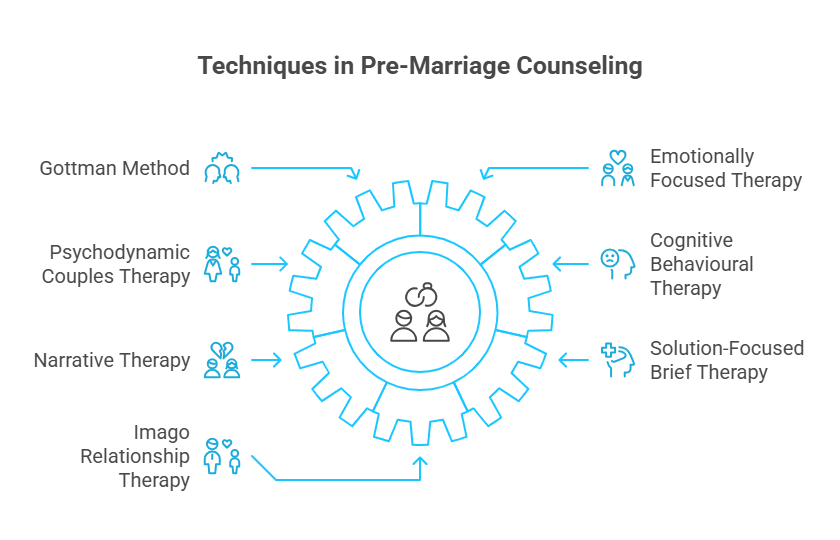
Pre-marriage counselling is not a one-size-fits-all process. Therapists often draw from different approaches based on what the couple needs, how they communicate, and the challenges or concerns they bring in.
Here are some of the most widely used techniques:
1. Gottman Method
Developed by Drs. John and Julie Gottman, this approach is based on decades of research with real couples. It starts with a detailed assessment and focuses on improving friendship, emotional connection, and conflict management. It teaches couples how to recognise harmful patterns and replace them with healthy ones.
2. Emotionally Focused Therapy (EFT)
EFT is a short-term, structured approach that helps couples build a stronger emotional bond. It is especially helpful for those who feel distant or misunderstood. The idea is to create a safe emotional space where both partners feel secure and supported in expressing their needs.
3. Psychodynamic Couples Therapy
This method explores how your early life experiences, family background, and emotional patterns shape the way you relate to your partner. By bringing deeper awareness to these unconscious dynamics, couples can understand each other more compassionately and respond to conflict with less defensiveness.
Therapists may use one or more of these approaches depending on your goals and relationship history. The goal is not just to teach skills, but to help you feel more connected and confident in your partnership before marriage.
4. Cognitive Behavioural Therapy (CBT) for Couples
CBT is often used when couples struggle with unhelpful thought patterns, assumptions, or beliefs that impact their relationship. It helps partners identify negative thinking, reframe conflict, and develop more constructive responses. This is especially helpful for couples dealing with anxiety, overthinking, or past relationship trauma.
5. Narrative Therapy
In narrative therapy, couples are encouraged to view their problems as separate from themselves. It helps partners "re-author" the story of their relationship by focusing on strengths and shared meaning, rather than blame. This approach is often used when couples feel stuck in negative cycles or identities (e.g., “We’re always fighting”).
6. Solution-Focused Brief Therapy (SFBT)
This approach is forward-looking and goal-oriented. Instead of focusing on past issues, SFBT helps couples identify what’s working, set clear goals, and build on existing strengths. It’s a useful approach for couples who are not in crisis but want to proactively strengthen their partnership.
7. Imago Relationship Therapy
Imago therapy explores how unmet childhood needs shape adult relationship dynamics. It encourages intentional dialogue and deep listening, helping partners become more aware of emotional triggers and how to heal them together.
What to Expect in Pre-Marriage Counselling Sessions?
If you have never been to therapy before, it is normal to feel unsure about what to expect. Pre-marriage counselling is not about judgment or criticism. It is a guided conversation that helps you and your partner understand each other better and prepare for life together.
Most counselling processes begin with a few individual or joint assessments. Your therapist may ask each of you to fill out a questionnaire or have an individual session to understand your personal background, expectations, and communication style. These early steps help the therapist guide your sessions with clarity and care.
In a typical counselling plan, you can expect around 6 to 10 sessions, although this can vary depending on your needs and the therapist’s approach.
Topics commonly discussed in sessions include:
1. Finances
How you handle money individually, whether you plan to merge finances, financial goals, budgeting styles, and how you make financial decisions together.
2. Roles and responsibilities
What each of you expects in terms of household responsibilities, careers, and emotional labour in the relationship.
3. Parenting and future planning
Whether or not you want children, parenting styles, and how you envision your future as a family.
4. Sexual expectations
Your definitions of intimacy, comfort with discussing sex , and how physical closeness fits into your relationship.
5. Family dynamics
Your relationship with your families, boundaries with in-laws, and how family influence might affect your marriage.
6. Beliefs, values, and lifestyle
Cultural or religious differences, personal habits, and shared goals for your lifestyle, including time together, space, independence, and social life.
Through these conversations, your therapist helps you notice patterns, surface hidden assumptions, and create shared agreements. They are not there to give you a score or tell you what is right or wrong. Their role is to facilitate honest, respectful dialogue and offer tools to handle future challenges with clarity.
Every couple is different. Some walk into counselling feeling aligned and leave even more confident. Others discover important differences, which can be worked through with support. In either case, the process gives you a stronger foundation to build your marriage on.
How to Find the Right Pre-Marriage Counsellor?
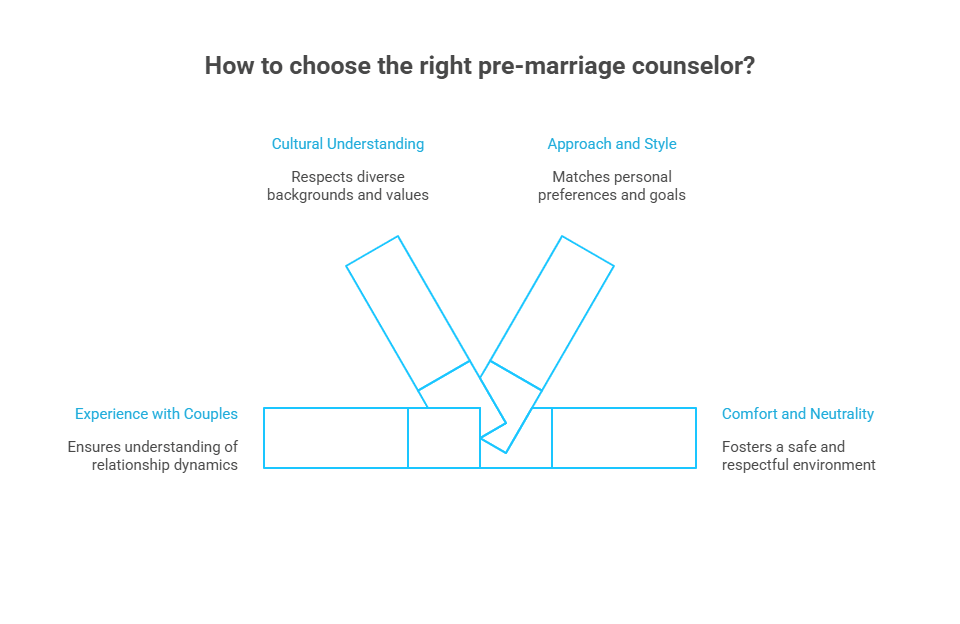
Choosing the right counsellor can shape how comfortable and supported you feel throughout the process. While there is no perfect formula, finding someone who fits your relationship’s needs is more important than simply choosing the nearest available therapist.
Here are some things to look for:
1. Experience with couples
Not all therapists specialise in relationship work. Look for someone who has formal training or experience in couples counselling or pre-marital therapy. This ensures they understand the dynamics between two people, not just individual concerns.
2. Cultural understanding
In a country as diverse as India, or in intercultural relationships abroad, it helps to work with someone who respects your background, values, and language. A good therapist does not impose views but helps both partners feel heard and understood.
3. Approach and style
Some therapists take a more structured approach with assessments and goal-setting. Others focus more on open dialogue and emotional insight. You can ask about their methods before booking a session to see what feels right for you.
4. Comfort and neutrality
A good counsellor will not take sides. Instead, they hold space for both partners and gently guide the conversation so that it stays respectful, honest, and productive. If either of you feels unheard or judged, it is okay to speak up or look for someone else.
If you are unsure where to start, TherapyRoute offers a curated directory of mental health professionals from around the world. You can filter by location, specialisation, language, and more to find someone who aligns with your relationship goals.
Whether you are newly engaged or exploring the idea of commitment, the right support can help you move forward with clarity and confidence.
Conclusion
Marriage is more than a celebration or a ceremony. It is a shared life, shaped by communication, values, and the ability to grow through challenges. Pre-marriage counselling offers couples a rare opportunity to pause before the wedding day and explore what truly matters.
Whether it is understanding your family of origin, learning effective conflict resolution, or discussing difficult issues like finances and intimacy, counselling helps you build a strong foundation for the future. You learn to recognise potential problems not as threats, but as moments to grow closer.
The importance of pre marriage counselling lies in its ability to turn assumptions into clarity and silence into meaningful conversation. And as many therapists will tell you, that is one of the most important gifts you can give each other before stepping into married life.
If you are wondering whether counselling is a good idea, the answer is simple: if you are already committed to a happy, healthy marriage, then taking time to prepare together is a great way to begin.
Frequently Asked Questions
What is the purpose of pre marriage counseling?
The purpose is to help couples prepare for marriage by exploring key issues like communication, roles, finances, and emotional needs. It builds understanding and alignment, reducing future conflict.
What is pre marriage counseling like?
It usually involves sessions with a licensed therapist, where you and your partner discuss your relationship openly. It is not about fixing you, it is about helping you build trust, insight, and confidence in your partnership.
Pre marriage counseling what to expect?
Sessions vary depending on the type of therapy used, but most cover topics like family background, expectations, emotional patterns, and problem-solving. You can expect guided conversations that help you understand each other better.
Is pre-marriage counseling only for couples with problems?
Not at all. In fact, many couples attend even when things are going well. It is a great way to strengthen your connection, learn conflict resolution skills, and talk through important questions before they become stressful later.
How do we know if it’s the right time?
If you are planning to get married or thinking seriously about commitment, now is the right time. Couples counseling is most helpful when done early, before stress or distance takes root.
Important: TherapyRoute does not provide medical advice. All content is for informational purposes and cannot replace consulting a healthcare professional. If you face an emergency, please contact a local emergency service. For immediate emotional support, consider contacting a local helpline.
Find Therapists
Must Read
Creating Space for Growth: How Boundaries Strengthen Relationships
Setting healthy boundaries fosters respect, protects emotional well-being, and strengthens relationships by defining personal limits and maintaining self-care.
International Mutual Recognition Agreements for Mental Health Professionals
Mutual recognition agreements for mental health professions are rare and uneven, with major gaps in counselling, social work, and allied therapies. Read on to understand ...
Mental Health Licensing & Regulation in New York State: 2026 Guide
Mental Health Licensing & Regulation in Singapore: 2026 Guide
Jumping to Conclusions
Jumping to conclusions is a thinking habit where we assume the worst or make judgments without enough evidence. By recognising this pattern, therapy can help you slow dow...
About The Author

TherapyRoute
Cape Town, South Africa
“Our in-house team, including world-class mental health professionals, publishes high-quality articles to raise awareness, guide your therapeutic journey, and help you find the right therapy and therapists. All articles are reviewed and written by or under the supervision of licensed mental health professionals.”
TherapyRoute is a mental health resource platform connecting individuals with qualified therapists. Our team curates valuable mental health information and provides resources to help you find the right professional support for your needs.