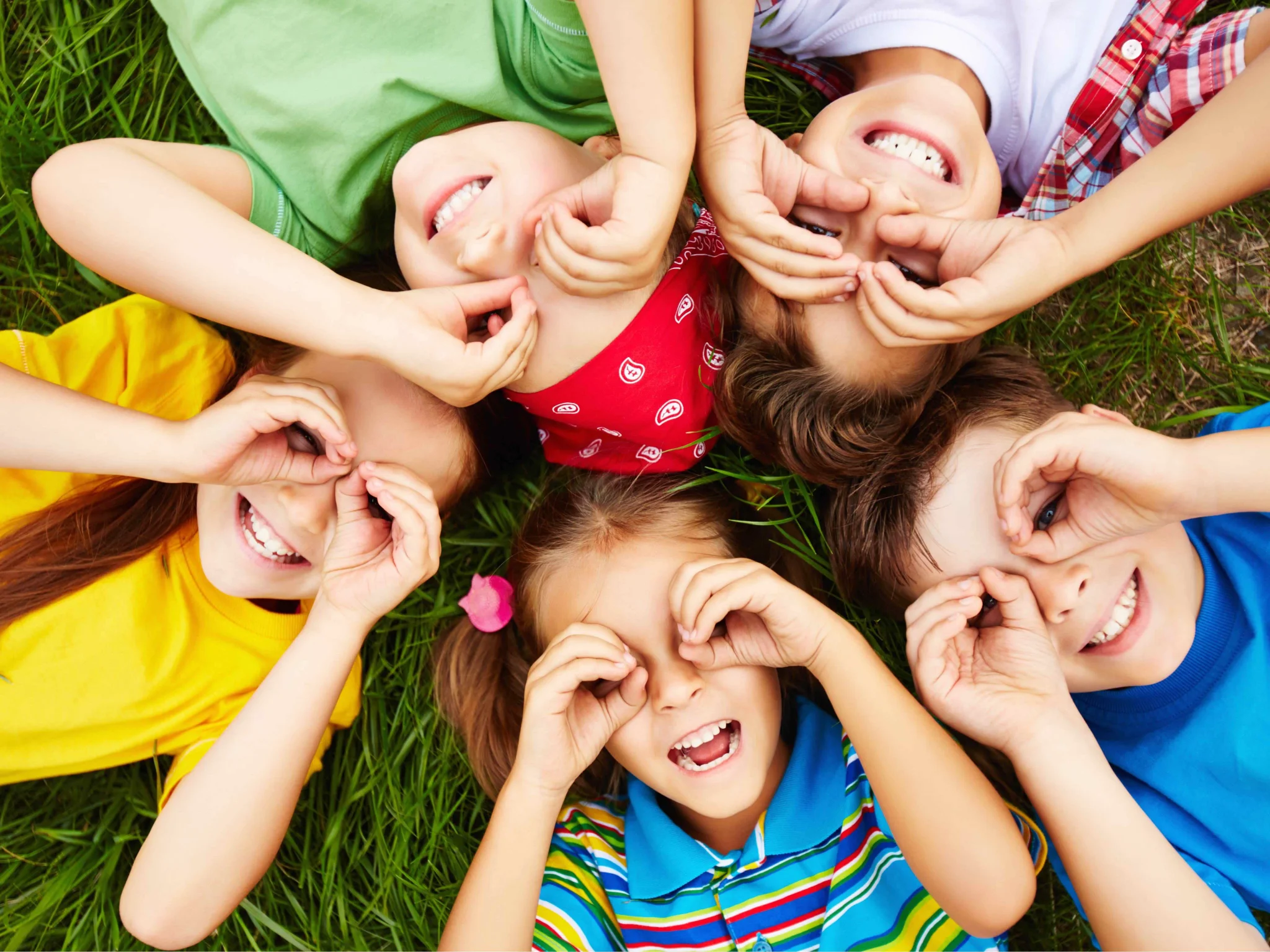
The Importance of Play in Child Development

❝How play is important for a child's cognitive, physical, social and emotional development. By Raquel Marshall, M.Sc.❞
Across all countries, cultures, languages and borders, all children do several things in common. For example, all children (and adults) eat, sleep and communicate. These are some of the more obvious activities that are necessary for a child’s health and development. But one activity which may be less obvious is playing. Play is another activity that all children have in common with each other. All children play.
But why is this? What is the importance of playing?
Children express struggles differently. A child psychologist can help your child build resilience and feel understood.
Find a Child PsychologistFor something that comes so naturally to children, and which occurs in all cultures, there must be a very important reason for it.
It turns out that there is.
Play is the work of a child, and the mode through which a great deal of learning takes place. Through the eyes of an adult, this may not always be clear. Play may be seen as frivolous and purely for fun by some adults. But if you stop, and look closely, you’ll begin to see the enormous lessons, skills and values that your child is engaged in learning naturally through his/her play.
Play has been shown to have a huge role in overall child development and contributes to the cognitive, physical, social and emotional well-being of children. In fact, play is so important to optimal child development that it has been recognized by the United Nations High Commission for Human Rights as a right of every child (Ginsburg, 2007).
That is huge. But how is play linked to a child’s overall development? Just how is your child learning so much through play?
This will now be explained with emphasis on four areas of child development.
Cognitive development
What is cognitive development?
Cognitive development, simply put, refers to how children make sense of their world (Isenberg & Jalongo, 2010). It is the building of thought processes, including remembering, problem-solving, and decision making, that begins in childhood and continues through adolescence to adulthood.
When playing, children are actively engaged in problem solving, mental planning, self-monitoring and evaluation (Isenberg & Jalongo, 2010).
For example, imagine that your child is playing with blocks and building a tower. Many cognitive skills are necessary for and involved in this common play activity:
• The child plans what to build and what kinds of blocks they will need.
• The child monitors how successful they are - Did my tower stay balanced, or did it fall?
• The child tries to solve their problems if they wish to succeed - Why did it fall? What do I need to do to keep it balanced this time? Do I need a different block?
• And they evaluate whether they reached their goals – Does it look like the tower that I wanted to build?
The above scenario is just one example of how cognitive skills are developed and used through play, but these skills are learnt through many other different forms of play as well and are necessary for a child’s success in later life. If you think about it, as adults, how often do we need to problem-solve, mentally plan, self-monitor and evaluate? With the daily life activities of work, meal planning, financial planning, child-care, etc. etc. I would say the answer is that we need these skills every day!
Physical Development
Physical development refers to the physical growth of the child and involves both large and small-muscle development known as gross-motor and fine-motor development respectively (Brotherson, n.d.).
Running, jumping, climbing and throwing a ball are all examples of gross-motor development activities, as they involve the use of large-muscle groups.
Tying a shoe, putting together puzzles, painting with a paint brush and drawing with crayons are all examples of fine-motor development activities, since they involve the use of the smaller muscle groups.
Both types of muscle development are necessary for a child’s overall physical growth and development and are supported through play activities such as those mentioned above.
Social Development
Social development involves learning the values, knowledge and skills that help children relate to others effectively (“About Social Development”, n.d.)
Through play, especially group play, a child learns to understand others and to take other children’s needs and views into account. Turn-taking, learning to share, communication, making friends and resolving conflict; these are all skills which are necessary for children to develop in childhood and through to adulthood.
Emotional Development
Play is the work of a child, but it is also the language of the child, and the medium through which they best express themselves and cope with feelings. Children use play to release emotions, work through feelings and to understand their world better by play-acting in situations they can control (“Back to Basics”, n.d.)
For example, a child might witness or experience a car accident, and later, might begin to re-enact the car accident through toy cars in his/her play. This helps the child to understand his or her experience more clearly and to release any emotions that they may have felt while witnessing or experiencing the accident. This is similar to an adult who talks about his or her experiences with another adult.
While some children may choose to simply talk about their experiences as well, it isn’t always as effective because children, especially very young children have more limited vocabularies than adults. Therefore, it is easier for children to use toys as a means to express themselves and to work through their emotions. It is through play, in fact, that a child learns to talk about his/her feelings. Children in the example above may tell a friend or a parent who may be present in the room, that they felt scared when they saw or experienced the accident, while they are actively re-enacting it with the toy cars.
In summary, play is largely important to children’s overall development through the ways described above and much more. While different types of play have been highlighted as examples of supporting different areas of development, it is important to recognize that many types of play support many areas of a child’s development all at once! For example, a group art project supports a child’s fine-motor (small-muscle), social, cognitive and emotional development, through painting/drawing, (perhaps even cutting and gluing), taking turns, planning and assessing and expression. Another example is a game of tag, which supports a child’s gross-motor (large-muscle), social and cognitive development through running, communicating and planning.
Therefore, with so much being learnt and supported through play, it is no wonder that it is formally recognized as a right of every child. In addition, the best part about it is, play is fun! Children (and adults) enjoy playing immensely.
So, next time your child is playing, stop and look a little closer to see if you can notice what they are learning. Better yet, join in and play with them! :)
About the Author
Raquel Marshall is a Clinical Psychologist currently working in private practice in Barbados. She works with both children and adults and has received specialized training in Play Therapy which she utilizes in her work with children.
References
About Social Development (n.d.) Retrieved 2nd December, 2014 from: https://www.kidsmatter.edu.au/families/about-friendship/social-development/social-development-children%E2%80%99s-social-development
Back to Basics. Emotional Development. (n.d.) Retrieved 4th December, 2014 from http://www.childcarehelp.org/basics8.pdf
Brotherson, S (n.d.). Understanding Physical Development in Young Children. Bright Beginnings. Retrieved 2nd December, 2014 from: http://www.ag.ndsu.edu/pubs/yf/famsci/fs632.pdf
Ginsburg, K (2007). The Importance of Play in Promoting Healthy Child Development and Maintaining Strong Parent-Child Bonds. Pediatrics, 119, (1), 182-191.Retrieved 2nd December, 2014 from: http://pediatrics.aappublications.org/content/119/1/182.full
Isenberg, J & Jalongo, M (2010). Why is Play Important? Cognitive Development, Language Development, Literacy Development. Pearson Allyn Bacon PrenticeHall. Retrieved 2nd December, 2014 from: http://www.education.com/reference/article/importantance-play-cognitive-language/
Important: TherapyRoute does not provide medical advice. All content is for informational purposes and cannot replace consulting a healthcare professional. If you face an emergency, please contact a local emergency service. For immediate emotional support, consider contacting a local helpline.
Find Therapists
Must Read
Creating Space for Growth: How Boundaries Strengthen Relationships
Setting healthy boundaries fosters respect, protects emotional well-being, and strengthens relationships by defining personal limits and maintaining self-care.
International Mutual Recognition Agreements for Mental Health Professionals
Mutual recognition agreements for mental health professions are rare and uneven, with major gaps in counselling, social work, and allied therapies. Read on to understand ...
Mental Health Licensing & Regulation in New York State: 2026 Guide
Mental Health Licensing & Regulation in Singapore: 2026 Guide
Jumping to Conclusions
Jumping to conclusions is a thinking habit where we assume the worst or make judgments without enough evidence. By recognising this pattern, therapy can help you slow dow...
About The Author

“Clinical Psychologist working with children, families and adults. Services include both in-person and telehealth online services. Telephone Number: 246-424-0449”
Raquel Marshall is a qualified Clinical Psychologist, based in St James, Barbados. With a commitment to mental health, Raquel provides Trauma Counseling, Play Therapy, Individual Therapy, Personal Development, EMDR, CBT, Child / Adolescent Therapy and Counselling.
