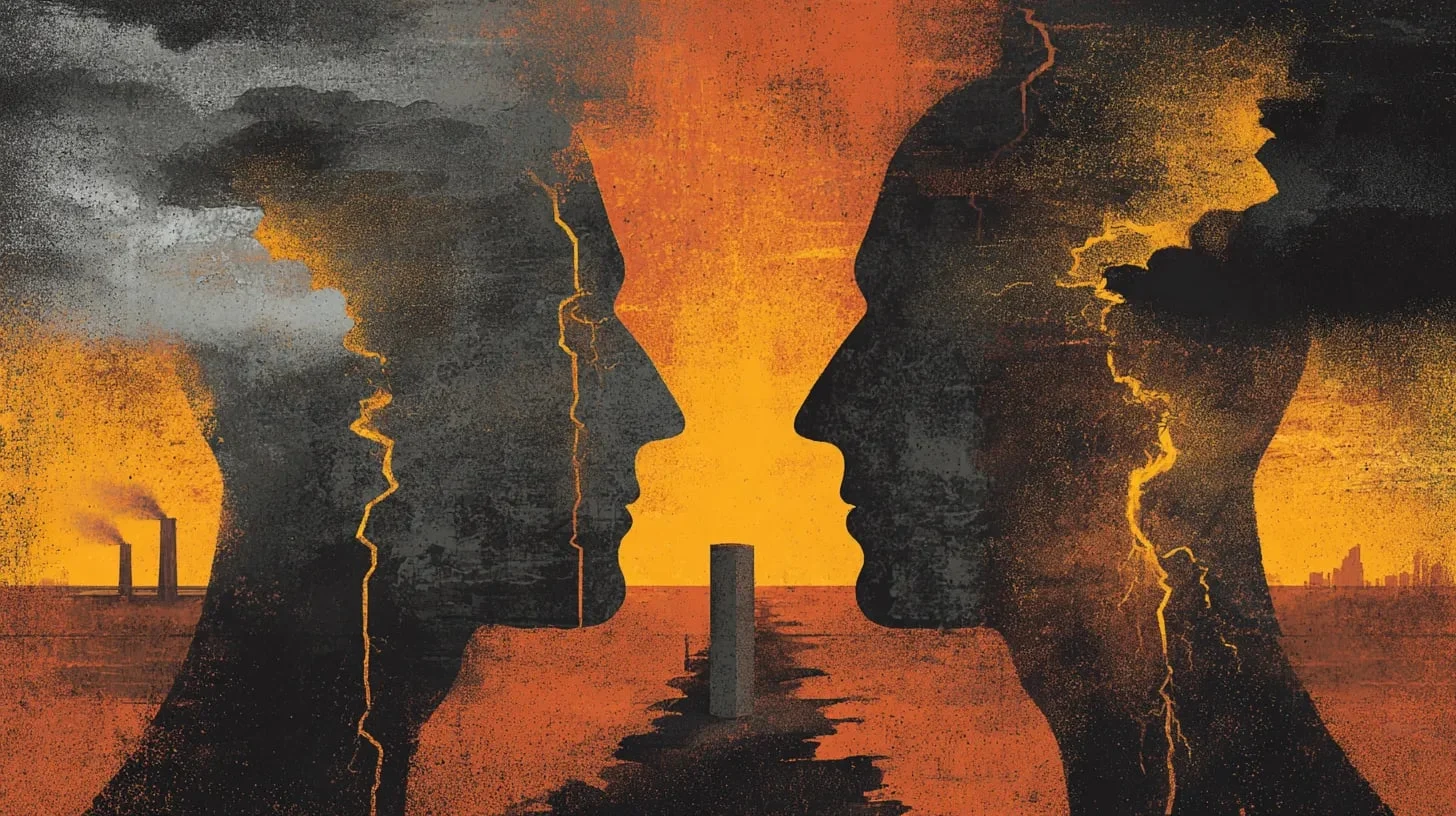
On the Edge of Madness – Living with Bipolar Disorder


❝A personal description of what I learned on my journey to wellness with bipolar. I have also included some comments from the doctors and practitioners who walked with me on this rocky road.❞
Editor’s note: this is a personal account. The author’s reflections on homoeopathic remedies, sedation and prescribed medication describe her own experience and beliefs, and are not clinical advice. Decisions about treatment for bipolar disorder belong with your own doctor or prescriber.
'Go placidly amid the noise and haste, And remember what peace there may be in silence … And whatever your labours and aspirations, in the noisy confusion of life keep peace with your soul.’
Therapy should be personal. Therapists listed on TherapyRoute are qualified, independent, and free to answer to you – no scripts, algorithms, or company policies.
Find Your TherapistDesiderata, Old St Paul’s Church, Baltimore, 1692
or some say by Indiana poet Max Ehrmann, 1920s
Incidences of road rage, domestic violence, crime, bullying and tantrums are common. Other forms of ‘over the top’ unhelpful behaviour are more subtle, such as swallowing one’s words to keep the peace, burn-out, criticism, negativity and sulking. These are manifestations of excessive or manic behaviour and indicate that there is far more to the condition than is diagnosed.
In my family, my dad carried the label of bipolar disorder (manic depression). I was diagnosed in 1995 with the same disorder, although because of a different disposition I don’t have the problem with depression that he had.
Is the condition inherited? Is it learned behaviour? Does the incarnating soul choose parents with the same condition so as to provide a suitable family in which to heal? Could the illness be a reflection of the times in which we live? Could some individuals carry the condition on behalf of humanity? Who knows? What is obvious is that there are many different perspectives.
When a psychiatrist told me that bipolar disorder was incurable and potentially fatal I was shocked. I cried, felt desperate and outraged, wondering ‘why me?’ My daughter’s kindergarten teacher had said that I should view my illness as my greatest gift. At the time I didn’t understand what she meant. However, I knew that I could not work with someone who believed there was no cure, and so eventually decided on psychotherapy in conjunction with medication. So began my conscious journey of self-discovery and thus acceptance of my ‘greatest gift’.
My engineering and project management training gave me the ability to think clearly, aim high and dream big. My complementary medical passion and work have led me to understand that the mind has no limits.
Although it was hard work to view myself objectively and to change a lifetime of unhelpful habits it got easier as it was so rewarding. I achieved immediate results if my behaviour was precisely relevant to whatever I was dealing with in the moment; I call this ‘right action’. My condition cannot be separated from me, the person, and so any issue has to be dealt with holistically. I worked with a counsellor and felt secure knowing that I would regularly have someone who would listen, care and reflect with me – an objective sounding-board. This route has proved worthwhile.
This is my story ….
Mania
When a spider walks across the ceiling I stop dead in my tracks – actually he’s my friend, reminding me not to do six things at once. Tarantula is the perfect homoeopathic remedy for mania as multi-tasking actions and thoughts are the telltale symptoms of moving faster and faster until there’s no stopping myself and I eventually ‘spin off the planet’. I sleep less, eat less, do more, move and think faster, become more efficient and more ambitious. This is the addictive part – imagine having so much extra energy that all the things you always wanted to achieve just happen without effort; life is interesting and exciting and the enthusiasm is infectious; you become creative, lose weight, tidy your house and complete projects that have been hanging over your head for ages.
Confusion
This time is so fantastic I don’t want it to end. This is the main problem with mania as the speed increases exponentially, and at some point I can’t stop it. Now my body is so exhausted that I’m over-emotional and sensitive, the positive energy has become pushy and is irritating people, and boy, do they irritate me! Why can’t they keep up? Take it a step further and I start losing track of time and the sequence of events … confusion … utter exhaustion … collapse. However, somewhere along the way, what usually happens is that I end up at a doctor or clinic and am sedated. What a come-down, from superwoman to drooling wreck!
Madness
It’s interesting that I call the end of the road confusion, as actually there is hugely heightened awareness and insight. The words spoken sound like garbage because they are so fast and jump from one subject to another, but the ‘veils of perception are down’ and this offers a look at life from another angle. I can ‘read’ what people are thinking by their body language or expression. I understand things much more clearly. If carried too far it can develop into so-called delusions of grandeur and imagination – madness maybe? There is a thin line between psychic and psychotic.
Unacceptable behaviour
In the past I believed that because my behaviour was unacceptable I had to be sedated. Now I know that when I am exhausted the normal control mechanisms are ineffective, and emotions bubble up. Shouting and banging on doors is not considered acceptable, but actually it's only an expression of what's previously been suppressed. The clinics have not been able to cope, and have sedated me. I now believe that while they are supposed to be helping me with my emotional life, when I express my feelings they aren’t really equipped to assist.
If only they knew that I have never hurt anyone or myself they might not be so fearful of my intense behaviour. Also, it's a pity they aren't set up just to lead me through this phase. I believe that I just need to be taken care of and not forced to fit in with the rules or be quiet and polite. In other words, I need to be allowed to go through my ‘healing ritual’ as it unfolds. I’d like to find a place and create a support system, if there is a next time, to be able to complete my healing process.
Triggers, symptoms and helpful practices
I have identified my triggers as lack of rhythm and routine, lack of sleep and too much stimulation and have to anticipate these. Early symptoms differ from person to person but can be identified easily. Mine are waking early, an anxious butterfly feeling in my tummy, talking too fast, excess multi-tasking and becoming impatient. Things that I find helpful are regular yoga (or exercise), massage, walking, gardening, resting and extra sleep – all easy to do, inexpensive and very helpful. I have to build the rhythm into my life when I’m feeling strong so that it’s there when I need to use it.
Questions
I still have a few questions about what would happen to the brain if it wasn’t stopped with the drugs. If it was just left, would the healing ritual go on until finished and then go back to normal, or would the brain burn out and stay in an out-of-reality state forever? Scary thought. There seem to be differing opinions on this.
Support
I noticed that in the bad times many people appeared to help and support my family and me. I didn't know they cared so much and how much support there is out there. So contrary to believing that I have to stand on my own two feet, I learned again that it's fine to be needy and to receive help and also to ask for it. To allow someone the opportunity to help is like giving them a gift. The world doesn’t stop if I’m ‘out of it’ for a while. I’m lucky to have an involved and supportive husband, who despite his worry and stress about me, just takes over and keeps the family rhythm going.
This year, another new thing I noticed was that my helpers were not always strong themselves and that we gave and received help at the same time. In the past I had thought I could get help from someone who was strong, and then give help when I was strong again. Now I see that even in our needy states we can still support each other.
Family malaise
The other insight is that when there is a ‘malaise’ in a family everyone suffers from it, not only the person who has the condition. Everyone either has it, is affected by it, or is co-dependent. This means that while my family can support me, for objectivity I have to step away.
Whirlwind
I find the whirlwind image of life useful. It is always there, what changes is how it affects me. Sometimes I am running to keep up, and sometimes I can step sideways and not be caught up in its speed. In between I am running along the edge. My aim is to be aware enough to keep stepping sideways, out of the maelstrom and into the calm. I know it’s easy to do – constantly remembering to do it is the trick.
Wise words
My counsellor Batya Daitz helped me understand that ‘bipolar disorder is an identity crisis’. She also said recently: ‘If you aim for full cure but are happy to settle for total management that may be all you get’. My soulmate Susan van Breda explained the difference between activity and action: ‘Activity is busy and action is appropriate’. She also confirmed that to ask the question ‘What?’ is more helpful than ‘Why?’
I have learned how to be honest and direct with my feelings towards others. I say what I appreciate, and also what does not make me feel good, while trying not to offend. I don’t always find this easy, and can still be intense, dogmatic and argumentative.
Who can I rely on?
I really thought I had set up a support structure – my family, counsellor, doctor, homoeopath, my yoga teachers, practitioners/healers – people who know me and would be honest in their observation of where I was; people who would help when I was going too fast to stop myself. So, why didn’t it work? Why couldn’t they stop the manic episode? Why did my counsellor not keep me at her practice when she could see I was ‘at the height of an identity crisis’? Why did the homoeopathic remedies not hold me? Why didn’t my doctor prescribe something ahead of time? Why didn’t the clinic have a feedback mechanism to ensure my eating and sleeping so I didn’t get worse? Why couldn’t they support the expression of my emotions instead of telling me ‘I’ll have you locked up if you do that again’ (when I banged on a door and raised my voice). Why did going to a place of safety turn out to be so wrong? Was it so wrong? While I don’t like the thought of being heavily sedated, did my brain really need a rest? Or did the sedation stop the process when it would have been better to allow it to continue and burn out naturally?
I have many questions, and interestingly, I know that the questions are more important than the answers. I know that I cannot benefit by blaming anyone, including myself. I also know that I have to take full responsibility and while I couldn’t stop the mania then, I will continue to learn.
When my daughters were born I wanted a midwife in attendance and my birth plan said ‘preferably no drugs’. I now wish to create a ‘mania plan’ that says ‘preferably no sedation but support, through the process, whatever happens’.
I invited my supporters from various fields to comment on bipolar from their own perspective as well as from their experience of journeying with me through my healing process.
Chris George (psychiatrist)
What is mania?
Previously it was believed that about 1% of the general population suffers from bipolar disorder. However, new epidemiological data suggest a higher prevalence of as much as 5% for what has been called the ‘bipolar spectrum disorder’. This increase in prevalence can be accounted for by clinical expressions of bipolarity somewhere between full-blown bipolar disorder and unipolar depression. In diagnosing hypomania, hypomanic symptoms are usually not reported by patients themselves because hypomanic symptoms do not often cause personal suffering, and may even be considered advantageous.
Traditionally the typical manifestation of mania was classical ‘euphoric mania’, characterised by a euphoric state that is overly high, irritable and associated with hyperactivity and atypical behaviour for that person. During a manic episode very little sleep may be needed and individuals can experience grandiose feelings, to the extent of experiencing delusions of a grandiose or religious nature. In some cases psychotic mania is difficult to distinguish from schizophrenia due to the presence of delusions and hallucinations. In bipolar disorder, mania and depression come in degrees of severity; a less severe form of mania is known as hypomania, and some episodes can be characterised by both mania and depression occurring at the same time or alternating.
Treatment of acute mania
Bipolar disorder is treatable, but like other illnesses caused by a chemical disorder, it cannot be ‘cured’. Rather, it can be controlled successfully with treatment. In most instances bipolar disorder episodes recur; treatment consists of management of the acute episode, and maintenance treatment. The mainstay of treatment in bipolar disorder is medication and counselling. The medications used are described as mood stabilisers and are the mainstay of acute as well as long-term treatment. The most commonly used medications are lithium, valproate, carbamazepine and antipsychotic medicines such as haloperidol, olanzapine and risperidone. These medications are used for prophylaxis of bipolar disorder, as well as treatment of specific episodes.
Over a period of time the longitudinal course of a person's bipolar disorder can be useful in: (i) clarifying important events and possible precipitants of bipolar episodes; (ii) identifying the unique characteristics of the person's illness such as seasonal variations and relationship to anniversaries; and (iii) elucidating periods of increased vulnerability and responsiveness to different indications, which vary from person to person. The severity of bipolar illness also varies, with different levels of mania or depression and different patterns of occurrence in each individual. In mania, mood may be elevated or irritable; and the latter can deteriorate to cantankerous and aggressive behaviour. Psychosis can aggravate the aggression and such persons can sometimes harm others. Left untreated a manic episode may come to an end spontaneously, switch to depression, or persist indefinitely. Because of the danger of aggressive behaviour and physical exhaustion a manic episode can be dangerous and sometimes fatal.
Important note
I know of no establishment offering care and containment while allowing a manic episode to run its course. Regarding Suzanne’s condition, I doubt very much that she would ever become violent or destructive as that has not been part of her pattern of behaviour in the past.
Batya Daitz (spiritual counsellor)
My relationship with Suzanne has been a continuous revelation into the nature of this illness during the last 5 years of serving as her counsellor or spiritual psychotherapist. She sought my help on the advice of her psychiatrist who thought understanding the state of her soul was a needed addition to the lithium he was giving her.
Mania
Mania and genius are closely related in that both conditions cross the threshold of agreed-upon reality into a unique reality. However, in mania, the person is not in control of the cycle of action which incorporates start, change, stop. In addition to this there can also be behaviour regarded as atypical of the individual, which psychiatrists call a psychotic break in reality. The behaviour that is acceptable to the individual in the formulation of a unique reality becomes unacceptable to the psychiatrists’ view of an agreed-upon reality. The imagination of the individual is unbridled and becomes rampant. In the case of genius the imagination drives the individual into higher states of consciousness (inspiration and intuition) and results in a creative act, which is also distinct from agreed-upon reality. The ability to channel the energy of mania is a risk factor in mania and genius.
Management
I worked closely with Suzanne’s psychiatrist (medication), and doctor (anthroposophical remedies, advice on healthy living and an interest in the state of mind). We became involved with Suzanne as an individual with a unique life process. Interactive communication and the development of love and trust between us has revealed the direction to be taken and the exercises to be done.
Suzanne is courageous in pursuing a conscious path towards healing this condition. During 5 years of process-oriented therapy she has worked at observation, visualisation, increasing her awareness of the spiritual world and her own identity as a spiritual being. The exercises practised in the session and the insights gained have been taken into her life and integrated.
Susan van Breda (BA Honours, psychology)
Looking at bipolar disorder from a systemic perspective
Systems theory directs our attention away from the individual and individual problems toward relationships and relationship issues. The individual is no longer seen as a vessel of pathology but rather a symptom-bearer of dysfunctional patterns of interaction within the family. The disorder becomes a shared responsibility for the whole family. The emphasis is on what is happening rather than why it is happening. Reality is not seen as external to us but rather something that we create through our own perceptions in order to find our own meaning.
As we are not interested in cause, we are interested in the patterns of interaction within the family maintaining the disorder. If one looks at changing these patterns of interaction one can look at finding the ultimate cure, as there will be no need for the disorder to exist anymore. In the first chapter of our journey, Sue and I befriended the dragon, exploring his coat of many colours. In the second chapter of our journey I suggest that we explore the environment that sustains him. Changing the environment in which the beast thrives could be the key to encouraging him to move on as he will no longer have a role to perform. Sue took the role of symptom-bearer of dysfunctional patterns of interaction within her family. The mania phase of bipolar has allowed her total freedom of expression of emotion within the given context of bipolar, which otherwise may not have been permitted. Instead of only expressing emotions during her manic times, Sue now allows herself to be more expressive during her ‘normality’ phase while at the same time being aware of reining in her need for mania. This has dissipated the ‘pressure-cooker effect’ which led to burn-out and hospitalisation.
I remember the day that the psychiatrist told Suzanne that bipolar was incurable and potentially fatal well. Her reply was, ‘I am not a statistic!’ and so began her journey to disprove this perspective. Taking on bipolar disorder has enabled Sue and her family to heal the pain associated with the illness and the loss of her father. In healing herself, she has also healed her family. My greatest lesson has been not to be afraid of madness as it is here on the edge of madness as Suzanne calls it that we have experienced pure genius.
Genevieve White (aromatherapist)
In 1995 when Suzanne Leighton consulted me for aromatherapy I was delighted to see her again, but this soon turned to dismay. This was not the Suzanne I remembered: the bright, quiet, organised person who had been my student 4 years before. Now she was babbling. A torrent of free-association streamed from her mouth and I was at a loss as to how to manage the situation. Suzanne talked so much that I have no proper record of that appointment. I could not stem the flow to elicit the information I needed. No massage was done that day, I just listened as she talked non-stop for the 2 hours.
In 2000 we found ourselves in an aromatherapy professional development group swapping treatments. By then she had been diagnosed and seemed to be managing her disorder quite well. She came to me for a treatment and I was mildly surprised when she presented me with her fait accompli typewritten case history. All aromatherapists record their clients’ pertinent details in a way that makes the best sense to the aromatherapist, so it’s unusual for one’s client to have done that already, even if she is in the same profession!
That little action alerted me to a manic undercurrent in Suzanne’s behaviour; a tendency to over-helpfully speed things along even when not in the middle of an episode. I treated her for several sessions, and what she mostly seemed to need were rose oils: any of the roses, geranium, rosewood, and also ylang ylang for her hyperactivity. Each session became more esoteric than the last and it seemed to me that this disorder, while terrifying to onlookers, put the recipient in touch with some extraordinary (though unsustainable) levels of perception.
In August this year I received a call from her to visit her in the clinic. She was hypermanic again. Although on powerful medications, she was still extremely busy; I received full instructions on what she wanted and how she wanted it done. This time I did manage to massage her. Her mix included chamomile and ylang-ylang to slow her down, and interestingly, cypress, which is also calming, but is used metaphysically ‘to cleanse the spirit’.
It is my take that for the most part, Suzanne is not always aware of her mania as, from an experiential point of view, her hyper-alertness and busyness makes absolute sense to her. It is the world that is sluggish and slow.
Joanna Castle (Reiki master/teacher)
As a friend and student of Suzanne's yoga class I see her in different scenarios. Suzanne is thorough, knowledgeable and confident when teaching, not an airy-fairy yoga teacher. It is easy for me to spot when a manic cycle is beginning. As I watch her teach her classes I see impatience creeping in, quickened speech and a general imbalance appearing. I know she is beginning to spin. When I offer her a few minutes of Reiki, it often soothes and smoothes her out. Calmness and peace begin to reappear.
Sometimes in this cycle she phones and speaks enthusiastically, moving from topic to topic, barely giving me room to make a comment. I find she can wind herself up and begin obsessing. When I do make a comment I try to speak with an exaggerated slowness in an attempt to bring her down a bit. To assist this I send her long-distance reiki, which also seems to have a calming effect. The definite personality change can be disturbing, but I know that in time and with rest she will be her cheery self again, without the panic fringes.
The Daoists say that during the manic attack your spirit is not in your body. As the spirit resides in the heart (fourth chakra), this is the area that must be worked on to bring you back. At the same time you need to work on the spleen (connected to the first chakra) to ground you and keep you in your body.
Suzanne’s conclusion. I went to the edge and then I came back.
I now know that my work is actually to make people comfortable and relaxed so as to assist with any struggle or transition, be it physical, mental, emotional or spiritual. I do this by helping them to tap into their intuition and insight by putting them into a half-awake/half-asleep state using massage and the therapeutic properties of plant essential oils.
Personally, my journey with bipolar disorder has given me a deep insight into mental health which I believe to be the area of my life’s work. I would like to be involved in discussions and presentations to break the silence and stigma on taboo topics that I understand, like suicide, depression and mania.
My dream is to create a sacred place and a support system for people going through their process or healing ritual. I feel it is necessary to listen to “mad” people, as they may have insights and carry the thinking of the future.
Suzanne Leighton is a Therapeutic Aromatherapist and Reflexologist with a special interest in the initiation into parenthood (pregnancy, infertility, baby massage, post-natal depression) and mental health (depression, suicide prevention, mania, bipolar disorder). She was one of the founder members of the “Sophia Family Centre” and the Bipolar Disorder support group “The Bipolar Bears” in Cape Town. In the UK, she was registered with the British Complementary Medical Association and is registered with the Allied Health Professionals Council (SA) in aromatherapy and reflexology. She is also a Reiki master and a registered teacher with the British Wheel of Yoga.
Important: TherapyRoute does not provide medical advice. All content is for informational purposes and cannot replace consulting a healthcare professional. If you face an emergency, please contact a local emergency service. For immediate emotional support, consider contacting a local helpline.
Find Therapists
Must Read
Creating Space for Growth: How Boundaries Strengthen Relationships
Setting healthy boundaries fosters respect, protects emotional well-being, and strengthens relationships by defining personal limits and maintaining self-care.
International Mutual Recognition Agreements for Mental Health Professionals
Mutual recognition agreements for mental health professions are rare and uneven, with major gaps in counselling, social work, and allied therapies. Read on to understand ...
Mental Health Licensing & Regulation in New York State: 2026 Guide
Mental Health Licensing & Regulation in Singapore: 2026 Guide
Jumping to Conclusions
Jumping to conclusions is a thinking habit where we assume the worst or make judgments without enough evidence. By recognising this pattern, therapy can help you slow dow...
About The Author

“Complementary Therapist : Counselling combined with aromatherapy massage and reflexology. Special interest in stress management, mental health, pregnancy and the initiation into parenthood.”
Suzanne Leighton is a qualified Allied Professional, based in Constantia, Cape Town, South Africa. With a commitment to mental health, Suzanne provides Counseling, Individual Therapy and Personal Development.