
How to Deal with a Depressed Partner?

❝Feeling helpless in your relationship and unsure how to deal with a depressed partner? Discover practical, compassionate ways to support them.❞
Table of Contents | Jump Ahead
- What Are the Signs of Depression and How to Recognise Them?
- How to Cope With a Depressed Spouse? 8 Simple and Effective Ways
- Why Choose TherapyRoute to Find the Right Mental Health Professional?
- Conclusion
- Frequently Asked Questions
TL;DR
|
Watching someone you love slip into silence, lose interest in life, or push you away can feel heartbreaking and confusing. When that someone is your partner, the emotional toll hits even harder, leaving you feeling stuck between concern and helplessness.
As per reports, in India alone, 56 million people suffer from depression, and another 38 million live with anxiety disorders, yet conversations around mental health remain limited and misunderstood.
You’re not alone. And you’re not helpless.
If you’ve been wondering how to deal with a depressed partner, this blog offers a safe, practical, and culturally sensitive guide. Let’s help you move forward with clarity and care.
What Are the Signs of Depression and How to Recognise Them?

Depression isn’t always visible, and in Indian families, mental health issues are often brushed under the carpet due to stigma.
If you're struggling with low mood or depression, talking to a professional can make a real difference. Find a therapist who understands.
Find a Therapist for DepressionHere are common signs to watch for, especially if you’re wondering how to deal with a depressed spouse or how to handle a partner with depression:
- Loss of interest in activities they once enjoyed, including time with you.
- Persistent sadness, emptiness, or low mood that lasts for weeks.
- Sleep changes, either sleeping too much or struggling with insomnia.
- Appetite or weight changes without any clear reason.
- Irritability or anger outbursts, even over small things.
- Withdrawal from family, friends, and social settings.
- Low energy and fatigue, despite adequate rest.
- Feelings of worthlessness or guilt.
- Negative thought patterns, often about the future, self-worth, or life.
- Substance use, including alcohol or drugs, as a coping method.
- Talking about feeling hopeless or not wanting to live.
Your partner may not even realise they’re depressed, as the symptoms of depression aren't always obvious, and it's important to understand that depression is not just sadness, but a serious mental health condition that can be treated with the right support and care.
Not sure if it’s stress or depression? Click here to find out what sets them apart.
How to Cope With a Depressed Spouse? 8 Simple and Effective Ways
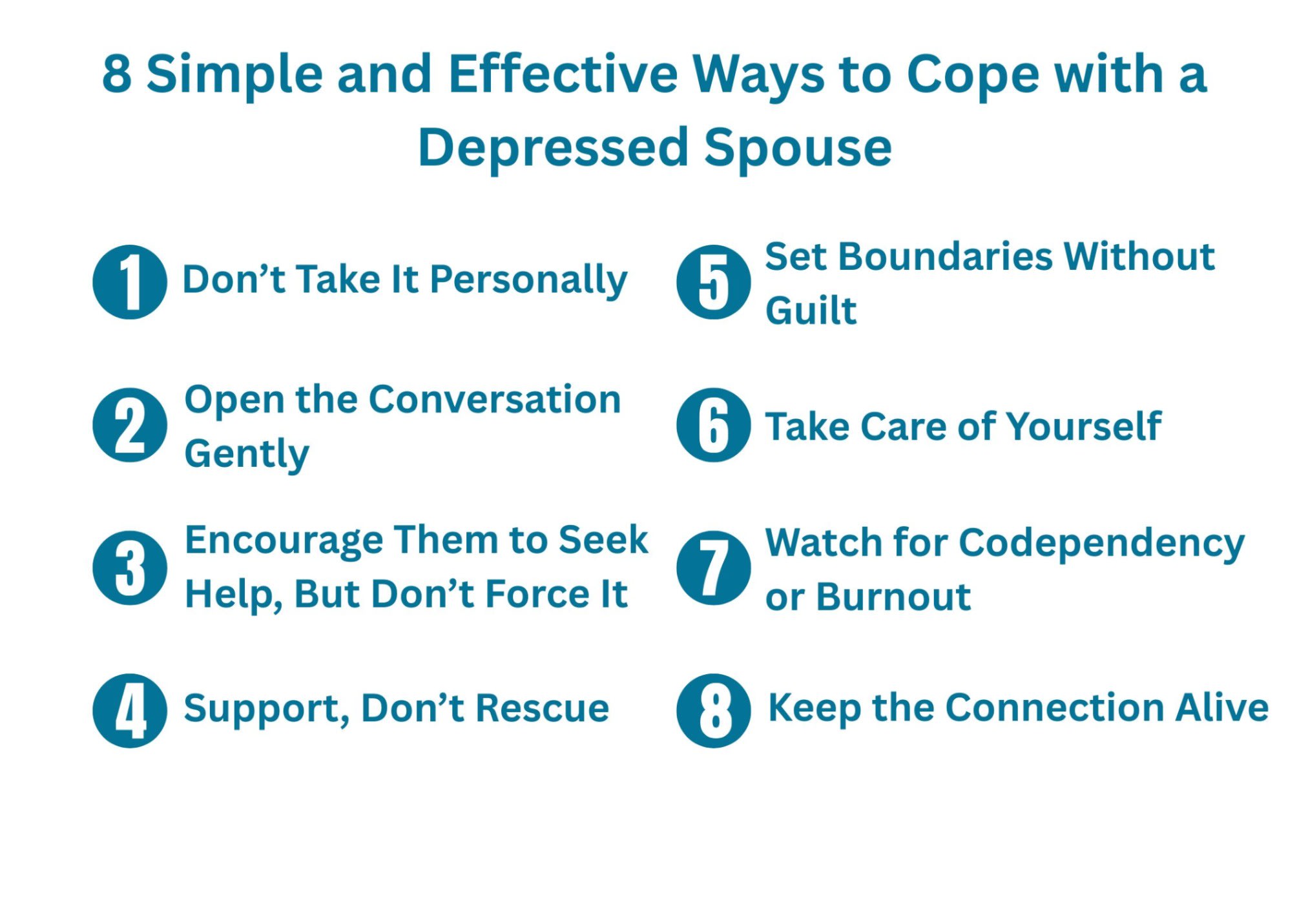
Knowing the signs is just the beginning; the real challenge lies in navigating daily life with empathy and balance. Here’s how to support your partner while also protecting your own emotional well-being.
1. Don’t Take It Personally
When you're dealing with a partner with depression, it’s natural to feel hurt, rejected, or even blamed. But remember, depression can distort emotions, thoughts, and behaviour in ways that have nothing to do with you.
Your partner might:
- Withdraw emotionally or physically
- Seem irritable or unresponsive
- Struggle to express love or appreciation
These shifts often reflect their mental health condition, not your actions or lack of effort.
It’s not your fault. Their mood is not a reflection of your worth; it's a sign they may need mental health treatment and professional help.
2. Open the Conversation Gently
Starting a conversation about mental health issues with your partner can feel awkward, but silence only builds distance. Approach with care, not confrontation.
Try saying:
“I’ve noticed you’ve been feeling low lately, do you want to talk about it?”
“You don’t have to go through this alone. I’m here if you ever feel ready to share.”
Focus on non-judgmental listening, allow them to speak without rushing in to offer solutions.
- Don’t try to fix, just be present.
- Create a safe space for open communication.
- Let them feel heard, not analysed.
Understanding is the first step to healing.
3. Encourage Them to Seek Help, But Don’t Force It
One of the kindest ways of supporting a partner with depression is encouraging them to seek professional help, whether that’s a therapist, counsellor, or general physician. But remember, you can’t push them into it. Healing takes readiness.
What you can do:
- Offer to help them research mental health professionals.
- Go with them to the first appointment, if they’re comfortable.
- Be patient, it might take a few tries to find the right fit.
Remind them: asking for help is a strength, not a weakness.
Need help finding the right support? Explore trusted therapists and mental health service providers on TherapyRoute.
4. Support, Don’t Rescue
When your partner is going through mental health problems, it’s easy to slip into the role of the “fixer.” But trying to solve everything for them can lead to burnout and codependency.
Support means standing beside them, not carrying their entire emotional load.
You must avoid:
- Making decisions for them.
- Speaking to professionals on their behalf (unless they ask).
- Ignoring your own mental health needs.
You can offer care, time, and patience without losing yourself.
Click here to understand and recover from burnout.
5. Set Boundaries Without Guilt
Loving someone with depressive disorder doesn’t mean ignoring your own emotional limits. Setting boundaries is not selfish; it’s essential for your well-being and the health of the relationship.
Without boundaries, frustration and exhaustion build up fast. Here’s how to set limits with love:
- Be honest but kind: “I care about you, but I also need time to recharge.”
- Say no without guilt when something feels emotionally draining.
- Prioritise your own mental health needs.
Healthy boundaries protect connection; they don’t break it. A strong relationship needs space, not sacrifice.
6. Take Care of Yourself
When you're supporting a partner with depression, it’s easy to put your own needs last. But neglecting your well-being only leads to compassion fatigue, stress, and emotional burnout.
You matter too, and your mental health is just as important.
Make time for:
- Hobbies that bring you joy.
- Talking to a mental health professional.
- Joining support groups for caregivers or spouses.
“You can’t pour from an empty cup.” So, don’t wait until you’re completely drained.
Caring for yourself is not a luxury; it’s part of how you cope and continue to care for them.
7. Watch for Codependency or Burnout
In trying to help your partner, you might unknowingly lose yourself. Over-involvement in their mental illness can lead to codependency or emotional exhaustion.
Watch out for signs like:
- Neglecting your own needs or responsibilities.
- Feeling guilty for setting boundaries.
- Constantly monitoring their mood or behaviour.
- Believing it’s your job to “save” them.
These are red flags that your own mental health needs attention, too.
Couples counselling or one-on-one therapy can help you create balance, understand your role, and rebuild emotional clarity, without guilt. You deserve support as much as they do.
Feeling overwhelmed with everything on your plate? We’re here to support both you and your partner. Find the right therapist via TherapyRoute today.
8. Keep the Connection Alive (Even in Small Ways)
Depression can affect physical and emotional intimacy, making your relationship feel distant or disconnected. But even when things feel heavy, small moments of togetherness can help rebuild trust and warmth.
Focus on low-pressure ways to stay close, like:
- Watching a comforting movie or show together.
- Taking a short walk without talking about the illness.
- Sitting quietly with a cup of chai or just being present.
Emotional connection is still possible, even if romance takes a backseat for now. Small steps can keep your bond strong through the difficult times.
Read this helpful guide on how to get out of depression and support your partner more effectively.
Why Choose TherapyRoute to Find the Right Mental Health Professional?
Choosing the right mental health professional for your partner can feel overwhelming, especially when you're already coping with emotional strain. TherapyRoute simplifies this process through a thoughtfully curated, clinician-run directory that reflects genuine mental health needs, not corporate agendas.
- You can filter by issue (e.g., depression, anxiety, relationship concerns), language preference, identity, or mode (in‑person or online).
- Each therapist profile is verified and highlights their qualifications, approach, and client focus, enabling truly informed choices.
- The platform values inclusivity, helping you connect with someone who understands your cultural background, a powerful step in reducing stigma and improving treatment outcomes.
Ready to begin? Find your therapist today and take the first step toward healing, for both of you.
Conclusion
Loving someone with depression is undoubtedly challenging, but it’s not hopeless. With the right mindset, open communication, and healthy boundaries, it’s possible to support your partner while also protecting your own well-being.
Remember, you don’t have to do everything alone, and it’s okay to take care of yourself, too. Striking a balance between empathy and emotional limits isn’t selfish; it’s necessary. Healing takes time, but every small step counts for both of you.
Frequently Asked Questions
How does depression in marriage affect the spouse?
Depression in marriage can leave the spouse feeling isolated, emotionally drained, or helpless. It often creates distance, disrupts communication, and builds resentment if not addressed with empathy, patience, and proper support.
What activities help most when depression worsens?
Low-pressure, calming activities like walking, listening to music, watching light films, or doing art can help. Simply sitting together or engaging in small daily routines can provide comfort and reduce emotional isolation.
What if your spouse refuses to go to therapy?
If your spouse refuses therapy, stay supportive but avoid forcing it. Gently express concern, share information, and suggest small steps like a general doctor visit. In the meantime, consider seeking support for yourself.
What should you avoid saying or doing when dealing with a depressed partner?
Avoid dismissing their feelings, offering quick fixes, or saying things like “just be positive.” Don’t take things personally or push them too hard. Instead, focus on listening and being present without judgment.
When should you consider involving friends or family in supporting your partner?
Involve trusted friends or family if your partner is withdrawing completely, showing signs of self-harm, or refusing all support. Choose people they feel safe with, and always communicate with sensitivity and respect for privacy.
Important: TherapyRoute does not provide medical advice. All content is for informational purposes and cannot replace consulting a healthcare professional. If you face an emergency, please contact a local emergency service. For immediate emotional support, consider contacting a local helpline.
Find Therapists
Must Read
Creating Space for Growth: How Boundaries Strengthen Relationships
Setting healthy boundaries fosters respect, protects emotional well-being, and strengthens relationships by defining personal limits and maintaining self-care.
International Mutual Recognition Agreements for Mental Health Professionals
Mutual recognition agreements for mental health professions are rare and uneven, with major gaps in counselling, social work, and allied therapies. Read on to understand ...
Mental Health Licensing & Regulation in New York State: 2025 Guide
Mental Health Licensing & Regulation in Singapore: 2025 Guide
Jumping to Conclusions
Jumping to conclusions is a thinking habit where we assume the worst or make judgments without enough evidence. By recognising this pattern, therapy can help you slow dow...
About The Author

TherapyRoute
Cape Town, South Africa
“Our in-house team, including world-class mental health professionals, publishes high-quality articles to raise awareness, guide your therapeutic journey, and help you find the right therapy and therapists. All articles are reviewed and written by or under the supervision of licensed mental health professionals.”
TherapyRoute is a mental health resource platform connecting individuals with qualified therapists. Our team curates valuable mental health information and provides resources to help you find the right professional support for your needs.