Feel Stuck? Try These Marriage Counseling Therapy Techniques

❝Struggling with communication or emotional disconnect in your marriage? Find 10 proven marriage counseling therapy techniques that help rebuild trust and connection.❞
Table of Contents | Jump Ahead
- Looking to Strengthen Your Relationship? Try These 10 Marriage Counseling Therapy Techniques
- How to Choose the Right Counseling Technique for Your Relationship?
- What Are Some Couples Therapy Exercises You Can Try at Home?
- Why Choose TherapyRoute for Your Counseling Journey?
- Conclusion
- Frequently Asked Questions
TL;DR
|
Relationships aren’t always easy. Even the most committed couples encounter rough patches like miscommunication, emotional distance, or recurring conflicts that never seem to resolve. Marriage counseling can be a turning point, offering techniques that are both structured and deeply compassionate.
In this blog, we will explore 10 trusted marriage counseling therapy techniques that therapists use to help couples rebuild connection, resolve conflict, and strengthen their bond. Whether you're navigating relationship issues or simply want to grow closer, these methods offer meaningful ways forward.
Looking to Strengthen Your Relationship? Try These 10 Marriage Counseling Therapy Techniques
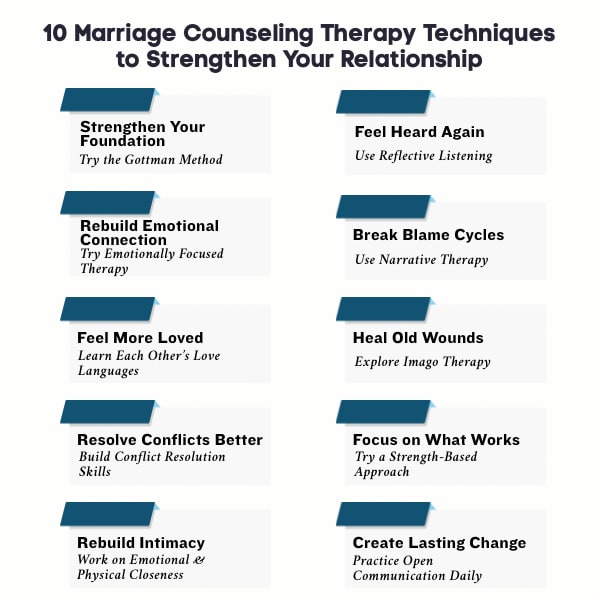
Every relationship faces its share of challenges. When conflicts feel repetitive or connection starts fading, marriage counseling offers structured techniques to help couples rebuild broken trust , improve communication, and deepen emotional intimacy.
Sometimes you just need someone qualified to talk to. Find a counsellor near you — independent, professional, and ready to listen.
Find a CounsellorIn fact, across the research on couple therapy, the average person who completes it is better off at the end than 70% to 80% of people who had no treatment (Lebow, Chambers, Christensen & Johnson, 2012, Journal of Marital and Family Therapy, 38(1), 145–168). This shows that with the right tools and support, meaningful change is absolutely possible.
Here are 10 proven approaches that therapists use to guide couples toward healthier, more fulfilling relationships.
1. Want to Strengthen Your Foundation? Try the Gottman Method.
It is one of the most widely used and research-backed approaches in couples therapy. The Gottman Method focuses on strengthening the foundation of a relationship through what’s called the Sound Relationship House. This technique helps couples develop better communication processes, resolve conflict respectfully, and foster positive interactions over time.
Therapists trained in this method help couples rebuild trust and emotional connection by emphasizing friendship, shared meaning, and effective repair attempts.
2. Struggling to Feel Heard? Use Reflective Listening.
When communication breaks down, frustration builds. Reflective listening is a simple yet powerful technique where one partner listens actively and then paraphrases what they heard. This creates space for active listening, clarity, and mutual validation.
It reduces misunderstandings and encourages couples to express needs in healthier ways, especially during tense conversations.
3. Want to Rebuild Emotional Connection? Try Emotionally Focused Therapy.
Emotionally Focused Therapy (EFT) helps couples understand and reorganize their emotional responses. Rooted in attachment theory, EFT is ideal for couples struggling with emotional intimacy or deeper relationship distress.
It allows partners to identify their triggers, share vulnerable feelings, and rebuild emotional safety, leading to stronger emotional bonds and a deeper understanding of one another.
4. Tired of Blame Cycles? Reframe With Narrative Therapy.
Narrative therapy allows couples to see problems as separate from themselves. Instead of blaming each other, partners are encouraged to externalize specific problems and rewrite their shared narrative in more constructive ways.
This form of therapy fosters collaboration and reduces defensiveness, making it easier to address relationship problems without feeling personally attacked.
5. Not Feeling Loved? Learn Each Other’s Love Languages.
Understanding each other’s love language, whether it's words of affirmation, acts of service, or quality time, can transform how couples show and receive affection. When partners are aware of how the other feels loved, they’re more likely to meet each other’s emotional needs.
This technique supports healthier relationships and encourages more consistent positive connections in everyday life.
6. Old Wounds Showing Up in Your Relationship? Explore Imago Therapy.
Imago therapy explores how childhood experiences and unmet emotional needs shape the way we interact with our partners. Through structured dialogue, couples learn how their family history affects their current dynamics.
By recognising these patterns, they can replace reactive behaviors with conscious, compassionate responses that support lasting change and deeper emotional connection.
7. Keep Arguing in Circles? Build Conflict Resolution Skills.
Knowing how to navigate conflict is crucial in any relationship. Many therapists teach structured conflict resolution strategies such as “I” statements, timed breaks, or problem-solving exercises that help couples find common ground.
These techniques support emotional regulation skills and encourage open communication, especially when dealing with specific relationship difficulties.
8. Need a Fresh Perspective? Try a Strength-Based Approach.
This technique shifts the focus from problems to possibilities. By identifying positive interactions and existing strengths, couples are encouraged to build on what’s already working. It fosters hope, reinforces healthy patterns, and helps partners feel more empowered as they work through relationship conflict together.
Therapists guide couples to revisit moments of resilience, shared accomplishments, or mutual support. These reminders can renew emotional connection and create a stronger foundation for lasting change.
9. Feeling Distant? Work on Rebuilding Intimacy.
Emotional and physical intimacy often reflect the overall health of a relationship. When intimacy begins to fade, due to stress, past trauma, physical health concerns, or changing needs, it can create distance and misunderstandings.
Therapists can help couples navigate conversations around desire and unmet needs, and rebuild trust and emotional safety. This aspect of relationship therapy supports renewed physical intimacy and emotional closeness in a respectful, guided setting.
10. Want Lasting Change? Make Open Communication a Habit.
At the heart of all successful marriage counseling techniques lies open communication. Couples are encouraged to share thoughts, express needs clearly, and listen without judgment.
This strengthens the therapeutic alliance and promotes long-term relationship satisfaction. Techniques such as reflective listening, validation, and curiosity help couples feel heard and understood, even during a disagreement.
Struggling with recurring conflicts? Explore common marriage problems and how to handle them effectively.
How to Choose the Right Counseling Technique for Your Relationship?
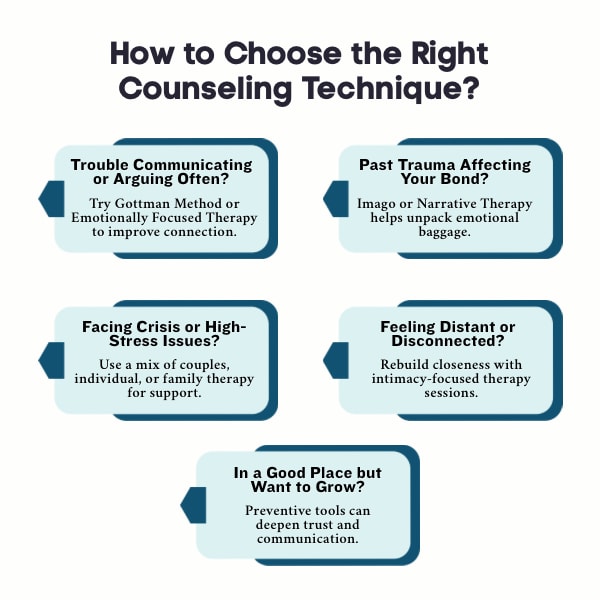
With several approaches available, choosing the right one can feel overwhelming. The best technique often depends on your relationship dynamics, emotional history, and the specific challenges you’re facing.
While a skilled couples therapist can guide you during the initial assessment, this overview may help you reflect on what might work best for your journey.
1. Techniques That Support Better Communication and Conflict Resolution
For couples experiencing frequent misunderstandings or heightened tension, structured approaches like the Gottman Method, reflective listening, or emotionally focused therapy can help. These strategies foster empathy, strengthen communication skills, and reduce escalation by exploring inner psychological processes.
2. Approaches That Address Past Trauma and Emotional Baggage
When past experiences, such as childhood experiences or unresolved trauma, begin to affect present interactions, therapies like imago relationship therapy or narrative therapy offer valuable insights. These techniques explore the connection between your family history and your current patterns of relationship distress.
3. Specialized Interventions for High-Stress or Crisis Situations
In cases involving more complex issues like substance abuse, domestic violence, or physical health concerns, a layered approach is often necessary. This may include individual therapy, group therapy, or family therapy in addition to marriage counseling.
4. Therapeutic Tools for Strengthening Emotional and Physical Intimacy
When emotional disconnect becomes a concern, therapy can help rebuild closeness. Approaches such as emotionally focused therapy or sessions focusing on emotional connection and open communication can foster renewed intimacy and understanding.
5. Preventive and Growth-Oriented Techniques for Stable Relationships
Even healthy couples can benefit from counseling. Exploring love language, building more positive interactions, and learning how to clearly express needs can nurture long-term relationship satisfaction and well-being.
Protect your relationship early; discover five hard truths couples often realise too late in marriage.
What Are Some Couples Therapy Exercises You Can Try at Home?
You don’t always have to wait for the therapy room to start reconnecting. Many couples counseling techniques are built around simple yet powerful exercises that you can try together at home. These can help improve communication, increase emotional intimacy, and reduce day-to-day friction.
Here are a few therapist-recommended exercises to try:
1. Daily Check-In
Take 10–15 minutes each evening to ask each other two questions: “How are you feeling today?” and “Is there anything you need from me right now?” This habit creates emotional presence and keeps small issues from building into bigger ones.
2. Appreciation Journal
Each partner writes down one thing they appreciated about the other every day for a week. At the end of the week, exchange your notes. It’s a powerful reminder that love often lives in the little things.
3. The Stress-Reducing Conversation
Once a week, take turns talking about a non-relationship-related stressor (like work, family, or health). The other partner's role is only to listen and validate, and not fix. This builds empathy and emotional support.
4. The Love Map Game (from the Gottman Method)
Ask each other questions that deepen your understanding of each other’s world: “What’s been your biggest challenge recently?” or “What are you currently dreaming about?” The goal is to stay curious and stay connected.
5. Rituals of Connection
Create small moments of predictable connection, like a morning coffee together, a shared walk after dinner, or a weekly ‘no-phone’ dinner. These routines strengthen intimacy and reduce emotional distance over time.
Why Choose TherapyRoute for Your Counseling Journey?
At TherapyRoute , we make it easier to find the right therapist for your unique relationship needs. Whether you're looking for marriage counseling, individual support, or online therapy options, TherapyRoute connects you with trusted, verified professionals across India and beyond.
Our platform offers a wide selection of experienced therapists, transparent profiles, and filters to help you choose someone who truly fits your values and goals. With TherapyRoute, you're not just booking a session, but you’re also taking a meaningful step toward healing, growth, and deeper connection.
Conclusion
Marriage counseling isn’t just for couples in crisis, it’s for anyone seeking a healthier, more connected relationship. The techniques shared in this blog aren’t quick fixes but valuable tools that help partners communicate better, resolve conflicts, and rebuild emotional intimacy. Whether you’re facing long-standing issues or simply want to grow together, therapy offers structured support and space to heal.
Every relationship is unique, and so is the therapy journey. With a trained professional, couples can explore patterns, strengthen their bond, and make meaningful, positive changes. With commitment and the right guidance, it’s possible to build a relationship that feels safe, respectful, and fulfilling.
Frequently Asked Questions
How does couples counseling support overall mental health?
Couples counseling doesn't just improve the relationship, it can also benefit each partner’s individual mental health. When communication improves and emotional safety is restored, anxiety, stress, and other emotional strains often lessen as well.
How many therapy sessions are usually needed in marriage therapy?
The number of therapy sessions can vary depending on the couple's goals and the complexity of their concerns. Some couples see positive changes in as few as 8–12 sessions, while others may benefit from a longer therapy process to work through deeper challenges.
Can couples attend therapy even if they’re not in crisis?
Yes, seeking support through couple therapy is an effective way to strengthen healthy relationships before major issues arise. It’s also a proactive step toward building better habits, deeper intimacy, and mutual understanding.
What role does the therapist play in guiding the sessions?
The therapist plays a crucial role in creating a safe, nonjudgmental environment. They help couples explore emotions, guide conversations constructively, and introduce common techniques that support long-term growth.
Are there different types of therapy approaches for different relationship needs?
Absolutely. Therapists use various approaches in marriage therapy, like emotionally focused therapy, narrative therapy, or the Gottman Method, depending on each couple’s unique dynamics. The right method is chosen based on your goals, history, and relationship patterns.
Important: TherapyRoute does not provide medical advice. All content is for informational purposes and cannot replace consulting a healthcare professional. If you face an emergency, please contact a local emergency service. For immediate emotional support, consider contacting a local helpline.
Find Therapists
Must Read
Creating Space for Growth: How Boundaries Strengthen Relationships
Setting healthy boundaries fosters respect, protects emotional well-being, and strengthens relationships by defining personal limits and maintaining self-care.
International Mutual Recognition Agreements for Mental Health Professionals
Mutual recognition agreements for mental health professions are rare and uneven, with major gaps in counselling, social work, and allied therapies. Read on to understand ...
Mental Health Licensing & Regulation in New York State: 2026 Guide
Mental Health Licensing & Regulation in Singapore: 2026 Guide
Jumping to Conclusions
Jumping to conclusions is a thinking habit where we assume the worst or make judgments without enough evidence. By recognising this pattern, therapy can help you slow dow...
About The Author

TherapyRoute
Cape Town, South Africa
“Our in-house team, including world-class mental health professionals, publishes high-quality articles to raise awareness, guide your therapeutic journey, and help you find the right therapy and therapists. All articles are reviewed and written by or under the supervision of licensed mental health professionals.”
TherapyRoute is a mental health resource platform connecting individuals with qualified therapists. Our team curates valuable mental health information and provides resources to help you find the right professional support for your needs.